


Debt Collection Dashboard With Cash Flow Metrics




Try Before you Buy Download Free Sample Product
 Impress Your
 Audience
 100%
100% Editable
 Save Hours
 of Time


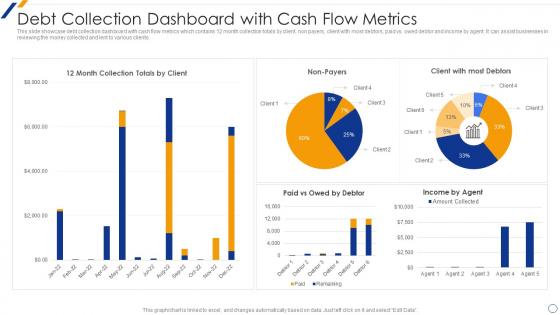
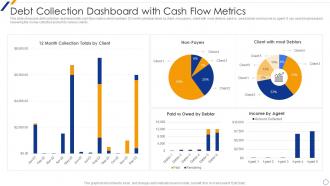
This slide showcase debt collection dashboard with cash flow metrics which contains 12 month collection totals by client, non payers, client with most debtors, paid vs. owed debtor and income by agent. It can assist businesses in reviewing the money collected and lent to various clients.
People who downloaded this PowerPoint presentation also viewed the following :
Debt Collection Dashboard With Cash Flow Metrics with all 7 slides:
Use our Debt Collection Dashboard With Cash Flow Metrics to effectively help you save your valuable time. They are readymade to fit into any presentation structure.





FAQs for Debt Collection Dashboard With
Definitely track your collection rate - what percentage you're actually recovering. DSO is clutch too, shows how fast you're collecting. The age bucket stuff matters because old debt becomes a nightmare to collect, honestly. First-call resolution rates and cost per dollar collected are solid metrics. Compliance is where it gets tricky though - dispute rates and regulatory violations will mess you up if you're not careful. I'd probably start with collection rate and DSO since those hit your cash flow directly. Set up monthly tracking and compare to industry benchmarks so you know where you stand.
Track first-contact resolution by flagging when debtors make payments or set up arrangements during that initial call. Have your agents mark outcomes right after each conversation - full resolution, partial, or nothing. Here's the thing though - payment promises are sketchy. People say they'll pay and then... don't. So I'd track actual payments separately from promises to see what's really working. Defining "resolution" gets tricky too. Run weekly reports comparing your agents' FCR rates. You'll spot patterns and figure out who's crushing it versus who needs help.
Dude, segmentation is a game changer for collections. You're basically grouping debtors by stuff like payment history, debt age, or how they prefer to be contacted. Makes way more sense than blasting everyone the same way - that approach is pretty much useless tbh. Younger people usually respond better to texts, while older folks still prefer actual phone calls. I'd start by looking at your current accounts and maybe create 3-4 different groups. Then you can hit each segment with tactics that'll actually work for them. It's honestly one of those things that seems obvious once you start doing it.
Honestly, the worst thing I see is when people get obsessed with recovery rates but completely ignore cost per dollar collected. You're basically celebrating while bleeding money. Also - and this drives me nuts - everyone looks at metrics in isolation instead of the whole customer journey. Monthly snapshots are pretty useless too; you need cohort tracking to see what's actually happening. Don't even get me started on treating all debt the same regardless of age, amount, or customer type. That's just lazy analysis. Map your metrics to real business outcomes, not vanity numbers that look good in presentations.
Oh man, the tech side really makes a huge difference with data accuracy. Your systems can automatically grab payment histories and contact info instead of someone typing it all in - bye bye human errors. The AI pattern recognition is honestly wild, it catches stuff we'd totally miss. Short version: it helps you figure out who's actually gonna pay so you're not chasing ghosts. I'd start by checking what data sources you've got now and see where you can connect things better. Less manual work = cleaner data.
Focus on collection rate first - that's the obvious one. Right party contact rate is huge too. Promises-to-pay conversion tells you if your agents can actually close. Average call duration matters, but only if it leads to money collected. Don't let agents burn time on dead-end calls. Compliance scores are non-negotiable - seriously, one lawsuit kills your whole month's numbers. Skip the vanity stuff like total calls made. Quality contacts and actual dollars recovered, that's what pays the bills. Benchmark your top performers on these four, then coach everyone else up to those standards.
Payment plans usually bump up collection rates by 15-25% - makes sense since people can actually afford to pay something vs nothing at all. Track enrollment rate, completion rate, and how long collection takes compared to your usual methods. Honestly, don't get too excited about enrollment numbers though. Completion rate is what actually pays the bills. Also watch average payment amounts and how often people miss payments within the plans. Sweet spot seems to be 3-6 months with auto-pay set up. I'd start by seeing what your current completion rates look like, then mess around with different structures.
So the big stuff you gotta watch is how your team treats customers, being upfront about everything, and following fair debt rules. Track complaint rates and how often you're hitting people up - that frequency thing will bite you if you're not careful. Settlement acceptance rates matter too. Oh and don't sleep on training scores, I know it sounds boring but regulators actually care about that stuff. Start with your complaint-to-contact ratio though, that'll tell you real quick if you're being too aggressive.
Dude, visual dashboards are a game changer for this stuff. Heat maps will show you seasonal patterns, bar charts let you compare how different agents are doing. I swear spreadsheets just make me want to take a nap, but good visuals? Everything suddenly makes sense. Track your recovery rates and time-to-collection with interactive charts - you'll actually spot which strategies work and when people are most likely to pay up. Start with basic line graphs first, then get fancier once everyone's comfortable. Oh, and funnel charts are perfect for tracking your collection pipeline stages.
So start with contact-to-promise rates - that's basically how good your messaging is at getting people to commit to paying. Promise-to-pay conversion is huge too. Track which channels work best (calls vs texts vs emails) because honestly, some people just hate phone calls. Right party contact percentage matters more than you'd think. Time-to-resolution and total collections per account will show if your new strategies actually work. Don't skip customer satisfaction though - pissed off customers are way less likely to pay up. I'd pick one metric that aligns with your main goal first, then add others. Test different messaging approaches monthly.
So time-to-recover basically shows how long your cash sits stuck in receivables. Track it monthly and you'll start seeing patterns - like which customers drag their feet or if things slow down seasonally. Some industries are just terrible at paying quickly, it's annoying but predictable. The real win is better cash flow forecasting since you'll know roughly when money's coming in. If recovery time keeps getting longer? That's usually a red flag about your customers' financial health or maybe your collection process needs work. Honestly, catching these trends early can save you major headaches down the road.
Dude, you're basically flying blind without regular metric reviews. Recovery rates tank when you don't spot failing strategies fast enough. Monthly check-ins are non-negotiable – I learned this the hard way at my last job. Set up alerts so you know immediately when numbers drop. Otherwise you'll waste money on collection methods that stopped working ages ago. It's wild how many teams skip this step then wonder why their budgets get slashed. You can't defend your resources to leadership without current data backing you up.
Join ACA International or your local collectors' groups first - their annual reports have all the good stuff like recovery rates and cost metrics. Credit agencies publish industry data too. Here's the thing though: comparing your numbers only works if you're looking at similar debt types. Different industries are all over the place with collection patterns. Stick to benchmarks from your specific sector. I'd set up quarterly check-ins to see where you're lagging behind. The data's out there, you just gotta make sure you're not comparing medical debt to credit cards or whatever.
SAS, FICO, and Experian's analytics suites work really well - they're built for this exact thing. If your team knows coding, R or Python give you way more control over customization. But honestly? Clean data is what actually matters most. Payment history, demographics, account patterns - get that stuff tracked consistently first. I'd probably just start with whatever plugs into your current systems easiest. You can always upgrade later once you show your boss it's actually working and worth the investment.
Dude, CRM integration is seriously worth it for debt collection. You get this full picture of each debtor - their payment history, how they like to be contacted, all their past interactions. Makes it way easier to figure out the right approach and timing. My contact rates went up like 20% once I wasn't just shooting in the dark anymore. You can actually see what works for different types of people too. Honestly, I'd start with your newest debtor data first - that's where you'll notice the biggest difference right away. Takes about a month to really see it clicking.
-
SlideTeam was so customer-centric and quick service-provider that I doubted the amount I was paying and literally re-checked the transaction.
-
The presentations are very helpful. I am always able to get appropriate templates for the different topics related to my profession.