

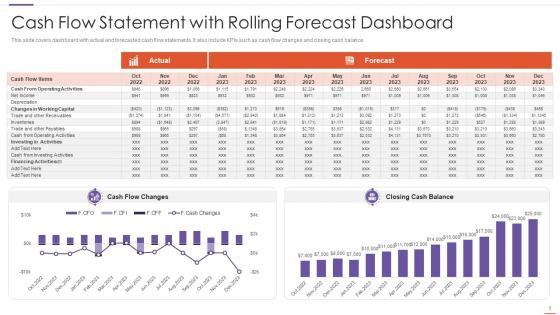
Cash Flow Statement With Rolling Forecast Dashboard




Try Before you Buy Download Free Sample Product
 Impress Your
 Audience
 100%
100% Editable
 Save Hours
 of Time


This slide covers dashboard with actual and forecasted cash flow statements. It also include KPIs such as cash flow changes and closing cash balance.
People who downloaded this PowerPoint presentation also viewed the following :
Cash Flow Statement With Rolling Forecast Dashboard with all 7 slides:
Use our Cash Flow Statement With Rolling Forecast Dashboard to effectively help you save your valuable time. They are readymade to fit into any presentation structure.





FAQs for Cash Flow Statement With
Honestly, it's all about predicting when money actually hits your account vs when it leaves. Track real cash movement, not just what invoices say. Late payments will absolutely wreck you - I learned this the hard way - so chase down collections aggressively and maybe throw in early payment discounts. Time your own payments smart and keep some emergency cash tucked away. Weekly reports are a lifesaver. Map out 13 weeks of cash flow projections first thing. You'll spot trouble before it hits. Also helps you sleep better knowing what's coming.
Start with your last 12-18 months of cash data to see what patterns emerge. Build a rolling 13-week forecast tracking receivables, payables, and seasonal stuff. Be conservative on collection timing - customers are basically allergic to paying on time! Update weekly with real numbers, not guesses. Oh, and run different scenarios: best case, worst case, realistic. That way you won't get blindsided when things go sideways. The whole point is actually using it for decisions, not letting it rot in some forgotten Excel tab.
Honestly, QuickBooks or Xero are solid choices if you want the full package - invoicing, reporting, all that stuff. But don't sleep on good old Excel or Google Sheets! I actually still use spreadsheets for quick projections because they're so flexible. For cash flow specific tools, check out Pulse, Float, or CashAnalytics. They're built just for forecasting. Here's the thing though - pick whatever you'll actually stick with using. The best tool is useless if it just sits there collecting digital dust. Start with something that plays nice with whatever accounting system you're already running.
Dude, this is actually a game-changer for cash flow. Instead of paying suppliers immediately, try negotiating 30 or 60-day terms - it's basically free money sitting in your account longer. You'll have time to collect from your customers first before paying bills. Way less stressful. I learned this the hard way when I was constantly scrambling to cover expenses. Just don't be that person who forgets to pay on time and pisses off suppliers. Track your payables religiously. Start with your biggest vendors since they're usually more flexible on terms.
Honestly, the worst cash flow mistakes I see are giving customers way too long to pay, then never chasing up overdue invoices. Inventory kills so many businesses too - they tie up everything in stock that just sits there. Bad timing on expenses is brutal, like buying equipment right before your quiet months hit. Oh, and not planning for seasonal dips is a classic rookie move. You really need some kind of rolling forecast - maybe 13 weeks out? That way you can see problems coming instead of panicking when you're already broke.
Dude, seasonal swings will destroy your cash flow if you're caught off guard. Like, retail gets hammered in summer, landscaping dies in winter - but your rent and payroll don't care. I'd start tracking your patterns now using past data. Build up reserves during good months. Also negotiate payment flexibility with suppliers and get a credit line ready. My cousin learned this the hard way with his pool business - almost went under one February. Basically you're squirreling away nuts for winter. The sooner you prep for slow periods, the better you'll survive them.
Dude, cash flow is literally your business lifeline. You can look profitable on paper but still go bankrupt if you can't pay bills when they're due. Timing is everything. Make sure you've got enough money flowing in to cover expenses, payroll, random stuff that pops up - without always panicking or maxing out credit cards. I've watched solid businesses crash just because they ran dry during slow months. Super frustrating to see. Track your cash weekly and build up a cushion. Try saving 3-6 months of expenses so you're not stressed when things get tight.
Dude, track every single dollar from the start - I can't stress this enough. Most founders think they'll figure it out later and then panic when they're broke. Build a basic spreadsheet that shows your cash flow for the next 3-6 months, update it weekly. Try to get longer payment terms from suppliers but make customers pay you faster. Burn as little as possible and always have 6 months of runway minimum. I know it sounds boring, but being obsessive about numbers early saves you from that awful "where did all my money go" moment later.
Honestly, start by tightening up who you give credit to in the first place - saves so much headache later. Offer early payment discounts like 2/10 net 30, people love saving money. Automate your invoicing because manual tracking is where stuff gets lost (learned that the hard way). Set up a collections schedule - call at 15 days, email at 30, get serious at 45. The biggest thing though? Don't wait around hoping they'll remember. Be proactive about it. Most customers aren't trying to stiff you, they just have their own cash flow issues and forgot.
Honestly, pay your must-haves first - payroll, rent, key suppliers. After that though, don't just sit on whatever's left. Too many people I know get stuck in this endless survival loop and never actually grow. Pick a percentage of your monthly cash flow and commit to spending it on growth stuff - marketing, new equipment, maybe another hire. Both sides matter here. Oh, and figure out your cash conversion cycle first (like when money actually comes in vs goes out). Makes timing these investments way less stressful when you're not guessing.
Look, I'd focus on operating cash flow ratio first - it shows whether you're actually generating enough cash to cover what you owe. Saved my ass more times than I care to admit. Then track your cash conversion cycle (how long before inventory becomes cash again) and days sales outstanding for customer payment speed. Your cash runway matters too - basically how long you can survive at current spending. Oh, and free cash flow trends obviously. Honestly, just throw these into a simple monthly dashboard. Way easier to catch problems early instead of scrambling later.
Dude, good cash flow management is like showing investors you actually know what you're doing. They see consistent, predictable cash and think "okay, these people won't randomly go broke next Tuesday." You'll hit your projections more often, which builds trust. Honestly, the best part? You won't need to go begging for money constantly - investors eat that independence up because it screams financial discipline. I'd track everything obsessively and include those trends in every update you send them. Makes you look way less risky than the competition.
Look, a cash flow statement is basically your reality check - it shows where money's actually flowing in and out, not just what you "earned" on paper. Track three main areas: daily operations, asset purchases/sales, and financing stuff like loans. Start with net income, then add back things like depreciation since that's not real cash leaving. Here's the thing though - I've seen profitable companies go broke because profit doesn't equal cash sitting in your account. Working capital changes mess with timing too. If your operations are bleeding cash consistently, that's when you know something's seriously off with collections or spending patterns.
Dude, think of cash reserves as your business emergency fund. When revenue tanks or some random expense pops up, you've got money ready instead of panicking. I'd say keep 3-6 months of operating costs in accounts you can actually access quickly - none of that locked-up CD nonsense. Building it doesn't have to be painful either. Just stash away like 5% of profits each month and it'll grow faster than you think. Trust me, you'll sleep way better knowing you won't have to beg banks for loans when things get weird.
Okay so three main moves here: watch your cash like a hawk, stretch out when you pay suppliers, and get customers to pay you faster. Weekly cash forecasts are way better than monthly - daily checks aren't crazy if things are really tight. Try negotiating longer payment windows with vendors while giving discounts to customers who can pay early. Slash anything you don't absolutely need. Factoring receivables is an option too if you're desperate for quick cash. Basically you want the biggest cushion possible between your actual cash and hitting zero. Trust me, you don't want to cut this close.
-
Innovative and Colorful designs.
-
Unique and attractive product design.