

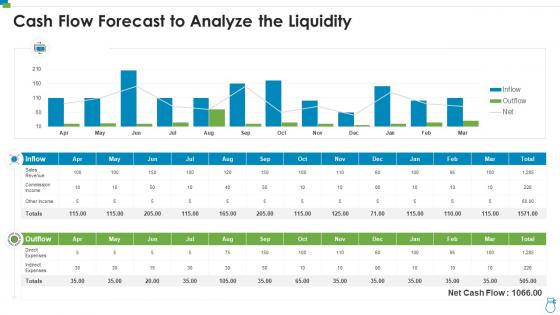
Cash flow forecast to analyze the liquidity




Try Before you Buy Download Free Sample Product
 Impress Your
 Audience
 100%
100% Editable
 Save Hours
 of Time


Our Cash Flow Forecast To Analyze The Liquidity are topically designed to provide an attractive backdrop to any subject. Use them to look like a presentation pro.
People who downloaded this PowerPoint presentation also viewed the following :
Cash flow forecast to analyze the liquidity with all 2 slides:
Use our Cash Flow Forecast To Analyze The Liquidity to effectively help you save your valuable time. They are readymade to fit into any presentation structure.
FAQs for Cash flow forecast to
You'll need your starting cash, then map out money coming in (sales, collections, whatever) and going out (payroll, rent, suppliers, loan payments). I do weekly forecasts for the next 13 weeks, then switch to monthly - honestly, weekly gives you way better control. Track your actual numbers against what you predicted because you're gonna be wrong at first (we all were). The whole point is catching cash problems before they smack you in the face. Just start with a basic spreadsheet and add bells and whistles later once you get the hang of it.
Monthly updates are the bare minimum, but weekly is honestly where it's at. You'll catch trends way faster and can actually do something about problems before they bite you. For most businesses, monthly keeps you from getting blindsided by cash crunches. But if your revenue's all over the place or you're in survival mode? Weekly for sure. I learned this the hard way last year - waiting a whole month between updates nearly killed us when a big client delayed payment. Start monthly though, then bump it up if you need more current info to make decent decisions.
Honestly, the two biggest mistakes are being way too optimistic about when people will actually pay you (spoiler: they won't pay on time) and totally lowballing your expenses. Seasonal stuff will hit you out of nowhere, plus random one-time costs and taxes. I learned this the hard way! Don't get crazy detailed with forecasts beyond 6 months - it's just fake precision at that point. Keep the next few months detailed, then go broader. Oh, and actually update the thing regularly when real numbers come in. Sounds obvious but most people forget.
Dude, seasonal swings will mess up your cash flow forecasting big time if you don't plan for them. Like, December might be insane but then January's dead - I learned this the hard way with my first business. Don't just average monthly numbers or you'll be totally off. Pull at least 2-3 years of data to see the real patterns. Holiday rushes, summer slumps, those quarterly spending cycles - they're all predictable once you map them out. Build this stuff into your forecasts so you won't freak out when things naturally slow down.
Dude, cash flow forecasts are huge for getting funding. Investors and banks want proof you'll actually pay them back, you know? It shows when your money's flowing in and out, plus that you get your business cycles. Banks are super cautious about this stuff - they hate surprises. Your forecast basically proves you're not gonna scramble when payments are due. Oh, and don't go crazy optimistic with the numbers. They'll tear apart your assumptions if things look too rosy. Keep it real and you'll be fine.
Honestly, automating your cash flow forecasting is a game-changer. AI tools dig into your historical data and spot trends you'd never catch in Excel - like seasonal patterns or which customers always pay late. The best part? Everything updates in real-time when connected to your accounting software, so no more surprises at month-end. You can run different scenarios instantly too. I'd start by hooking up your accounting system to a forecasting platform and just let it watch your business for a few months. Way better than guessing with spreadsheets.
Big companies have whole teams and expensive software building these crazy detailed models with tons of scenarios. Small businesses? You're probably just tracking cash flow weekly or monthly in Excel. Which is honestly fine - you don't need all that complexity. Large enterprises forecast years out with departmental breakdowns and every variable imaginable. For small businesses though, simple works better. A basic forecast you actually update regularly beats some complicated thing you'll abandon after two weeks. Focus on getting the numbers right rather than making it fancy.
Market conditions mess with your cash flow big time - both when money comes in and goes out. Customers start paying late or ordering less when things get rough. Suppliers might jack up prices or demand faster payment. Economic downturns are the worst because everyone tightens their belts. You gotta check your forecasts way more often during crazy times - like monthly instead of every quarter. Always run three scenarios: best case, worst case, and what'll probably happen. That way you won't get blindsided when stuff inevitably goes sideways. Trust me, it always does.
Definitely track your accounts receivable aging and payable schedules first. DSO is huge - shows if you're actually collecting what you think you are. Working capital ratios help too. Most people totally ignore seasonal stuff, which is dumb because it'll wreck your accuracy. Your burn rate obviously matters, but don't forget gross margin trends since that's what actually tells you how much cash each sale brings in. Oh, and cash conversion cycle metrics are worth watching. Honestly, these basics will catch cash problems way before your forecasts do. Start there and you'll be fine.
Start by sorting your variable costs - utilities, materials, marketing stuff that changes with seasons or sales. Pull up your old data to find patterns, but use ranges instead of exact numbers. Trust me, these expenses always find ways to go over budget! Tie the ones that scale with sales to your revenue forecasts using percentages. Seasonal costs should get mapped to specific months based on what happened before. Oh, and update your assumptions monthly when real numbers come in - honestly makes a huge difference in accuracy over time.
Track your cash flows weekly, not monthly - seriously makes a world of difference. Break everything into fixed vs variable costs, then run a few different scenarios instead of just one optimistic forecast. I know it's tedious, but dig into your historical data for seasonal patterns. Rolling forecasts work way better than those static annual ones everyone does. Oh, and always assume customers will pay late because they will. The timing buffer thing alone has saved my ass multiple times. Start with more frequent tracking first, then add the scenario stuff once you've got that down.
You absolutely need that historical data - it's your lifeline for decent forecasting. Pull at least 12-24 months of bank statements and start categorizing by month. This shows you the real patterns: when customers drag their feet on payments, which months crush your cash flow, seasonal swings you forgot about. Without it? You're just throwing darts blindfolded, honestly. I learned this the hard way when I tried winging a forecast once - what a disaster. The historical stuff catches all those sneaky recurring expenses that slip your mind. Way better than relying on hunches.
Dude, payment terms are basically everything for cash flow. You give customers 30 days to pay? That money's not hitting your account for a month, even though you invoiced today. Flip side - if suppliers let you wait 60 days, you've got more wiggle room than you think. Honestly, most people just track when invoices go out and call it a day. Big mistake. I've watched companies panic about cash when they forgot their actual collection timeline. Map out when money really moves, not just paperwork dates. Trust me on this one.
Honestly, cash flow forecasting is like having a heads up on your money situation. You can spot potential problems or windfalls months before they hit. Way better than crossing your fingers and hoping you'll have enough for that equipment upgrade, you know? I'd say forecast at least 3-6 months out to make it worthwhile. The timing thing is huge too - you can actually plan major investments around when cash will be flowing in instead of just winging it. And budgeting becomes so much easier when you're not just guessing about what money you'll have when.
Cash flow forecasting totally depends on your industry. Retail? You're dealing with crazy seasonal swings and inventory cycles. SaaS companies obsess over subscription renewals and churn rates instead. Manufacturing has those long payment cycles plus raw material costs that jump around constantly. Healthcare is rough - insurance reimbursements take forever (seriously, it's painful). Construction gets milestone payments but material costs are all over the place. You'll want to dig into historical data from similar businesses in your space. Each industry has its own weird payment patterns and seasonal quirks, so understanding those makes your projections way more accurate.
-
Excellent Designs.