


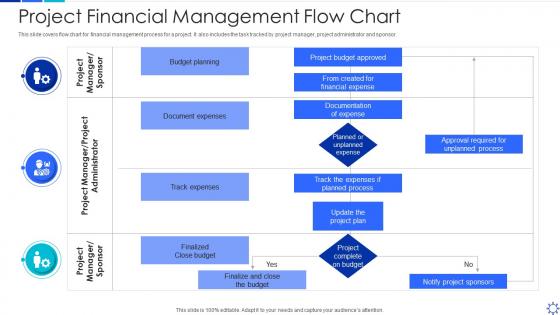
Project financial management flow chart




Try Before you Buy Download Free Sample Product
 Impress Your
 Audience
 100%
100% Editable
 Save Hours
 of Time


Our Project Financial Management Flow Chart are topically designed to provide an attractive backdrop to any subject. Use them to look like a presentation pro.
People who downloaded this PowerPoint presentation also viewed the following :
Project financial management flow chart with all 6 slides:
Use our Project Financial Management Flow Chart to effectively help you save your valuable time. They are readymade to fit into any presentation structure.





FAQs for Project financial
Ok so project finance deals basically have a few key moving parts. You'll set up an SPV first - that's your special purpose vehicle that owns everything and keeps it separate from the sponsors' other stuff. Funding usually breaks down to like 70-80% senior debt, then equity from your sponsors. Sometimes there's mezzanine financing thrown in the middle too. Construction contracts, O&M agreements, and your revenue deals are huge because lenders get nervous without predictable cash flows (honestly can't blame them). Map these pieces out early when you're putting your deal together - makes the whole process way smoother.
Risk assessment controls everything in project finance - your funding costs, deal structure, whether lenders even want in. You'll map out technical, market, regulatory, and credit risks since each affects your debt-to-equity mix. It's this endless risk puzzle, honestly. Higher risk means pricier financing plus more safeguards like reserves. Build a solid risk matrix upfront - trust me, it saves major headaches later when you're negotiating. Oh, and don't underestimate regulatory stuff... that can torpedo deals faster than anything else.
So basically an SPV is like a legal shield between your main business and whatever risky project you're funding. You create this separate company that owns all the project stuff and handles the debt. If it crashes and burns, lenders can't touch your other assets - which honestly saved my ass once. The whole setup also makes banks happier since they're only analyzing one project's numbers instead of digging through your entire financial history. Oh, and it keeps your main company's books cleaner too. Trust me, always go the SPV route when you're doing project finance deals.
Dude, credit ratings basically control everything - whether you can get funding and how much it'll cost you. Good ratings = cheaper money and way easier access to capital. Bad ratings? Your deal's probably dead, or at least crazy expensive. Rating agencies dig into your cash flow consistency and contract quality first - honestly, they're pretty predictable about what they want. Get solid offtake agreements locked down and keep those debt service coverage ratios looking healthy. I learned this the hard way on my first project. Those two things are what they'll scrutinize right off the bat.
So most renewable projects use non-recourse financing - you're basically borrowing against the project's future cash flows instead of your company's balance sheet. Pretty smart actually. The debt-to-equity split is usually around 70-80% debt, which sounds crazy aggressive but works because the revenue streams are so predictable. Power purchase agreements are huge here since they lock in long-term revenue. You'll also see tax equity partnerships (big in the US), green bonds for the bigger stuff, and sometimes development finance institution money. Oh and the secret sauce? Get that revenue certainty locked down early - makes everything else way easier to arrange.
Ugh, international regs are such a maze when you're putting together project finance deals. Basel III totally changes how banks price everything, and don't even get me started on AML rules - they slow everything to a crawl with all that extra due diligence. Environmental stuff like Equator Principles? They'll literally kill your deal if your project has a big footprint. Tax treaties matter way more than people think too, especially for cross-border structures. Seriously though, map out all this regulatory stuff early. I've seen too many people try to fix compliance issues later and it's always a nightmare.
Dude, don't rush the term sheet stuff - that's where most people screw up. Risk allocation has to be sorted from day one or you're toast. I've literally seen teams get 8 months deep into projects only to have everything collapse because they didn't nail down debt sizing and coverage ratios early enough. Such a waste. Scope creep on technical requirements will kill you too. Oh, and make sure your lawyers actually know project finance - you'd be surprised how many don't. Get your commercial terms locked first, then worry about the rest.
Honestly, you gotta overcommunicate everything from the start. I'm talking regular check-ins, being super transparent about wins AND the messy stuff. Map out who needs what info and when - seriously, I've watched deals completely blow up just because someone felt out of the loop (not even kidding). Don't promise crazy timelines you can't actually hit. Document everything so there's no "wait, I thought we agreed on..." drama later. Oh, and those stakeholder calls? Schedule them now and don't skip them, even when you're swamped.
Build separate phases for construction, ramp-up, and steady ops - cash flows are totally different. Debt and equity waterfalls should be separate too. The debt sizing gets messy with all those coverage ratios, honestly such a pain. Use quarterly periods instead of annual since lenders obsess over timing. Always run multiple scenarios for your key assumptions like commodity prices. Oh and build flexibility in from the start - I can't stress this enough. You'll be tweaking assumptions constantly during due diligence, so make your model easy to adjust or you'll hate yourself later.
Honestly, volatility just screws with everything finance-related. Banks get spooked and either jack up rates or bail completely - can't really blame them though. Your cash flow gets wonky, especially with international stuff where currencies are all over the place. Long-term deals? Forget about it when rates keep jumping around. I learned this the hard way on a project last year. You've gotta build in way more cushion than you think and look into hedging if you can afford it. Short answer: expect everything to cost more and take longer.
So you'll want to hit the main three: NPV, IRR, and payback period. NPV's honestly the most important one - shows if you're actually making money or just fooling yourself. IRR gives you the return rate, which is nice but can be misleading sometimes. Payback period is pretty straightforward - how fast you get your cash back. If there's debt involved, definitely check the debt service coverage ratio too. Oh, and run some sensitivity analysis to see what happens when things go sideways (they always do). Those five should cover you for most decisions.
Dude, cash flow issues will absolutely kill your project finance deal. Banks are crazy paranoid about predictable revenue - they want to see money flowing in consistently to cover loan payments. Any volatility freaks them out. Even minor hiccups can breach covenants or force you to pump in way more equity than you budgeted for. Build solid cash flow models with realistic numbers, not pie-in-the-sky projections. Have backup plans too, because lenders will stress-test everything until it breaks. Honestly, they're more conservative than my grandmother with her savings account, but that's just how project finance works.
Look, due diligence can make or break your whole deal. Lenders want proof your project actually works and won't blow up in their faces - they're basically doing detective work on everything you submit. Your financial projections, environmental studies, technical reports? They'll comb through it all. Honestly, I've seen people get blindsided by how long this takes. The cleaner and more complete your documentation is upfront, the better your chances of getting funded. My advice? Start gathering those documents way earlier than you think you need to.
Look, instead of waiting months for financial reports, you get instant updates on where your project stands money-wise. Blockchain creates permanent transaction records that nobody can mess with. AI dashboards immediately alert you when costs are spiraling out of control. Cloud platforms let everyone see the same live data - honestly, this alone saves so many headaches. Compliance reporting happens automatically, which regulators love. The trick is making sure your systems actually connect to each other. Otherwise you're just creating more disconnected data pools, and who needs that nightmare?
Honestly, three big things are changing project finance right now. ESG stuff is huge - lenders want all your sustainability data upfront, not tacked on later. Digital infrastructure is exploding too (data centers, 5G, smart city projects) because COVID made everyone realize how much we need this tech. Blended finance is getting popular where you mix public and private money for risky emerging market deals. Sounds fancy but it's pretty straightforward once you get it. My take? Get familiar with ESG reporting frameworks ASAP. It's basically required for any serious deal now.
-
The Designed Graphic are very professional and classic.
-
Great designs, Easily Editable.