


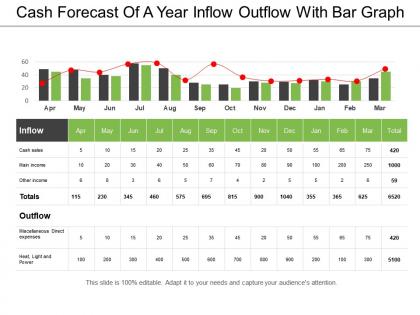
Cash forecast of a year inflow outflow with bar graph




Try Before you Buy Download Free Sample Product
 Impress Your
 Audience
 100%
100% Editable
 Save Hours
 of Time


Develop their interest with our Cash Forecast Of A Year Inflow Outflow With Bar Graph. Increase the degree of enthusiasm they feel.
People who downloaded this PowerPoint presentation also viewed the following :
Cash forecast of a year inflow outflow with bar graph with all 5 slides:
Flashbacks benefit from our Cash Forecast Of A Year Inflow Outflow With Bar Graph. Days gone by appear even better.

FAQs for Cash forecast of a year inflow outflow
So there are three parts to a cash flow statement. Operating activities - that's your daily stuff like sales and expenses. Then investing activities, which is buying/selling equipment or other assets. Financing activities covers loans, equity, dividends - basically money in and out from investors. Honestly? Just focus on operating cash flow first. That's where you'll see if your actual business makes money or burns through it. I mean, the other sections matter too, but if operating cash flow keeps going negative, you've got real problems. Everything else is just moving money around, but operating shows whether your core business works.
Cash flow tracks actual money going in and out of your accounts. P&L shows revenue and expenses when they happen - even if no money moved yet. You can look super profitable but still be broke if clients haven't paid invoices. Happened to my cousin's consulting business last year - showed $50K profit but couldn't make payroll because everything was tied up in receivables. That's why both reports matter. P&L tells you if your business actually works. Cash flow? That's what determines if you'll survive next month.
Operating cash flow is like your business's real heartbeat - way more honest than net income. You might look profitable on paper while cash is actually flowing out the door because customers aren't paying up or you've got too much tied up in inventory. Honestly, I trust this metric way more than profit numbers since it cuts through all the accounting BS and timing games. Watch for it trending up over time. Big gap between this and net income? That's your red flag to start digging around.
Dude, start doing weekly or monthly cash flow forecasts - you'll never get blindsided again. Chase those late invoices even though it sucks. Offer early payment discounts to get money faster. Flip the script with suppliers and ask for longer payment terms. Time your big expenses smart. Build up some emergency cash too, obviously. Oh, and try a 13-week rolling forecast - sounds boring but it's honestly amazing for catching problems before they hit. My accountant friend swears by this stuff.
Dude, so many people think cash flow and profit are the same thing - they're not! Also, you'll get payments way later than when you actually make the sale, which screws everything up. Seasonal stuff will mess with your numbers too. Everyone's way too optimistic with their forecasts (myself included, honestly). Random expenses pop up that you never see coming. Build in some cushion for weird stuff and actually update your projections regularly. I learned that one the hard way - don't just make them once and ignore them.
Yeah, seasonality will totally mess up your cash flow if you don't see it coming. Look at retail - they're dumping money into inventory before Black Friday but then crushing it in Q4. Construction companies? They're basically dead in winter. Tourism's wild too since ski places and beach resorts are complete opposites timing-wise. Here's what I'd do: grab 2-3 years of your numbers and map out the patterns. Once you know when things get tight, set up a credit line or stash cash before you hit those rough patches. Way better than panicking when you're already broke, trust me.
Look, cash flow forecasting is like having a heads up on your money situation - when it's coming in, when it's going out. Without it, you're basically flying blind on big decisions. Want to hire someone or expand? You better know if you'll actually have cash in a few months. I learned this the hard way honestly. It helps you see trouble coming and figure out the right timing for investments. Also keeps you from overpromising to investors when your bank account says otherwise. Start with 12 months out, then update monthly. Trust me on this one.
So cash flow ratios are basically your reality check for whether you've got enough money coming in. I look at operating cash flow ratio first - tells you if your day-to-day business actually generates enough to pay bills. Then there's cash coverage ratio for debt payments. Way better than just staring at profit numbers honestly. If you're hitting below 1.0 consistently, that's not great - maybe speed up how you collect from customers or see if suppliers will give you longer to pay. I got burned once ignoring these, so now I check monthly.
So basically, positive cash flow = more money coming in than going out. Negative is the flip side. When it's positive, you're golden - can pay bills, maybe expand, build up some savings. Negative flow? Could spell trouble if you're just bleeding cash on operations or customers aren't paying up. Though honestly, sometimes negative isn't the end of the world if you're dumping money into growth that'll pay off later. I'd say track the pattern over a few months rather than panicking over one bad month. Context matters way more than the number itself.
Dude, inventory is basically cash sitting on your shelves instead of your bank account. Too much stock? Your money's just trapped there for months. Not enough? You're missing sales and actual cash coming in. I totally messed this up at my old job - ordered way too much thinking we'd sell it fast. Spoiler alert: we didn't. You want just enough to meet demand without tying up all your cash. Oh, and track that inventory turnover ratio thing. Sounds boring but it'll save your butt.
Okay so for cash flow stuff, I'd just start with Excel or Google Sheets. They're still the best for most businesses and you can customize everything. QuickBooks or Xero are great if you want automated reports pulling from your actual data - way less manual work. Bigger companies use things like Anaplan but honestly? That's overkill for most people. I've watched so many friends blow money on fancy software when a solid Excel template would've done the job. My old boss used to say "master the basics first" and he was right. Start with spreadsheets, then move up if you're drowning in numbers or really need those real-time dashboards.
Dude, cash flow problems are brutal. Suppliers start getting pissy when you're late on payments, which can screw up your whole supply chain. Then there's payroll - honestly, nothing tanks employee morale faster than bounced paychecks. Growth investments? Forget about it. You'll be lucky to keep up with basic maintenance. Most businesses end up taking out expensive emergency loans just to survive. Oh, and here's something I learned the hard way - check your cash flow every week, not monthly. Gives you way more time to work out payment plans before everything hits the fan.
So basically you wanna look at three cash flow types - operating, investing, and financing. The operating one matters most since it shows if they're actually making real money from their business, not just fancy accounting tricks. Free cash flow is huge too because that's what's left after they pay for stuff they need. Honestly, I get sketched out when profits look amazing but cash flow sucks - usually means something's fishy. Check if their cash flow can handle their debt payments without stress. Oh and don't just look at one year, you want companies pumping out positive operating cash flow consistently. That's where the real winners are.
Dude, try offering 2/10 net 30 terms - basically give them 2% off if they pay in 10 days instead of 30. Set up automated reminders for overdue invoices, and honestly? Pick up the phone for your bigger clients. I know it's awkward but it works way better than emails sometimes. Ask for deposits on large orders upfront too. The whole thing really comes down to being consistent about following up instead of just hoping people remember to pay you. Make it worth their while to pay fast and stay on top of your AR - that's like 90% of the battle right there.
Honestly, cash flow analysis is like putting on glasses - suddenly you see where your money's actually going vs where you thought it was. Break it down by product lines or segments monthly. You'll probably find some surprises, like maybe Q3 always has extra cash sitting around that you could reinvest. Look for which areas generate the most money and can actually scale up. The seasonal patterns are pretty revealing too. Most importantly, you'll know if you've got enough free cash to expand without begging banks for loans. Start simple - just categorize everything monthly and watch for weird trends.
-
Great quality slides in rapid time.
-
Best Representation of topics, really appreciable.