


Cash Flow Management KPI Dashboard With Trade Receivables




Try Before you Buy Download Free Sample Product
 Impress Your
 Audience
 100%
100% Editable
 Save Hours
 of Time


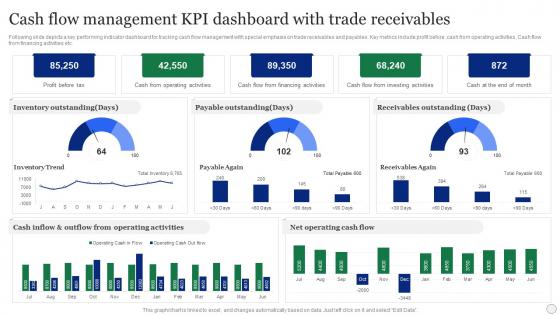
Following slide depicts a key performing indicator dashboard for tracking cash flow management with special emphasis on trade receivables and payables. Key metrics include profit before, cash from operating activities, Cash flow from financing activities etc.
People who downloaded this PowerPoint presentation also viewed the following :
Cash Flow Management KPI Dashboard With Trade Receivables with all 7 slides:
Use our Cash Flow Management KPI Dashboard With Trade Receivables to effectively help you save your valuable time. They are readymade to fit into any presentation structure.





FAQs for Cash Flow Management KPI Dashboard
Honestly, cash flow management comes down to three things: predicting, watching, and controlling your money in and out. Track when cash actually lands in your account - not just when you send invoices. That gap between the two is brutal if you're caught off guard. I'd create weekly projections to catch problems early. Speed up collections by tightening your invoicing and payment terms. You can also play with timing when you pay suppliers. Keep enough cash for operations but don't let too much sit there doing nothing. Oh, and set up balance alerts - total lifesaver.
Honestly, weekly tracking changed everything for me - way better than monthly. Pull straight from your bank instead of guessing at numbers. Sort expenses into categories so you can actually see where money's going. Keep tabs on which customers are reliable vs. the ones who make you wait forever to get paid (those 30-day late payers, ugh). Most small business owners just cross their fingers until they're scrambling for cash, but you're already ahead by asking. Don't forget seasonal stuff if that affects you. Even a basic spreadsheet works - just update it every single week without fail.
Dude, the two killers are not looking far enough ahead and confusing profit with actual cash flow. Like, you can be "profitable" but still can't pay rent because customers are slow to pay or you've got money tied up in inventory. I swear, some businesses have zero idea when their big bills are even due. They forget about slow seasons, never negotiate better terms with suppliers, then freak out when cash gets tight. Oh and tracking is usually garbage too. Honestly? Just do a 13-week rolling forecast, update it weekly. Game changer.
Dude, seasonal swings are brutal if you're not ready for them. Retail goes crazy during holidays then dies afterward - construction basically shuts down when it snows. Tourism is feast or famine, which honestly seems exhausting to manage. Even B2B feels it when their clients slow down. Agriculture's tied to harvest cycles obviously. Here's what works: track your monthly patterns starting now so you'll see the trends coming. Build up cash during good months because you'll definitely need it later. I learned this the hard way watching friends scramble every winter.
QuickBooks and Xero are your safest bets - they handle pretty much everything you'd need. Float's amazing for cash flow stuff specifically, but yeah, it costs more. Honestly? A good Excel sheet works great if you actually keep it updated (big if, I know). Wave is free and way better than you'd expect for smaller businesses. The thing is, pick whatever you'll actually stick with using. I've seen people buy fancy software then never touch it. Start with something that plays nice with what you're already using. You can always upgrade once you outgrow it.
Honestly, cash flow timing is everything. Save up during your strong months, then dump that money into stuff that'll make you more - inventory, equipment, maybe hiring someone. Don't blow it when things get tight (learned that one the hard way lol). Try getting better payment terms from suppliers too, and throw customers a small discount if they pay early. I swear, most people do this backwards. Think of it like saving up for a big purchase, except you're buying things that generate more cash later.
Invoice right after you deliver - seriously, waiting until month-end is just throwing money away. I'd set up automatic reminders at 15, 30, and 45 days, then call personally after that. Make payment terms crystal clear upfront (net 15 or 30). Early payment discounts work pretty well too, even like 2% gets people moving faster. Oh, and check your aging report weekly so you catch slow payers before they ghost you completely. For bigger jobs or sketchy new clients? Definitely ask for deposits upfront - learned that one the hard way.
Honestly, start with a weekly cash flow forecast - sounds boring but it'll save your ass. Track what's coming in vs going out for the next few months. I'd update it with real numbers every week (yeah it's tedious but whatever). Set alerts when cash drops below like 30-60 days of expenses. Watch your cash conversion cycle and days sales outstanding - they'll show problems before they hit. The magic happens when you compare what you predicted vs what actually happened each week. You'll spot where you're always wrong and can fix it. Basic spreadsheet works fine to start.
So working capital is just current assets minus current liabilities - basically the cash stuck in your daily operations. Your inventory, what customers owe you, bills you need to pay. When working capital goes up, your actual cash goes down. Pretty annoying when you think about it. If you're drowning in unsold products, that's money you can't spend on other stuff. You want enough to keep things running but not so much that you're hoarding cash for no reason. I'd start by looking at your cash conversion cycle - shows you how fast you're actually turning that working capital back into spendable money.
Dude, track your cash weekly - monthly is way too slow. I learned this the hard way tbh. Set up a 13-week rolling forecast so you can see money coming in vs going out. Some clients are terrible at paying on time (you'll figure out which ones fast). Check your receivables aging report every week and chase anything over 30 days. Don't let cash sit in inventory either - that stuff just collects dust while you're scrambling for money elsewhere. Every Friday, look at your numbers and tweak the forecast. Sounds boring but it'll save your butt when things get tight.
Honestly, get aggressive about collecting money faster - offer discounts for early payment and tighten up those credit terms. Cash now beats cash later, especially when you're stressed about it. Meanwhile, see if you can stretch out payments to suppliers (without pissing them off obviously). Cut anything that's not making you money. I know it sucks but you gotta be ruthless right now. Oh, and start doing weekly cash flow projections - way better to catch problems early than get blindsided.
Honestly, tracking your cash flow is like having a crystal ball for your business decisions. You'll see exactly when money hits your account and when it's flying out the door. That timing matters SO much - like, you don't want to blow your budget on new equipment right before payroll, you know? I check mine every week now (used to be monthly but that was useless). It sounds super tedious but it's literally saved me from making stupid expensive mistakes. Now I actually know if I can afford that marketing push or if I need to pump the brakes.
Dude, negative cash flow will kill your business if it drags on. Money going out faster than coming in? You can't pay anyone - suppliers, staff, loans, nothing. Startups burn cash for a while and survive, but most can't handle it long-term. You'll either go bankrupt or become totally dependent on investors bailing you out constantly. The worst part is losing control of everything - instead of planning for growth, you're just panicking about next week's bills. Honestly such a stressful way to run anything. Check your numbers weekly and save money during the good months.
Honestly, good cash flow management is what separates real businesses from the ones that look good on paper but are secretly bleeding money. Investors want to see you're actually collecting what you're owed and not just booking phantom sales. When you nail your working capital game, they see way less risk - and that means better terms for you down the road. Nobody wants to be that founder begging for emergency cash at 2am (been there, not fun). Track your cash conversion cycle every month and throw those numbers in your investor updates. Shows you actually know what's going on under the hood.
Honestly, start with free Coursera or edX courses on financial planning - they're way better than I expected. "Profit First" by Mike Michalowicz completely changed how I look at cash flow (that book's legit). If you want something more formal later, CFA or FP&A certifications are solid but pricey. YouTube's got some surprisingly good finance channels too. Oh, and don't feel like you need to do everything at once - pick one free course first, see what works for your brain, then go from there. Some people learn better from videos, others from reading.
-
I'm happy to discover your PowerPoint presentations and templates. They met my expectations precisely. Very innovative!
-
I am extremely pleased with these PPT slides that we used for our event. They were easy to modify and came out great in all aspects!