


Debt management dashboard snapshot debt collection strategies




Try Before you Buy Download Free Sample Product
 Impress Your
 Audience
 100%
100% Editable
 Save Hours
 of Time


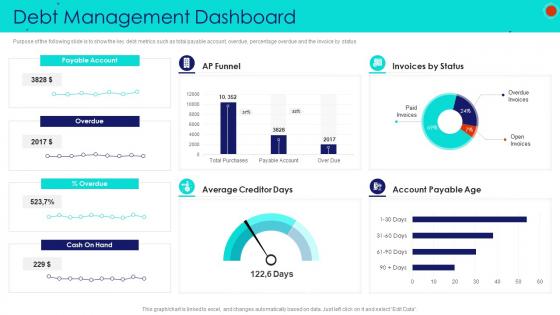
Purpose of the following slide is to show the key debt metrics such as total payable account, overdue, percentage overdue and the invoice by status
People who downloaded this PowerPoint presentation also viewed the following :
Debt management dashboard snapshot debt collection strategies with all 7 slides:
Use our Debt Management Dashboard Snapshot Debt Collection Strategies to effectively help you save your valuable time. They are readymade to fit into any presentation structure.





FAQs for Debt management dashboard snapshot
Okay so first thing - write down every debt you have with the balance and interest rate. Then pick your attack method. Avalanche = pay minimums on everything but throw extra cash at the highest interest debt first. Saves you the most money. Snowball = smallest balance first for those quick dopamine hits when you pay something off completely. Honestly both work, just depends if you need the mental boost or want max savings. Oh and this is the hard part - don't rack up new debt while you're doing this! Seriously, start that list tonight.
Look, budgeting is basically your GPS for getting out of debt - shows you exactly where your cash disappears each month. Track everything for a bit and you'll probably have that "holy crap, I spend WHAT on DoorDash?" moment. We all do it. Once you see the damage, cut the stupid expenses and throw that money at your highest-interest debts first. That's the move that actually works. List out all your debts with their rates, then build your budget around killing them off one by one. Plus it keeps you from racking up new debt while you're trying to dig out.
Your credit score is basically the gatekeeper for all your debt options. Higher scores mean lower interest rates on loans, better credit card deals, and lenders actually want to work with you. It's honestly like having a VIP pass to cheaper money. Stuck with a low score? You're looking at high-rate options that make digging out of debt way harder. Here's the thing though - there's this positive cycle you can get into. Pay down your balances, your score improves, then you qualify for better rates to knock out the rest of your debt faster. Pretty sweet deal if you can stick with it.
Honestly, go after the high-interest stuff first - credit cards with crazy 20% rates before your student loans at 4%. It's called the avalanche method and you'll save way more money. Some people do the snowball thing where you pay off smallest balances first (feels good psychologically, I guess), but math-wise avalanche wins every time. Just make minimum payments on everything else. Then throw any extra money at whatever has the highest rate. Once that's dead, move to the next one. Oh, and write down all your debts with their rates first - you might be surprised what you find.
So debt consolidation basically rolls all your payments into one, usually with better interest rates. Pretty nice for your sanity and wallet. But watch out - if you stretch the timeline too long, you might pay more overall. Plus there's always fees to deal with. Honestly though, the biggest trap is people go crazy with their "cleared" credit cards again because they never actually changed their spending habits. That's like... defeating the whole point, right? Just make sure you run the math first and be real about whether you'll stay disciplined afterward.
Look, debt management plans can totally turn things around for you. Your monthly payments and interest rates usually drop, which gives you way more breathing room each month. Yeah, your credit might dip a little at first, but it bounces back once you're making regular payments - honestly way better than just letting everything go to hell. The best part? You're not dealing with five different creditors anymore. Just one clear plan. My cousin did this and said the stress relief alone was worth it. You gotta stick with it though, and maybe use that extra cash to start an emergency fund so you don't end up back here again.
Look, there's actually way more help out there than most people realize. Start with nonprofit credit counseling - search "nonprofit credit counseling near me" and just make the call. The National Foundation for Credit Counseling has certified agencies that'll set up payment plans for free. Your local community center might have financial counselors too (honestly never thought of that until recently). The FTC has debt management resources, plus your state attorney general's office can point you in the right direction. Oh, and check if your job has any financial wellness stuff through HR - some companies do that now. Don't wait until it gets worse.
Look, high-interest debt is literally bleeding you dry, so hit those credit cards first if they're sitting at 20%+. The numbers don't lie on this stuff. Low-rate debt like your mortgage or student loans? Just pay the minimums for now. There's this thing called the avalanche method where you go after the most expensive debt first - saves you way more money than bouncing around randomly. I know it sounds boring, but make a list of everything with the interest rates. Then just work your way down from the worst ones. Trust me, your future self will thank you.
Honestly, start by tracking every expense for like a week - you'll be horrified where your money disappears to lol. Build an emergency fund even if it's tiny, maybe $20/month. That's what saves most people when random stuff breaks. Automate your savings so you can't touch it. Don't grab new credit cards unless you absolutely have to. Oh, and make a budget you'll actually stick to - not some perfect spreadsheet you'll ignore. Find someone to bug you about your goals. Makes a huge difference having accountability.
Okay so behavioral finance is basically understanding why our brains sabotage us with money decisions. Try mental accounting - literally put debt payments in a "must pay" category so you can't justify spending it on random stuff. Automate payments because honestly, future you will make excuses every single time. The debt snowball thing? It works because small wins keep you going even when it's not the most mathematically perfect approach. Figure out which psychological trap you keep falling into first - that's your starting point.
So bankruptcy wipes out most of your debt, but your credit gets absolutely destroyed for like 7-10 years. Getting approved for anything becomes a nightmare - loans, cards, even apartments. Student loans and taxes? Yeah, those usually stick around unfortunately. But hey, at least creditors stop blowing up your phone constantly. You can ditch credit card debt and other unsecured stuff though. Honestly, I'd try negotiating with creditors first or look into debt consolidation before nuking your credit score. It's not something you can just undo later.
Dude, get that emergency fund going even while you're paying off debt - I know it sounds backwards! When your car breaks down or you get a random medical bill, you'll just end up throwing it on a credit card otherwise. That's literally how I got stuck in my debt spiral for way longer than I should have. Save like $500-1000 first before going all-out on debt payments. Yeah, it slows down your debt attack, but trust me, it's worth it. I started with maybe $20 each paycheck? Nothing crazy. Just protects all the progress you're making.
Dude, learning about money stuff before you actually need it is *huge*. Like, once you get how interest rates screw you over and what budgeting actually looks like, you won't make those dumb decisions that turn into massive debt later. Those payday loan sharks? You'll see them coming from a mile away since they prey on people who don't know any better. I probably should've learned this in high school honestly. But yeah, grab some budgeting apps or hit up free courses online. Way better than figuring it out when you're already buried.
Dude, forget spreadsheets - apps make this so much simpler. I use Mint but YNAB and Debt Payoff Planner are solid too. They'll auto-track your balances and send reminders so you don't get hit with late fees (learned that one the hard way). The visual progress bars are weirdly addictive - watching debt shrink feels like a game. Most apps let you compare different payoff methods too, like snowball vs avalanche. Honestly, the snowball method isn't always mathematically optimal but it keeps you motivated. Just pick one free app and connect your main accounts first.
Here's what I wish someone told me earlier - go after your highest interest debt first, not the smallest balances. I know it feels good to knock out those little ones, but you'll save so much more money targeting the brutal 24% credit card instead. Debt consolidation gets a bad rap but honestly? If you can snag a lower rate and simplify things, why not. Don't close old credit cards either - that actually tanks your score. Oh, and avoiding ALL debt is kinda silly since mortgages literally build wealth. List everything with rates and attack accordingly.
-
Easy to edit slides with easy to understand instructions.
-
Understandable and informative presentation.