


Debt Collection Dashboard With Market Value Of Business




Try Before you Buy Download Free Sample Product
 Impress Your
 Audience
 100%
100% Editable
 Save Hours
 of Time


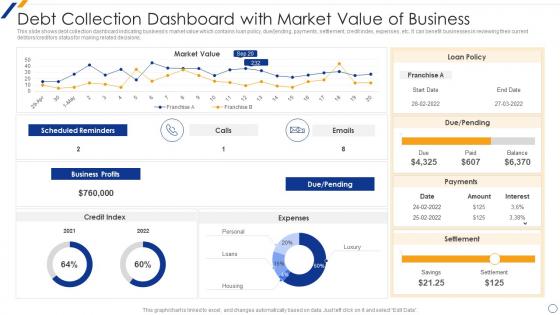
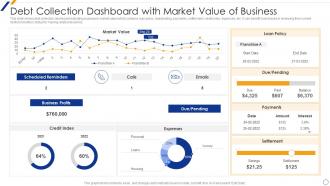
This slide shows debt collection dashboard indicating business market value which contains loan policy, due ending, payments, settlement, credit index, expenses, etc. It can benefit businesses in reviewing their current debtors creditors status for making related decisions.
People who downloaded this PowerPoint presentation also viewed the following :
Debt Collection Dashboard With Market Value Of Business with all 7 slides:
Use our Debt Collection Dashboard With Market Value Of Business to effectively help you save your valuable time. They are readymade to fit into any presentation structure.





FAQs for Debt Collection Dashboard With Market
Focus on your collection rate and aging buckets first - those are gold. Track average days to collect too. I'd also watch which collectors are killing it versus who's struggling with recovery rates. Contact ratios matter big time - are you actually reaching people? Promise-to-pay conversions tell you if your team's persuasive or just going through motions. Cost per dollar collected keeps you profitable, and write-off rates show when to bail on dead accounts. Honestly, set up alerts for anything dropping so you catch problems early instead of scrambling later.
Honestly, charts and graphs are a game-changer for spotting collection trends. Raw spreadsheet data? Total nightmare to parse through. With visuals you'll instantly see what's working - which agents are crushing it, seasonal patterns, performance dips before they get ugly. Bar charts work great for comparing different time periods or debt types. Line charts show trends super clearly. Oh and management meetings become way less painful when you can actually show them what's happening instead of rattling off numbers. Trust me, once you start using visual data you won't go back to staring at endless rows of figures.
Real-time data is such a lifesaver - you can actually see what's happening and pivot fast instead of waiting around for those monthly reports. Which payment methods are crushing it? Which accounts need you to jump on them ASAP? You'll catch the warning signs way before things go south. Honestly, it beats the hell out of those old spreadsheet days. Your team can focus on the big-money accounts first and time their calls based on when people actually pick up. Set up some alerts for the key stuff so you're not flying blind with week-old info.
So basically you'll want to use APIs or middleware to sync your debt collection dashboard with your CRM in real-time. That way you can see payment history, communication logs, and customer profiles all in one place. Honestly, it's a game-changer when you can view someone's entire relationship with your company instead of just their overdue balance. Most dashboards these days have pre-built integrations with the big CRMs like Salesforce or HubSpot - setup isn't too painful. I'd start by figuring out which customer data points would actually help your collectors make smarter decisions, then set those fields to sync automatically.
Okay so first thing - split your debts by priority and how likely you are to actually collect. Focus on recent ones, bigger amounts, people you can actually reach. Age buckets work great too: 30, 60, 90+ days overdue. I'm a big fan of status categories like "contact attempted" or "payment plan going" because honestly it saves so much time when you're trying to figure out what needs your attention next. Oh and don't stress about getting it perfect right away - you can totally tweak the categories once you see what's actually useful for your team.
So predictive analytics can totally transform your debt collection dashboard. Machine learning models score accounts using payment history, demographics, and behavior patterns - the accuracy is honestly impressive. Your team can then focus on high-probability accounts instead of wasting time on dead ends. Different debtor segments get customized strategies based on what actually works. Payment prediction scores should go right into your current dashboard views so agents know where to spend their energy. Oh, and it helps predict timing too - like when someone's most likely to pay up.
Start with debt age buckets - 30, 60, 90+ days overdue. Original amounts matter too, plus debtor location since every state has different collection rules (such a pain). Account status is critical - active, settled, charged-off, whatever. If you're using multiple agencies, track those assignments separately. Payment history filters are gold - you'll spot who actually pays vs who just promises to. Also break it down by debt type: credit cards, medical bills, utilities. Honestly, medical debt collections are weird compared to everything else. You can always add more filters later, but these will let you slice your portfolio and see what's actually working.
Dude, dashboards are a game changer for debt collection. You can actually see what's happening instead of staring at endless spreadsheets all day. Payment trends jump out at you. Aging reports make sense. Your team's performance becomes crystal clear - honestly, some collectors just perform way better than others and the data doesn't lie. You'll spot which accounts need immediate attention versus ones that can wait. Plus when you're presenting to the higher-ups, they eat up those colorful charts way more than raw numbers. Monday mornings? Pull up that dashboard first and let it guide your whole week.
Honestly, dashboards are game-changers because they put everything out in the open. Your collectors can see their call volumes, recovery rates, and follow-ups in real-time - no more guessing how they're doing. It creates this healthy competition when people can compare themselves to targets and teammates. Managers love it too since they can instantly spot who needs help vs. who's killing it. The best part? You'll catch bottlenecks faster and figure out what actually works so you can teach it to everyone else. I'd start with maybe 3-4 metrics that really matter to you.
Dude, start with scheduled data pulls from your CRM - saves you from updating those spreadsheets manually every single day. Set up alerts for the big stuff like overdue accounts or when you're hitting collection targets. Honestly saved me like 2-3 hours a week just not constantly checking numbers. Automate your report distribution too, and create workflows that trigger when aging buckets get sketchy. Oh, and maybe start small? Pick whatever's eating up most of your time first then build on it.
Start with the basics - debtor contact info, balances, payment history, and how old each account is. Your CRM is honestly your best friend here since it tracks everything customers have done and paid. Third-party credit data is clutch too because it shows their full financial picture, not just what they owe you. Don't forget communication logs - saves you from repeating failed collection attempts like an idiot. Legal status updates matter if things have escalated that far. Get these core sources locked down first, then you can add demographic stuff later once you've got a solid foundation.
Honestly, your UI can totally tank the whole thing if it sucks. Collectors end up clicking around forever just trying to find basic stuff like payment history instead of actually doing their job. Map out what people do most – like finding priority accounts or grabbing contact info – then build everything around that. Clean navigation is huge. Nobody wants to wrestle with clunky software when they should be on the phone. Oh and data hierarchy matters way more than you'd think. Short version: make it dead simple or watch productivity crater.
Start with role-based controls - hide debt info from people who don't need to see it. Mask account numbers so you're only showing the last 4 digits. For really sensitive stuff, redact it until someone clicks to reveal. SSL encryption is a given, obviously. Audit logs will save your butt when someone asks who saw what and when. Oh, and set session timeouts because people are terrible about locking their screens. I swear, it's like they want their info stolen. Build multiple layers of protection - pretend it's your own bank account you're protecting and you'll be fine.
Dude, you should totally integrate payment gateways into your dashboard. Makes everything so much easier - debtors can pay instantly without dealing with separate systems or whatever. One-click payments, payment plans, partial settlements, all that stuff. Honestly, it's probably the best thing you can do because people hate jumping through hoops to pay you back (weird, I know, but true). Your collection rates will improve since there's less friction. Real-time confirmations are nice too - no more manual updates eating up your time. Figure out what payment methods your people actually use first though.
FDCPA is your big one - that's the federal law governing debt collection displays and sharing. TCPA covers any communication stuff. State laws are all over the place depending on where your debtors live, which is honestly a pain. Medical debt? HIPAA kicks in too and people always forget about that part. If you're publicly traded, SOX applies. Plus whatever state privacy laws are floating around. Get your legal team involved way before launch - they'll want to review the whole dashboard setup and how data moves through it. Trust me on that one.
-
My team has been relying on SlideTeam’s professional PPT designs for a while now. It has greatly sped up quality work at my organization. So thanks!
-
Been using SlideTeam for some time now…can’t imagine why I wasted all that time in front of the screen trying to make the perfect presentation.