


Loan Collection Process Improvement Plan Debt Management Dashboard Snapshot




Try Before you Buy Download Free Sample Product
 Impress Your
 Audience
 100%
100% Editable
 Save Hours
 of Time


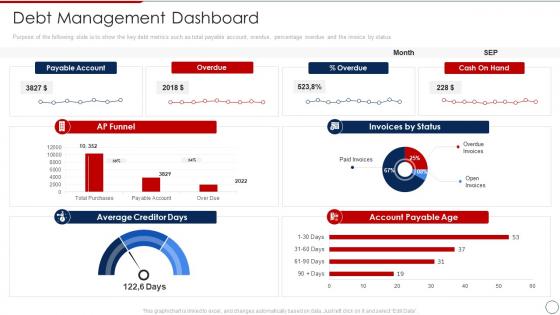
Purpose of the following slide is to show the key debt metrics such as total payable account, overdue, percentage overdue and the invoice by status
People who downloaded this PowerPoint presentation also viewed the following :
Loan Collection Process Improvement Plan Debt Management Dashboard Snapshot with all 7 slides:
Use our Loan Collection Process Improvement Plan Debt Management Dashboard Snapshot to effectively help you save your valuable time. They are readymade to fit into any presentation structure.






FAQs for Loan Collection Process Improvement Plan Debt
Look at collection rate, DSO, and recovery rates by age bucket first. Contact rates are massive too - you can't collect from people you can't reach. Cost per dollar collected shows if you're being efficient about it. Promise-to-pay conversion is key, but honestly the follow-through payment rate after promises tells the real story. Roll rate is probably the most important though - tracks how accounts move through delinquency stages. Oh, and right-party contact rate matters way more than total contacts. Start with those and you'll catch issues fast while building a decent optimization strategy.
Dude, start with predictive scoring models - they'll help you figure out who's actually gonna pay and prioritize your calls. The ML stuff gets weirdly accurate at spotting payment patterns you'd miss completely. You can automate how you segment accounts and time your outreach better. It even figures out whether someone responds better to calls, texts, or emails. Settlement offers can adjust automatically based on how people have paid before (or haven't, honestly). The algorithms learn from behavior data and get smarter over time. It's like having a crystal ball for collections - sounds dramatic but it really does boost recovery rates once you get it running.
Dude, engaging with your customers is literally what separates companies that get paid from those drowning in bad debt. Personal touches work so much better than being another annoying debt collector blowing up their phone. People actually prioritize paying companies they don't hate - crazy concept, right? When you segment borrowers and tailor your approach, even small gestures boost response rates like crazy. Plus customers will often give you a heads up about money troubles early if they trust you. That gives you way more wiggle room to work out payment plans. Honestly beats aggressive tactics every time.
So break your borrowers into risk buckets first - delinquency stage (30, 60, 90+ days) is the obvious starting point. Then look at their payment history and how they've responded before. Account balance matters too, obviously. I usually add demographic stuff but that's where compliance gets messy. Match your approach to the risk - soft touches for good customers just hitting a rough patch, harder pressure for the serial late payers. Oh, and definitely automate the sorting rules in whatever system you're using. You don't want to manually categorize every account - that'll drive you nuts.
Stop calling everyone 10 times a day - that's just burning bridges. First thing you need to do is figure out who literally can't pay vs who's just avoiding you. Payment plans work way better for people actually struggling, plus they'll appreciate not being harassed. Save the tough approach for customers who have money but are being sketchy about it. I'd set up some kind of automated system that starts gentle and gets firmer over time. Track how pissed off you're making people too, not just collection numbers. Honestly, the whole "aggressive collections" thing is pretty outdated. Start by looking at your current mess and grouping customers by their actual situation.
Dude, the worst thing you can do is wait forever to start collecting - like seriously, procrastination kills your recovery rates. Most people mess up by treating every borrower the same way instead of figuring out who's actually high-risk. Inconsistent follow-up is another killer. Don't go full aggressive mode right away because you'll just piss people off, but being too nice the whole time means your money disappears. I'd start tracking who responds to what and when. Build some kind of system with clear deadlines for when you escalate things. Oh, and segment your borrowers - makes a huge difference in how you approach each situation.
Here's what I'd do - dump all your payment history, customer info, and economic data into some ML models. They'll catch early red flags like weird payment patterns or people only paying partial amounts. Honestly, it's kinda creepy how well these things predict defaults 30-90 days out. Also worth checking seasonal patterns and stuff like unemployment rates since those mess with your whole portfolio. Break your customers into risk groups first, then figure out different game plans for each segment. The trick is catching problems before they snowball.
Honestly, the digital stuff is where it's at - automated SMS chains and those personalized payment portals work way better than phone calls these days. AI timing based on how people actually behave? Game changer. Skip the aggressive scripts though, especially for personal loans. Empathy works better (sounds weird but the numbers don't lie). Some teams send financial wellness tips before collections even kick in - pretty smart move. For secured loans, throw modification options at them early instead of just demanding payment. Oh, and test like 2-3 different approaches at once. Track recovery rates AND whether customers stick around after you collect from them.
Dude, regulatory changes will flip your whole collection game upside down. New contact rules, communication limits, debtor protections - stuff that worked yesterday might be totally illegal today. The CFPB is relentless with updates (seriously feels constant at this point). You've got to track federal AND state changes religiously. Build your workflows flexible from day one because rigid systems cost a fortune when rules change. Oh, and do compliance reviews every quarter - your software needs to adapt fast without breaking the bank on overhauls.
Honestly, you'll want to hit three main things with your agents. First up - compliance training is huge. FDCPA, state laws, all that boring but crucial stuff because one screw-up can cost you thousands. Communication skills are next - de-escalation, negotiation tactics, how to actually talk to people without being a jerk about it. Then there's your internal systems and processes. I'd have new people shadow someone experienced for like two weeks minimum before they're on their own. And don't forget refresher training every quarter or so - people get sloppy and regulations change constantly.
Don't just stick to phone calls - mix it up with emails, texts, letters, whatever works. Some people hate talking on the phone but will text you back instantly. Try emailing first, then if they ghost you, hit them with a text a few days later. Age matters too - older borrowers might prefer calls while younger ones live on their phones. Oh and make sure you're not breaking any compliance rules with whatever channel you pick. Test different approaches based on who pays on time vs who doesn't. Rotating between methods usually works better than hammering them with the same thing.
Honestly, explaining stuff upfront saves you so much headache later. Borrowers who actually get what's happening - like how interest keeps piling up or what defaulting really does to them - they'll work with you instead of dodging calls. Makes sense, right? They can look at payment plans or settlement offers and actually understand what they're agreeing to. I see it all the time too - the ones who know their stuff don't get suckered by those sketchy debt relief scams that just mess everything up for us. Quick education chat = way better resolution rates.
Social media's actually pretty useful for tracking down current info before you call someone. LinkedIn works well for checking if they still work somewhere. Facebook sometimes has updated phone numbers or addresses if they've moved. Here's the thing though - you gotta be really careful about compliance stuff. Never post anything public about what someone owes or try contacting them through comments. That's asking for trouble. Just use it for research, then call or send mail like normal. Think of it more like detective work - you're just gathering intel, not actually reaching out through the platforms themselves.
So basically you call in collection agencies when your team's tried everything and gotten nowhere - usually after like 3-4 months of banging your head against the wall. Yeah, they'll take a big cut of whatever they collect (anywhere from 25-50% which honestly stings a bit), but at least your people can focus on the newer stuff that actually pays off. These agencies have all the legal know-how and specialized systems that would cost you a fortune to set up yourself. Just make sure you pick ones that won't completely torch any chance of keeping those customers down the road.
Dude, you gotta track your failed collections - they're actually super valuable. Document everything that went sideways: bad timing, wrong communication method, whatever the debtor's situation was. Most companies just give up and move on, which is honestly pretty stupid. Look for patterns in your failures - maybe younger people respond better to texts, or certain payment plans work for specific income brackets. Oh, and get your collectors to write down what they learned from each dead end case. Use all that info to tweak your scripts and approach next time. It's way more useful than you'd think.
-
Their templates are super easy to edit and use even for the one like me who is not familiar with PowerPoint. Great customer support.
-
The Designed Graphic are very professional and classic.