

Debt Collection KPI Dashboard Post Implementing Recovery Strategies





Try Before you Buy Download Free Sample Product
 Impress Your
Audience
 100%
Editable
 Save Hours
of Time


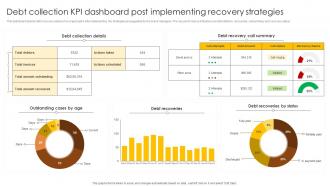
This dashboard depicts debt recovery status of an organization after implementing the strategies as suggested by the brand managers. The key performance indicators are total debtors, recoveries, call summary and recovery status.
People who downloaded this PowerPoint presentation also viewed the following :
Debt Collection KPI Dashboard Post Implementing Recovery Strategies with all 7 slides:
Use our Debt Collection KPI Dashboard Post Implementing Recovery Strategies to effectively help you save your valuable time. They are readymade to fit into any presentation structure.






FAQs for Debt Collection KPI Dashboard Post
So the big ones are collection rate and DSO - those are no-brainers. Right party contact rate matters too. Recovery rate by age bucket is huge though, like 30/60/90+ day stuff since old debt is basically a nightmare to collect. Track cost per dollar collected and agent productivity metrics. Oh and compliance stuff - seriously, one screw-up there can tank everything. My buddy learned that the hard way. Calls per hour is solid for measuring your team. I'd just build a basic dashboard with these and check weekly so you catch issues before they snowball.
Look, KPIs are like your collection operation's report card - they show you what's actually working versus what's just wasting time. Track stuff like recovery rates and how long collections take on average. Some agents might need extra help, others are crushing it. The whole thing becomes way clearer when you have real numbers to look at instead of just guessing. I'd honestly start small though - pick maybe 4 key metrics and check them weekly. That way you can tweak your approach before problems get too big. Focus your energy on whatever's actually bringing in cash.
So this metric is basically how fast you're turning those overdue accounts into actual money. Faster is obviously better - shows your collection process isn't broken. I always think of it like a speedometer for your team's performance, you know? You can spot where things are getting stuck and see which collectors are crushing it vs. struggling. When the number starts climbing, that's your cue to switch up contact strategies or maybe reprioritize accounts differently. Track it every month and use the data to help the slower performers get better. Pretty straightforward but super useful for staying on top of things.
So there's a few things you'll want to keep an eye on. Collection rate is your main number - basically what percentage of debt you're actually getting back in a given timeframe. DSO (days sales outstanding) shows how fast you're collecting stuff. Also break down recovery rates by how old the debt is, since older accounts are obviously way harder to collect on. Oh, and definitely track cost per dollar recovered - sometimes spending $50 to collect $60 isn't worth the headache, you know? I'd pull these monthly and see how you stack up against industry averages.
So first contact resolution basically tracks how often your team actually solves the debt issue in one call instead of dragging it out. Nobody wants to get called five times about the same thing - that's annoying for everyone involved. Plus it saves you money since each follow-up call costs more time and resources. Your agents who nail this usually have better training and know how to handle payment plans or objections right away. I'd definitely track it monthly because it shows you which reps might need some extra coaching. Higher rates mean you're running a tighter operation overall.
So you take your total collection costs and divide by what you actually recovered - like if you spent $10k and got back $100k, that's 10%. Pretty straightforward math. Here's why it matters though: you need to know if chasing this debt is even worth it financially. Breaking it down by collection method helps too - maybe your internal team runs 15% while those outside agencies you're thinking about cost 25%. Honestly, I've seen companies blow way too much on collections without tracking this stuff. Use these numbers when you're deciding where to spend your budget or which approach actually works.
Collection rate and recovery percentage are your main ones - shows who's actually bringing money in versus what they're assigned. Right-to-party contact is huge too since you can't collect if you can't reach anyone (seems obvious but tons of people miss this). Call volume, average call time, and promises-to-pay conversion tell you a lot. Settlement rates matter, but honestly compliance scores are where you really need to focus - one FDCPA screw-up kills months of solid work. Start there, then add quality scores from call monitoring once you've got the basics down.
Dude, debt age totally kills your collection numbers. Fresh debt? You'll probably recover like 70-80%. But anything over a year old drops to maybe 10-15% - it's brutal how fast it falls off. People start ignoring your calls, so contact rates tank. Your cost per dollar collected goes through the roof because agents waste time chasing people who've basically disappeared. Days sales outstanding gets worse too. I learned this the hard way at my last job - we kept throwing resources at old accounts when we should've been hammering the new ones first. That's where your best ROI is, trust me.
Look at what your team's actually hitting first, then bump targets up maybe 10-15% from there. Don't crush their souls with impossible numbers. Mix it up - track calls and contacts made, but also dollars collected and resolution rates. Most teams get way too hung up on just the money stuff honestly. Factor in things like how old the debt is and what types of accounts you're working. Oh, and seasonal patterns matter more than people think. Review quarterly and adjust based on what's really working, not whatever looks impressive in meetings.
Dude, collection software will save you so much time. It pulls all that data automatically - recovery rates, contact attempts, payment promises, agent stuff. No more spreadsheet hell every day. The dashboards actually look pretty good too, you can catch problems early instead of scrambling later. Weekly reports? They just send themselves to whoever needs them. I'd say start with whatever CRM you're already using since integration is usually easier that way. Then once you see how much time you're getting back, you can add more features. Trust me, the manual tracking gets old fast.
Yeah, there's definitely a sweet spot with this stuff. Call too little and people just forget about you - out of sight, out of mind, you know? But blow up their phone daily and they'll start dodging your calls completely. I've seen that backfire so many times. What works better is spacing things out strategically. Call right after payday when they actually have cash, or follow up exactly when you said you would. Consistency beats harassment every time. Track which frequency gets you the best payment rates - that's your golden number right there.
Look, your historical KPI data is basically a crystal ball if you know how to read it. Collection rates always tank 15% in December? Plan for it. Track your contact rates, payment promises, and recovery percentages from similar periods - I swear it's half science, half fortune telling sometimes. When first-call resolution drops for three straight months, your overall recovery's gonna follow. Set up monthly dashboards so you can tweak staffing or switch up strategies before things get ugly. The patterns don't lie, even when they're annoying.
Dude, you HAVE to track compliance KPIs - I can't stress this enough. Things like call frequency violations and documentation screw-ups will absolutely destroy you with FDCPA fines. Seriously, I've watched entire teams get wrecked by this stuff. Track improper contact attempts too. Here's the thing though - good compliance actually makes your collections better since debtors respond well to proper processes. Weird how that works, right? Set up automated monitoring and check it weekly. Catching problems early beats dealing with lawsuits later, trust me on this one.
ARM (Association of Credit and Collection Professionals) puts out solid annual reports with collection rates and recovery data by industry. Trade publications are honestly your best bet though - they're constantly publishing benchmark numbers. Hit up some industry conferences if you can swing it, people actually share real data when you're face-to-face. Credit associations and financial research firms also release studies with days to resolution metrics. I'd start by figuring out your top 3-5 KPIs first. Then hunt down those specific benchmarks from collection professional groups - way more efficient than trying to track down everything at once.
Don't just stare at one metric at a time - that's where everyone screws up. Sure, your recovery rate looks solid, but what if collection costs are through the roof? Or you're pissing off customers left and right? Debt collection is naturally all over the place too, so one killer month doesn't mean you've cracked the code. Compare stuff that actually makes sense - same time periods, similar situations. Honestly, I'd just build a simple dashboard with 3-4 key numbers so you can see how they move together. Way easier to catch problems early.
-
I had them make a presentation for an office retirement party. They were very helpful in understanding what we wanted and delivered the perfect presentation. Highly recommended!
-
Perfect template with attractive color combination.