

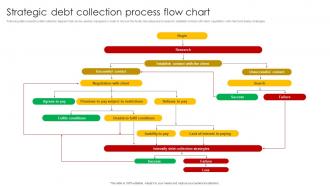
Strategic Debt Collection Process Flow Chart





Try Before you Buy Download Free Sample Product
 Impress Your
 Audience
 100%
100% Editable
 Save Hours
 of Time


Following slide presents a debt collection diagram that can be used by managers in order to recover the funds. Key steps are to research, establish contact with client, negotiation with client and deploy strategies.
People who downloaded this PowerPoint presentation also viewed the following :
Strategic Debt Collection Process Flow Chart with all 6 slides:
Use our Strategic Debt Collection Process Flow Chart to effectively help you save your valuable time. They are readymade to fit into any presentation structure.





FAQs for Strategic Debt Collection
Get your payment policy down in writing first, then stick to it religiously. Most people honestly just forget to pay - life gets crazy, you know? So I'd start with automated reminders before stuff goes overdue. After 15-30 days, switch to personal calls. Way more effective than being pushy right away. Payment plans work great when someone's genuinely struggling financially. Don't just write them off. Track everything in whatever system you use, and if nothing works after 90-120 days, that's when you call in a collection agency. Speed matters here.
Look, debt collectors are basically counting on you not knowing your rights. The Fair Debt Collection Practices Act actually protects you from their BS - no calls at crazy hours, no harassment, no lying about what you owe. When you know this stuff, you can call them out when they cross the line. You can demand they prove the debt's legit and negotiate from there instead of panicking. I swear these companies prey on people who don't realize they have options. Write down every conversation you have with them. Trust me on that one.
Ugh, debt collection rules are all over the place depending where you live. In the US there's the Fair Debt Collection Practices Act - basically no harassment, can't bug you super early or late, and they have to prove the debt's legit if you ask. European countries usually have even tighter rules protecting consumers. Some places cap how often they can contact you or make them send letters before calling. Laws change pretty often though, which is annoying. I'd honestly just find a local lawyer who deals with this stuff - yeah it costs money upfront but way better than accidentally breaking rules later.
Honestly, tech is a game-changer for debt collection. Start with automated dialing - you'll reach way more people without your team going crazy. AI can predict which accounts will actually pay (pretty cool stuff). Chatbots handle the basic first contacts, and digital payment platforms let people pay immediately instead of mailing checks like it's 1995. Analytics help you see what's working in real time. My advice? Don't roll everything out at once though. Pick one system, let your team get comfortable, then add more. Otherwise you'll just stress everyone out and nothing will work right.
Yeah, so collections absolutely trash your credit score - we're talking 50-100+ points depending where you started. But here's what most people don't know: you can actually negotiate with these collectors. Ask for "pay for delete" when you settle - basically they remove it from your report entirely. Way better than just paying it off, because even paid collections stick around for 7 years otherwise. I learned this the hard way with an old medical bill. Collectors honestly expect people to negotiate, so don't just accept their first offer.
Dude, you gotta be persistent but not a total dick about it - that's literally the magic formula. Start friendly with emails and calls, lay out what they owe and how they can pay. So many companies jump straight to being assholes which just pisses people off. Let them set up payment plans if they need to. Write down every conversation and follow up on a schedule. Automated reminders are clutch so you're not manually tracking everything. Stay professional but make it clear you're not going away. Oh and give them multiple ways to reach you back!
Look, it's pretty straightforward - don't be a jerk when collecting debts. Be upfront about what's actually owed and don't harass people with constant calls or threats. You can't discuss someone's debt with random family members either, that's their private business. Calling super late or lying about who you are? Total no-go. Most of this stuff falls under FDCPA rules, but honestly it's just basic decency. Oh, and document everything you do - covers your butt later. Would you want some collector treating your mom or sister like garbage? There's your answer.
So the FDCPA is basically for third-party debt collectors - doesn't cover you collecting your own stuff. Can't call before 8am or after 9pm, can't harass people or be deceptive about it. They're also not allowed to discuss the debt with anyone except the actual debtor. Pretty basic "don't be awful" rules, but apparently some collectors needed that spelled out for them. Oh, and they can't use those sketchy tactics you hear about. If you end up hiring a collection agency, just make sure they follow FDCPA rules so it doesn't come back to bite you.
Honestly, most people think debt collectors can just do whatever they want - like they'll show up at your house or throw you in jail for unpaid bills. That arrest thing is such BS and scares people for no reason. Truth is, they can't garnish your wages without going to court first. There are actually strict federal rules (the FDCPA) about when they can even call you and what they're allowed to say. They love making you think you're powerless, but you've got way more rights than they want you to know about.
Dude, staff training is honestly a game-changer for collections. Your team needs to know the regulations cold - saves you from expensive violations and keeps customers from hating you. Good training bumps collection rates by like 20-30%, which is nuts. They learn how to actually talk to people, de-escalate situations, and negotiate payment plans that stick. Communication skills matter way more than being pushy, trust me. Start with compliance stuff first so nobody gets sued, then work on the soft skills. That's where the real money is. Oh, and make sure they know what's illegal - that's kinda crucial.
Don't ignore those letters - seriously, it just makes everything worse. They'll blow up your phone even more and trash your credit score. Plus they can actually take you to court over it. Your credit getting wrecked will screw you over for apartments, loans, maybe even jobs later. I get it though, throwing those letters away feels so much easier (I've totally wanted to do the same thing). But the debt's still gonna be there. Write them back instead - dispute it if it's bogus or see if you can work out some kind of payment plan that won't destroy your budget.
Honestly, it's all about not being a jerk to people who owe you money. When you actually listen to their situation instead of just barking demands, they'll work with you on solutions. Be upfront about fees, offer payment plans that make sense. Nobody wants to feel like just another overdue account - I mean, would you? If you treat people decently, they'll call YOU when money gets tight instead of dodging your calls for months. They might even pay you first when funds are limited. Train your collectors to solve problems, not pick fights. Way more effective than the whole aggressive approach.
First thing - get the real numbers from them. Income, expenses, what they can actually pay each month. Don't just take their lowball offer either. I always throw in a small discount if they'll do automatic payments or pay a chunk upfront - works like magic honestly. Write everything down and make them agree to it before you're done. People "forget" to pay way too often, so autopay is your friend. Oh, and set specific dates to check how it's going. Two missed payments? Time to have another conversation instead of letting this thing drag out forever.
Look at your payment patterns and figure out which accounts actually pay up. Track who responds to what - younger people might text back but older folks probably want a phone call. Honestly, it's like having a cheat sheet for who's worth your time. Start simple: just track your collection rates by age, amount owed, whatever makes sense. Then use that info to focus on the accounts that'll actually pay instead of chasing dead ends all day. The data shows you exactly which strategies work for different types of people.
Ugh, dealing with deadbeat customers is the worst. Stay professional though - document every single interaction and stick to your process. Send those formal demand letters, make your calls, keep records of everything. Yeah, some people will totally ghost you (seriously annoying), but don't let that throw you off track. After you've made reasonable attempts, time to escalate - collection agency or legal action. Be persistent but don't cross into harassment territory, obviously. Know your legal limits and when it's time to pass things off to the pros. Sometimes you just gotta accept that not everyone pays up easily.
-
Great quality slides in rapid time.
-
Perfect template with attractive color combination.