

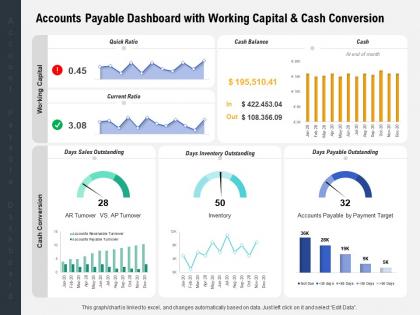
Accounts payable dashboard with working capital and cash conversion




Try Before you Buy Download Free Sample Product
 Impress Your
 Audience
 100%
100% Editable
 Save Hours
 of Time


Our Accounts Payable Dashboard With Working Capital And Cash Conversion are topically designed to provide an attractive backdrop to any subject. Use them to look like a presentation pro.
People who downloaded this PowerPoint presentation also viewed the following :
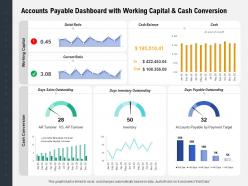
Accounts payable dashboard with working capital and cash conversion with all 2 slides:
Use our Accounts Payable Dashboard With Working Capital And Cash Conversion to effectively help you save your valuable time. They are readymade to fit into any presentation structure.
FAQs for Accounts payable dashboard with working capital
So you'll need invoice workflows, vendor databases, approval chains, and payment scheduling - the usual stuff. Honestly, segregation of duties is huge though. Don't let one person both approve AND cut checks (trust me on this one). Documentation first - map out what you're doing now, then figure out where it's breaking down. Good reporting helps you track aging and cash flow trends. Integration with your ERP keeps things from getting messy. Oh, and analytics for vendor performance if you're feeling fancy. Just tackle your biggest headaches first with whatever automation makes sense.
Dude, AP automation is honestly a lifesaver. Manual data entry? Gone. Processing time drops from days to literally hours. The system automatically routes invoices to whoever needs to approve them based on dollar amounts and department rules - you set it up once and forget about it. It even catches duplicates and weird errors before they mess things up. The ERP integration is seamless too, everything just syncs without you doing anything. Oh, and start with invoice capture and approval workflows first. Those two features alone will save you the most time and headaches right off the bat.
Honestly, start with just 2-3 metrics or you'll drive yourself crazy. Days payable outstanding (DPO) tells you how long you're taking to pay suppliers. Invoice processing time is clutch - tracks everything from when it hits your desk to final approval. Cost per invoice is where companies get their minds blown though, seriously calculate this one! Also track your early payment discount capture rate and on-time payment percentage so you're not bleeding money on late fees. Get consistent with tracking these first, then you can always add more later.
Look, vendor management is literally the backbone of your whole AP process. It controls how smoothly everything flows from purchase to payment. You're handling vendor onboarding, keeping contact info updated, negotiating terms - plus building relationships that actually matter when things go sideways. Good vendor relationships will save you when invoices get messy or disputes pop up. You'll also spot early payment discounts and better terms. The trick is keeping your vendor database current, because outdated info just creates payment delays. Trust me, frustrated suppliers will definitely let you know about it (learned that one the hard way).
First thing - split up who approves invoices vs who writes checks. Never the same person! Then set up three-way matching: match your purchase orders, receiving reports, and invoices before you pay anything. I've seriously seen so many fake vendor scams that could've been stopped right there. Keep an eye on your vendor list too - audit it for duplicates or weird entries. New vendors should need two people to approve them. Oh, and watch for sketchy stuff like "pay me ASAP" requests or random bank account changes. Start with the three-way matching though - it'll catch most problems.
Ugh, the worst parts are definitely invoice delays and duplicate payments - feels like you're drowning in paperwork half the time. Automated invoice matching is your best friend here, plus setting up proper approval workflows. Vendor disputes are annoying too, but a good centralized database with clear payment terms helps tons. Cash flow stuff will always be tricky (honestly my least favorite part), though payment schedules and early discounts make it manageable. Just get everything standardized first - your team will thank you for not having to figure it out from scratch every time. Automation changed everything for us accuracy-wise.
Honestly, payment terms are like your cash flow remote control. Net 60 gives you breathing room to collect money before you have to pay out, but Net 15? That's brutal - cash flies out before it even hits your account. I'd push for the longest terms suppliers will give you without pissing them off. Here's what works: figure out how long it takes you to actually get paid by customers, then try to get payment terms that match or beat that timeline. You want at least a little cushion so you're not constantly scrambling for cash.
First thing - get your approval workflow sorted with clear authorization levels. Digital processing will save your sanity, trust me on this one. Do the three-way match every time (invoice, PO, receipt) before paying anything. Capture invoices right when they come in and get them to the right people fast. Automated reminders are clutch for those approvers who drag their feet. Honestly, half the battle is just getting everyone to follow the same process consistently. Otherwise you're looking at missed payments and vendors breathing down your neck.
Honestly, your AP team talks to vendors way more than anyone else - they're dealing with payment questions and problems every single day. Pay on time, give them a heads up if something's delayed, and fix disputes fast. Trust me, I've watched companies score better terms just because their payment process didn't suck. Quick payments make suppliers actually like working with you. The data helps too - you can spot which vendors are solid and push for better deals. Basically, think of AP as managing relationships instead of just pushing paperwork around. Suppliers get way more flexible when they don't hate you.
So the biggest game-changers right now are AI invoice processing, RPA, and blockchain for vendor stuff. AI can actually read invoices and pull out all the data automatically - saves so much time vs typing everything in manually. RPA takes care of boring tasks like matching purchase orders and sending approvals around. Cloud platforms are pretty solid too since they put everything in one spot, plus mobile apps so you can approve things from wherever. Blockchain's still kinda experimental but could be cool for tracking changes. Honestly though? Start with the AI invoice thing - that's where you'll actually notice a difference day one.
So AP basically controls your cash flow and all those financial ratios investors care about. The trick is timing your payments right - you want to hold onto cash as long as possible without pissing off your vendors. Mess this up and your current ratio looks terrible, plus auditors start sniffing around asking uncomfortable questions. Your income statement gets hit through expense timing, and obviously it shows up as current liabilities on the balance sheet. Honestly, I've seen companies get way too aggressive with payment delays and then wonder why suppliers won't work with them anymore. Use those payment terms smartly, but don't be that customer everyone hates dealing with.
Honestly, centralizing AP is probably your best move. You'll get way better control over cash flow and can actually see what's happening with your money. Each department doing their own thing might seem flexible, but it usually just turns into a mess - duplicate payments, no consistency, the whole deal. The cost savings are real too. Better vendor negotiations, fewer people needed to run the process. Sure, departments lose some autonomy, but the efficiency boost is worth it. Oh, and compliance becomes so much easier when one team handles everything instead of trying to wrangle five different processes. Start with your biggest spend categories first - way less painful than going all-in immediately.
Honestly, get your controls and documentation sorted right from day one. Capture all the tax stuff you need and keep detailed records - auditors love those. Your industry matters too - healthcare has way more hoops to jump through than others. Set up a solid approval workflow so you can track who signed off on what and when. Regular compliance checks are clutch. Oh, and keep your team in the loop when regulations change (because they always do). Really though, just invest in decent AP software with built-in compliance features. Manual processes? That's where everything falls apart.
Your AP team needs regular training on fraud prevention, automation tools, and compliance stuff. The landscape changes crazy fast with new tech and threats - way more than just invoice processing these days. Get them learning electronic payments, vendor management, and data analytics for spend optimization. Industry webinars are solid, or certifications from IOFM or AFP if you want to go that route. Don't do one-and-done training though, that's useless. I'd set up quarterly sessions to keep everyone current. Honestly, the teams that stay on top of this stuff perform way better than the ones who don't.
Oh man, this stuff gets tricky fast when you're dealing with multiple countries. Payment terms are all over the place - US companies expect 30 days but good luck with that in Europe where 60-90 days is totally normal. Your vendors will want completely different invoice formats too. Some cultures are super formal about documentation, others just want to chat it out based on relationships. Holiday schedules mess everything up (don't even get me started on August in France). Banking systems work differently everywhere, and honestly? Some places are way more chill about late payments than others. Just map out what each region expects first.
-
Very well designed and informative templates.
-
Unique design & color.
-
Very unique and reliable designs.
-
Awesomely designed templates, Easy to understand.