


Credit Approval Flow For Customer Purchases




Try Before you Buy Download Free Sample Product
 Impress Your
 Audience
 100%
100% Editable
 Save Hours
 of Time


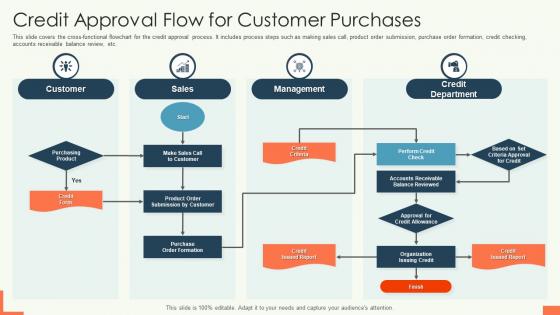
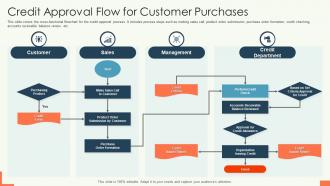
This slide covers the cross-functional flowchart for the credit approval process. It includes process steps such as making sales call, product order submission, purchase order formation, credit checking, accounts receivable balance review, etc.
People who downloaded this PowerPoint presentation also viewed the following :
Credit Approval Flow For Customer Purchases with all 6 slides:
Use our Credit Approval Flow For Customer Purchases to effectively help you save your valuable time. They are readymade to fit into any presentation structure.





FAQs for Credit Approval Flow
So lenders basically check four main things: your credit score, income, how much debt you already have, and job history. Credit score is probably the biggest deal - it shows them whether you've been good with money before. They'll want proof you actually make enough to cover payments, obviously. Your debt-to-income ratio matters too because if you're already drowning in payments, they won't want to add more. Employment stuff is just making sure you're not jumping jobs every few months, which honestly makes sense from their perspective. Different lenders weight these differently, but work on improving those areas before you apply and you'll have way better chances.
So basically, your credit score is like your report card to lenders. Anything above 740? You're golden - best rates, easy approvals. Between 670-739 is still pretty solid, though you might pay a bit more in interest. Once you drop below 670, that's when things get messy - more rejections, way higher rates. VantageScore and FICO work almost the same but weigh factors a little differently. Honestly, the difference between "good" and "excellent" credit can save you serious money over time. If you're close to that next tier, maybe wait a few months to bump your score up first?
So you'll need the usual stuff - pay stubs or tax returns for income proof, your ID, and bank statements from the past few months. Employment verification is big too, and honestly some lenders are super annoying about that part. Don't forget proof of address like utility bills or your lease. They'll also want to know about any debts or assets you have. Requirements change depending on the lender and loan type, but if you get all this together first it'll make the whole process way smoother. Trust me on that one.
Here's what worked for me when I was going through this whole mess - focus on your credit score, debt-to-income ratio, and job stability. Pay down what you owe and don't miss any payments. Seriously, banks are obsessed with steady income, so having the same job for two years is gold. Oh, and don't go crazy applying everywhere at once since that'll tank your score. Check your credit report first too - I found some random error on mine that was dragging me down. Small fixes in these areas can flip a "no" into a "yes" pretty quick.
Yeah, your job history matters a ton for credit stuff. Lenders basically want to see you're not gonna flake on payments, so they check how stable your work situation is. Two years at the same place is usually the magic number, but they'll look at your whole pattern too. Constantly switching jobs? That freaks them out. Your income consistency matters just as much as the actual amount - learned that one the hard way. Oh, and if you're thinking about changing jobs soon, maybe hold off until after you apply. The timing can really mess things up.
So basically they take your monthly debt payments and divide by your gross monthly income. There's front-end (just housing) and back-end (everything - credit cards, car loans, whatever). Most want under 36-43% for the back-end ratio, though some programs go higher. Honestly it's huge for getting approved. Lower ratio = better chances and rates. Oh and definitely run your own numbers first - add up all your monthly payments and see where you land. If you're cutting it close, maybe pay down some stuff before applying. Trust me on this one.
Ugh, loan rejections suck but it's usually one of a few things. Your income might not be high enough - they want to see like 3x your monthly debt payments. Credit history matters too, especially missed payments from the last couple years. Maxed out credit cards are a huge red flag since it shows high utilization. Sometimes it's just stupid simple stuff like incomplete paperwork or not hitting their minimum requirements. Oh, and credit report errors can totally screw you over. I'd pull your report first and clean up any mistakes, then focus on paying down balances. Your debt-to-income ratio makes a big difference honestly.
So personal loans are way more thorough - they'll want to verify your income, check your debt ratios, basically scrutinize everything since you're asking for a chunk of cash upfront. Credit cards? They're mostly looking at your credit score and spending habits. Way faster approval too, sometimes literally minutes vs days for personal loans. I always think of credit cards as the "quick money" option when you're in a pinch. But honestly, if you need a bigger amount for something specific, personal loans have much better interest rates. Just depends what you're dealing with really.
Yeah, those recent inquiries can hurt your chances. Hard pulls usually knock a few points off your score, and lenders get sketchy when they see someone applying everywhere - looks desperate, you know? Here's the thing though: if you're shopping for the same loan type (like comparing mortgages), multiple inquiries within 2-6 weeks only count as one. Pretty smart system actually. It's the random scattered applications over months that'll mess you up. Credit card here, auto loan there... that adds up fast. My advice? Space things out and only apply when you're actually ready to pull the trigger.
Look, collateral is basically your golden ticket for getting approved. Lenders love it because they know they can grab your car or whatever if things go south. Your credit's kinda meh? Doesn't matter as much when you've got something backing the loan. Plus you'll usually score better interest rates too. Just make sure whatever you're putting up is worth more than what you're borrowing – learned that one the hard way with my cousin's situation last year. Bottom line: dig around and see what assets you can use before you apply.
Yeah, you can totally appeal that! Call them right away and ask exactly why they said no. Then ask to talk to a supervisor or someone higher up - they usually have more wiggle room than the first person you talk to. Bring any extra paperwork that fixes whatever they were worried about. Pay stubs, bank stuff, whatever explains the issue. Also ask about secured cards as a backup option. Honestly, being persistent works way better than most people realize. Just don't wait around - they're most likely to change their mind in the first couple days after rejecting you.
Most applications get processed by computers now - they're super fast but totally inflexible about credit scores and debt ratios. When things get messy, that's when actual humans jump in. The automated systems are getting scary good, honestly, but they still can't figure out nuanced stuff like why your student loans were deferred. Don't freak if yours gets sent for manual review though. It usually just means your situation is too complicated for the algorithm to handle - maybe you're self-employed or have weird income timing. Human reviewers can actually see the bigger picture.
Honestly, the whole lending space is moving crazy fast right now. AI models can approve loans in seconds instead of weeks - it's pretty insane. Lenders aren't just looking at credit scores anymore either. They're pulling data from your bank transactions, phone usage, even social media stuff (which feels kinda invasive but whatever). Open banking makes it super easy to verify income instantly too. Machine learning has gotten really good at figuring out who'll actually pay back loans. If you're working in lending, definitely look into alternative data sources. Could help you approve more people while cutting down on defaults.
So basically, low income creates this whole mess with credit approvals. People end up with spotty credit history and sky-high debt ratios. Plus they're stuck in areas where banks barely exist. Then what happens? They can't get regular banking, so they hit up payday loans instead - which obviously doesn't help their credit at all. The whole thing's rigged, honestly. When emergencies hit, keeping up with payments becomes impossible if you're already scraping by. Oh, and here's a thought - lenders should start looking at rent payments or utility bills too. That'd actually show who's responsible with money.
Honestly, reg changes are such a pain but they totally flip how we handle credit approvals. New compliance stuff means different documentation standards and risk criteria. Income verification gets tougher, debt-to-income ratios tighten up, consumer protection rules slow down timelines - you know the drill. What really gets me is how it affects which loan products we can even offer anymore. The structure changes too. Your team needs to watch for updates constantly (I swear they come out of nowhere sometimes) and tweak workflows before those deadlines sneak up. Trust me, staying ahead of this stuff saves so many headaches later.
-
SlideTeam’s readymade presentations have landed my unique images with my bosses in the past and it continues to reward me.
-
You know what? I'm so glad I opted for this PPT design. It has been a total game-changer for me and my presentations. Thank you!