Customer sales service process flow

Customer sales service process flow
Slide 1 of 2
Favourites Favourites

Try Before you Buy Download Free Sample Product

Audience Impress Your
Audience
Editable 100%
Editable
Time Save Hours
of Time
The Biggest Sale is ending soon in
0
0
:
0
0
:
0
0
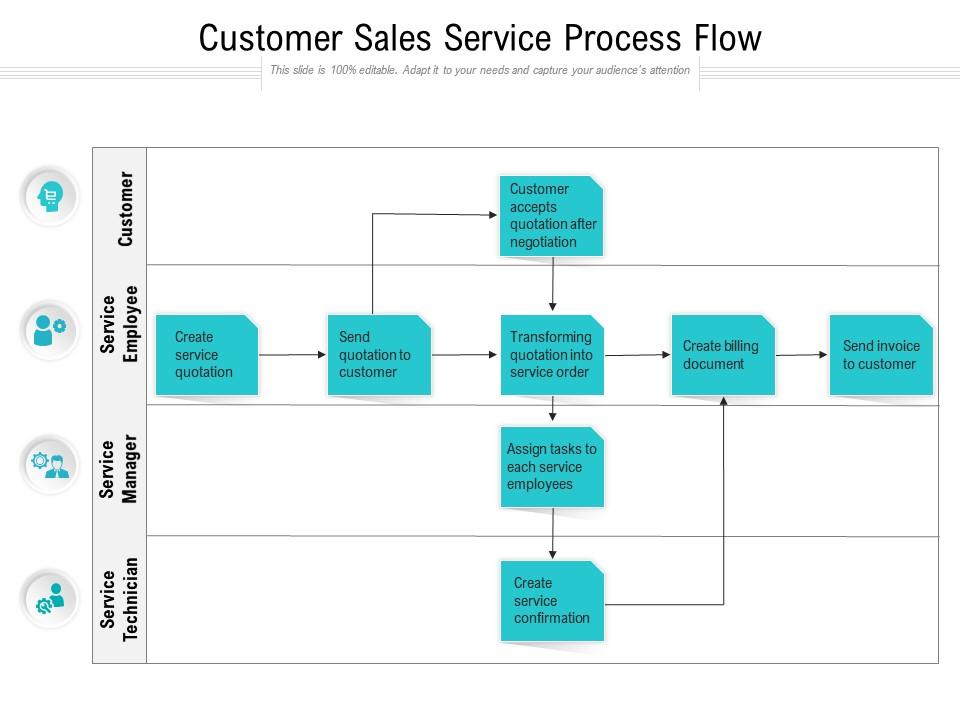
Presenting this set of slides with name Customer Sales Service Process Flow. This is a four stage process. The stages in this process are Service Technician, Service Manager, Service Employee, Customer. This is a completely editable PowerPoint presentation and is available for immediate download. Download now and impress your audience.

FAQs for Customer sales

So basically it breaks down into five main parts: greeting them, actually listening to what's wrong, digging into the problem, fixing it, then checking back later. Honestly, most people mess up the listening step because they're rushing to solve everything. Don't do that. Each part should feel natural - like you're not just following some script, you know? Always double-check with them before jumping to the next thing. The follow-up is huge too since it proves you weren't just trying to get rid of them. Oh, and start keeping notes on where your calls usually go sideways - you'll spot patterns pretty quick.

You'll need both hard numbers and the softer stuff to really get it. CSAT scores, NPS, first-call resolution rates, response times - those are your basics. But honestly? The real gold is in customer feedback and complaints because that tells you *why* your numbers suck (or rock). Don't just check once and call it done - track everything monthly so you can spot trends. I'd set up a simple dashboard mixing both types of data. Oh, and use what you find to actually fix training gaps or wonky processes. The feedback part is way more valuable than most people think.

Honestly, tech can totally transform your customer service game. Chatbots handle the boring FAQ stuff 24/7. Your actual team gets to work on complex problems that need real human brains. CRM systems give agents instant customer history - no more "can you repeat your issue for the third time" nonsense. Ticketing systems automatically route problems to the right department. Knowledge bases let customers help themselves, which most people prefer anyway. Just make sure whatever tools you pick actually work together. Nothing's worse than buying a bunch of software that doesn't talk to each other. I'd start by figuring out where you're bleeding the most time and fix those spots first.

Role-playing is where I'd start - way more effective than boring lectures. Get them practicing with fake angry customers and return situations. Product training's crucial too because nobody wants to hear "I dunno" when they need help. Active listening stuff works great, plus some basic conflict resolution. Oh, and don't make it a one-and-done workshop thing. Monthly sessions where they can share their horror stories and figure out solutions together? That's gold. People actually remember what they practice, not what they read in some manual.

Ugh, the worst stuff is always wait times and your agents not knowing what the last person told the customer. So annoying when people get bounced around! Queue management helps a ton - also get everyone using the same scripts and knowledge base so answers stay consistent. Honestly, a good CRM that shows the full customer history is like... game changing. Your agents will actually know what's going on. Oh and definitely train people regularly on both the technical stuff and how to not sound like robots. Start by just asking your team what's driving them crazy day-to-day.

Look, customer feedback is like having a roadmap to all your blind spots. When people complain about the same thing over and over, that's your cue to fix whatever's broken in your process. It also shows you which team members might need extra help - though nobody likes hearing that part. Here's what I've learned: don't just collect feedback and let it sit there gathering dust. Actually do something with it. The positive stuff matters too because it tells you what's working. Set up time each week to go through everything and turn the biggest problems into real changes. Otherwise you're just asking people to waste their time telling you things you won't fix.

Communication is honestly everything in customer service - like, it can completely make or break the whole experience. When your team listens well and speaks clearly, customers actually feel heard instead of brushed off. Poor communication? That's how you get angry callbacks and terrible reviews. I've seen teams cut their resolution times in half just by getting better at this stuff. The trick is acknowledging what the customer said first, then being super specific about your solution. Oh, and always follow up - people remember that. Start by teaching your reps to repeat back the problem before they dive into fixing it. Trust me, it works.

Honestly, just start with their name and what they've bought before - it's not rocket science but people love it. Don't treat your VIP customers like newbies though, that's always awkward. Train your team to actually listen instead of reading scripts word-for-word. Keep good notes in your CRM so when they call back, you're not starting from zero again. Oh, and segment your customers properly - a first-time buyer shouldn't get the same treatment as someone who's been with you for years. Pick one thing to focus on first, then add more personalization tricks as you go.

Just breathe and let them get it all out first - don't jump in to defend yourself. Even when they're being totally unreasonable, acknowledge that they're frustrated (I know it sounds backwards but it actually works). Tell them what you CAN do instead of listing what you can't. Some people are just having the worst day ever and you happened to be there, you know? Document the whole thing though. And honestly, if they start being abusive, that's when you get your manager involved - don't try to be a hero. Leave that drama at work when you clock out.

You gotta measure both speed AND how happy customers actually are. Response times and ticket volume show if your team's keeping up. But then check CSAT scores and first-call resolution - that's where you see if people are genuinely satisfied or just... dealt with, you know? Agent stuff matters too though - call times, how often things get escalated. The annoying part is you can't just focus on being fast because that usually tanks your satisfaction ratings. I'd honestly start with maybe 3 key metrics that actually align with what your company cares about, then add more later once you've got those dialed in.

Yeah totally! Bots are great for the boring stuff - order tracking, basic FAQs, that kind of thing. Most people actually want quick answers for simple questions anyway. But here's the thing - always make it super easy to get to a real person when things get complicated or someone's pissed off. I'd start by figuring out which conversations actually need human intervention. Train your team so handoffs feel smooth, not clunky. Oh and don't try to trick people - just be upfront about when they're chatting with a bot versus talking to someone real.

Try to jump on it within an hour if you can. Post something public first - just acknowledge you see the problem - then take the real conversation private through DMs or a call. Twitter warriors can be absolutely brutal, but don't let them bait you into getting snippy. Use their actual name when you respond, say sorry if you screwed up, and circle back later to make sure everything's actually fixed. The whole point is showing everyone else who's lurking that you don't just ignore complaints. Oh, and set up those mention alerts so nothing slips through the cracks.

Honestly? Hire people who actually give a damn about helping others - that's like 80% of it right there. Give your team real power to fix problems instead of making them ask permission for everything. I know it sounds obvious, but leadership has to show they care through bonuses and recognition, not just empty meeting talk. Regular training's good too. Oh, and create ways for your team to learn from mistakes without getting crucified for them. Celebrate when someone kills it with a difficult customer. Start by just asking your current people what's blocking them from doing their job well.

Dude, ignoring customer service while you're growing is such a rookie mistake. Response times go to hell. Quality gets all over the place. People start feeling like they don't matter to you anymore - because honestly, they probably don't at that scale. Your churn rate will absolutely tank you since customers bail for companies that actually pick up the phone. Meanwhile your team's drowning and getting burned out. It kills your rep, ruins word-of-mouth, stunts revenue growth. Seriously though, build that CS foundation early before you're scrambling to fix everything.

Honestly, getting departments to actually work together is a game changer. Your customers stop getting bounced around like ping pong balls. When support can pull in the product team directly, people get real answers instead of that "let me get back to you" runaround. The other teams finally hear what customers are actually complaining about too - which helps them fix stuff before it becomes a bigger mess. You need solid communication channels though, not just hoping people check Slack. I'd start by figuring out what issues come up most and creating fast ways to loop in the right people.

Ratings and Reviews

0% of 100
Review Form
Write a review
Most Relevant Reviews

No Reviews