

Credit card processing process flow powerpoint graphics




Try Before you Buy Download Free Sample Product
 Impress Your
 Audience
 100%
100% Editable
 Save Hours
 of Time


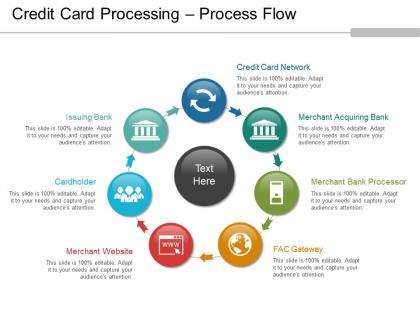
If you are planning to create a professional presentation to showcase the credit card processing process, then download our ready to use a credit card processing process flow PowerPoint graphics. A team of professional graphic designers has created this stunning PPT template. This credit card processing work presentation diagram represents seven steps circular process using which you can highlight the various stages for the credit card process. Various stages represented by this fantastic credit control PowerPoint template are credit card network, merchant acquiring bank, merchant bank processor, FAC gateway, merchant website, cardholder and issuing bank. Our graphics designer have used editable icons and graphics which make this template stunning and professional. Applying this template design in your presentation, you will be easily able to attract the attention of the audience. Using this credit process management presentation template, you will be easily able to explain the concept of merchant services, online transaction processing, retail financial services, transaction processing quality, payment gateway and many. We believe in providing the best template diagrams at an affordable price. So, hurry up and download this editable credit card process flow PowerPoint slide with a click. Use our Credit Card Processing Process Flow Powerpoint Graphics like an easel. Paint a pretty picture with your views.
People who downloaded this PowerPoint presentation also viewed the following :
Credit card processing process flow powerpoint graphics with all 5 slides:
Earn respect from your colleagues and senior managers with the help of our carefully prepared PowerPoint Templates and Slides. Sell your ideas with little effort.

FAQs for Credit card processing process
So you've got a few key players in this whole thing. You're the merchant, obviously. Then there's your payment processor - they're basically your main contact for everything. Card networks like Visa and Mastercard are in the mix too, plus the customer's bank that issued their card. There's technically an acquiring bank involved, but whatever - your processor deals with them so you probably won't. When someone swipes, all these companies ping each other super fast to check funds and move the money. Takes seconds but like 4-5 different parties are working behind the scenes. Honestly just focus on picking a solid processor since you'll be dealing with them the most.
So when someone swipes their card, it's pretty wild how fast everything happens. The payment processor shoots the transaction info to the card network - Visa, Mastercard, whatever. Then it goes to the customer's bank to check if they've got enough money and if it looks legit (not some fraud thing, basically). Takes like 2-3 seconds tops, which honestly still amazes me sometimes. The bank sends back yes or no through the same route. But here's the catch - this just holds the money for you. You still gotta actually capture it later to get paid for real.
Okay so you'll need three big things: encryption, tokenization, and PCI compliance. Encryption locks up all the card data when it's moving around or stored - basically makes it unreadable to hackers. Tokenization swaps out real card numbers with random fake ones, so stolen data is worthless. PCI compliance isn't really optional either, it's like your insurance policy. Oh and definitely get fraud detection running to catch weird patterns. Multi-factor authentication too for system access. Honestly, don't even think about processing payments until you've got these basics covered - it's not worth the risk.
Ugh, interchange fees are the worst - they're basically the card networks' cut from every sale you make. You can't escape them either. What's annoying is premium cards charge way more than basic debit, so your costs fluctuate based on how customers pay. Most processors don't show you these fees clearly though - they'll bundle everything together which is super shady. When you're comparing processors, definitely push for interchange-plus pricing. Yeah it sounds boring but you'll actually see what you're paying instead of guessing. Trust me on this one.
So basically it's the middleman that handles all the card info between your site and whoever processes the payment. Customer clicks pay, gateway encrypts everything and sends it off for approval. Then it tells you whether it went through or got declined. Pretty straightforward stuff really. You literally can't take payments online without one - there's no other way to safely handle people's card details. Just make sure whatever you pick plays nice with your current setup. I'd probably shop around a bit since they're not all the same.
So chargebacks are basically consumers vs merchants fighting over transactions. As a buyer, they're awesome protection - you can reverse sketchy charges without much hassle. Merchants hate them though. They lose the money AND pay fees ($15-100 each time). Such a pain. Plus they have to gather paperwork to dispute it. The system totally favors consumers, which makes sense for fraud stuff, but merchants often get screwed even when the chargeback's bogus. My advice? If you're buying, don't abuse it. If you're selling, have crystal clear policies and solid customer service to avoid the headache.
Honestly, AI fraud detection is huge right now - catches sketchy transactions in milliseconds. Contactless payments are everywhere too (I literally can't remember the last time I inserted my chip). Real-time payment systems settle instantly now instead of that annoying 2-3 day wait. Blockchain's popping up for international transfers, and tokenization replaces your actual card numbers so hackers just get useless random digits. Everything works together to make checkout faster and safer. Check what tech your processor's using though - it directly impacts your fees and how smooth things run for customers.
PCI compliance is basically your security rulebook for handling credit card data - covers everything from storage to transmission. Your payment processor needs to be compliant (obviously), but you've also got to encrypt data when it moves around and lock down your payment systems. The storage protocols are honestly pretty intense - lots of hoops to jump through. It also affects which payment methods you can actually use and how you connect with gateways. Oh, and audit your systems regularly because the fines for screwing this up are brutal. Plus they can literally cut off your ability to process cards, which would be a nightmare.
So tokenization swaps out your real credit card number for a random fake one when you buy stuff. Your actual number never sits in the store's system. Pretty clever, right? If hackers break into Target or whatever, they just get worthless tokens instead of card numbers they can actually use. I mean, retailers get breached all the time these days. When you're picking a payment processor, definitely check they use tokenization - honestly it's become kind of a dealbreaker if they don't. Your customers will thank you later.
Basically when you swipe in-store, they've got your physical card plus PIN or signature - way more secure. Online is riskier since there's no actual card, so processors charge you more. You'll need extra stuff like CVV checks too which is kinda annoying. The actual authorization process works the same either way though. But yeah, expect online fees to be like 0.5-1% higher than in-person transactions. It's just the price you pay for that convenience factor, I guess.
Ugh, PCI compliance is honestly the worst part - so much paperwork and security stuff to wade through. Your APIs will probably hate you if your current setup wasn't built for payments. Between setup costs, transaction fees, and monthly charges, you'll be bleeding money faster than you think. Failed transactions are a special kind of hell when you're dealing with multiple gateways. Pro tip though - pick a processor with decent docs and give yourself way more testing time than seems reasonable. Trust me on that last part, I learned the hard way.
So basically international payments are way more complicated than regular ones. Your transaction has to bounce through different card networks and do currency conversion in real-time - honestly such a headache. Plus they run extra fraud checks which slows everything down. Settlement takes like 3-4 days instead of the usual day or two. Oh and the fees are higher since more companies get their cut along the way. I learned this the hard way when I first started processing international orders. Just build those delays and extra costs into your pricing from the start so you're not scrambling later.
Honestly, most people think payments happen instantly - they don't. There's this whole dance between processors, card networks, and banks that takes time. Also, processors aren't interchangeable despite what some people assume. They're wildly different in pricing and features. Oh, and here's something that trips everyone up - you can't negotiate interchange fees. Visa and Mastercard set those rates, period. When cards get declined, customers always blame the store, but it's usually just their bank being overly cautious. My advice? Really dig into your processor's fees and how long settlements take. You'll save yourself headaches later.
Honestly, start by ditching those tiered rate processors - they're basically designed to confuse you. Look for interchange-plus pricing instead, it's way clearer what you're actually paying. Don't just sit there either, negotiate every year because these companies will happily overcharge you forever if you let them. Push customers toward debit cards when you can, and definitely set up ACH for regular payments. Oh, and check you're not getting dinged for random stuff like PCI compliance violations. The real killer though? Chargebacks. Process everything fast and keep those disputes down - those fees will wreck your bottom line quick.
Real-time payments are basically everywhere now - nobody wants to wait 3-5 business days anymore. Fraud detection using AI has gotten scary good too. COVID totally changed the game for contactless stuff, and buy now/pay later is eating into credit card space like crazy. Oh, and embedded finance is huge - companies want payments built right into their own platforms instead of bouncing users around. Honestly, when you're shopping processors, real-time capabilities and solid fraud protection aren't optional anymore. Those used to be premium features but now they're just expected.
-
The Designed Graphic are very professional and classic.
-
Wonderful templates design to use in business meetings.