

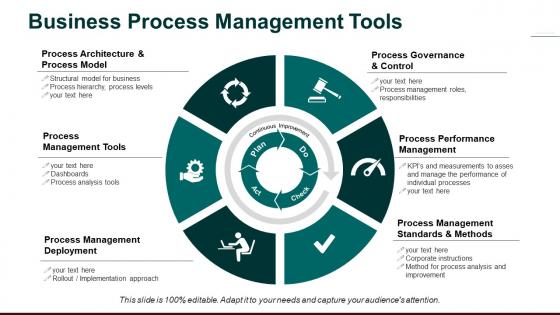
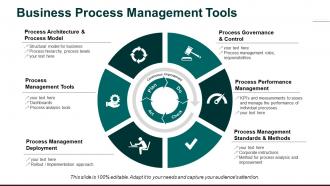
Business process management tools process management tools process performance management





Try Before you Buy Download Free Sample Product
 Impress Your
 Audience
 100%
100% Editable
 Save Hours
 of Time


Freedom gets a boost with our Business Process Management Tools Process Management Tools Process Performance Management. Folks find their fears disappearing.
People who downloaded this PowerPoint presentation also viewed the following :
Business process management tools process management tools process performance management with all 5 slides:
Give immediate assistance with our Business Process Management Tools Process Management Tools Process Performance Management. Answer all doubts face to face.

FAQs for Business process management tools process management tools
So the big things with BPM - start with your customers and build everything around what they actually need. Most processes touch multiple departments, so you'll need people collaborating instead of working in silos. Someone has to own the whole process end-to-end, not just bits and pieces. Standardization is massive but honestly where companies face-plant the hardest. Make everything measurable with solid KPIs - data beats hunches every time. Oh, and map your current processes first. You can't fix what you can't see, right? Continuous improvement through regular reviews keeps things fresh.
Honestly, BPM tools are game-changers for process mapping. You can pull data straight from your current systems and boom - instant workflow diagrams instead of drawing everything out manually. The cool part is they'll catch bottlenecks and redundancies you'd totally miss otherwise. Real-time metrics mean you're not just guessing what's working. I'd suggest starting small though - pick one straightforward process to mess around with first. Way less overwhelming that way, and you'll actually figure out how the tool works before diving into complex stuff.
Honestly, resistance from your team is gonna be your biggest headache. People hate changing how they work, even when their current process sucks. Executive buy-in is tricky too - sometimes they say they're committed but aren't really. You'll also deal with crappy documentation and unrealistic deadlines. Oh, and don't try automating everything right away, that's a recipe for disaster. Data quality issues pop up constantly since BPM needs clean info flowing between systems. My take? Pick one easy process first, grab some quick wins, then expand from there.
So BPM lets you map out all your compliance stuff right into your workflows - super helpful for audits. You can set up automated checks and keep solid records of everything. Honestly saved my butt during our last regulatory review! If issues pop up, you've got clear documentation showing what happened and where. The cool thing is it catches problems before they become real violations. I'd start with your biggest compliance headaches first, then build those controls into your process maps. Way less stressful than scrambling when auditors show up.
Dude, training is literally what makes or breaks BPM. I've seen so many companies skip this part and then wonder why everything falls apart. Your people need to get the "why" behind changes, not just the steps. Hands-on practice works way better than boring presentations too. The technical stuff matters, but honestly? If they don't buy into the reasoning, you're screwed. Oh, and don't think one training session cuts it - you'll need follow-ups and support sessions. People forget things or develop bad habits quickly.
Pick 3-5 metrics that actually connect to your business goals - cycle times, error rates, customer satisfaction, cost per process. Don't measure everything just because you can. Honestly, most companies go overboard here and drown in data. Track before and after so you can prove impact. Also talk to the people doing the actual work - they'll tell you if your "improvement" sucks in practice. Set up simple dashboards and review quarterly. Start with whatever's easy to measure now, then get fancier as you figure things out.
So BPM is about your day-to-day processes that never really "end" - like how orders get processed or how you handle customer complaints. Project management? That's temporary stuff with clear deadlines. Think "launch the new website by March." BPM means you're constantly tweaking how work flows between departments. Projects usually have their own dedicated team that disbands when it's done. Honestly, most companies could benefit from doing more process mapping before they jump into new projects. Start by just writing down how things actually work right now - you'll probably find some weird inefficiencies.
Here's the thing - BPM gives you a solid way to constantly look at your processes and make them better. You'll actually see how work moves through your company instead of guessing. Bottlenecks become obvious, and so do those annoying redundant steps we all hate. What I love most is how it shifts people's thinking. Once your team realizes they can actually change processes instead of just dealing with them, they get creative. Document what you're doing now, try new stuff, measure what works. My advice? Pick that one process everyone complains about and experiment with it first.
Digital transformation seriously upgrades your BPM game. You'll get way better automation tools and can actually see what's happening in real-time instead of waiting forever for reports. The cloud stuff makes everything so much smoother too. What I love most is how you can finally design processes that don't suck for customers, not just make things easier internally. AI even spots problems before they blow up. Honestly, just look at whatever processes eat up the most manual work right now - those are perfect starting points. Oh, and the data insights you get are pretty incredible compared to the old way of doing things.
Yeah totally! Map out what you're doing now first. Then run short sprints - like 2 weeks - to test tiny changes. It's way better than trying to nail everything perfectly from the start. Think of it like building an app, honestly. Build something small, see how it works, get feedback, tweak it. Agile teams I know get results so much faster this way. The old-school approach where you plan everything upfront? Takes forever and usually misses the mark anyway. Try a couple quick sprints and you'll see what I mean.
Keep process docs simple and visual - BPMN notation works great but don't get crazy with symbols that'll confuse everyone. Document what you're actually doing now before trying to fix anything. Trust me on this one, skipping the "as-is" step always bites you later. Include who does what, what goes in and out, plus decision points. Assign someone to own updates because dead documentation is honestly worse than having nothing. Oh, and make sure people can actually find the docs when they need them - not buried in some random SharePoint maze nobody remembers.
Look, customer complaints are literally your best blueprint for what to fix first. Don't waste time on internal stuff nobody cares about - I've watched teams do this and it's painful. Map their biggest headaches to actual bottlenecks in your process. Like if they're mad about 3-day response times, boom - that's your goal right there, get it down to 24 hours. You'll be shocked how different their pain points are from what you assumed needed work. Start with a simple survey asking where they get most frustrated. Way better than guessing.
Track cycle time, cost per process, and error rates first - those show real improvement. Customer satisfaction matters too, obviously. Employee satisfaction is huge though because nobody's gonna stick with a process they hate. Also measure how well people actually follow the new process and adoption rates for any automation stuff. Honestly, don't go crazy trying to measure everything right away. Pick like 3-4 key things to start. Oh and make sure you get baseline numbers before you change anything, otherwise you're just guessing if it worked.
Honestly, BPM is pretty genius for this. You map out workflows across departments and suddenly everyone sees the bigger picture - like marketing finally gets why finance is so pushy about those Tuesday deadlines. IT realizes sales isn't just being annoying about system updates. The transparency thing is huge too because teams can actually track where things get stuck instead of just pointing fingers at each other. I'd start small though - pick one process that crosses departments and see what happens. It's like giving everyone the same playbook for once.
Hey! AI-powered automation is where everything's headed right now. Low-code platforms are pretty sweet - your team can build stuff without bugging IT constantly. Real-time process intelligence shows you bottlenecks instantly, which is clutch. Hyperautomation connects all your automated processes together (fancy term, but it actually works). Process mining got way more sophisticated lately - honestly kind of nerdy but super useful. Instead of just mapping what you do, you can predict problems before they blow up. My advice? Pick one process and mess around with some AI tools first.
-
Great product with effective design. Helped a lot in our corporate presentations. Easy to edit and stunning visuals.
-
It saves your time and decrease your efforts in half.