


Business Planning Process Powerpoint Presentation Slides




Try Before you Buy Download Free Sample Product
 Impress Your
 Audience
 100%
100% Editable
 Save Hours
 of Time


Clearly define the goals of the company to meet the future requirements by using the Business Planning Process PowerPoint Presentation Slides. You can analyze the market size and understand the different trends with the aid of the business system planning PPT deck. Use operational planning presentation templates to make an overall report on the financial projection of the company. With the help of a business process plan PowerPoint graphic, you can maintain a balance sheet of the total liabilities and fixed assets. Take the assistance of the strategic planning PPT slideshow to share your business plans and activities with your employees. Included here are various high-grade icons that make your presentation visually-appealing and interactive. Employ the integrated business planning PowerPoint layout to showcase the budgetary structure and training plans of your organization. You can build a proper guideline to attain the business targets more efficiently by downloading our ready-to-use strategic planning process model PPT slides.
People who downloaded this PowerPoint presentation also viewed the following :
Content of this Powerpoint Presentation
Slide 1: This slide introduces Business Planning Process. State Your Company Name and begin.
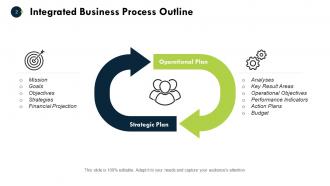
Slide 2: This slide shows Integrated Business Process Outline.
Slide 3: This slide displays Strategic Planning with related imagery.
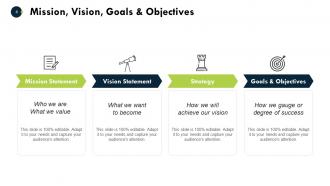
Slide 4: This slide presents Mission, Vision, Goals & Objectives.
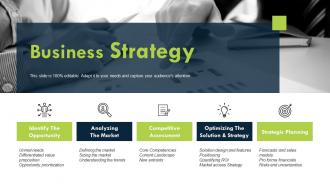
Slide 5: This slide represents Business Strategy describing- Competitive Assessment, Analyzing The Market, Optimizing The Solution & Strategy, Identify The Opportunity, Strategic Planning.
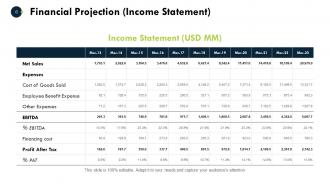
Slide 6: This slide showcases Financial Projection (Income Statement) with net sales, expenses, tax and profit after tax.
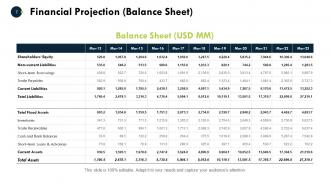
Slide 7: This slide shows Financial Projection (Balance Sheet) with assets and liabilities.
Slide 8: This slide displays Operational Plan with related imagery.
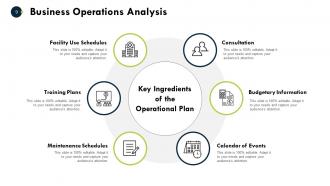
Slide 9: This slide presents Business Operations Analysis describing- Consultation, Budgetary Information, Calendar of Events, Facility Use Schedules, Training Plans, and Maintenance Schedules.
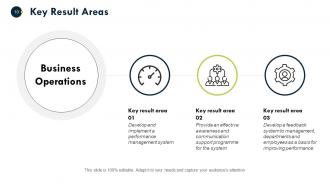
Slide 10: This slide represents Key Result Areas with related icons and text.
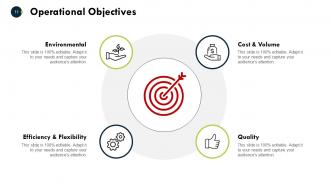
Slide 11: This slide showcases Operational Objectives describing- Cost & Volume, Quality, Environmental, Efficiency & Flexibility.
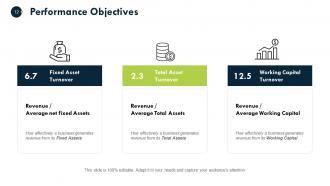
Slide 12: This slide shows Performance Objectives with- Fixed Asset Turnover, Total Asset Turnover, Working Capital Turnover.
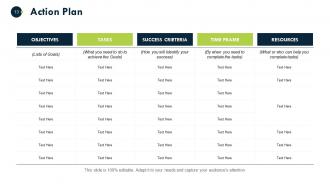
Slide 13: This slide presents Action Plan with- Objectives, Tasks, Success Criteria, Time Frame, and Resources.
Slide 14: This slide represents Budget on yearly basis. Add data as per requirements.
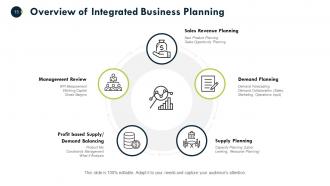
Slide 15: This slide showcases Overview of Integrated Business Planning describing- Sales Revenue Planning, Demand Planning, Supply Planning, Profit based Supply/ Demand Balancing, Management Review.
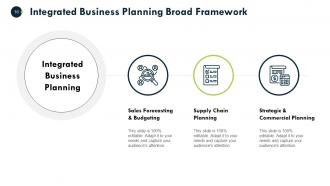
Slide 16: This slide shows Integrated Business Planning Broad Framework describing- Sales Forecasting & Budgeting, Supply Chain Planning, Strategic & Commercial Planning.
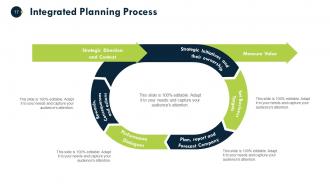
Slide 17: This slide displays Integrated Planning Process with related diagram.
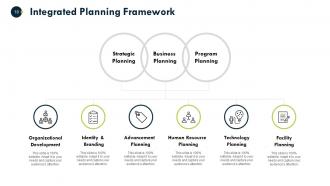
Slide 18: This slide represents Integrated Planning Framework describing- Organizational Development, Identity & Branding, Advancement Planning, Human Resource Planning, Technology Planning, Facility Planning.
Slide 19: This slide reminds about 15 minutes coffee break.
Slide 20: This slide displays Business Planning Process Icons.
Slide 21: This slide is titled as Additional Slides for moving forward.
Slide 22: This is Our Mission slide with related imagery and text.
Slide 23: This is Our Team slide with names and designation.
Slide 24: This is About Us slide to show company specifications etc.
Slide 25: This is Our Main Goal slide. Show your firm's goals here.
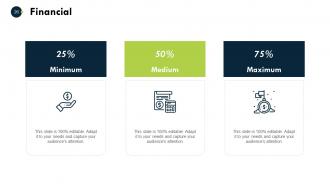
Slide 26: This is a Financial slide. Show your finance related stuff here.
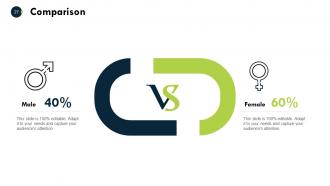
Slide 27: This is a Comparison slide to show comparison between commodities, entities etc.
Slide 28: This slide displays Radar Chart with two products comparison.
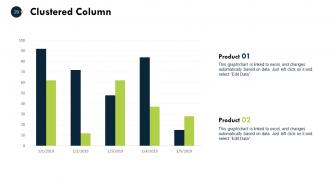
Slide 29: This slide shows Clustered Column chart with two products comparison.
Slide 30: This is a Thank You slide with address, contact numbers and email address.
Business Planning Process Powerpoint Presentation Slides with all 30 slides:
Use our Business Planning Process Powerpoint Presentation Slides to effectively help you save your valuable time. They are readymade to fit into any presentation structure.








FAQs for Business Planning Process
Okay so for your business plan you'll need an executive summary, market analysis, financial stuff, and how you'll actually run things. Honestly, nail that executive summary because investors are lazy and won't read past it if it sucks. Map out who you're selling to, what competitors look like, and your marketing game plan. Oh and definitely include your funding needs - kinda obvious but people forget. The management team section matters way more than you'd think since people bet on founders, not just cool ideas. Keep those financial projections realistic though. Nobody believes you'll triple revenue every quarter. Start simple with one page, then build it out.
Look, you really can't skip market analysis and competitor research - they're what tell you if people actually want your product and how packed the competition is. I'd start with free stuff like Google Trends and industry reports before spending real money on research. This data helps you figure out realistic revenue goals and who your customers are. Plus, studying competitors shows you what works and what doesn't, so you're not making their same dumb mistakes. Honestly, I've watched friends launch without doing this homework first and... yeah, it usually doesn't end well. Everything from your pricing to marketing flows from these insights.
Look, financial forecasting is like trying to predict the future - kinda impossible but you gotta do it anyway. Investors want to see your revenue projections, expenses, cash flow, all that stuff mapped out for the next few years. It proves your idea isn't just wishful thinking. Honestly, the whole thing feels like educated guessing, which is why I always suggest running multiple scenarios. Start conservative though - nobody likes overly optimistic numbers that fall flat later. It's probably the hardest part of writing a business plan, but you need it for funding and basically any major decisions.
Honestly, the SMART thing actually works - specific, measurable, achievable, relevant, time-bound. I used to set these super vague goals and got absolutely nowhere. Now I'm like "grow revenue 15% in six months" instead of just "increase sales." Way better results. Break your big stuff into smaller chunks you can check monthly. Numbers and deadlines are everything - "50 new customers by Q3" crushes "get more customers." Oh, and don't go crazy with too many goals at once. Pick 3-5 solid ones for the quarter and make sure you can actually track each one. Trust me on this.
Dude, the two big ones I always see? People get way too pumped and think they'll grab like 10% of some massive market right away - total fantasy. Also, most folks skip actually talking to potential customers, which is honestly pretty backwards when you think about it. You don't want your plan super vague, but also don't go crazy with every tiny detail. Hit the key stuff without writing a novel. Oh, and validate your assumptions by actually getting out there and asking people if they'd buy your thing. Those fundamentals will save you from most of the obvious screwups.
Look, your business plan isn't some sacred document you write once and forget about. Early on, you're just trying to prove your idea works and find customers who actually want it. Later? You'll be focused on scaling up, expanding markets, maybe chasing bigger investors. Those financial projections you sweat over in year one will be hilariously wrong by year three - but honestly, everyone's are. I'd say revisit it every quarter or so. Treat it like a GPS that recalculates when you take a different route, not some dusty manual sitting on your shelf.
Honestly, SWOT analysis is like taking a brutal but necessary selfie of your business. You're forcing yourself to look at strengths, weaknesses, opportunities, and threats all at once - no sugar coating allowed. I can't tell you how many times I've watched businesses crash because they thought they could skip this reality check. The magic happens when you use what you discover to build smarter strategies. Like, why fight your weaknesses when you could double down on what you're already crushing? External threats are gonna exist whether you acknowledge them or not, so might as well face them head-on. Run one every quarter if you can swing it.
Dude, seriously - charts and graphs are game changers for business plans. Nobody wants to read through endless paragraphs of numbers, and honestly? Most investors will just skim that stuff anyway. Bar charts work great for showing revenue growth, pie charts for market breakdown. Your financial projections become so much clearer when they're visual. Plus it makes you look way more polished during presentations. I learned this the hard way after my first pitch was basically a novel. Just keep the design clean though - don't get crazy with animations and colors. Focus on the data that actually tells your story.
Okay so first things first - get that elevator pitch down cold. Most investors basically decide in the first few minutes if they're even remotely interested, which is kinda brutal but whatever. Your pitch deck needs to tell the story visually - problem, market size, financials, all that stuff. Practice until it feels natural, not like you're reading a script. Always bring an executive summary they can keep. Oh and this might be obvious but make sure you're actually pitching to investors who fund your type of business. I've seen people waste months going after the wrong crowd. Be confident about your numbers but don't pretend there aren't any risks.
Honestly, tech can save you so much time with business planning. Instead of manually pulling financial data, software does it automatically. Real-time forecasts that actually update themselves? Game changer. Your team can work on the same plan together instead of emailing Word docs around like animals. AI tools are pretty decent now for market research too - though I still double-check the important stuff. Charts and graphs get generated without you wanting to throw your laptop out the window. Just don't go crazy with apps. Pick 2-3 that work well together and you're golden.
Honestly, writing a business plan is like doing homework for your future self. You'll catch problems before they blow up - cash flow gaps, sketchy competitors, supply chain disasters. The whole process forces you to think through worst-case scenarios and actually plan for them. I know it sounds boring, but you end up spotting weak points early instead of scrambling later. Plus you'll have backup strategies already mapped out when things go sideways (and they will). It's basically like having a crystal ball, except way more practical and less mystical nonsense.
Honestly, start with figuring out who you're actually trying to reach - like really narrow it down. What do those people want? Once you've got that nailed, work out what makes you different from everyone else doing similar stuff. Budget planning is huge too (so many people skip this and regret it later). Map out your channels - social, email, whatever makes sense for your audience. Set some real goals with deadlines so you're not just throwing stuff at the wall. Oh, and make sure it all ties back to your bigger business goals. Customer personas are basically your foundation - get those right first.
Look, you've got to check three things before diving in. First - do people actually want this? Talk to potential customers, scope out competitors, make sure you're solving a real problem. Financial side comes next: crunch those numbers hard because I've watched friends get burned by skipping this part. Can you actually turn a profit after expenses? Last thing is being brutally honest about your own capabilities. Do you have the skills and resources to make it happen? If any of these areas are screaming "no," either change your approach or maybe look for something else entirely.
Okay so the executive summary is literally the only thing most investors will actually read at first - no joke. Write it last even though it goes up front, because you'll know your story way better after finishing everything else. Keep it under 2 pages and hit your value prop, market size, and money stuff. I always think of it like a movie trailer that has to sell the entire film in 60 seconds. Make sure it works as a standalone thing too. Don't stress about perfection - just nail why your business matters and why now.
Dude, get feedback early and often - it's like having a sanity check built into your planning. Customers and employees will catch stuff you totally missed. I swear, investors always ask the one question that makes you realize your whole timeline is off. Market insights come from the weirdest places too... I once completely changed our pricing after chatting with a random user at a coffee shop. Don't just ask "thoughts?" though - that gets you nowhere. Set up quick 15-minute calls at key milestones with specific questions. Way better than planning in your own bubble.
-
It saves your time and decrease your efforts in half.
-
Use of different colors is good. It's simple and attractive.
-
Appreciate the research and its presentable format.