


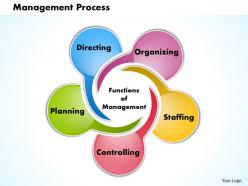
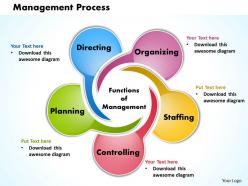
Management process powerpoint presentation slide template





Try Before you Buy Download Free Sample Product
 Impress Your
 Audience
 100%
100% Editable
 Save Hours
 of Time


In a presentation you have to relate to your audience and there's no need to read. Use Management Process Powerpoint Presentation Slide Template that created to communicate without words.
People who downloaded this PowerPoint presentation also viewed the following :
Management process powerpoint presentation slide template with all 6 slides:
Develop an elegant attitude with our Management Process Powerpoint Presentation Slide Template. They will be drawn by your demeanour.
FAQs for Management process powerpoint
So there are four main parts to managing: planning, organizing, leading, and controlling. Planning is just setting goals and mapping out how you'll hit them. Organizing means getting your team and resources lined up right. Leading is honestly where most people either crush it or completely bomb - it's all the people stuff like motivating and communicating. Then controlling is tracking how things are going and fixing whatever's broken. The whole thing just cycles over and over. I'd figure out which one you're naturally good at first, then work on the rest. My manager is terrible at the leading part but thinks he's amazing at it, which is... awkward.
Strategic planning is honestly your roadmap as a manager. Makes every decision easier because you can ask "does this help us hit our goals?" Without one, you're basically just putting out fires all day (which gets exhausting fast). It shapes how you spend money, organize your team, tackle projects - everything flows from there. Plus you'll spot problems coming instead of getting blindsided. Oh and the planning itself? Super helpful for thinking through what could go wrong. I'd start with nailing down maybe 3-4 big objectives for this quarter first.
Honestly, leadership is what makes management actually mean something - otherwise you're just shuffling paperwork. You've gotta paint that big picture for your team and show them what winning looks like. Then comes the fun part: getting everyone pumped about it. Management covers the what and how, but leadership? That's all about the why. Trust me, the messy decisions will come (they always do), so you better be ready. Oh, and build trust first - I can't stress this enough. Once your team actually trusts you, everything else just clicks into place way easier.
First thing - match tasks to what people are actually good at. Nobody wins when you set someone up to fail. Be crystal clear about deadlines and what "done" looks like (learned this one the hard way!). Give them real authority to make decisions, not just busy work. Check in without being that hovering boss everyone hates. When things go sideways - and they will - fight the urge to jump in and fix everything yourself. That's the hardest part honestly. Use it as coaching instead. Trust me, they'll figure it out if you let them.
So you'll want to track both efficiency and effectiveness - sounds boring but stick with me. Cycle time, error rates, resource utilization for the efficiency stuff. Goal achievement, stakeholder satisfaction, and quality outcomes cover effectiveness. Employee engagement scores are honestly huge because miserable people don't perform well under crappy processes. Also worth tracking compliance rates and cost per outcome if that applies to your situation. Here's the thing though - pick maybe 3-5 metrics that actually matter to your goals. Don't drown yourself in data. Get your baseline numbers first, make changes, then compare.
Honestly, communication is like the backbone of everything in management. Your best plans mean nothing if your team has no clue what's going on. Bad communication creates those annoying silos where nobody talks to each other. It kills teamwork and leaves people constantly confused about what they should actually be doing. Good communication fixes all that mess. Here's what I'd do - just straight up ask your team where the communication breakdowns are happening. Check your current channels too. You'll probably find some obvious gaps you didn't even realize existed. Trust me on this one.
Ugh, honestly the hardest part is just getting everyone on the same page when you can't actually *see* them. Like, so much gets lost over Slack - tone, urgency, all that stuff. And don't even get me started on trying to figure out if someone's swamped or barely working without being able to walk by their desk. Some people absolutely love the remote life, others are literally dying of loneliness at home. It's wild how different people react. My advice? Be super clear about what you expect from day one, and do regular check-ins with everyone. Catch the problems early before they become disasters.
Look, feedback loops are game-changers - they turn management from just giving orders into actually improving how things work. Instead of guessing what's happening, you get real intel from your team about what's actually going down. Problems get caught early, you can pivot when stuff isn't working, and honestly? It beats the hell out of managing in the dark. The trick is making sure people feel safe being honest with you, not just saying what they think you want to hear. Weekly check-ins work great - keep them short though, nobody wants another pointless meeting.
Risk management is your safety net - stops projects from completely imploding. You identify problems before they turn into disasters, then either prevent them or have backup plans ready. Way more useful than a crystal ball, honestly. It feeds into all your decision-making and planning too. You're building contingencies into everything, which sounds boring but actually saves your ass later. I'd start by listing what could realistically go wrong with your current stuff. Then work backwards from there and figure out how you'd handle each scenario.
Dude, culture makes a massive difference in management style. Japanese and German teams expect clear hierarchy and formal communication - they want structure. But Scandinavian cultures? Total opposite. They're all about collaboration and group decisions. Communication's tricky too. Dutch people will tell you exactly what they think (sometimes brutally honest), while other cultures expect you to read between the lines. Oh, and time - some cultures are obsessed with punctuality, others care more about building relationships first. Honestly, you just gotta watch your team and figure out what works instead of forcing your usual approach.
Honestly, start with whatever's driving you crazy right now - like if scheduling is a nightmare, tackle that first. Tools like Asana are great for seeing all your deadlines at once. Real-time analytics dashboards will show you what's actually working (spoiler: probably not what you think). You can automate the boring stuff now too. AI scheduling is getting scary good - saves me like 2 hours a week, no joke. Don't go overboard though. I made that mistake and ended up with 12 different apps that didn't talk to each other. Pick one thing that fixes your biggest headache first.
Kotter's 8-step thing is super popular - walks you through urgency, coalitions, vision stuff. ADKAR's good too, focuses on the individual side (Awareness, Desire, Knowledge, all that). Honestly? Most places I've worked totally bomb the communication part then act shocked when people push back. Bridges' model tackles the psychological stuff if your team's really struggling. There's also Lean Change for more agile orgs - though that might be overkill depending on what you're dealing with. Pick whatever fits your company culture and actually follow through. Don't just make it up as you go.
Honestly, engaged employees are like having a cheat code for management. They'll communicate better and actually *want* to hit their targets instead of you having to push them constantly. Plus they take ownership when stuff goes wrong - way less firefighting for you. I've noticed they're also more open to feedback and will flag problems early instead of letting things blow up. The whole dynamic just flows better, you know? Focus on regular check-ins and giving them work that actually matters to them. It's wild how much easier everything becomes when people genuinely care about what they're doing.
Look, if you're not constantly tweaking how you manage, you'll get left behind pretty fast. Your team notices when you actually listen to their feedback and make changes - keeps them way more engaged. Plus you avoid repeating the same dumb mistakes (been there). It's like ignoring software updates on your phone until everything crashes, you know? Start with something tiny though - maybe grab one process this week and just ask your team how to make it slightly better. The small stuff adds up surprisingly quick.
Honestly, just weave it into your normal routine instead of treating it like this big separate thing. During your regular one-on-ones, actually listen for tension brewing - don't wait until people are ready to quit over drama. I made that mistake once and wow, what a disaster that became. Get your team some basic conflict skills, maybe set up clear ways to escalate issues. The real trick? Jump on stuff while it's still small. Way easier than dealing with a full meltdown later. Oh, and create spaces where people feel safe bringing up concerns early - saves everyone headaches.
-
Unique research projects to present in meeting.
-
Awesome presentation, really professional and easy to edit.