

0514 promotion mix powerpoint presentation





Try Before you Buy Download Free Sample Product
 Impress Your
 Audience
 100%
100% Editable
 Save Hours
 of Time


Our 0514 promotion mix Powerpoint Presentation act like elbow grease. They enhance the force of your effort.
People who downloaded this PowerPoint presentation also viewed the following :
0514 promotion mix powerpoint presentation with all 5 slides:
Give it your all with our 0514 promotion mix Powerpoint Presentation. Ensure your effort is not half hearted.
FAQs for 0514 promotion
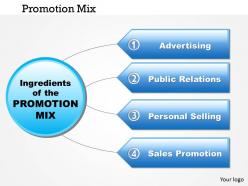
So there are four main parts to promotion mix - advertising, personal selling, sales promotions, and PR. Advertising gets your name out there broadly. Personal selling actually closes the deals. Sales promotions make people act fast (think discounts, limited offers). PR builds trust and credibility. Honestly, they work so much better together than alone - like your PR can boost whatever message you're advertising. Map out your customer journey first, then figure out which tool fits each stage. Oh and obviously consider your budget because some of these cost way more than others. The whole point is creating something that feels coordinated, not scattered.
First thing - figure out what you're actually trying to achieve. Then pick the right tools for the job. New product launch? Advertising gets you awareness, PR builds trust, and promos get people to try it. Your audience matters too - digital ads work great for younger folks but my mom's generation? Not so much. Honestly, the biggest mistake I see is trying to do everything at once. Pick maybe 2-3 things and nail them instead of half-assing a bunch of stuff. Run some tests, see what actually converts, then double down on what works. Way better than spreading yourself thin.
Dude, it's all about knowing where your people actually spend their time. Gen Z? They're glued to TikTok and Instagram, so influencer collabs are your best bet. Meanwhile, my mom still checks her mailbox religiously, so direct mail actually works for older folks. Though honestly, even boomers are getting weirdly good at social media now. You gotta figure out how they like getting info first. Do they scroll endlessly? Watch TV? Actually read emails? Once you map that out, just meet them where they already are instead of trying to drag them somewhere new.
Honestly, digital marketing is where it's at now - that's where everyone's scrolling anyway. You can target super specific audiences through social ads, email, content stuff, all way cheaper than traditional ads. The best part? You actually get data back showing what works. No more guessing like with those expensive TV commercials that may or may not hit anyone. I'd start by looking at what you're doing digitally right now and see what's missing. Oh, and you can tweak campaigns in real-time instead of being stuck with whatever you launched.
Don't treat social media like its own separate thing - use it to boost whatever else you're already doing. Running print ads? Create posts that expand on those same messages and get people talking. It's basically the glue that holds everything together. Too many brands just throw random content out there without any real plan, which honestly drives me crazy. Share behind-the-scenes stuff to make your brand feel more human. Use it to support your PR work and build actual relationships with people. Map out how each platform can help with your existing goals first.
Honestly, mixing your promotional channels is a game-changer for launches. Different people respond to different stuff - some love ads, others need social proof from reviews, and some still want that face-to-face sales pitch. Each channel backs up the others too, so your ads make your PR look more legit, and your sales team can point to both. The repetition across platforms really sticks in people's heads. I always tell people to figure out where their customers actually hang out first, then build around those spots. Don't spread yourself too thin though - better to nail 3 channels than half-ass 6.
Think of branding like having a reputation that precedes you. Your ads get noticed quicker when people already recognize your name. Sales becomes way less of an uphill battle - honestly, half the work's already done if customers trust you. PR stunts actually land because you've got credibility. Without that foundation? You're basically starting from scratch every single time and blowing through cash like crazy. I learned this the hard way with a project last year. Get your brand positioning nailed down first, then watch how much easier everything else becomes.
You'll want to track a mix of stuff - awareness, engagement, and conversions. Start with reach and impressions to see if people actually know about you. Engagement rates and click-throughs show if they care. Sales lift and cost per acquisition are the real deal though - that's where you see if this is actually making money. ROI calculations are honestly a pain across different channels, but worth doing. I'd set up maybe 3-4 key metrics per channel on a simple dashboard. Makes it way easier to spot what's working and throw more budget at the good stuff. Social interactions matter too, forgot to mention that.
Honestly, just watch your numbers like a hawk. Track everything - social engagement, email opens, website hits, actual sales. If you see people suddenly obsessing over TikTok instead of Instagram, move your money there fast. Consumer data is seriously your best friend here. When analytics show they want videos over boring text posts, switch it up. I always test small tweaks first though - don't blow your whole budget on some wild experiment. And yeah, trends are cool but ignore them if they don't fit your vibe. Your audience matters way more than what everyone else is doing.
Honestly, the coordination part is brutal - your Instagram could be promoting one deal while your email team sends something totally different. Budget gets messy fast when you're juggling multiple channels. ROI tracking? Good luck with that when people see your Facebook ad, visit your website, read reviews, then buy after getting a text coupon. Each channel needs different expertise too, so you're either training everyone on everything or hiring specialists (expensive). My advice? Pick 2-3 channels your audience actually uses. Master those first. Don't try to be everywhere at once - I've seen that backfire so many times.
So basically, IMC is just making sure all your marketing stuff tells the same story. Your ads, social posts, PR team - everyone needs to be on the same page. Think of it like a band where everyone's playing different songs vs. actually working together. Way better results when you're not confusing customers with mixed messages (which honestly happens ALL the time). Oh, and you'll reach way more people since you're hitting multiple channels consistently. Start with some basic messaging guidelines that everyone can actually follow - nothing fancy, just get everyone singing from the same songbook.
Dude, cultural stuff will make or break your promotions. What crushes it in the US might feel way too aggressive in Japan. Colors, timing, messaging - you've got to flip everything. Humor's tricky too - Aussies love sarcasm but it bombs in conservative markets. Then there's the whole social media thing. WeChat owns China while everyone in Latin America uses WhatsApp. I learned this the hard way once. Do your homework on local communication styles and what ticks people off culturally. Test everything locally before going big.
Content marketing fits mostly under sales promotion, but honestly it touches everything in the promotion mix. You're making helpful stuff - blog posts, videos, infographics - to educate people instead of just selling at them. Way more effective than being pushy, in my opinion. It backs up your ads with actual substance. Builds credibility for PR. Gives your sales team good materials to share with prospects. The whole point is pulling customers in with useful info rather than shoving messages down their throats. Map your content to different stages of the customer journey and you'll see better results.
Okay so Nike's "Just Do It" is like the gold standard here. They nail it by mixing TV ads with athlete sponsorships, social media stuff, and PR around big games. Coca-Cola's another great one - they blend regular ads with those experiential campaigns and sponsorships that hit you right in the feels. Old Spice totally flipped their image by syncing up funny commercials with viral social content and influencer collabs. Honestly, that rebrand was genius. Point is, you can't just run one type of promotion and call it a day. Everything's gotta work together to really stick.
Here's the deal - B2B is all about building real relationships because you're talking to people making huge decisions with their company's money. Think trade shows, LinkedIn outreach, tons of detailed content. Personal selling is huge. B2C? Completely flips that script. You want mass reach and emotional hooks - social media ads, PR stunts, anything that grabs attention fast. B2B buyers need hard data and ROI numbers. Consumer buyers just want to feel good about buying something (honestly, half the time it's impulse anyway). Focus on lead nurturing for B2B, but with consumers you need immediate "buy now" energy.
-
Design layout is very impressive.
-
Excellent design and quick turnaround.