

Process flow business plan powerpoint slide presentation tips




Try Before you Buy Download Free Sample Product
 Impress Your
 Audience
 100%
100% Editable
 Save Hours
 of Time


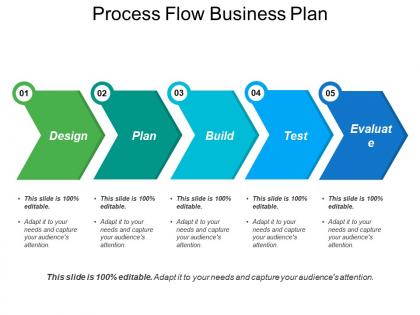
Outline the steps needed to complete a business process using Process Flow Business Plan PowerPoint Slide Presentation Tips. Design a plan for your employees to follow. Make sure it is aligned with your goals and targets. Streamline the functioning and execution of your business with a well-defined business process flow chart. Convince the sponsors to make the necessary investments in your project with an easy to understand business plan process. Determine the time that will be needed to accomplish a task in the activity diagram PPT slide. Address the areas and issues that need to be focused on. Describe how the business functions with the help of business process mapping tools. A flowchart for creating a business plan will help improve your efficiency and productivity. With high-quality graphics and content, curate an attractive and effective presentation. Make use of this readily available business process model PPT template to make an impressive presentation in less time.
People who downloaded this PowerPoint presentation also viewed the following :
Process flow business plan powerpoint slide presentation tips with all 5 slides:
Our Process Flow Business Plan Powerpoint Slide Presentation Tips will aid your effort. Your thoughts will flow that much smoother.
FAQs for Process flow business plan powerpoint
So for your business plan presentation, hit these key points: the problem you're solving, your solution, who your customers are, competition analysis, how you'll make money, financial projections, and team backgrounds. Oh and don't forget the actual ask - funding, partnership, whatever you need. Start with the problem right away. I swear, half the presentations I see waste time on flashy intro slides when nobody cares yet. Then show how you'll profit and why your team can pull it off. Keep those financial numbers realistic but exciting. Definitely practice beforehand - you'll get grilled on your assumptions for sure.
Dude, numbers and projections just make people's eyes glaze over. But tell them a story? That's when they actually pay attention. Like, start with how you figured out this problem exists - maybe a customer who was super frustrated, or that moment when you realized "wait, this is actually huge." Investors hear pitches all day long. Stories stick with them though. They'll remember the founder who painted a picture of their customer's daily struggle way better than whoever just threw spreadsheets at them. Honestly, I'd open with something that shows exactly what pain you're fixing. Makes everything else click.
White space is honestly your best friend - don't try to cram everything onto each slide. Pick maybe 2-3 colors max and stick with them throughout. Arial or Calibri are boring but readable, which matters more than you think. Charts beat walls of text every single time, especially for financial stuff. Oh, and make your font big enough that people in the back can actually see it. One main point per slide keeps everyone focused. Practice moving between slides so it doesn't feel choppy. Trust me, less is definitely more here.
Dude, timing is everything - practice with a stopwatch first. I swear by the 10-20-30 thing: 10 slides, 20 minutes tops, 30-point font minimum. Skip the boring background stuff though, seriously. Investors zone out during those parts anyway. Put your time into the actual problem you're solving, your solution, and the money stuff. That's what they came to hear. Oh, and build in like 5 extra minutes for questions because there's always someone who asks something random. Practice cutting whole sections if you're running behind - you'll still hit what matters most.
Ugh, biggest thing - don't be vague about money stuff. Investors will check out instantly if you can't explain how you actually make revenue or what your real market size is. Also never just read off your slides, it's painful to watch. Oh and definitely don't get all defensive when they ask hard questions about competitors - even ones you didn't think of. Focus on the problem you're solving and why timing matters right now. Practice beforehand though, seriously. I've seen people rush through their best parts because they ran out of time.
Honestly, data viz tools are a lifesaver for making spreadsheets not suck. Your audience can actually see patterns instead of staring at endless rows of numbers. I personally love Tableau but Power BI works great too - even Excel charts do the trick sometimes. Pick bar charts when you're comparing stuff, line graphs for trends over time. Pie charts... eh, they're fine for showing parts of a whole I guess. Just don't go crazy with fancy effects. Label everything clearly so people aren't confused. Way better than making everyone squint at tiny cells during your presentation!
Dude, engagement is everything. Without it, you're just reading slides at people - which is brutal to watch, trust me. Make eye contact. Ask rhetorical questions. Let them interrupt you! The goal is getting investors leaning forward, mentally putting themselves in your success story. I've watched amazing business plans tank because the presenter treated it like a lecture instead of a conversation. When people feel involved, they're not just hearing your pitch - they're experiencing it. That's when they start imagining what working with you would actually look like.
Okay so basically you gotta figure out what each group actually cares about. Investors? They want to see dollar signs - ROI, market size, how you'll make them rich. Partners are thinking strategic fit and collaboration stuff. Your team (and let's be real, they're worried about job security) wants to know their role and growth path. Board members need the boring governance and risk stuff - which honestly can be a slog but whatever. Do your research first though. Figure out what's keeping each group awake at night, then hit those pain points right up front in your pitch. Makes everything way smoother.
Honestly, you need to practice way more than feels necessary - like, embarrassingly more. Start alone, then rope some friends into listening and giving you real feedback. Record yourself on your phone because trust me, you'll catch annoying habits you had no idea you were doing. Time it too since nerves make everything drag longer. Think about what curveball questions they might throw at you and have decent answers ready. The whole point is getting so comfortable that even if you totally blank out, you can still hit your main points. Oh, and do one complete run-through the night before - it helps.
Your exec summary is basically your elevator pitch crammed onto one slide. Hit the big stuff - problem you're solving, your solution, market size, and how much cash you need. Keep bullets short and make those traction numbers BOLD because that's what catches eyes. Don't overthink the text though - honestly, investors skim more than they read. Focus on why this matters right now and what sets you apart. Oh, and be specific about what you'll do with their money. Someone should get your entire business from this slide alone, since half the time it's all they actually look at anyway.
Honestly, go with something clean and minimal - those Sequoia or First Round templates are solid choices. You want bold headings and tons of white space so investors aren't squinting at your slides. Skip the text walls completely. Instead, focus on killer product screenshots and charts that actually show your metrics clearly. I've seen way too many decks fail just because the fonts were microscopic. Professional colors are key, but don't go overboard trying to be fancy. The whole point is making your data and market opportunity impossible to ignore.
Oh man, this is so true from experience. Germans and Japanese investors want ALL the data - like, every spreadsheet you've ever made. Americans love a good story though, even if your numbers aren't perfect. Middle Eastern and Latin American folks? They want to know YOU first before they care about your business. I learned this the hard way in Mexico once - spent 20 minutes on financials when I should've been building rapport. Look up how direct you can be with your audience too. Some cultures think you're rude if you're too blunt, others think you're wasting time if you're not.
Practice your answers to the obvious stuff ahead of time - market size, competition, financials. People love to ramble when they ask questions, so listen for what they're actually asking. Don't try to BS your way through something you don't know. Just say "I don't have that info but I'll get back to you tomorrow." Bookmark your important slides so you can jump around quickly. Oh and stay focused - it's tempting to go down rabbit holes but you'll eat up all your time. The biggest thing though? Don't let them rattle you if they challenge your assumptions. Shows you can handle the heat.
Honestly, multimedia beats boring slide presentations every time. Videos showing your product working, animated charts, customer audio clips - that stuff actually sticks with people. I sat through this one pitch where the guy literally just read bullet points and half the room was checking their phones. Short demo videos work great, or interactive prototypes investors can mess around with. Just don't go overboard with flashy stuff that doesn't serve a purpose. Pick one or two solid multimedia elements that really show off what makes your business special. Way more memorable than another PowerPoint deck.
Don't just end with "any questions?" - that's weak. Hit them with your main value prop in 1-2 sentences, then get specific about what you need and when. Like "We're seeking $500K to capture this $2M opportunity - let's discuss next steps." Then shut up and let them talk. I always toss in one solid stat that shows momentum or why timing matters. Makes you look way more confident than rambling on. The key is being direct about your ask - whether it's funding, partnership, whatever. Pause after you make your pitch. Honestly, most people appreciate the clarity instead of dancing around what you actually want.
-
Topic best represented with attractive design.
-
Qualitative and comprehensive slides.