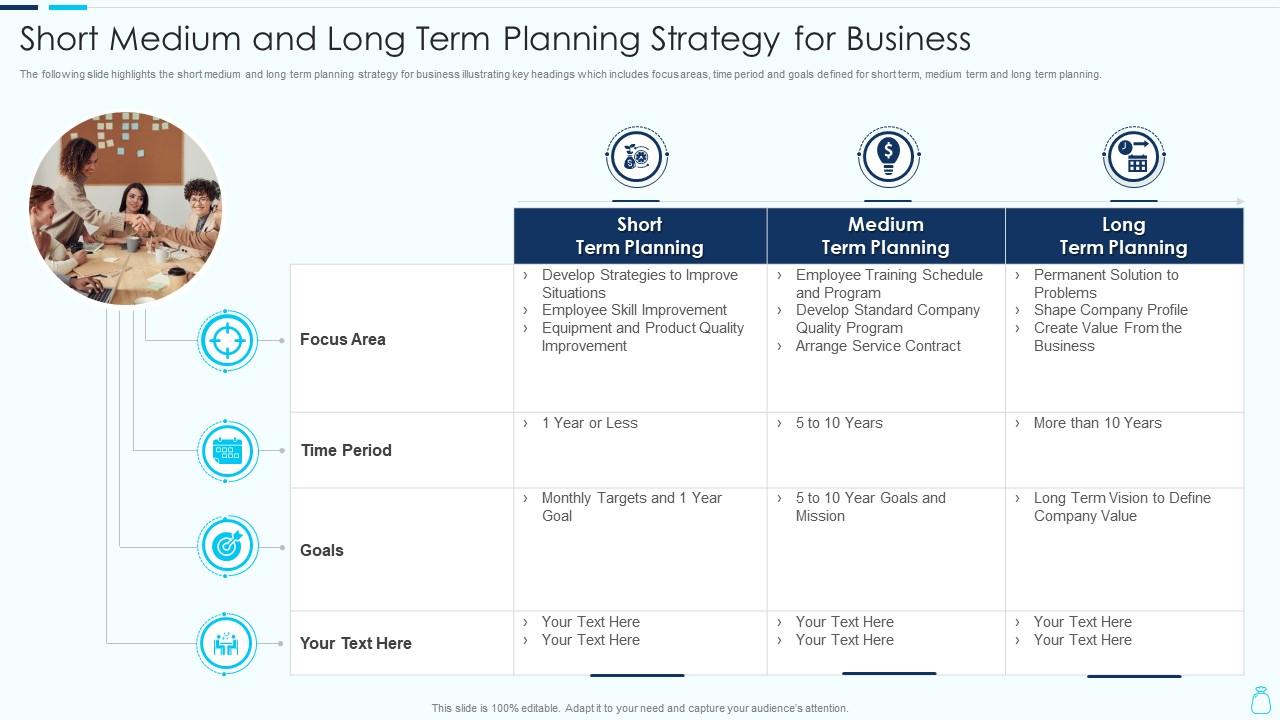
Short medium and long term planning strategy for business

Rating:
100%
A business planning strategy slide with focus areas, time periods, and goals for short term, medium term, and long term planning
Slide 1 of 6

or

Favourites Favourites

Try Before you Buy Download Free Sample Product

Audience Impress Your
Audience
Editable 100%
Editable
Time Save Hours
of Time
The Biggest Sale is ending soon in
0
0
:
0
0
:
0
0
Rating:
100%
Presenting our set of slides with Short Medium And Long Term Planning Strategy For Business. This exhibits information on four stages of the process. This is an easy to edit and innovatively designed PowerPoint template. So download immediately and highlight information on Focus Area, Goals, Term Planning.

FAQs for Short medium and long term planning

Okay so definitely start with your exec summary - that's what everyone actually reads anyway. Then you'll need market analysis, competitive stuff, and financial projections that aren't completely unrealistic (I've seen some wild ones lol). Business model and marketing strategy are obvious musts. Don't skip the operational plan or team overview either - investors want to know who they're betting on. Honestly, I'd map out a one-page outline first rather than diving into the full thing. Way less overwhelming. Build each section slowly from there and you'll be good.

SWOT basically maps out your strengths, weaknesses, opportunities, and threats in one spot - sounds simple but it's actually pretty eye-opening. You'll spot connections you missed before, like how your biggest strength could help you handle that looming threat. Honestly, most people do the analysis then never look at it again, which is such a waste. The real value comes from actually using it when you're making decisions. Shore up weak spots before they bite you, and jump on opportunities that match what you're already good at. It's one of those tools that seems too basic but works.

Okay so first thing - dig into whatever historical data you've got, that's your reality check. Don't go with best-case scenarios because honestly, when does that ever happen? I'd break it down month by month for the first year so you can catch cash flow problems before they bite you. Create three versions: pessimistic, realistic, optimistic. Then plan for the worst one (trust me on this). Look up industry benchmarks too - see how similar businesses actually perform. Oh and update everything quarterly once real numbers start coming in, because your initial guesses will probably be off.

Look, market research is what stops you from burning cash on ideas nobody wants. Survey people who'd actually buy your stuff - find out their problems and what they'll pay to solve them. Check what competitors are doing too, especially where they're failing. I learned this the hard way honestly. You'll get real data for pricing, marketing channels, all that crucial stuff. Test your assumptions early with potential customers and industry trends. Way better than just winging it and hoping for the best. The right questions upfront save you from expensive mistakes later.

Look, competitive analysis is basically your insurance against getting totally caught off guard by what other companies are up to. Pick your top 3-5 competitors and check what they're doing every few months. You'll spot market gaps, see what's actually working for them (and what's bombing), plus avoid their mistakes. Honestly, the pricing insights alone make it worth it. It's like having inside info before making your next move. Oh, and you might discover customer segments nobody's really serving well. Start simple though - don't overthink it at first.

Honestly, you've gotta nail down what success actually means first - like write down specific, measurable stuff. Work backwards from there to build strategies that actually connect to those goals. I swear half the business plans I see are just random ideas thrown together with no real connection to what they're trying to achieve. Every initiative should tie back to at least one main objective, otherwise what's the point? Oh, and check this alignment every few months because things change. Your priorities will shift and your strategies need to shift too. Always ask yourself: "Is this actually getting us closer to where we want to be?"

Honestly, agile's all about rolling with the punches - you can pivot super fast when stuff changes. Traditional planning? Way more structured upfront, which some teams love because everyone knows exactly what's happening. But good luck changing course halfway through, lol. Agile feels messy at first since you're constantly tweaking things based on feedback. Really depends on your industry though. Fast-moving tech stuff? Go agile and test how your team handles it. More predictable business? Traditional might work better. I'd probably start small with agile sprints either way.

Templates basically force you to get your thoughts straight instead of rambling through complex strategy stuff. Your audience can actually digest what you're saying without their eyes glazing over. Honestly, most execs have the attention span of a goldfish anyway, so visuals are clutch. You'll want everything looking consistent whether you're pitching investors or your own team - same format for timelines, metrics, all that. I'd grab a basic framework first, then just plug in your actual data. Way easier than starting from scratch every time you need to present something.

Track your revenue growth, profit margins, and cash flow obviously. But also watch customer acquisition costs and retention rates - that stuff can make or break you. Don't forget the operational side either. Employee productivity, customer satisfaction, hitting your deadlines. Honestly, I'd rather have solid operational metrics than perfect financials that won't last. Pick maybe 5-7 that actually matter to your specific goals. Too many and you'll drive yourself crazy. Set up something simple to review monthly so you can pivot when things start looking sketchy.

Honestly, you've gotta weave risk planning into everything from the start. Figure out what scares you most - losing key clients, cash problems, your best people jumping ship. Then actually plan for those scenarios and give someone ownership of each one. We got burned hard when our biggest client bailed without notice last year - totally avoidable if we'd thought ahead! Don't just do this once and forget about it either. Make it part of your quarterly reviews so you're constantly scanning for new threats. Risk planning isn't sexy but it'll save your ass.

Honestly, the worst thing you can do is get crazy optimistic with your numbers - like seriously, nobody's buying that you'll make a million in year one. Do your homework on the market first. Don't be vague either! Saying "we'll grab 5% market share" means nothing if you can't explain how you'll actually do it. Here's the thing though - stop obsessing over making it perfect and just test your idea already. Also, claiming you have no competition is basically lying to yourself. Everyone has competition. Just keep it real but exciting, and make sure you can actually pull off what you're promising.

Honestly, trends are everything for strategy - they show you where the market's going before you get left behind. Take automation blowing up in different industries right now. Smart companies are already prepping for tech upgrades and figuring out how their workforce will change. You've gotta watch customer habits, what tech people are actually adopting, and what your competitors are doing. Then adjust your business model and resources based on what you're seeing. The trick is staying flexible enough to pivot when something totally unexpected hits - which it always does eventually.

Look, you've gotta keep that business plan fresh or you'll get caught with your pants down. Markets change constantly, new competitors show up out of nowhere, and what customers wanted last year? Totally different now. I've watched so many businesses crash because they stuck with some outdated plan from ages ago. Update yours quarterly minimum - or whenever something big happens. Your investors will actually respect you more for staying on top of it instead of pretending everything's going according to some ancient strategy. Trust me on this one.

So scenario planning is basically running "what if" drills for your business before stuff actually goes wrong. Pick your 3-4 biggest worries - market crash, supply issues, new competitors swooping in. Then game out how you'd handle each one. Honestly, most people skip this step and regret it later. You'll spot warning signs earlier and won't be totally scrambling when things hit the fan. It's like having a playbook ready. Start with whatever keeps you up at night business-wise and build from there.

Honestly, stakeholders are like your sanity check through the whole planning mess. Get them involved right from the start when you're figuring out goals and priorities. I'm talking investors, key employees, big customers - maybe even suppliers if they matter to your business. They'll call you out on unrealistic deadlines and catch problems you'd never see coming. Plus they make your plan way stronger overall. Here's what I'd do: set up regular check-ins with your main group instead of waiting until you think everything's perfect. Trust me, their pushback is worth it even if it stings a little.

Ratings and Reviews

100% of 100
Review Form
Write a review
Most Relevant Reviews
  1. 100%

    by Charley Bailey

    Great product with highly impressive and engaging designs.
  2. 100%

    by Cletus Ross

    Perfect template with attractive color combination.

2 Item(s)

per page: