


HR Salary Management Process Flow Chart




Try Before you Buy Download Free Sample Product
 Impress Your
 Audience
 100%
100% Editable
 Save Hours
 of Time


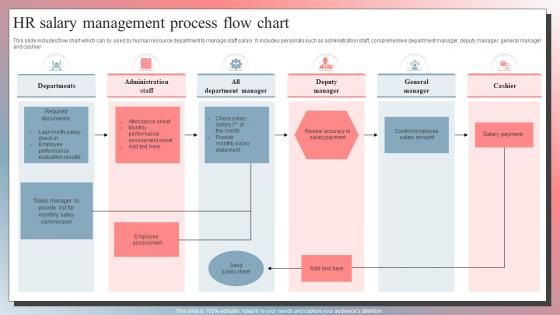
This slide includes flow chart which can by used by human resource department to manage staff salary. It includes personals such as administration staff, comprehensive department manager, deputy manager, general manager and cashier.
People who downloaded this PowerPoint presentation also viewed the following :
HR Salary Management Process Flow Chart with all 6 slides:
Use our HR Salary Management Process Flow Chart to effectively help you save your valuable time. They are readymade to fit into any presentation structure.





FAQs for HR Salary Management
Start with market research - figure out what competitors pay for the same jobs. Build salary bands and grades so you're not all over the place with compensation. Benefits and equity matter just as much as base pay, honestly sometimes more depending on the person. Do salary reviews every year minimum to catch problems early. Oh and be upfront with your team about how you decide pay - nobody likes feeling like it's some mystery process. I'd audit what you're currently paying against market data first though. That'll give you a reality check on where you actually stand.
Start with pay audits to catch gaps early - trust me on this one. Create salary bands for each role using market data, but honestly the whole thing becomes a nightmare if you're not consistent about it. Transparent promotion criteria across all departments is huge. Document everything because people will definitely ask questions later. Standardized processes help remove the subjective BS from pay decisions. I'd do quarterly reviews of your salary structure too - don't just wait around for complaints to roll in before fixing obvious problems.
So market research is like your GPS for pay decisions. Check out industry reports, salary surveys, and job postings to see what companies are actually paying - don't just wing it based on what feels right because honestly, those gut instincts are usually terrible. This stuff helps you set salary ranges that'll pull in good people without breaking your budget. Oh, and update it every year since pay scales move around more than you'd expect. The data keeps you competitive but not stupid with spending.
Look, performance management basically creates the paper trail you need for salary decisions. Instead of going on gut feelings, you've got actual metrics and documentation. So when Sarah gets an 8% bump and Mike only gets 3%, you can point to real data. Legal departments love this stuff too, obviously. The trick is connecting your performance criteria to actual salary bands and promotion paths. Otherwise you end up with your best people getting stuck at crappy pay levels - and honestly, that's when they start looking elsewhere. Makes the whole thing way cleaner when review time rolls around.
Always do this face-to-face or video call - seriously, don't even think about email or Slack for this stuff. I've watched that blow up spectacularly. Be super direct about the amount, when it kicks in, and why it's happening. Pay cuts? Yeah, have your reasons locked and loaded because they'll have questions. Even with raises, explain the why - performance bump, market adjustment, whatever. Honestly, people appreciate knowing the logic behind it. Give them room to ask questions and actually schedule enough time to talk through everything properly. Then document it all afterward.
Honestly, the right HR software will save your sanity. Payroll systems automatically handle all the math and compliance stuff, while HRIS platforms keep employee data in one place instead of scattered across a million spreadsheets. There's also compensation tools that'll show you market rates and help with budget planning - super helpful for raises season. The best part? When everything's connected, data syncs automatically. No more typos from copying numbers around. I'd start by figuring out which manual tasks are eating up most of your time each month, then tackle those first.
Honestly, salary transparency is kinda tricky. Yeah, it builds trust and helps with hiring since people know what they're getting into. But man, it can also blow up in your face if someone finds out their coworker makes way more for the same job. People get so weird about money discussions - I've seen friendships ruined over less. You really need solid pay structures figured out first, like actually fair ones based on clear criteria. Otherwise you'll be stuck explaining every single pay difference to angry employees. Which sounds exhausting. Just make sure your compensation makes sense before opening that can of worms.
Yeah, location totally matters for salary - your people literally can't afford to live otherwise. Someone in SF or NYC needs like 30-50% more than the same role in Austin just to cover rent and basic stuff. I learned this the hard way when we lost good people who couldn't make the numbers work. Market reality is brutal that way. Remote workers are tricky too since they might be anywhere. Definitely check those salary tools that show geographic data, and always look up local costs before you set ranges. Otherwise talented people just bounce.
Start with pay equity ratios - compare salaries across gender, race, and departments to catch any weird gaps. Track turnover rates by comp level too. When people bail for better money, measure how long it takes to backfill those roles (trust me, nobody wants to be the company that can't keep talent). Check where your pay sits against industry benchmarks. Internal promotion rates matter too - are you actually moving people up? Don't forget satisfaction scores around compensation. Set up quarterly reviews of this stuff so you can fix problems before they snowball into major headaches.
First thing - run regular pay audits to spot gaps by gender and ethnicity. The data's usually pretty shocking when you actually crunch the numbers. Fix any disparities you find with a solid plan and timeline (and budget, obviously). Transparency helps too - post salary ranges in job descriptions and use the same criteria for everyone. Honestly, most companies mess this up by being reactive instead of getting ahead of it. Don't wait for complaints to roll in. Check progress quarterly and make sure leadership actually follows through on closing gaps.
Ok so the big stuff you gotta worry about is minimum wage, overtime rules, and equal pay - that's like your holy trinity right there. FLSA covers most of it federally but honestly, state laws are usually way stricter anyway. Don't mess around with pay equity either - you can't pay people different amounts for the same job based on gender, race, all that protected stuff. Document everything too because if someone complains, you'll need proof your pay structure isn't totally screwed up. Oh and definitely run any major changes by legal first - learned that one the hard way at my last job.
Honestly, I'd say twice a year minimum - the job market's been absolutely insane. Once a year used to be fine but now? Your comp data gets outdated way too fast. Tech companies especially should probably check quarterly for their key people. Also do it whenever you're hiring for brand new roles or if you notice people leaving specific departments more than usual. I use 2-3 different salary survey sources since they can vary quite a bit. Oh and set those calendar reminders now because I always forget otherwise! The worst feeling is realizing you're underpaying good people.
Honestly, non-monetary perks are kinda genius for tight budgets. You can attract good people without bumping salaries, which saves you when HR says no to raises. Remote work, training programs, wellness stuff - employees actually care about this. The ROI is pretty solid too since these perks usually cost way less than salary bumps but still make people happy. Oh, and definitely ask your team what they want first. I learned that the hard way - spent money on perks nobody used because I assumed what they'd like.
When money's tight, start with the free stuff - flexible schedules, training opportunities, maybe extra vacation days. Small salary bumps work better than big ones, or just do one-time bonuses instead of permanent raises. Performance-based increases are smart because they're tied to results. Here's the thing though - just be honest about the budget situation. People get it if you're straight with them. Oh, and promotions with fancy titles but same pay? Totally valid move. Shows you care even when you can't throw cash around.
Ugh, the location pay thing is such a mess. You've got people in NYC vs small towns and nobody knows what's fair anymore. Performance reviews get weird too when you can't see what people actually do all day. Remote folks always think they're getting passed over for promotions - which honestly, they probably are sometimes. Don't even get me started on payroll compliance across different states, that's a whole nightmare. I'd say figure out pay bands based on the actual job, not just where someone lives. And maybe track results instead of hours? Way less headache.
-
Incredibly beautiful designs that will help you get noticed! These eye-catching templates are perfect for corporate presentations that can be altered to fit any occasion or taste.
-
The designs by SlideTeam are honestly the best I have seen so far. Will be definitely coming back for more.