


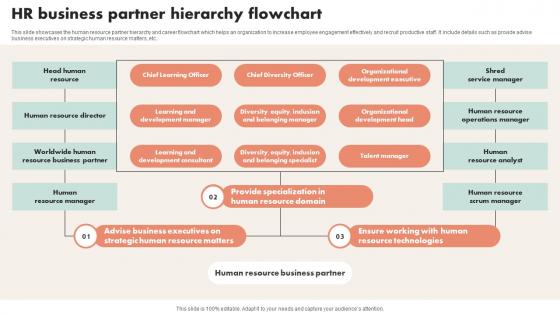
HR Business Partner Hierarchy Flowchart




Try Before you Buy Download Free Sample Product
 Impress Your
 Audience
 100%
100% Editable
 Save Hours
 of Time


This slide showcases the human resource partner hierarchy and career flowchart which helps an organization to increase employee engagement effectively and recruit productive staff. It include details such as provide advise business executives on strategic human resource matters, etc.
People who downloaded this PowerPoint presentation also viewed the following :
HR Business Partner Hierarchy Flowchart with all 9 slides:
Use our HR Business Partner Hierarchy Flowchart to effectively help you save your valuable time. They are readymade to fit into any presentation structure.








FAQs for HR Business
So you're basically the bridge between HR and actual business teams. Instead of sitting in some HR corner, you get embedded with specific departments. Your job is workforce planning, helping managers make talent decisions, and making sure HR stuff actually matches what the business needs. You'll deal with employee drama, coach leaders on managing people, and support big organizational changes. It's honestly way more interesting than regular HR work - like being part consultant, part firefighter. Oh, and here's the thing that really matters: you've gotta understand what keeps your business partners up at night. That's what makes you indispensable.
You've gotta learn the business side first - what makes them money, their key numbers, what's stressing out the executives. Once you get that, you can pitch HR stuff that actually matters to them. Like if they're obsessing over innovation, focus your talent programs on hiring creative people and building learning opportunities. Cost cuts? Then retention and efficiency are your best friends. Honestly, it's about being bilingual - HR and business. The real magic happens when you can show leadership exactly how your programs will impact their bottom line, not just make people happier at work (though that's nice too). Try getting into those strategy meetings if possible. Game changer.
Honestly, you need to get really good at thinking like a business person first - understanding how HR stuff actually affects profits and talking their language. Communication skills are huge since you're basically the middleman between what employees want and what the company needs. I'd also work on your data analysis game because nobody takes you seriously if you can't back up your ideas with numbers. Change management is pretty much required now too, which is kind of annoying but whatever. Figure out what you're already decent at, then maybe find a mentor or take some courses to fill in the gaps.
Honestly, data analytics completely flips how you work as an HRBP. No more relying on hunches - you're making decisions based on actual evidence. You'll catch turnover trends early, figure out which teams really need training (not just the loudest ones), and finally prove your programs actually work. Leadership takes you way more seriously when you show up with retention stats instead of just saying "people seem unhappy." I'd start with one thing you're genuinely curious about and just dive in. The conversations with business leaders change overnight once you have those insights.
Honestly, skip the cheesy trust falls - nobody wants that. Instead, get departments working on actual projects together where they need each other's skills. I'd start with regular cross-team meetings focused on shared goals, plus those lunch-and-learn sessions where people can show off what they know. Also worth adding collaboration stuff to performance reviews so people know it matters. Public recognition when teams work well together goes a long way too. Pick one team that's really siloed and try a pilot project with them first. Oh, and make sure you're partnering with other departments yourself - people notice when leadership actually walks the walk.
Honestly, the toughest part is juggling strategic stuff while constantly putting out fires. Business leaders can be skeptical at first - you gotta prove you actually get their world before they'll listen. HR policies vs. what the business actually needs? That tension never goes away. My advice: block time for big projects or you'll never touch them. Build relationships by learning their pain points first, then pitch how HR helps. When policies don't fit reality, get creative instead of being the "no" person. Oh, and yeah - you'll mediate a LOT of drama. Bottom line: be a business consultant who just happens to know HR inside out.
So you'll want to track both the quick wins and longer-term stuff. Start with your basics - engagement scores, turnover, productivity, how long it takes to fill roles. The tricky bit is figuring out what's actually from your work versus other random factors happening in the company. I'd also watch shorter-term things like training completion rates or how confident managers feel after your leadership programs. Build some simple dashboards that show trends over time, not just one-off numbers. And honestly? Just ask people directly through surveys if they think your initiatives are actually helping - sometimes the qualitative feedback tells you way more than the data does.
Honestly, you gotta get ahead of the problem instead of scrambling after people quit. Do pulse surveys and stay interviews - way better than finding out why someone left when they're already gone. Bad managers are usually the real culprit here, so invest in coaching them up. People need to see where they're going career-wise, and you actually have to deliver on those development promises (shocking, I know). Recognition is huge too - doesn't always have to be cash, sometimes the personal stuff matters more. Trust me, fixing issues early beats damage control every time.
So HR Business Partners are basically your go-to people for growing leaders in your company. They'll sit down with managers and figure out who's got potential, then actually create real development plans - not just those boring online training things everyone hates. What's cool is they really get your business, so they can suggest stuff like mentoring or giving people challenging projects that make sense for your goals. They're kind of the middleman between HR's big strategy and what actually helps your team grow. Plus they'll keep tabs on how people are progressing, which honestly saves managers a ton of headache.
Dude, tech is seriously a game-changer for HR business partners. Analytics platforms show you actual patterns - like why people are quitting or which teams are struggling - instead of just winging it. Predictive stuff is wild too, saves so much guesswork. Slack and Teams keep you plugged into what's happening with your business units without being that annoying HR person who's always scheduling meetings. Oh, and pulse surveys are clutch for real-time feedback. Just don't go overboard - you still want actual human connections, not everything through a screen.
Honestly, just bake it into your regular HR stuff instead of treating it like some separate project. Start by recruiting from different talent pools and mixing up your interview panels. Check your pay data for gaps too - that's where you'll find some eye-opening stuff. Leadership actually pays attention when you tie this to business goals, not just feel-good initiatives. Set hiring targets with managers, create mentorship programs for underrepresented folks. Oh, and definitely survey people about culture regularly. Begin with auditing what you're already doing, then pick one thing you can fix right away.
Honestly, you gotta flip the whole approach - don't just wait for fires to put out. Schedule regular check-ins with department heads about team stuff and upcoming projects before everything gets crazy. Listen way more than you talk (this seriously changed everything for me). Pick one department head you click with and suggest monthly coffee chats about their priorities. Learn what metrics they actually care about so you're not speaking total gibberish during meetings. Oh, and follow through on what you promise - sounds basic but builds trust fast. Being upfront about what HR can't deliver helps too.
So you're basically the translator between executives and regular employees when everything's changing. Map out who your key stakeholders are first - that's clutch. You'll be assessing how changes affect people, creating communication plans, and helping managers have those awkward conversations nobody wants. Design training programs, spot where people are gonna push back, and coach leadership through the mess. Honestly, you're stuck in the middle of competing priorities half the time which is... interesting. But your real win is turning corporate-speak about change into something people can actually understand and act on. The "how" matters way more than the "what" here.
Honestly, start with what's killing you right now - probably data tracking, right? Workday and BambooHR are solid for analytics that actually impress executives. Your HRIS handles the basic employee stuff, but pulse surveys through Culture Amp or 15Five are game-changers for catching problems early. Performance reviews become way less painful with Lattice. Oh, and don't ignore project management tools like Asana - you're basically running ten projects at once. I'd audit your current stack first though. Find the one gap that's making your days hell and fix that before adding more tools.
Think ahead 6-12 months and figure out what skills you'll need before your competitors do. Most HRBPs are honestly still just doing admin work, so being strategic automatically puts you ahead. Build your hiring plans around those future needs instead of just reacting to open roles. Use data to catch retention issues early - way easier than scrambling later. Oh, and have those quarterly conversations with leadership about what's coming down the pike. They love when HR actually gets the business side of things. The whole trick is being proactive rather than waiting for problems to hit your desk.
-
It is my first time working with them and that too on a friend's recommendation. I would say, I am not expecting such a worldly service at this low price.
-
The quality of PowerPoint templates I found here is unique and unbeatable. Keep up the good work and continue providing us with the best slides!