

HR Employee Termination Process Flow Chart




Try Before you Buy Download Free Sample Product
 Impress Your
 Audience
 100%
100% Editable
 Save Hours
 of Time


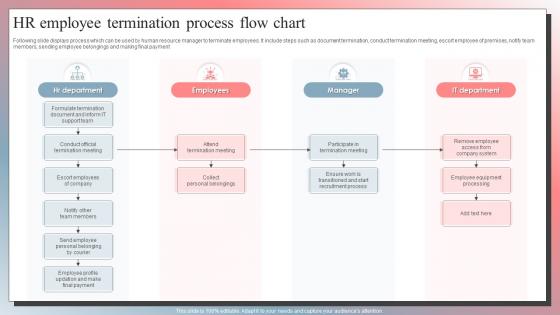
Following slide displays process which can be used by human resource manager to terminate employees. It include steps such as document termination, conduct termination meeting, escort employee of premises, notify team members, sending employee belongings and making final payment.
People who downloaded this PowerPoint presentation also viewed the following :
HR Employee Termination Process Flow Chart with all 6 slides:
Use our HR Employee Termination Process Flow Chart to effectively help you save your valuable time. They are readymade to fit into any presentation structure.





FAQs for HR Employee Termination
Most people get fired for the obvious stuff - showing up late, doing crappy work, or being jerks to coworkers. Policy violations are huge too, especially harassment or just flat-out ignoring your boss. Then there's the stuff that's not really your fault, like budget cuts or company restructuring. Social media posts can bite you in the ass nowadays - I've seen people lose jobs over dumb tweets. Drug tests, stealing, creating legal headaches for HR... basically anything that makes you a liability. Oh, and honestly? Half these situations could've been avoided if managers just had real conversations instead of letting problems fester until they explode.
Honestly, documentation is your best friend here. Write down every performance issue, conversation, disciplinary action - all of it. I've seen companies get screwed because they handled similar situations differently, so stay consistent with past decisions. Your state probably has specific rules about final pay and notice periods (they're all over the place), so look those up. Before you actually fire them, get HR or legal to review everything. They might catch something you missed. Also quick tip - keep copies of everything because this stuff has a way of disappearing when you need it most.
Documentation is literally everything when you fire someone - it's what saves your butt legally. You've got to track performance problems, write-ups, conversations, all that stuff before you even think about termination. I've watched companies get absolutely wrecked because they had zero records and couldn't defend their decision. Don't wait until the last minute to start building a paper trail either. Keep it all factual, no emotions or weird opinions. Honestly? Start documenting your current team now - even the good employees. You'll be so glad you did if things go sideways later.
Be direct but kind - ripping the band-aid off is way better than dragging it out. Write down your main points first because even "simple" firings get weird fast, and you don't want to ramble when emotions kick in. Stay factual, don't debate their performance, and honestly? Keep tissues handy since people's reactions are unpredictable. Always bring a witness and write everything down right after. Oh, and make sure you cover the boring stuff - final paycheck, benefits, returning their laptop or whatever. Gives them something concrete to focus on instead of just feeling blindsided.
Honestly, start by just asking what they actually need - everyone's situation is different. Outplacement services are clutch if you can swing it. Career coaching too. COBRA extension gives them breathing room, which... people really underestimate how stressful the insurance thing gets. Write solid reference letters and LinkedIn recs. Some companies let people keep email access briefly for job hunting, or even temporary office space. Don't rush them out the door - give them time to wrap projects up properly. The whole thing's awkward but treating people with dignity when they're already stressed makes a huge difference. Small gestures matter more than you'd think.
Honestly, wrongful termination suits are your biggest headache here. Document everything first - performance issues, policy violations, the works. Courts will absolutely nail you if you ignored your own employee handbook procedures. Check if they're in any protected class or recently complained about something, because retaliation lawsuits get pricey fast. I'd definitely loop HR in before you do anything - they'll catch stuff you might miss. Keep detailed records of your reasoning too. The more backup you have, the better off you'll be if things go sideways later.
Look, performance reviews are basically your insurance policy for firing someone. You've got to document everything - missed deadlines, unmet goals, whatever the issues are. One crappy review won't cut it unless they did something majorly screwed up. What you need is a pattern showing problems over multiple reviews, even after you've coached them. Be super specific too, not just "attitude problems" or whatever. I know it feels like overkill sometimes, but legally you're covered and it shows you actually tried to help them improve before pulling the trigger.
Document everything, seriously. Performance issues, disciplinary meetings, weird conversations - write it all down. Your company probably has some progressive discipline thing, so stick to that. Don't be the manager who just wings it because that's when people sue. I've seen it happen too many times. Make sure you're treating similar situations the same way across the board. Oh, and watch out for accidentally targeting someone because of age, race, gender stuff. Before you actually fire anyone, loop in HR or legal first. They'll catch things you missed.
You absolutely need documentation - learned this the hard way when we got sued a few years back. Document every conversation, email, review, the works. Your feedback has to be specific and timely too. Don't wait until the last minute to dump all their problems on them - that's just asking for trouble. Have those uncomfortable conversations early and keep having them. Give them real chances to improve with clear expectations. Oh and definitely loop HR in throughout this whole mess, not just at the end. Keep copies of literally everything.
Ugh, layoffs mess with everyone's heads. The person getting let go deals with shock and panic about money, obviously. But your remaining team? They're probably freaking out about job security or feeling guilty they survived the cut. Some might even feel relieved if that person wasn't pulling their weight - which sounds harsh but it's real. Don't let people spiral with gossip and worst-case scenarios. Call a team meeting ASAP, like within 48 hours. Be straight about how you'll handle the extra work and answer their questions directly. The person who got terminated is going through something like grief, especially if they didn't see it coming.
Keep it simple and straightforward - just send a brief message saying [person] is no longer with the company as of [date]. Don't get into the why behind it because honestly, that just creates more drama. Focus on the practical stuff instead: who's covering their work, where to redirect clients, basic transition details. I'd probably do a quick team meeting too for any immediate questions. The main thing is getting ahead of it so people don't start hearing random versions through office gossip first. Trust me, that never ends well.
Wait 1-2 weeks after they leave so things aren't as heated. Get someone neutral to do it - definitely not their old boss, that's just weird. Focus on bigger picture stuff like training gaps or broken processes instead of personal drama. Ask open questions like "what could've helped you succeed here?" rather than yes/no stuff. Honestly, the whole point is getting real feedback about how your workplace actually functions. Oh, and make sure you actually do something with their feedback if it's valid - otherwise you're just wasting time. Document everything so good points don't get forgotten.
Honestly, you've got to get everything in writing first - like actual procedures that don't leave room for guessing. Document every single thing when issues come up because trust me, you'll need that paper trail later. Train your managers so they're not doing wildly different things in each department (I've seen that mess before). Progressive discipline is key - nobody should be shocked when consequences happen. Oh, and definitely include an appeals process. Start employees off knowing exactly what's expected during onboarding. That way if someone gets fired, it feels like the natural result of their choices, not some random decision. Your current policy probably has vague spots that'll bite you - audit that thing first.
Layoffs are all about consistency - same severance, timeline, messaging for everyone. You're basically showing the remaining team that it was a fair business decision, not personal. Firing someone individually? Completely different beast. Document everything beforehand, have HR there, keep it confidential. That's about their specific performance or behavior issues. Here's the thing though - layoffs mean the job itself is gone. Firings mean the person couldn't do the job. Either way, you better have your paperwork ready because trust me, you'll need it later.
Honestly, you can turn these situations into learning opportunities by doing post-mortems with your team. Figure out what actually went wrong - was it bad hiring, unclear expectations, or did they not get enough support? Then fix those gaps. I know it sounds counterintuitive, but terminations usually expose problems in your processes you didn't see before. Exit interviews are gold for this stuff - people will tell you things about management they'd never say otherwise. The trick is being upfront with your remaining team about what changes you're making. Shows them you're actually learning from mistakes instead of just randomly firing people.
-
Incredibly beautiful designs that will help you get noticed! These eye-catching templates are perfect for corporate presentations that can be altered to fit any occasion or taste.
-
SlideTeam is very efficient when it comes to saving time. I am happy that I chose them for my presentation.