Employee Workload Management Process Flow Chart

Rating:
80%
Employee Workload Management Process Flow Chart
Slide 1 of 6

or

Favourites Favourites

Try Before you Buy Download Free Sample Product

Audience Impress Your
Audience
Editable 100%
Editable
Time Save Hours
of Time
The Biggest Sale is ending soon in
0
0
:
0
0
:
0
0
Rating:
80%
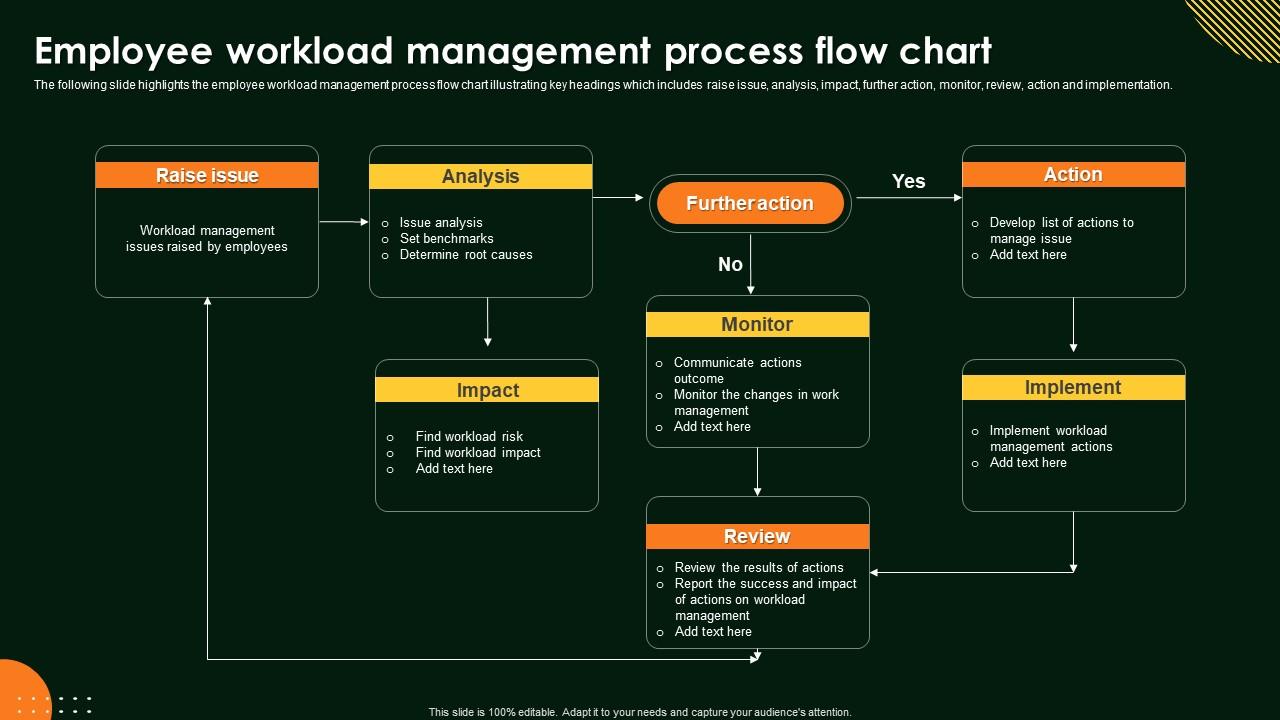
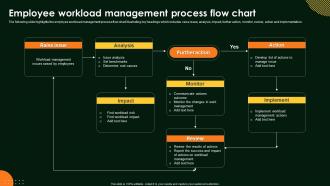
The following slide highlights the employee workload management process flow chart illustrating key headings which includes raise issue, analysis, impact, further action, monitor, review, action and implementation. Presenting our well structured Employee Workload Management Process Flow Chart. The topics discussed in this slide are Analysis, Further Action, Implement. This is an instantly available PowerPoint presentation that can be edited conveniently. Download it right away and captivate your audience.

FAQs for Employee Workload Management

Ugh, there's so many signs honestly. They're staying crazy late but still missing deadlines they used to nail. Quality of their work starts slipping too. Watch for the exhausted look - you'll know it when you see it. Are they calling in sick more often? Skipping lunch breaks? Not joining team chats like they used to? Sometimes they won't shut up about being "totally swamped" which is basically code for help me lol. Oh and increased irritability is huge. If you're noticing several of these, definitely sit them down and talk about shifting some stuff around before they completely burn out.

Honestly, these tools are game-changers because you can finally see who's swamped and who's... well, not doing much. Bottlenecks become obvious before they blow up your timeline. The best part? You'll catch capacity issues weeks early instead of scrambling last minute. Your team stops feeling overwhelmed when they can actually visualize their workload and deadlines. I'd go with Asana or Monday.com to start - nothing fancy. Just make sure everyone actually uses it consistently (that's always the hard part, isn't it?).

Dude, you NEED to ask your team about their workload regularly. Honestly, most managers are horrible at guessing who can actually handle what on any given week. Your people know their own bandwidth way better than you do. They'll catch those weird bottlenecks that you'd never see from your level too. I'd say check in weekly - ask what they're juggling now and what makes sense for next week. Otherwise you're just throwing tasks around hoping someone doesn't crash and burn. Plus it prevents that whole situation where Sarah's drowning while Mike's bored out of his mind.

Honestly, you'll spot it pretty fast once you know what to look for. People who usually hit deadlines start missing them. They're cranky in meetings or just seem totally checked out. Working late but somehow getting less done? Major red flag. Also watch for more sick days or that zombie look during calls - been there myself lol. Talk to them one-on-one about their workload and actually hear what they're saying. Move some stuff around if you can, push back deadlines, maybe get temp help. Catch it early though - once someone's completely fried, you're looking at them either bouncing or needing serious time off.

Try the Eisenhower Matrix - it's honestly a lifesaver. Get your team to dump all their tasks, then sort them: urgent + important (do now), important only (schedule it), urgent only (delegate), neither (trash it). I swear by this method. Time-boxing works great too - assign actual hours instead of just throwing deadlines around. Oh, and do weekly check-ins so stuff doesn't slip through the cracks. My old manager used to skip these and it was chaos. Start this week by having everyone categorize their current mess of tasks.

Dude, workload balance is everything for keeping people around. When someone's drowning in tasks while their coworker's scrolling Reddit half the day, that's when resumes start flying out the door. I've seen it happen so many times. Balanced teams are happier, do better work, and don't quit on you constantly. The trick is actually checking in with people before they're ready to lose it. Ask who's swamped and who's got room for more stuff. Honestly, most managers wait way too long to redistribute work. Don't be that person.

Honestly, start with a time audit - have them track what they're doing for like 3-4 days because we're all horrible at guessing our own time usage. Look at their current hours, what deadlines are coming up, and how complex their stuff is. Also just straight up ask them about bandwidth - sometimes the direct approach works best. Watch for stress signs too, like if they're missing deadlines or their work quality is slipping. Oh and check if they're staying late a lot, that's usually a dead giveaway. Mix the actual data with real conversation and you'll figure out pretty quick if they can take on more.

Dude, get some project management software - Asana or Monday are solid picks. They'll handle all the annoying reminder stuff automatically and actually show you where things are getting stuck before everything blows up. The time-tracking thing is honestly huge - you'll finally know why projects drag on forever instead of just wondering about it. Set up some automated workflows too so the boring tasks just run themselves. Oh, and don't go crazy with features right away. Pick one tool, let everyone get used to it first. Choose whatever actually makes sense for how your team works, not just the shiniest option.

Honestly, your workplace culture is what makes or breaks workload management. I've watched teams where saying "I'm swamped" gets you respect vs others where it's basically career suicide - wild difference. When leadership actually walks the walk on boundaries and values smart work over just grinding hours, people follow suit. But if your culture secretly rewards that hustle-till-you-drop mentality? Good luck. All those fancy systems won't matter because everyone's still scared to say no. You'll be fighting against what people really expect from each other, which is exhausting.

So it really depends on what industry you're in, honestly. Tech companies go with agile stuff and flexible hours since you can't just force creativity between 9 and 5. Healthcare's all about shift rotations and making sure people get rest - makes sense when lives are at stake. Manufacturing sticks to lean processes and standardized everything for max efficiency. Retail? They just adjust staffing based on busy seasons and foot traffic. Figure out what matters most in your field first. Is it innovation, safety, efficiency, or keeping customers happy? Then build your workload strategy around that main thing.

Honestly, most managers just wing it when dividing up work - they have no clue who's actually doing what. Get everyone to track their tasks in a shared system so you can see the real picture. Weekly check-ins help too, where people can speak up if they're drowning or have extra time. Don't forget about different work styles and time zones when you're handing stuff out. Oh, and rotate the really tough projects around - it's super unfair when the same person always gets stuck with the nightmare assignments. Basically, make workload visibility normal instead of this mysterious thing nobody talks about.

Honestly, flexible work is a game changer for managing your workload. I do my hardest tasks when I'm naturally wired (usually mornings for me, but everyone's different). Save the mindless stuff for when you're dragging. Remote work cuts out so much BS - no commute, fewer random interruptions from coworkers. Track your energy for like a week first though. You'll probably notice patterns you didn't realize before. Then just match your heavy lifting to when you actually feel sharp. It's wild how much more you can get done this way.

Look, I've been there and honestly? It's a game changer. Your team won't burn out as much, people actually stick around, and productivity goes way up. Plus you can catch those nightmare bottlenecks before everything explodes. The stress relief alone made it worth it for me - I was so tired of being in constant crisis mode. Fair workload distribution happens naturally when you have a system. Oh, and planning becomes actually doable since you can predict timelines better. Just track what everyone's doing for a couple weeks first to see where things are totally lopsided.

Honestly, training is a game-changer for handling bigger workloads without your team falling apart. People work way smarter when they actually know how to use their tools and prioritize stuff properly. You can spread work around more evenly instead of always piling it on your best people (which totally sucks for them). Oh, and stress management training helps too - probably more than most managers realize. I'd start by figuring out where your team's really struggling. Is it time management? Tech skills? Once you know that, focus your training there first. Way more effective than trying to fix everything at once.

Honestly, communication fixes like 90% of workload problems before they even start. Do quick weekly check-ins with your people - doesn't have to be fancy, just 15 minutes to see who's drowning. I've watched so many teams implode because someone was quietly struggling while their manager had no clue. Your job is making sure people actually feel safe saying "hey, I'm swamped" without worrying you'll think they can't handle it. Be super clear about what's urgent vs what can wait. Oh and those check-ins? They'll save your ass when crunch time hits.

Ratings and Reviews

80% of 100
Review Form
Write a review
Most Relevant Reviews
  1. 80%

    by Joseph Torres

    SlideTeam’s pool of 2Million+ PPTs has really benefited my team, everyone from the IT department to HR. We are lucky to have crossed ways with them.
  2. 80%

    by Charlie Jones

    Spacious slides, just right to include text.  SlideTeam has also helped us focus on the most important points that need to be highlighted for our clients.

2 Item(s)

per page: