

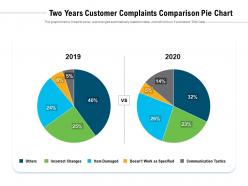
Two years customer complaints comparison pie chart





Try Before you Buy Download Free Sample Product
 Impress Your
Audience
 100%
Editable
 Save Hours
of Time


Enable folks to enjoy the breaks with our Two Years Customer Complaints Comparison Pie Chart. Ensure the interim is interesting.
People who downloaded this PowerPoint presentation also viewed the following :
Two years customer complaints comparison pie chart with all 2 slides:
Brief the interns with our Two Years Customer Complaints Comparison Pie Chart. Guide them on how to act at the first instance.

FAQs for Two years customer complaints
From what I've seen, customer complaints are pretty predictable across most industries. Poor service and rude staff top the list everywhere - retail, tech, healthcare, you name it. Product defects hit e-commerce and manufacturing hard, while telecom and utilities get slammed with billing screwups constantly. Delayed responses are another big one. Most of it comes down to either "your product sucked" or "your people were awful to me." The details change but those core issues don't really. Oh, and definitely track your complaint types monthly - catching patterns early saves you major headaches later.
Honestly, just make some basic buckets first - product stuff, billing drama, service complaints, whatever makes sense for your business. I always add a random "other" category because trust me, people will find ways to complain about things you never imagined. Tag everything consistently though, otherwise your data's gonna be useless later. Excel works fine for tracking this - don't overcomplicate it. After a few weeks you'll start seeing patterns. Like maybe billing complaints always spike right after your monthly charges hit, or certain products are total lemons. The consistency part is key here.
Honestly, customer feedback is like having a free army of quality testers. They'll spot what's broken way before you do. When someone complains, they're basically handing you a fix-it list - which beats randomly guessing what's wrong. Here's the thing though: don't get hung up on every single complaint. Look for patterns instead. If three people mention the same problem, boom - that's your top priority. I'd start tracking the common stuff and let that guide your updates. It's actually pretty genius when you think about it.
So here's what works for me - sort complaints by impact and urgency first. Safety stuff and legal risks obviously come first, then anything hitting tons of customers. I made this basic scoring system that looks at revenue impact, how many people are affected, and whether it could blow up bigger. The customers screaming "I'm never shopping here again!" are usually just loud, not actually your biggest problem (learned that the hard way). Way better to focus on the systemic issues that could spiral or trash your reputation. Set clear criteria so your team doesn't have to guess what needs immediate attention vs. what can sit until next week.
Dude, unresolved complaints are brutal for your business. About 70% of ignored customers won't come back - that's huge. They'll also trash you online and tell their friends. Social media makes it even worse now, you know? New customers see those angry reviews and just move on to your competitors instead. Here's the thing though - you don't need to fix every problem instantly. Just respond fast and acknowledge what happened. Sometimes that alone keeps people from totally writing you off. I've seen companies save relationships just by saying "we hear you and we're looking into it."
Honestly, social media customer service is pretty straightforward once you get the hang of it. Set up alerts for your brand name first - you'll catch complaints way faster that way. Twitter and Facebook are obvious picks, but Instagram comments can be brutal too, so don't ignore those. Always respond publicly first (shows you're paying attention), then move sensitive stuff to DMs. I'd make some templates for common complaints because typing the same thing over and over gets old fast. The whole transparency thing really works - other customers see you actually care about fixing problems instead of just ignoring them.
Start with clear timeframes - 24 hours to acknowledge, maybe 5 days to resolve. Document everything so you can actually spot patterns later (this part's honestly huge for preventing repeat issues). Train your team on listening skills, not just following steps. Create escalation paths so complaints don't get buried in someone's inbox forever. I'd also set up monthly reviews of complaint data - you'll be shocked what trends pop up. The whole thing should feel human, not like talking to a robot. Oh, and make sure there's a real person customers can reach if the first level doesn't work out.
Dude, response time is HUGE for customer happiness. Like, way bigger than you'd think. If you hit them back within an hour versus waiting a whole day? We're talking 60% better satisfaction rates - that's crazy. Even when you can't fix their problem right away, just shooting back "got it, looking into this" makes people feel heard. The trick is being upfront about timing. Tell them you'll have a real answer by Friday, then surprise them Wednesday if you can swing it. People just hate being left in the dark, you know?
Track your first-call resolution and average resolution time - those are your bread and butter metrics. Customer satisfaction scores right after you close cases matter way more than people think. I'd throw in complaint escalation rates and how often the same issues keep coming back, since that shows if you're actually fixing things or just slapping temporary fixes on everything. Resolution cost per complaint is worth watching too. Honestly, CSAT surveys sent within 24-48 hours of closing a case will tell you everything you need to know about whether your team's doing their job right. Set those up to go out automatically.
Honestly, complaints are just free feedback from people who actually use your product. When someone's mad enough to complain, they're telling you exactly what's broken - way better than any focus group. Start tracking what keeps coming up. If ten people complain about the same thing, boom, that's your next priority. Set up some kind of system to spot trends instead of just putting out fires. The whole mindset shift is huge though - stop seeing complaints as problems and start seeing them as someone literally handing you a roadmap for improvements. It's kinda wild how much insight angry customers give you.
So B2B complaints are way more formal and relationship-heavy - you're dealing with account managers, SLAs, the whole nine yards. Losing one client can literally wreck your quarter, so there's actual pressure there. With B2C it's all about speed and volume. Think chatbots, quick fixes, get people happy fast. B2B needs deeper investigation and custom solutions since contracts are worth serious cash. B2C? Most complaints get standardized responses. Personal relationships matter huge for B2B clients. For B2C, just build efficient systems that work.
Definitely use real customer complaints from your company's past - way more effective than made-up scenarios. Active listening is huge here. Most angry customers just want to feel heard, honestly. Practice de-escalation tactics and teach your team to ask questions that lead toward solutions. Oh, and make sure they're ready for different personality types because you'll get everything from quiet complainers to total screamers. Theory's nice but repetition with feedback is what actually works. I'd do monthly sessions where people can share war stories about what bombed versus what saved the day.
Honestly, Zendesk or Freshdesk are lifesavers for this stuff. They track complaints from beginning to end and let you categorize everything. The dashboards help you catch patterns before things get crazy. I was skeptical at first but damn, they really do save hours once you're used to them. Chatbots can handle the initial intake too - less work for you. Start with just one platform though. Trust me, don't try setting up everything at once or you'll want to throw your computer out the window. The analytics features are solid for spotting repeat issues.
Dude, this is such a huge thing that companies mess up all the time. Japanese customers will literally just ghost you instead of complaining - they hint around issues or stop buying entirely. Germans and Americans? They'll tell you exactly what sucks. Then you've got cultures where people won't challenge businesses because of that whole respect-for-authority thing. Social media complaints are everywhere in places like the US but way less common in traditional markets. Honestly, if you're not tweaking how you collect feedback for different regions, you're probably missing half the complaints that are happening in ways you don't even recognize.
Honestly, complaints can get messy fast if you're not careful. Discrimination and retaliation claims are probably your biggest headaches - customers love saying you treated them worse after they complained. Document literally everything though, because if things go sideways you'll need that paper trail. Privacy stuff is huge too, especially if you're in finance or healthcare where regulators actually have teeth. Don't just wing it with customer data during investigations either - those privacy laws keep getting tighter. Oh, and make sure your whole team actually follows the same process. Inconsistency just makes you look incompetent if you end up in court.
No Reviews