

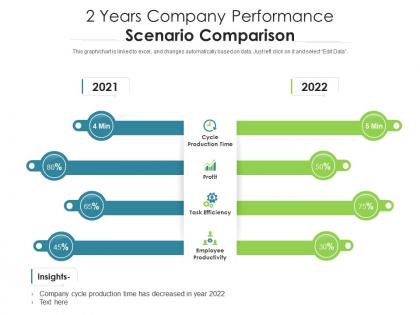
2 years company performance scenario comparison




Try Before you Buy Download Free Sample Product
 Impress Your
 Audience
 100%
100% Editable
 Save Hours
 of Time


Our 2 Years Company Performance Scenario Comparison are topically designed to provide an attractive backdrop to any subject. Use them to look like a presentation pro.
People who downloaded this PowerPoint presentation also viewed the following :
2 years company performance scenario comparison with all 2 slides:
Use our 2 Years Company Performance Scenario Comparison to effectively help you save your valuable time. They are readymade to fit into any presentation structure.

FAQs for 2 years company
Mix quantitative stuff with qualitative - you need both. Throughput, response times, resource usage are your core metrics. Error rates and availability percentages matter too, obviously. User satisfaction scores are clutch though - honestly, sometimes those tell you more than the technical stuff. Definitely compare current performance against historical data because managers eat that up. Oh, and capacity planning info is huge for decision-making. Any bottlenecks you've spotted should go in there. Here's the thing - organize everything by business impact, not how complex the tech is. Makes it way easier for people to actually act on your findings.
First thing - figure out what "good performance" actually means for your team and set some clear benchmarks. I'd check in quarterly (any longer and you're basically playing catch-up with problems). Compare your numbers against industry standards or how you did last quarter. Look at the hard data - productivity, quality scores, whether deadlines are getting hit. But also talk to people! Sometimes the metrics look fine but everyone's secretly miserable. Oh, and don't just blame individuals - your processes might be the real issue. Way better to be proactive about this stuff than scrambling when everything's on fire.
Okay so benchmarking is basically how you figure out if you're actually doing well or just think you are. You compare your numbers to competitors, industry averages, or your own past results to get a real picture. Otherwise you're just guessing - maybe you think you're killing it but you're actually way behind everyone else. It shows you exactly where the gaps are and what deserves your attention first. The trick is choosing benchmarks that actually matter to your goals, not just stuff that makes you feel good. Trust me, vanity metrics are tempting but they won't help you improve.
Dude, charts and graphs will save your life here. Nobody wants to stare at spreadsheets full of numbers - your brain just glazes over. With visuals, you'll spot weird patterns and trends right away that would take forever to catch otherwise. Heat maps are clutch for seeing how different teams stack up, and line charts show you what's happening over time. I swear, executives eat this stuff up compared to boring data tables. Start simple with bar charts and basic dashboards. Your analysis will actually get read for once instead of getting ignored in someone's inbox.
Don't analyze stuff without context - that's where people mess up the most. Also avoid cherry-picking numbers that just make you look amazing. I swear, comparing Q4 holiday sales to Q2 is like... why would you even do that? But I see it constantly. External factors matter too - market shifts, system changes, whatever. Short-term trends will fool you every time. Always cross-check with other data sources before you present anything. Having someone else review your work isn't just smart, it's basically required if you don't want to embarrass yourself.
Honestly? Monthly works for most stuff, but it really depends on what you're tracking. Critical systems need way more attention - maybe weekly or even daily when you're actively fixing things. I've watched teams completely burn themselves out checking metrics every damn day though. Quarterly deep dives are solid for big picture planning. Monthly catches issues before they spiral. The real trick isn't being perfect about it - just pick something your team won't hate doing and stick with it. You can always adjust based on what the numbers are actually showing you.
Honestly, your managers only see like 20% of what actually happens. Getting feedback from peers and direct reports fills in those gaps - you'll catch how someone really collaborates or handles problems when the boss isn't around. People act totally different with different colleagues, which is why that 360 view matters so much. The trick is being specific with your questions though. Don't just ask "how's Sarah doing?" Ask about actual behaviors and impact. Otherwise you'll get useless generic responses that don't help anyone.
Dude, automated tools are a game changer for tracking performance stuff. Instead of manually pulling data from everywhere, you can set up dashboards that do it automatically - saves hours every week. Real-time monitoring platforms will actually ping you when metrics hit certain thresholds, which is clutch for catching issues early. I literally don't know how I survived before getting automated alerts set up. Reports can run themselves on whatever schedule you want too. My advice? Figure out which manual tasks eat up most of your time first, then find tools to handle those specific things.
Lead with your exec summary - busy people want the punchline first. Charts beat spreadsheet dumps every time (trust me, nobody's reading those number walls). Don't just throw data at them. Explain what it actually means for their goals. Skip the jargon and connect everything to real actions they can take. Oh, and definitely prep for when someone asks "what happens if we ignore this?" Have those risk scenarios ready because that question always comes up.
Honestly, performance analysis is a game-changer for figuring out what your team's actually accomplishing. Track what drives revenue, saves money, or makes customers happy - then shift your priorities based on that data. You'll be shocked at how much time everyone wastes on random busy work that doesn't matter. Map your current projects to business goals first and see where the disconnects are. The trick is picking metrics that actually tie back to company objectives so your whole team isn't just spinning wheels. Trust me, once you start doing this you can't go back.
Honestly, you can't just compare departments straight up - there's too much different stuff going on. Sales and engineering are basically playing different sports, you know? Resource levels, team sizes, market timing, seasonal weirdness... it all matters. Budget constraints too, plus they're probably using totally different tools and processes. What works better is setting up relative benchmarks instead of hard numbers. I'd make weighted scorecards that actually account for these variables. That way you're not comparing a motorcycle to a pickup truck. First step though - just map out what's actually different between your teams.
Honestly, you need that hard data to back up your decisions instead of just winging it with gut feelings. Spot which initiatives actually work and where you're wasting money. Plus see what competitors do better than you. Without performance analysis, you're basically driving blindfolded - might get lucky, might crash into a tree. Look at both leading and lagging indicators so you can fix things before they blow up. Oh, and pick 3-5 metrics that actually connect to your goals and watch them like a hawk.
Honestly, the main thing is keeping everything fair across the board - no playing favorites or letting weird biases slip in. Base reviews on actual work performance, not whether someone's your golf buddy or reminds you of that annoying coworker from 2019. Write everything down objectively so there's no confusion later. Give feedback people can actually use to improve. Oh, and keep the confidential stuff locked down tight - nobody wants their review details floating around the office. Let employees respond to what you write too. It's really just about being respectful and sticking to work stuff, not personal impressions.
So basically, dig through your old data and look for patterns - like seasonal stuff or growth trends. I'd grab at least 12-18 months of data if you have it. Even just throwing it into Excel and making a trend line can show you surprising things (I know, Excel sounds boring but it actually works). Pick one metric that really matters to your business first. Don't try to analyze everything at once or you'll go crazy. Once you spot the patterns, you can start predicting what'll probably happen next. Clean data helps a ton though.
Look, continuous improvement is what separates useful performance analysis from just... making charts that nobody cares about. Your data means nothing if you're not constantly tweaking based on what you learn. I'd start with monthly check-ins on your current metrics - see what's actually moving the needle and what isn't. Question your KPIs regularly. Test different ways of measuring stuff as your business changes (because it will). The whole cycle should be: analyze, try something, measure how it went, then adjust. Otherwise you're just stuck with the same old dashboard that looked cool six months ago but doesn't help anyone make better decisions now.
-
Perfect template with attractive color combination.
-
Presentation Design is very nice, good work with the content as well.