


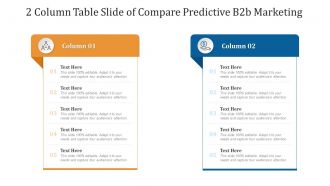
2 column table slide of compare predictive b2b marketing infographic template





Try Before you Buy Download Free Sample Product
 Impress Your
Audience
 100%
Editable
 Save Hours
of Time


Professionals belonging to any sector can use this set titled 2 Column Table Slide Of Compare Predictive B2b Marketing Infographic Template. From managers, executives to lower level employees, every individual can use this tool to present insightful details and implications in a well structured format. Various charts and graphs are added to this infographic design that makes it a resourceful set. Not only will this add to the informative qualities of this template, but it also makes it an instant attention grabber. Apart from this, it offers at a glance view of the topics, thus simplifying complex concepts. This helps in retaining the information presented for a long time. The biggest quality of this template is its visual elements, all added to elevate the aesthetic appeal of the presentation. Therefore download this template and present a customized version of it without any trouble.
People who downloaded this PowerPoint presentation also viewed the following :
2 column table slide of compare predictive b2b marketing infographic template with all 2 slides:
Use our 2 Column Table Slide Of Compare Predictive B2b Marketing Infographic Template to effectively help you save your valuable time. They are readymade to fit into any presentation structure.

FAQs for 2 column table slide of compare predictive b2b
B2B targets companies and it's all about logic - ROI, solving problems, that corporate stuff. Takes forever though, like months of committee meetings. B2C is totally different - you're hitting individual people with emotion and lifestyle vibes. Way faster decisions. Your messaging flips completely too. Companies want data dumps, case studies, all the boring details. Regular consumers? They care how your product makes them feel or if it'll make them look good. Honestly, just figure out if you're selling to businesses or regular people first. Everything else flows from there - your whole strategy changes.
Honestly, data analytics is a game-changer for B2B marketing. Instead of throwing stuff at the wall, you'll actually know which channels bring in quality leads. The attribution tracking gets a bit technical (warning: spreadsheet heaven ahead), but man, it makes proving ROI so much easier when you're talking to executives. You can spot exactly where prospects bail in your funnel and figure out the best times to hit them with campaigns. Predictive stuff helps too - flags which leads might actually close. First step? Get proper tracking set up on your site and link it to your CRM. That's your foundation right there.
Okay so content marketing is basically how you get leads to come to you instead of hunting them down. Way better than cold calling, trust me. You create stuff like whitepapers or case studies that actually solve problems your customers have. They find it through Google or whatever, then give you their email to download it. The trick is figuring out what keeps your ideal customers up at night, then making content around those specific headaches. Different content for different stages too - someone just researching needs different info than someone ready to buy. Honestly beats chasing people around LinkedIn all day.
B2B personas are a total headache compared to B2C. You're not just targeting "Sarah who does yoga" - you've got entire committees to worry about. There's the tech person who'll nitpick specs, the budget holder, actual users, plus that one influencer who shows up late and torpedoes everything. Honestly, I've seen deals die because someone forgot about the CFO's assistant who has weird opinions about software. Each person cares about different stuff and talks differently. Map out who's actually sitting in those buying meetings at your target companies first. That's where you start building real personas, not some generic template.
Dude, email marketing and LinkedIn are your best bets for B2B stuff. Email's great because you can actually talk directly to leads without algorithms screwing you over. LinkedIn is where all the decision-makers waste time anyway, so might as well meet them there. Content marketing works too if you know what you're doing - shows people you're not just another sales guy. SEO and webinars can pay off, but they're slow as hell. Honestly though, it really comes down to who you're trying to reach. I'd test LinkedIn and email first since you'll know pretty fast if they're working, then branch out from there.
Dude, B2B is all about relationships - way more than B2C. These deals take forever to close and you've got like 5 different people making decisions. Plus they're spending serious money, so trust is huge. Nobody wants to risk their company's budget on someone sketchy, you know? I've seen so many salespeople jump straight into pitching and it backfires hard. Focus on actually helping first. Be the person they can rely on for good advice, even if it doesn't lead to a sale right away. That's how you get referrals and repeat business.
Look, pipeline metrics are your bread and butter - MQLs, conversion rates from lead to opportunity, deal velocity. Revenue attribution? That's the dream but honestly a pain to track with long B2B cycles. Cost per acquisition and lifetime value matter huge since these deals are bigger but need way more handholding. Email opens and content downloads seem basic but they actually predict pipeline health pretty well. Just start tracking this stuff consistently. Your attribution will probably suck at first but you'll figure it out as you go.
Dude, B2B sales cycles are brutal - like months or years instead of impulse buys. You've got committees of people who all need convincing, not just one person with their credit card out. Expect tons of research, endless demos, vendor comparisons. Then they disappear for weeks getting approvals from bosses you'll never meet. Honestly makes me miss simple retail sometimes! They're spending corporate budgets so everything gets scrutinized to death. Just focus on building relationships and being helpful at every step. Don't rush them - you'll lose the deal.
Look, if you don't adapt to industry trends, you'll just get left behind. Your competitors are already shifting their approach when new tech or buyer behaviors change. Take that whole "digital transformation" craze - sounded like BS at first, but it genuinely changed how companies pick solutions. You've got to adjust your messaging and channels based on what's happening. Stay connected to industry news and actually listen to customer feedback. That way you can catch shifts early instead of scrambling to catch up later. Honestly, it's better to pivot too early than too late.
Look, first thing - slice up your contact list by industry, company size, job role, all that stuff. Then craft your emails to hit their actual pain points instead of generic BS. LinkedIn's clutch for this kind of targeting, honestly. Don't just do the lazy "Hi [First Name]" thing either. Dig into their company news or mention shared connections. Decision-makers care about ROI while end-users worry about day-to-day headaches - totally different messaging needed. My advice? Pick one small campaign to test first. See what clicks, then expand from there. Way easier than trying to personalize everything at once.
Honestly, the worst part is how long these sales cycles drag on - like 6 months to 2 years sometimes. Your prospects have to get approval from entire committees, which makes everything slower. They're terrified of screwing up because the budgets are huge, so they want demos, case studies, references... basically everything under the sun before they'll budge. You've got to nurture them through tons of touchpoints and create content that answers every worry they might have. I'd focus on thought leadership stuff and maybe build some ROI calculators to help them pitch it internally. Trust me, helping them make their business case is half the battle.
Okay so B2B keywords are totally different - you're chasing these super specific, long phrases because business buyers spend months researching stuff. Like "enterprise inventory management software" instead of just "inventory app." B2C is the opposite. Short, punchy keywords that people search when they want to buy NOW. "Running shoes" or "pizza delivery" - you get it. The buying cycles are night and day, honestly. B2B buyers need way more hand-holding through their research process. Map your keywords to each stage of your sales funnel and you'll be golden.
Honestly, your prospects are all over social media researching stuff way before they're ready to talk to sales. LinkedIn's obviously the big one, but don't sleep on Twitter or Instagram depending on what you sell. The key is actually joining conversations and sharing real insights - not just company news nobody cares about. I get that being "social" in B2B feels awkward at first. But here's the thing: your sales people need to be on there too, not just leaving it all to marketing. Start by commenting on industry posts and being genuinely helpful. Save the product pitches for later.
Webinars are honestly underrated for B2B. People actually attend them (unlike those PDFs collecting digital dust). Use them to show off what you know, get solid leads, and move prospects down your funnel. Perfect for demos, industry talks, or getting experts together for panels. Here's the thing though - don't just pitch for an hour. Give real value first. Promote on LinkedIn, email, your site... the usual spots. Then here's what most people mess up: follow up within 48 hours max. Strike while you're still memorable, you know?
Honestly, most people target way too broadly - you're just burning money at that point. Focus on specific personas instead of casting this huge net. Also, your buyer's decision-making process is probably way more complex than you think it is. Quality over quantity with leads too, like I'd rather have 50 solid prospects than 500 random people who'll never buy. Oh and B2B sales cycles are painfully long, so don't expect results next week. You've got to actually nurture those leads properly. I'd start by looking at your current targeting - bet you can narrow it down a ton.
-
Use of different colors is good. It's simple and attractive.