


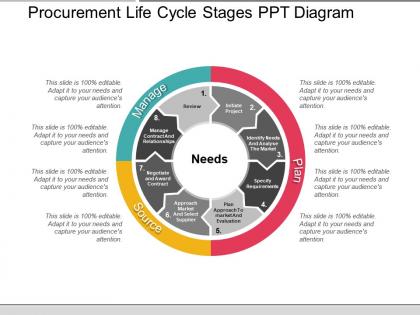
Procurement life cycle stages ppt diagram




Try Before you Buy Download Free Sample Product
 Impress Your
 Audience
 100%
100% Editable
 Save Hours
 of Time


Our Procurement Life Cycle Stages Ppt Diagram ensure you gain acceptance. They help display good habits.
People who downloaded this PowerPoint presentation also viewed the following :
Procurement life cycle stages ppt diagram with all 5 slides:
Elaborate on inflation with our Procurement Life Cycle Stages Ppt Diagram. Enlighten folks on the basic cause factors.

FAQs for Procurement life cycle
So you've got five main phases to work through: planning and requirements, finding suppliers, negotiating contracts, managing performance, then closing or renewing. Honestly, most people blow through the planning part way too fast - big mistake. You really want to nail down exactly what you need before you even start looking at vendors. After that it's pretty straightforward - find potential suppliers, review their proposals, hammer out the terms, then babysit the whole thing until it's done. Trust me on this one - spend the extra time upfront getting your requirements crystal clear. Vendors will tear you apart later if your specs are vague.
Honestly, don't skip the research phase - I've watched too many people rush into RFPs and regret it. You need to know what's out there first, what stuff actually costs, and who the real players are. Finding suppliers isn't just grabbing anyone with a decent website either. Map out maybe 3-5 solid options who can actually hit your deadlines and budget. The whole thing sets up your negotiation power later. Market research gives you those pricing benchmarks so you're not going in blind, plus you'll spot red flags early. Trust me, spending time upfront saves major headaches down the road.
Dude, you HAVE to negotiate - I can't stress this enough. Most people think prices are set in stone but that's just leaving cash on the table. Do it after you've narrowed down suppliers but before signing anything. Don't just focus on unit price either - look at the whole picture. Payment terms, delivery schedules, quality standards, penalty clauses. All of it matters. Come armed with market research and backup options. Honestly, I've seen companies save thousands just by asking the right questions. It's literally free money if you do your homework first.
Honestly, just set up your criteria before you start looking - cost, quality, delivery speed, compliance stuff. Don't wing it like I did once (total disaster). A scoring matrix helps you compare vendors without getting swayed by smooth sales pitches. References are huge too - actually call them. Here's what really works: run small test projects with your top picks first. Way better than diving into some massive contract and realizing they suck six months later. Document what you're doing now, then figure out where you're making gut decisions instead of using real data.
Honestly, most people just sign contracts and forget about them - huge mistake. Set clear metrics and SLAs from day one. Check in with vendors regularly, not just when stuff hits the fan. Document literally everything: changes, problems, calls, emails. Track deliverables against timelines and budgets (obvious but people skip this). Keep stakeholders updated on how things are going. Build actual relationships with vendors - being friendly gets you way further than being difficult. Oh, and create some simple system to track key dates and milestones. You don't want to miss renewal deadlines or whatever.
So basically tech makes procurement way less of a headache. AI can predict what you'll need and find suppliers during planning. E-procurement platforms automate the sourcing part - they compare vendors and handle RFPs digitally. Purchase orders and approvals all happen electronically through integrated systems (thank god, no more paperwork). Contract software tracks renewals automatically, which honestly saves so much time. Plus you get real-time spending data across everything. My advice? Pick whatever stage eats up most of your day and digitize that first. The rest will follow.
Dude, the data thing is brutal - suppliers never track what you actually need, and you'll get three different opinions about the same vendor from different teams. It's honestly a mess half the time. Setting up standard criteria is tough too because how do you compare your IT guy to whoever stocks the break room? Makes no sense. Oh and automate whatever data collection you can from day one, trust me on this. Clear KPIs upfront will save your sanity later when everyone's asking for reports you don't have.
So e-procurement tools are basically like having an assistant handle all your boring paperwork stuff. They automate requisitions, speed up approvals through digital routing, and keep all your vendor info in one place instead of scattered everywhere. The sourcing process gets way smoother too. What I'd do is figure out where you're wasting the most time right now - maybe approvals are taking forever? Then find tools that fix those specific headaches first. You'll get better tracking of spending and compliance automatically, which is nice since nobody wants to dig through paperwork later.
Focus on cost savings and cycle time first - those are your bread and butter. Cost savings proves you're actually adding value, and cycle time shows whether you're slowing everyone down (which honestly happens more than we'd like to admit). Supplier performance is huge too - track their delivery rates and quality because managing those relationships can make or break you. Don't forget contract compliance either. You'll want to see if you're getting what you negotiated for. I'd pick just 2-3 of these to start. Trust me, trying to measure everything right away just creates chaos.
Risk management isn't just a one-time thing - it runs through your whole procurement process. Start by checking supplier risks during sourcing, then look at their financial stability when selecting vendors. Build mitigation clauses right into contracts. Performance monitoring is where you'll catch delivery and quality issues (honestly, this stage trips up most people). After contracts are signed, do regular supplier health checks and keep backup plans ready. I learned the hard way that treating risk like an ongoing conversation with suppliers works way better than just filing paperwork. Set up quarterly reviews with your critical vendors.
Honestly, just don't play favorites with vendors - that's where people get burned. Document why you picked who you picked, give everyone a fair shot at bidding, and keep each vendor's info away from their competitors. Personal relationships and kickbacks? Yeah, stay far away from that mess. I always think about whether I'd be cool seeing my decisions on the front page tomorrow - sounds dramatic but it works. Oh and transparency is huge throughout the whole thing. Short version: build processes that won't come back to bite you later.
Cross-department collaboration is a game changer for procurement - seriously. Get finance, ops, legal, and your actual end-users talking early instead of passing things around like hot potato later. You'll spot problems before they blow up your budget. Better requirements, realistic pricing, smoother contracts. The whole thing just flows better when everyone's on the same page from day one. I learned this the hard way on a project last year where we had to backtrack three times because nobody talked to IT upfront. Map out who needs input at each stage before you start your next buy.
Honestly, start with contract law basics and negotiation skills - that's where you'll see the biggest impact. Risk assessment and vendor evaluation are super important too. Your team needs to get up to speed on compliance stuff and budget management since procurement basically touches everyone. Oh, and if you're using any specialized software, definitely get training on that. Communication skills matter more than people think because you're constantly dealing with different departments. I'd probably focus on contracts and negotiation first though - those skills pay off immediately. The rest you can layer in once you've got those down.
Start by baking green requirements right into your sourcing specs - stuff like energy efficiency and ethical labor practices. When you're evaluating vendors, score them on their actual environmental certs, not just the flashy marketing (some companies are surprisingly sneaky about greenwashing). Build sustainability KPIs into your contracts so there's real accountability. Local suppliers are clutch too - cuts down shipping emissions plus you're helping the community. Oh, and make sure sustainability has actual weight in your decision matrix. Don't just treat it like some afterthought box to check.
Market shifts mess with every part of procurement, no joke. Supply chain issues? You're suddenly scrambling for backup suppliers and stretching timelines. Prices going crazy means your evaluation metrics change halfway through - super annoying but what can you do. New regulations or political drama can torpedo your whole vendor shortlist. Build flexibility in from day one, that's my advice. I always tell people to monitor the market regularly and line up Plan B suppliers before things go sideways. Trust me, you don't want to be caught without options when everything hits the fan.
-
Very well designed and informative templates.
-
Designs have enough space to add content.