

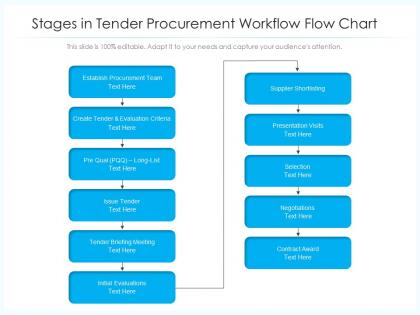
Stages in tender procurement workflow flow chart




Try Before you Buy Download Free Sample Product
 Impress Your
 Audience
 100%
100% Editable
 Save Hours
 of Time


Our Stages In Tender Procurement Workflow Flow Chart are topically designed to provide an attractive backdrop to any subject. Use them to look like a presentation pro.
People who downloaded this PowerPoint presentation also viewed the following :
Stages in tender procurement workflow flow chart with all 2 slides:
Use our Stages In Tender Procurement Workflow Flow Chart to effectively help you save your valuable time. They are readymade to fit into any presentation structure.
FAQs for Stages in tender procurement
So basically you start with figuring out what you actually need and planning it out. Then comes drafting the tender - all your requirements, evaluation criteria, that whole mess. Next suppliers bid on it after you publish everything. Evaluation is honestly the worst part - scoring every single proposal against your criteria takes forever. Contract award and onboarding the winner wraps it up. Each phase has deadlines and approvals you can't skip. Seriously though, add way more time than you think because procurement drags on. I learned that one the hard way!
So first, figure out your must-haves - financial stability, relevant experience, the technical stuff that actually matters for your project. Post everywhere you can think of: procurement sites, industry groups, maybe even hit up suppliers from similar projects (honestly feels like stalking sometimes lol). Once responses come in, score them using weighted criteria so you're not just going with gut feelings. Check their references too - people lie on proposals all the time. For big contracts, site visits are worth it. The trick is being super clear about what you want upfront so you don't waste time on suppliers who can't deliver.
Pre-qualification is like your first screening round - it filters out suppliers who can't actually handle the job. You check their finances, tech skills, and past work before they waste time on full proposals. Honestly saves you tons of headaches later when you're not stuck reviewing bids from companies that sound impressive but are totally out of their league. It creates a solid shortlist of people who can actually deliver. Just make sure your criteria match what really matters for the project - I've seen people get too picky and lose some decent options that way.
Definitely start with the tender docs - all the compliance stuff is buried in the legal terms section. Get someone on your team who knows procurement law because honestly, it's way trickier than you'd think. Format requirements and deadlines are non-negotiable, so don't mess around there. Also grab any mandatory certs or docs they want included. I always make a checklist and just work through it step by step. Oh, and build in buffer time for reviews - that's where most people screw up and get tossed out. Rushing compliance is basically asking to get disqualified.
Honestly, you need to get super specific about what you want - none of that vague bullshit that leaves suppliers guessing. Create detailed technical specs and clear evaluation criteria with weighted scores. Set realistic timelines too because rushing always backfires. Oh, and here's something I learned the hard way - define what "experience" actually means to you. Separate your must-haves from nice-to-haves. Before sending it out, read through everything like you're the supplier bidding on it. Trust me, your procurement team will love you for this, and you'll get responses that actually make sense.
Set up your scoring criteria before anything else and don't budge from them. I'd make a weighted matrix covering tech specs, cost, and vendor strength - share the exact same criteria with every bidder upfront. Have your team score separately first, then compare. You'll be shocked how differently people interpret the same proposal. Document every score with solid reasons because guaranteed someone's gonna challenge your decision later. Oh, and make sure the same evaluators handle all submissions using identical standards. Keep detailed notes on why you scored things certain ways so you can defend your choices to the losers.
Oh man, the big ones are always unclear requirements and rushing through everything when you're panicking about deadlines. Seriously, spend way more time upfront figuring out exactly what you need - vague specs are a nightmare later. Don't skip steps in vendor evaluations even when your boss is breathing down your neck (trust me on this one). Keep everyone updated as you go, not just when it's time to decide. Buffer time is your best friend here. Also document literally everything because people forget what they said like... immediately. It'll save your butt later.
Oh man, digital platforms are a game changer for tenders. Automated workflows handle all that document review stuff so you're not drowning in emails. Everything gets centralized - submissions, scoring, the works. AI can do the initial vendor screening (honestly pretty impressive these days), and e-signatures alone save you weeks on contracts. Best part? Complete audit trail for every decision. Makes reporting to the higher-ups painless and keeps compliance happy. Seriously cuts down the headache factor by like 80%.
Start with market engagement sessions 6-12 months out - honestly, these are game changers. Suppliers will catch things you totally missed. Prior information notices work great too, gives everyone a heads up. One-on-one meetings with the big players are worth it, or just do casual coffee chats to see what's actually possible in your market. I did this once and saved myself from writing a completely unrealistic spec. Stay transparent about timelines and what you need, but don't cross any procurement rule lines. The early engagement really pays off when tender time comes.
Honestly, communication can totally make or break your tender - I've watched solid companies crash and burn just because their proposals were a mess. Figure out who's actually reading this thing and what problems they're trying to solve. Then write directly to those concerns. Different people care about different stuff, so you might need to adjust your messaging depending on whether you're talking to procurement, technical folks, or whoever. Keep everything clear and consistent throughout. Bad communication just confuses everyone and makes you blend into the background with all the other forgettable proposals. Build trust by showing you actually get what they need.
Track your cost savings against budget first - that's the obvious one. Timeline stuff matters too, plus how well suppliers actually perform. Response rates are huge though. If you're only getting two crappy bids, your tender process sucks. Quality bidders won't bother with poorly run tenders. Watch contract compliance after you award it. Change orders and disputes will bite you later if you don't. Honestly, the metric I care most about is cycle time - from launch to signed contract. Faster processes usually work better for everyone, and procurement teams that drag their feet create more problems than they solve.
Don't just dump everyone in every meeting - figure out who you actually need when. Map out your main people first: procurement, users, legal, finance, tech folks. Get user input early for requirements. Technical people come in for scoring, legal reviews contracts. Honestly? The worst thing is freezing people out then dealing with their complaints later when they torpedo your project. I've seen it happen too many times. Send quick updates regularly - doesn't have to be fancy. Maybe do a simple RACI chart upfront so nobody's confused about their role or timing.
Honestly, it totally changes how you score bids - you can't just look at price anymore. Now you're digging into carbon footprints and labor practices too. The evaluation takes forever since you're checking all this sustainability stuff. Your tender docs get way more complicated because you have to spell out all the green requirements upfront. Suppliers usually don't have the right paperwork ready (they're still figuring it out tbh), so plan for tons of back-and-forth questions. Pro tip: figure out which sustainability metrics actually matter for what you're buying first.
Start by spotting risks early - dodgy suppliers, delivery problems, compliance stuff. When you're evaluating bids, don't just look at price. Score them on how they'll handle risks too. Most people mess this up because they're obsessed with saving money (guilty of this myself tbh). Your contracts need contingency plans and risk-sharing built right in. After you award it, keep tabs on everything with regular supplier check-ins. The whole point is making risk checks routine at every step. Otherwise you're just crossing your fingers and hoping nothing goes wrong.
Public sector is super regulated - you're stuck with formal evaluation criteria and everything gets documented like crazy. Way less flexibility compared to private companies who can actually negotiate and change things mid-process. With government tenders, you're dealing with EU directives and all that legal stuff, so honestly it's pretty rigid. Private sector? They care more about relationships and can move faster. My advice - if you're doing public tenders, just accept you'll spend forever on compliance paperwork. Build in extra time from the start or you'll be pulling your hair out later.
-
Graphics are very appealing to eyes.
-
Professional and unique presentations.
-
Really like the color and design of the presentation.
-
Great experience, I would definitely use your services further.
-
Great experience, I would definitely use your services further.
-
The Designed Graphic are very professional and classic.
-
Unique design & color.
-
Thanks for all your great templates they have saved me lots of time and accelerate my presentations. Great product, keep them up!
-
Awesome presentation, really professional and easy to edit.