


Tender procurement process presentation flowchart ppt summary




Try Before you Buy Download Free Sample Product
 Impress Your
 Audience
 100%
100% Editable
 Save Hours
 of Time


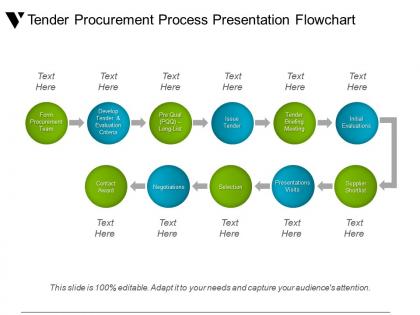
Regulate your procurement bidding with our tender procurement process PPT slide diagram. It helps in improving your existing business procurement model through the tendering process PPT template. It allows your management to describe the best tender management practices for your business in an info graphical manner. Use this procurement management PowerPoint template to take best of economic benefits from your business competitors in the business market. It also allows you to grab some essential business projects also. Use this tender inventory process PPT slide image to develop some effective competitive business strategies. Define the different stages involved in the business procurement framework in a graphical manner. Starting from identifying the need of the material to procure, specifying the same till the final stage of finally procuring the material. Thus, work over this professional Presentation template to design an effective management control measure to evaluate the growth of your business model. Therefore, simply click over the download link given below to start now. Extend full backing to brave folks with our Tender Procurement Process Presentation Flowchart Ppt Summary. Encourage the attempts of intrepid explorers.
People who downloaded this PowerPoint presentation also viewed the following :
Tender procurement process presentation flowchart ppt summary with all 5 slides:
Our Tender Procurement Process Presentation Flowchart Ppt Summary are akin to brick and cement. The basic ingredients of a good event.


FAQs for Tender procurement process presentation
So basically you'll start by figuring out what you actually need, then post the opportunity for suppliers to see. Vendors submit their proposals next - honestly this drags on forever and is where you'll spend most of your time waiting around. After that comes evaluating everything against your criteria, maybe doing some clarifications or presentations if needed. Then pick your winner, award the contract, and let the losers know they didn't make it. The whole thing usually runs 6-12 weeks depending on how complicated it gets, so definitely factor that into your timeline from day one.
Make a scoring matrix for the stuff that matters most - price, tech skills, timeline, past work. I always weight these differently depending on the project. Don't just pick the cheapest option though, seriously burned me before! Check their portfolio and call their references. Their proposal quality tells you everything about whether they actually get what you need. Compare everything the same way so it's fair. Keep notes on everything (saves your butt later) and narrow it down to 2-3 finalists. Then do final interviews before deciding.
Look, transparency is huge for keeping everything fair and legal. You've got to lay out your evaluation criteria, timelines, and how you'll make decisions right from the start. Document everything too - seriously, this part saves your butt later. When suppliers know exactly what you want and how you're judging their bids, they submit way better stuff. Fewer headaches down the road. I've watched so many procurement messes that could've been totally avoided if people just communicated better upfront. It protects you from challenges and keeps bidders happy throughout the whole thing.
Honestly, tech is a game changer for tenders. Start with the boring stuff - automate vendor notifications and go digital for document collection. You'll slash manual data entry (and the inevitable typos that come with it). AI handles initial vendor screening too, which beats staring at spreadsheets for hours. Cloud platforms are clutch because your whole team can jump in and see what's happening in real time. The approval workflows are probably the best part though - documents just zip to whoever needs them next. I'd say tackle your most repetitive tasks first, then build from there.
Honestly, the two big killers are being way too vague about what you want and setting completely unrealistic deadlines. Suppliers aren't mind readers. Also don't go overboard with your evaluation criteria - I've seen RFPs where even I couldn't figure out what they were asking for. Budget reality check too - if you want champagne quality, don't expect beer prices. Include all the boring legal stuff your procurement folks need (learned that one the hard way). And seriously, proofread everything. Typos make you look amateur. Oh, and grab someone else to review it first. You'll miss obvious stuff because you've been staring at it too long.
Oh man, legal requirements basically control everything in tender procurement. Think of them as guardrails keeping your process legit. You've got advertising rules, transparency stuff, documenting every single decision - it's honestly a pain sometimes. The regulations (varies by location obviously) set minimum timeframes, mandatory steps, even how you talk to bidders. Total paperwork nightmare but hey, it prevents sketchy favoritism. My take? Learn your local procurement laws upfront. Build compliance checks right into your timeline from the start. Trust me on this one - way easier than scrambling later when something goes sideways.
Look at three big things: can they actually do the work, do they have money, and have they done this before? Check their certifications and team skills first. Then dig into their finances - credit scores, cash flow, bonding capacity. You don't want them going bankrupt halfway through your project, trust me. Past performance is everything here. Get references and actually call them. Also make sure they're not already swamped with other work. Oh, and create some kind of scoring system so you can compare everyone fairly. Makes the whole decision way less of a headache later.
Honestly, you've got to weave risk assessment into every step of your tender process from day one. Start with your RFP - ask vendors about their contingency plans, insurance, and yeah, their past failures too (that's where you learn how they actually handle problems). Score those answers just like you would technical stuff and pricing. When you're evaluating bids, make risk registers for each shortlisted vendor and factor those potential costs into your total analysis. I learned this the hard way - don't treat risk as an afterthought. Make it a real evaluation criterion upfront.
Oh man, be upfront about your criteria and timeline from the start - suppliers get so annoyed when they're left guessing. I'd probably update them regularly even when nothing's happening (trust me on this one). Host some supplier days to actually get to know what they can do beyond just the paperwork. When you make decisions, give real feedback instead of those awful form rejection emails. Honestly treat them more like future partners than people trying to rip you off. Start tracking all this stuff in a spreadsheet or something so you'll remember conversations later. It makes such a difference for next time.
Yeah, each industry has its own weird quirks for sure. Government stuff is ridiculously rigid - mountains of compliance docs and formal evaluation boxes to check. Construction companies obsess over safety records and what you've built before. IT contracts? They want all your tech certs and security clearances lined up. Healthcare gets super picky about regulatory compliance and whether you've handled sensitive patient data without screwing up. Honestly, the paperwork differences alone will make your head spin. But whatever sector you're targeting, dig into their specific standards first. Once you understand what keeps them up at night, you've got a real advantage over everyone else just sending generic proposals.
So supplier diversity is actually pretty solid for your procurement stuff. Basically you're expanding who you can work with - minority-owned businesses, women-owned, small companies, that whole thing. Yeah it makes the RFP evaluation a bit messier, but honestly? Those smaller diverse suppliers usually move way faster than the big corporate dinosaurs. Plus they come up with solutions the established vendors never think of. I'd build the diversity scoring right into your criteria from the start - don't just tack it on later. Oh and your company will love hitting those social responsibility targets too.
Getting feedback from the bidders who didn't win is seriously valuable - probably more than most people realize. They'll catch things you totally missed, like confusing requirements or crazy deadlines. Sometimes it's stuff that makes perfect sense once they point it out, but wasn't obvious from their end. A quick feedback form works, or just hop on a call with the runners-up. Their input helps you write clearer specs next time. Better scoring criteria too. The whole process gets smoother when you actually listen to what went wrong. Just document everything they tell you - you'd be surprised how much it improves future tenders.
Honestly, the biggest changes are AI handling bid reviews automatically and blockchain finally making everything transparent. Sustainability isn't just a bonus anymore - it's becoming required. Those awful paper processes are getting replaced by digital platforms (thank god). Companies are also pushing hard for supplier diversity now, which is actually pretty cool. Oh, and data analytics helps spot which vendors consistently perform well. Your team should probably start testing these tools soon because early adopters are gonna crush it. The sustainability stuff will definitely change how you score tenders too.
Dude, you absolutely need to train your procurement team on bid evaluation - it's not optional. Poor training means inconsistent scoring and potential legal headaches down the road. Your people have to know weighted scoring systems, compliance checks, and how to spot their own biases. I've watched procurement decisions get completely overturned because evaluators winged it. Short sentences work better than long ones sometimes. Without proper training, you're risking picking the wrong supplier and opening yourself up to challenges. Cover both the technical scoring stuff and whatever legal requirements apply in your area. It's honestly a mess waiting to happen if you skip this step.
Document literally everything - requirements, decisions, all of it. Multiple people should review at each stage, plus you'll want audit trails for vendor communications. Standardized scoring keeps things objective instead of just going with gut feelings. Oh, and definitely separate your evaluation team from whoever's actually talking to suppliers - that's huge for avoiding conflicts. Regular check-ins help spot problems before they blow up. Map out who does what at each step so there's no confusion later. Honestly, the paperwork's annoying but it saves your ass when questions come up.
-
Out of the box and creative design.
-
Unique research projects to present in meeting.