

Tender management powerpoint presentation slides




Try Before you Buy Download Free Sample Product
 Impress Your
 Audience
 100%
100% Editable
 Save Hours
 of Time


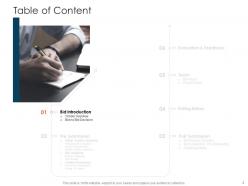
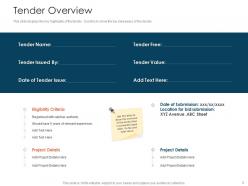
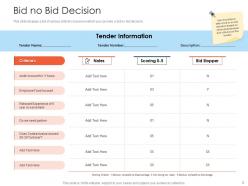
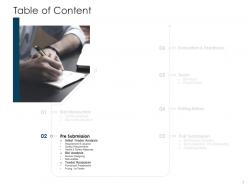
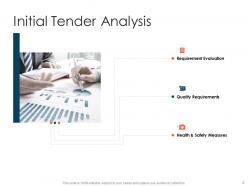
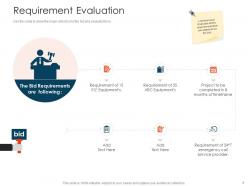
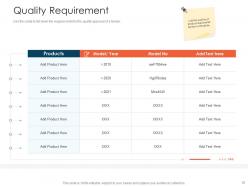
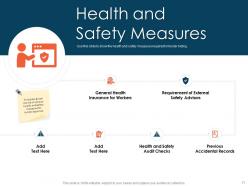
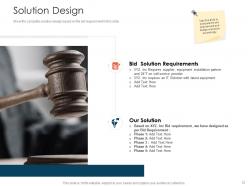
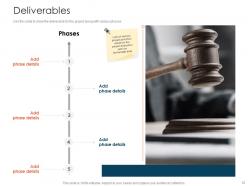
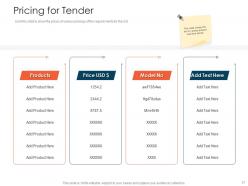
Analyze the tender and its requirements by employing Tender Management PowerPoint Presentation Slides. Take advantage of a visually appealing PPT visual to display various parameters and criteria of the tender. Demonstrate initial tender analysis by employing our ready-to-use PowerPoint templates. By taking the assistance of bid management process PPT themes, you can evaluate all the essential requirements essential for the tender. You can present the criteria for the quality approval of the tender with the help of this content-ready PPT infographics. You can also describe the health and safety measures required for tender bidding using aesthetically appealing PPT visuals. Take advantage of aesthetically appealing PPT layouts to demonstrate the solution design based on the bid requirement. The deliverables for the project and the phases can also be mentioned by utilizing this bid management process PPT slide design. You can display the tender response form to your audience with the help of this PPT slideshow. Depict the pricing for the tender in the tabular form by incorporating the bid evaluation process PowerPoint layout.
People who downloaded this PowerPoint presentation also viewed the following :
Tender management powerpoint presentation slides with all 39 slides:
Use our Tender Management Powerpoint Presentation Slides to effectively help you save your valuable time. They are readymade to fit into any presentation structure.

FAQs for Tender management
Here's what you need for a winning tender: First, nail their requirements - prove you actually understand what they want. Then build a solid technical solution that fixes their problems. Pricing should be competitive but not stupid low (you'll regret that later). Include proof you can deliver: case studies, testimonials, your team's background. Don't forget the executive summary since busy decision-makers might only read that part. Everything should connect back to their specific situation instead of just listing what you can do. Oh, and submit early! Trust me on this one - last-minute tech issues are the worst.
Honestly, you've gotta make a rock-solid checklist and actually follow it. Break down everything in that tender doc - compliance stuff, tech specs, deadlines, all of it. I've watched solid proposals get binned over tiny formatting mistakes, which is just painful to see. Get different people handling separate sections, then have them double-check each other's work. Always build in extra time before the deadline because trust me, something will go sideways at the last second. Oh, and get someone who wasn't involved to do a final review against the original requirements. Fresh eyes catch things you'll miss.
Dude, you absolutely have to do market research first - it's like your secret weapon. Figure out who else is bidding and what they usually charge. I spend way too much time creeping on competitors' LinkedIn profiles, but whatever, it works! Look at past contract winners in that space to see what actually matters to the client. Sometimes it's not just about being cheapest. You can spot partnership opportunities this way too. Oh and don't forget to check if you're pricing yourself into oblivion - I've seen people lose bids by going too high OR too low. Start with mapping the key players before writing anything.
Dude, you've gotta go digital with tender submissions. Project management software tracks your deadlines while automated doc generation saves tons of time. Cloud storage is a game-changer - your whole team can jump in instantly without the old-school binder madness. AI tools actually help with writing and compliance checks now (crazy, right?). Electronic signatures alone will save you hours. Real-time collaboration means no more nightmare scenarios where someone submits the wrong version. Honestly, courier services feel like something from the stone age. Start with just one tool and build up from there.
Missing deadlines is the obvious killer, but honestly? The worst mistake is skimming requirements instead of really reading them. I've watched teams blow it by rushing through compliance stuff and missing mandatory requirements - boom, you're out. Generic proposals are another death trap. Don't lowball costs or promise crazy timelines just to win either, because you'll hate yourself later when everything's falling apart. Oh and definitely have someone else do that final check before you hit submit. Buffer time saves lives.
Dude, you absolutely need everyone in the room from the start. Get technical, sales, finance, and ops talking early - your pricing will be way more realistic. Operations can catch delivery problems before you submit (trust me, overpromising sucks). Legal spots compliance issues that'll kill your bid completely. Yeah, it's like herding cats sometimes, but honestly? Teams that do this win more tenders. Don't wait until the end to loop people in - schedule regular check-ins throughout the whole process. Makes such a difference.
Honestly, start with win rate and how much profit you're making per tender - that's the stuff that actually matters. Time-to-submit is huge too because inefficient teams burn cash fast. Track your bid-to-award conversion rates, and don't sleep on getting feedback from clients even when you lose. That feedback is pure gold for next time. Oh, and cost per submission - I know it sounds boring but you'd be shocked how much money gets wasted chasing deals you'll never win. These five will show you what's actually working vs what just feels productive.
Build risk assessment straight into your evaluation criteria from day one. I'd create a matrix covering financial stability, technical skills, delivery timelines, compliance stuff. Honestly, I've watched so many projects crash because people just went with the cheapest option - such a mistake! Score vendors on how they'll handle problems, not just pricing. Request references you can actually call (half the time they're bogus anyway). Include contingency planning in your tender docs. Make risk weighting about 20-30% of your total score. Short version: don't let a low bid blind you to red flags.
So you gotta do more than just check the boxes, right? Show them something different - maybe you've got some cool methodology or your team crushed a similar project before. Price matters but isn't everything. What really works is proving you actually get their specific problems better than the other guys bidding. Throw in some solid case studies and real numbers from past wins. Oh and make the damn thing look good visually - nobody wants to read a boring wall of text. The compliance stuff just gets you considered, but the creative solutions are what actually win it.
Definitely ask for feedback on every rejection - seriously, most clients will actually tell you why you lost. Yeah, it sucks to hear sometimes, but you'll learn whether you're pricing yourself out or missing technical stuff they wanted. I started keeping a simple log of all the feedback I got, and honestly? Patterns emerge pretty quick. Maybe you're always too expensive on labor costs, or you keep forgetting some random compliance thing. Use that info to fix your templates and pricing approach. Oh, and follow up within a week while they still remember your proposal clearly.
Dude, pricing can totally make or break your tender. You gotta be competitive but not so low that you're basically paying them to do the work - learned that the hard way once. Research what similar projects actually cost first. Then figure out what they really care about besides money - maybe it's your timeline or experience with tricky clients. Price based on that whole package, not just trying to beat everyone else's numbers. Oh and honestly? Sometimes going middle-of-the-road works better than being the cheapest option. Clients get suspicious of lowball bids anyway.
Honestly? Be super responsive and show them you actually get what they're dealing with. Quick replies to questions, ask stuff that proves you're thinking past the basic RFP requirements. Don't be afraid to be transparent about your approach - even admitting where you might need to step up a bit. Most teams just copy-paste generic responses and then act shocked when they lose. During clarification periods, have real conversations instead of just checking boxes. Oh, and this might sound obvious but demonstrate you're already thinking like their partner. Not just another vendor chasing a contract, you know?
Honestly, start with your deadline and work backwards - you're gonna need way more time than you think. I learned this the hard way lol. Break everything down into smaller chunks with some padding built in because something will definitely go sideways. Those project management apps are actually pretty helpful for tracking who's doing what. Your real deadline should be 2-3 days before the official one. Gives you breathing room for final tweaks and reviews. Oh, and daily check-ins that last week are a lifesaver. Have backups ready for anything critical - seriously can't stress this enough.
Just bake it right into your scoring system from the start. Give sustainability maybe 20-30% of your total points - carbon footprint, waste plans, ethical sourcing, that whole thing. I've seen some teams get pretty clever with how they structure this stuff. Ask for actual proof though, not just nice words - certifications, real examples, whatever. Don't spring it on them last minute or you'll get garbage answers. Oh and definitely include local community impact if that matters to your org. The suppliers who care will actually have good stories to tell about this.
Look for people who can write clearly and handle crazy deadlines - that's your baseline. Compliance knowledge is key too, obviously. Project management skills matter way more than people think since you're juggling stakeholders left and right. Critical thinking gets overlooked but it's clutch for analyzing requirements and picking the right approach. Detail-oriented personalities will literally save your butt from embarrassing mistakes. Technical writing background is gold if you can find it. I'd start with seeing who on your team already has some of these skills, then hire or train to fill what's missing.
-
Very well designed and informative templates.
-
Great quality slides in rapid time.
-
Great product with highly impressive and engaging designs.
-
Illustrative design with editable content. Exceptional value for money. Highly pleased with the product.
-
Great quality product.
-
Wonderful templates design to use in business meetings.
-
Unique and attractive product design.
-
Editable templates with innovative design and color combination.
-
Innovative and Colorful designs.
-
Content of slide is easy to understand and edit.