


Project Manager Powerpoint Presentation Slides





Try Before you Buy Download Free Sample Product
 Impress Your
 Audience
 100%
100% Editable
 Save Hours
 of Time


Project managers select specific team members with specific task in mind, they need to know what the goals are where they fit in the bigger picture. He is accountable for success and failure of the project. Download Project Manager PowerPoint Presentation Slides to outline the duties of project manager. Business manager PowerPoint complete deck contains set of slides like project manager, project team structure, core team example, work breakdown structure, activities sequence, communication plan, about us, our goals, financial planning, dashboard, timeline etc. The presentation is very useful for project managers and entrepreneurs. you can use this project management team PPT slide to showcase the project stages in detail. This project group PPT template highlights the team and work break down structure to ensure the better management. Download project management presentation layout for accomplishment of project objectives. Brief folks on fine dining with our Project Manager Powerpoint Presentation Slides. Acquaint them with gourmet foods.
People who downloaded this PowerPoint presentation also viewed the following :
Content of this Powerpoint Presentation
Slide 1: This slide introduces Project Manager. State your company name and proceed.
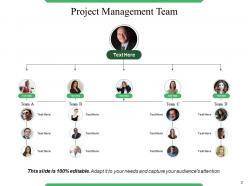
Slide 2: This slide presents Project Management Team in a flow chart form. It covers all the people associated to the project with their names and designations to fill.
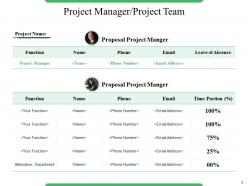
Slide 3: This slide shows Project Manager/Project Team with the following details to add- Project Name, Function, Name, Phone, Email, Leave of Absence, Time Portion %.
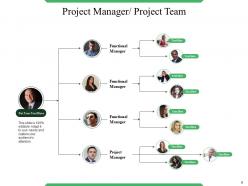
Slide 4: This slide also shows Project Manager/ Project Team with names, designation and image boxes.
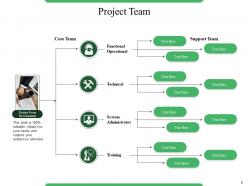
Slide 5: This is Project Team slide showing Project Team Development which is further divided into- Training, Technical, System Administrator, Functional Operational.
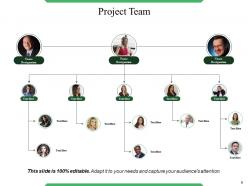
Slide 6: This slide also shows Project Team. Add the names and designation of the members here.
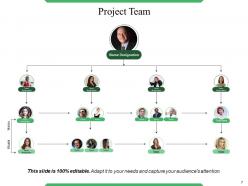
Slide 7: This slide shows another variation of Project Team. Alter as per your requirement.
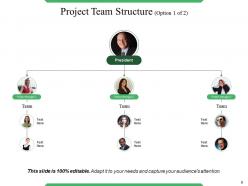
Slide 8: This slide shows Project Team Structure with a flow chart to add relevant information.
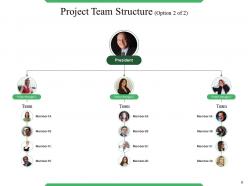
Slide 9: This slide also shows Project Team Structure. Use as per your business needs.
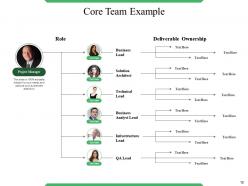
Slide 10: This slide displays Core Team Example flow chart to add relevant text.
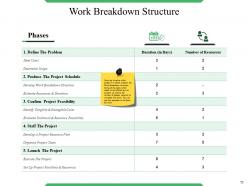
Slide 11: This slide shows Work Breakdown Structure. Once the timeline of the project is in place, prepare the Work Breakdown structure, listing all the tasks which need to be fulfilled and its duration as well as the number of people required to complete that work. You can use this template to list down the work.
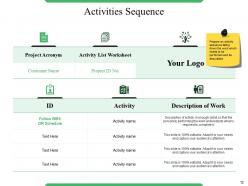
Slide 12: This slide shows Activities Sequence. Prepare an activity sequence listing down the work which needs to be performed and its description.
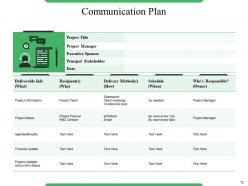
Slide 13: This slide shows Communication Plan table.
Slide 14: This is a Break Time slide to halt. Alter as per your business requirement.
Slide 15: This slide is titled Charts & Graphs to move forward. You may change the slide content as per requirement.
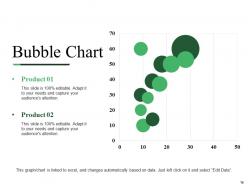
Slide 16: This slide presents a Bubble Chart for showcasing product/ company growth, comparison etc.
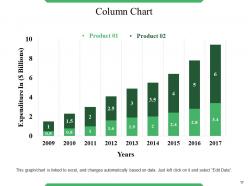
Slide 17: This slide presents a Column Chart for showcasing product/ company growth, comparison etc.
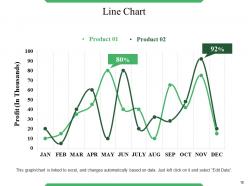
Slide 18: This slide presents a Line Chart showcasing product/ company growth, comparison etc.
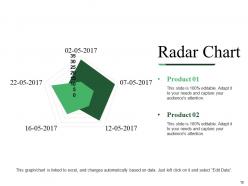
Slide 19: This is a Radar chart slide to show product/ entity growth, comparison etc.
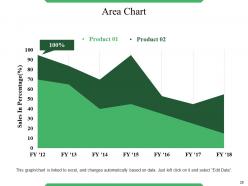
Slide 20: This slide presents an Area Chart for showcasing product/ company growth, comparison etc.
Slide 21: This slide is titled Additional Slides to move forward. You can change the slide content as per need.
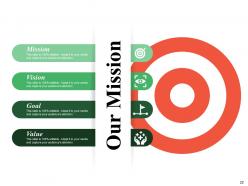
Slide 22: This slide showcases Our Mission. Show your company mission goals etc. here.
Slide 23: This is an Our Team slide with name, image & text boxes to put the required information.
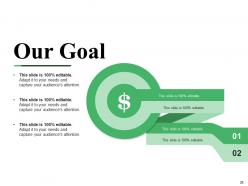
Slide 24: This is Our Goal slide. State your important goals here.
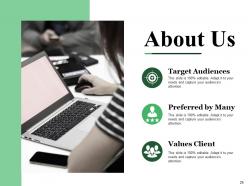
Slide 25: This is an About Us slide showing Target Audiences, Values Client, and Preferred by Many as examples.
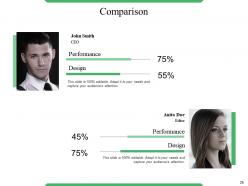
Slide 26: This is a Comparison slide to compare two products/ entities etc.
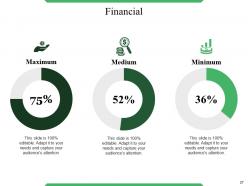
Slide 27: This is a Financial slide with Maximum, Minimum, and Medium parmeters.
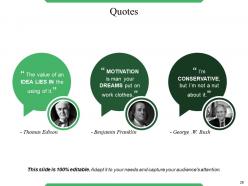
Slide 28: This is a Quotes slide to convey messages, beliefs etc. You can change the slide content as per need.
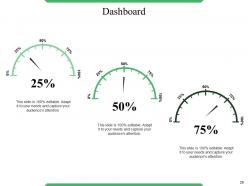
Slide 29: This is a Dashboard slide to state metrics, kpis etc.
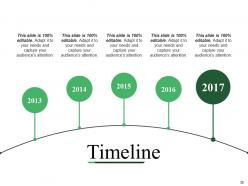
Slide 30: This is a Timeline slide to show evolution, growth, milestones etc.
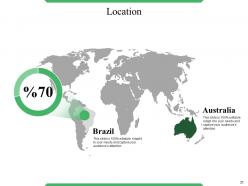
Slide 31: This is a Location slide on a world map image to show global presence, growth etc.
Slide 32: This is a Puzzle image slide to show information, specifications etc.
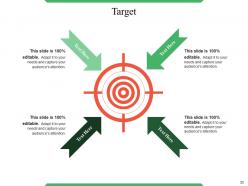
Slide 33: This is a Target image slide. State targets, etc. here.
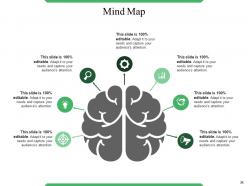
Slide 34: This is a Mind map image slide to show information, specifications etc.
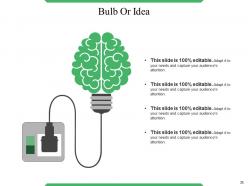
Slide 35: This is a Bulb or Idea slide with creative imagery to show information, ideas, specifications etc.
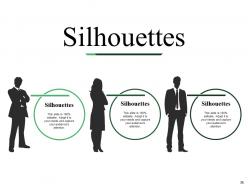
Slide 36: This is a Silhouettes slide to show people specific information etc.
Slide 37: This is a Magnifying Glass image slide to show information, scoping aspects etc.
Slide 38: This is a Thank You image slide with Address, Email and Contact number.
Project Manager Powerpoint Presentation Slides with all 38 slides:
Our Project Manager Powerpoint Presentation Slides are geared to come to your aid. Be certain to get the help you desire.

FAQs for Project Manager
So there's five main phases you gotta know. First is initiation - basically defining what you're actually doing and getting the green light. Then planning, where you map out timelines and figure out who's doing what. Execution is the longest part and honestly, it's always messier than you think it'll be. While that's happening, you're monitoring everything to make sure you're not completely off track. Don't forget the closing phase though! Wrap up deliverables, release your team, and do a retrospective. Those lessons learned will save your butt on the next project.
Agile totally changes how you approach projects - instead of trying to plan everything perfectly upfront (which honestly never works), you break stuff into 2-4 week chunks. Your team delivers actual working pieces regularly so clients can see real progress and give feedback early. Way better than getting to the end and realizing you built the wrong thing. The daily check-ins and team retrospectives make collaboration so much smoother. I'd say start with 2-week sprints on your next project. You'll be surprised how much easier it gets when you're focused on shipping something concrete every couple weeks instead of this abstract final deadline.
Dude, communication really is everything in project management. I've seen so many projects tank just because people weren't talking to each other properly. You'll want to map out who needs what info and when - then actually stick to it. Regular check-ins are your best friend for catching problems before they blow up. Nothing's worse than getting to the end and someone's like "oh wait, this is totally wrong." Trust me on this one. Good documentation saves your butt too. Just keep everyone in the loop and you'll avoid most of the nightmare scenarios.
Ugh, scope creep is the worst! Document literally everything - I mean everything. Even those "oh just one tiny thing" requests will bite you later. Get a proper change process going where people can't just walk up and ask for random stuff. Everything needs approval and impact assessment. No exceptions! I was way too nice on my first project and it was a disaster. Push back when things aren't in the original plan. Seriously, don't feel bad about saying no. Your sanity depends on it lol. Start a shared doc this week to track requests. Trust me on this one.
Honestly, just grab Asana, Monday.com, or Trello for project management - they're all decent so go with whatever doesn't annoy you. Slack keeps everyone chatting without drowning in emails (though my team still manages to overdo it somehow). You'll need Google Drive or Dropbox for files. Toggl's great if you're tracking hours. Oh, and obviously a calendar app - can't believe how many people skip this basic step. Start simple with these, then add fancier stuff later when things get messier.
Honestly, risk management just means figuring out what could go sideways before it actually does. Start each phase by asking "what's gonna bite us in the ass here?" then make backup plans for those scenarios. I learned this the hard way watching projects completely tank because everyone just crossed their fingers and hoped for the best. Spoiler alert - that never works out. Even something basic like a risk register (sounds fancy but it's just a list) can save you so much stress down the road. Way better to be paranoid upfront than scrambling to fix disasters later.
Honestly, most teams just throw people at tasks without thinking it through. Map out what you need against who's actually good at what - not just who's available. Buffer time is everything because someone always gets sick or priorities randomly change (trust me on this). Resource management tools help you see the big picture across timelines. Check in regularly since things shift constantly. Oh and here's what I learned the hard way - don't assign work based on who's free. Pick the person who'll actually nail it efficiently. Makes a huge difference in the end.
Honestly, team dynamics can totally make or break your project. Good communication and trust? You'll crush those deadlines. But when there's drama or people stepping on each other... yeah, that's when everything falls apart. I've watched some really talented teams completely bomb because of personality issues - it's painful to see. The teams that actually create psychological safety though? They innovate like crazy and spot problems before they blow up. As PM, you gotta stay on top of this stuff. Regular check-ins help, plus jump on conflicts fast. Oh, and don't forget to celebrate the wins!
Honestly, start tracking every penny from day one - I can't stress this enough. Set up weekly budget check-ins and actually stick to them (easier said than done, I know). Break down your budget by project phases so you're not flying blind. Most people avoid looking at the numbers until it's a complete disaster - been there myself on past projects and it's not fun explaining those overruns later. Build in contingency money upfront. Get approval before any scope changes happen. Project management tools help tons with tracking who's doing what and burning through budget where. Trust me, you'll be so glad you did this legwork when you're not panicking at the end.
Oh man, definitely watch for missed deadlines and budget issues - those are obvious ones. But honestly? The moment people start mysteriously "having conflicts" during project meetings, you know you're screwed. Communication falls apart, stakeholders go radio silent, and quality starts sliding. Here's what I'd do: just be straight with everyone about what's broken. Take a hard look at your timeline (probably too optimistic anyway). Talk to stakeholders more often, even when it's awkward. Don't wait to flag problems - I've learned that the hard way. Sometimes you gotta hit pause and regroup instead of pretending everything's fine.
So every industry basically grabs the standard PM methods and tweaks them for their own chaos. Construction sticks with waterfall because, well, you can't exactly pour concrete before the foundation exists. Tech loves agile since they're constantly changing direction based on whatever users are complaining about today. Healthcare and finance? They throw compliance checks into everything - honestly makes sense given the regulations they deal with. Manufacturing mixes lean principles with regular PM to cut out waste. Really comes down to your industry's rules, timelines, and how much risk they can stomach.
Think of project docs as your team's brain backup - captures all the decisions, requirements, and changes so you're not screwed when people quit or forget stuff. Trust me, you'll need it when stakeholders start asking questions and for managing risks. Honestly, it's also great for CYA moments when someone goes "wait, why did we build it like this?" months later. Future projects can learn from your mistakes too, which is actually pretty cool. Just start documenting early and keep updating it. You'll be so grateful you did when you're not digging through old emails trying to remember what happened.
Honestly, emotional intelligence is a game-changer for project management. You'll spot team drama brewing way before it blows up. Different people need different approaches - some want direct feedback, others need more encouragement. I've seen so many PMs crash and burn because they can't read their stakeholders. When you're stressed (and you will be), self-awareness keeps you from snapping at people or making dumb decisions. Oh, and pay attention to how your team reacts when you communicate. If someone always looks confused after meetings, maybe switch up your style with them.
Honestly, you need way more check-ins than feels normal at first - like weekly one-on-ones minimum. Get everyone on Slack for quick updates and use project management software to track who's doing what. The documentation thing is huge since you can't just peek over someone's shoulder anymore. I'd set "office hours" so people know when to expect responses. Oh, and build buffer time into deadlines because remote work always takes longer than you think. Video calls help too, even if they feel awkward initially. Trust me, catching problems early beats dealing with disasters later.
Oh man, global projects can be tricky! Different cultures handle deadlines and feedback completely differently - some are super direct, others beat around the bush forever. Plus hierarchy matters way more in some places than others. Time zones are annoying but honestly that's the easy part. What really gets you is when half your team needs consensus for every tiny decision while the other half just wants someone to call the shots. My advice? Build in way more time for back-and-forth communication than you think you'll need. Also set up clear protocols early about who makes what decisions - trust me on this one.
-
Innovative and attractive designs.
-
Innovative and Colorful designs.