


Construction Project Management Powerpoint Presentation Slides
Construction project management is the process of planning, coordinating, and executing a construction project from start to finish. Construction project managers are responsible for ensuring that all aspects of the construction process are completed on time, within budget, and to the required quality standards. Project management is a complex process, but with the help of SlideTeam’s project management PowerPoint templates, you can make it easier. Our templates are easy to use and customizable, so you can create presentations that fit your specific needs. Plus, our team is always updating our templates to ensure that you have access to the latest and greatest features. Download them now and see how they can help you streamline your construction project management process.
Construction project management is the process of planning, coordinating, and executing a construction project from start t..







































-

- Google Slides is a new FREE Presentation software from Google.
- All our content is 100% compatible with Google Slides.
- Just download our designs, and upload them to Google Slides and they will work automatically.
- Amaze your audience with SlideTeam and Google Slides.
-

Want Changes to This PPT Slide? Check out our Presentation Design Services
-

- WideScreen Aspect ratio is becoming a very popular format. When you download this product, the downloaded ZIP will contain this product in both standard and widescreen format.
-

- Some older products that we have may only be in standard format, but they can easily be converted to widescreen.
- To do this, please open the SlideTeam product in Powerpoint, and go to
- Design ( On the top bar) -> Page Setup -> and select "On-screen Show (16:9)” in the drop down for "Slides Sized for".
- The slide or theme will change to widescreen, and all graphics will adjust automatically. You can similarly convert our content to any other desired screen aspect ratio.
Compatible With Google Slides

Get This In WideScreen
You must be logged in to download this presentation.


Do you want to remove this product from your favourites?
PowerPoint presentation slides
It covers all the important concepts and has relevant templates which cater to your business needs. This complete deck has PPT slides on Construction Project Management Powerpoint Presentation Slides with well suited graphics and subject driven content. This deck consists of total of sixty three slides. All templates are completely editable for your convenience. You can change the colour, text and font size of these slides. You can add or delete the content as per your requirement. Get access to this professionally designed complete deck presentation by clicking the download button below.

People who downloaded this PowerPoint presentation also viewed the following :
Content of this Powerpoint Presentation
Slide 1: This slide introduces Construction Project Management. State your Company name and begin.
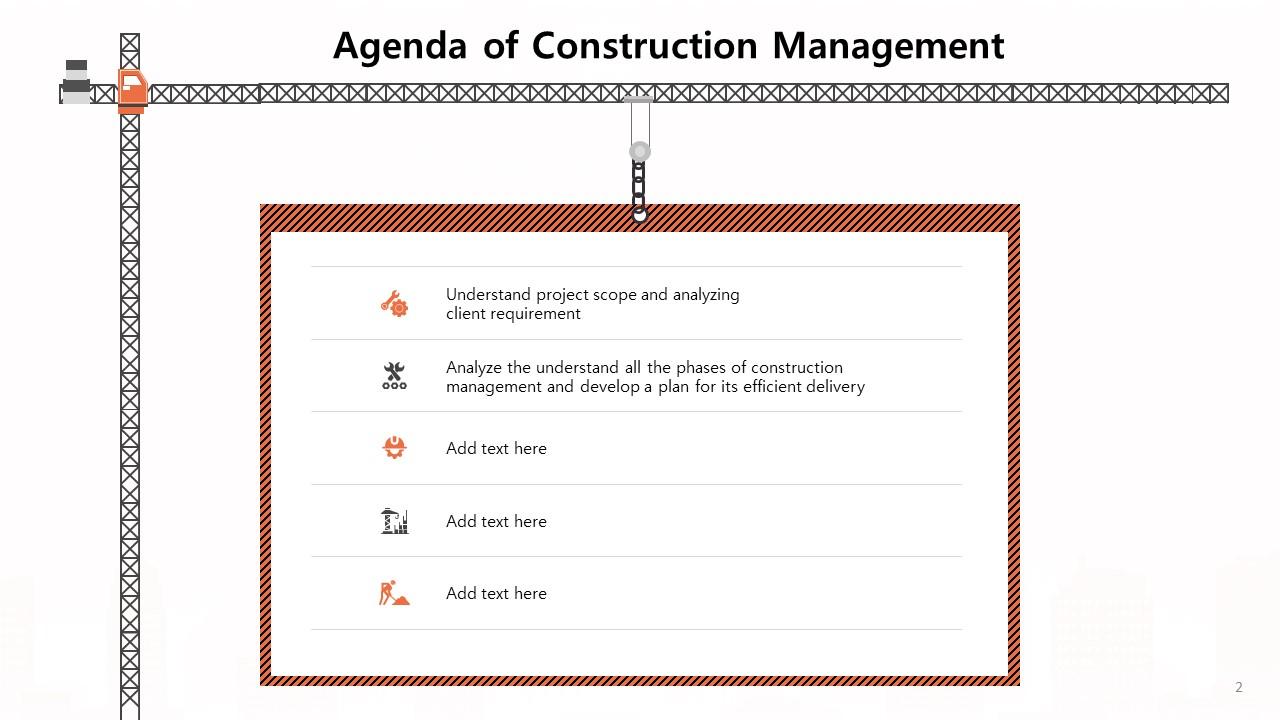
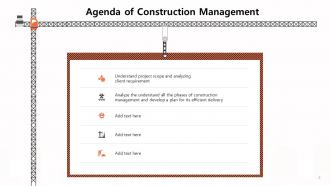
Slide 2: This slide displays Agenda of Construction Management
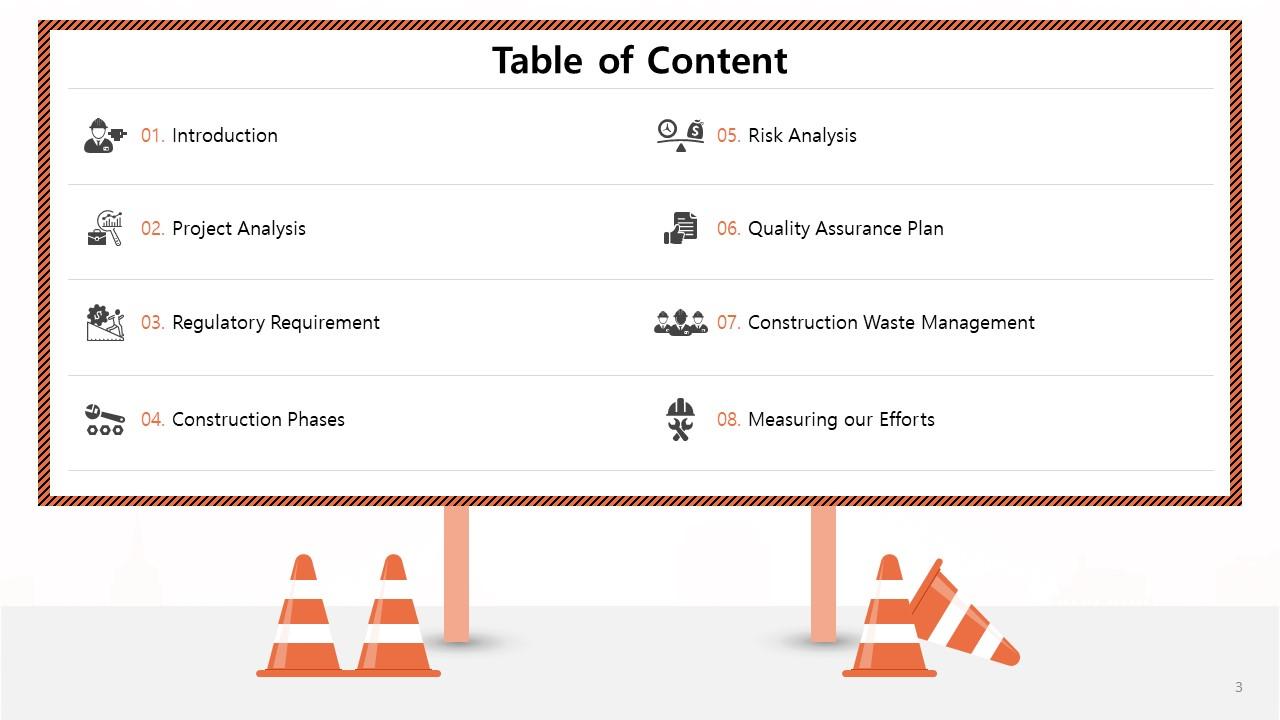
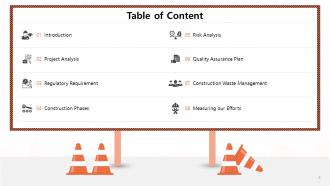
Slide 3: This slide displays Table of Content of presentation.
Slide 4: This slide displays Table of Content.
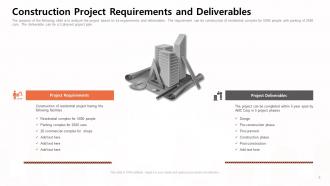
Slide 5: The purpose of the following slide is to analyze the project based on its requirements and deliverables. The requirement can be construction of residential complex for 5000 people with parking of 2500 cars . The deliverable can be a 5 phased project plan.
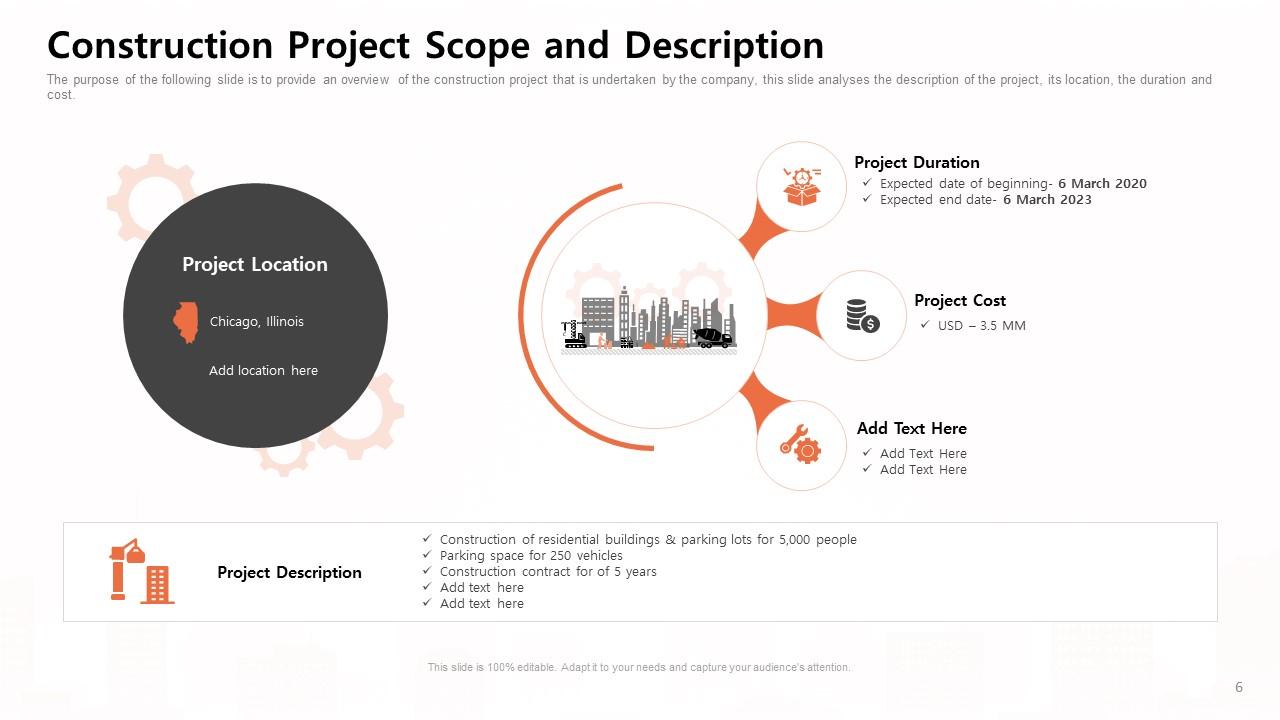
Slide 6: The purpose of the following slide is to provide an overview of the construction project that is undertaken by the company, this slide analyses the description of the project, its location, the duration and cost.
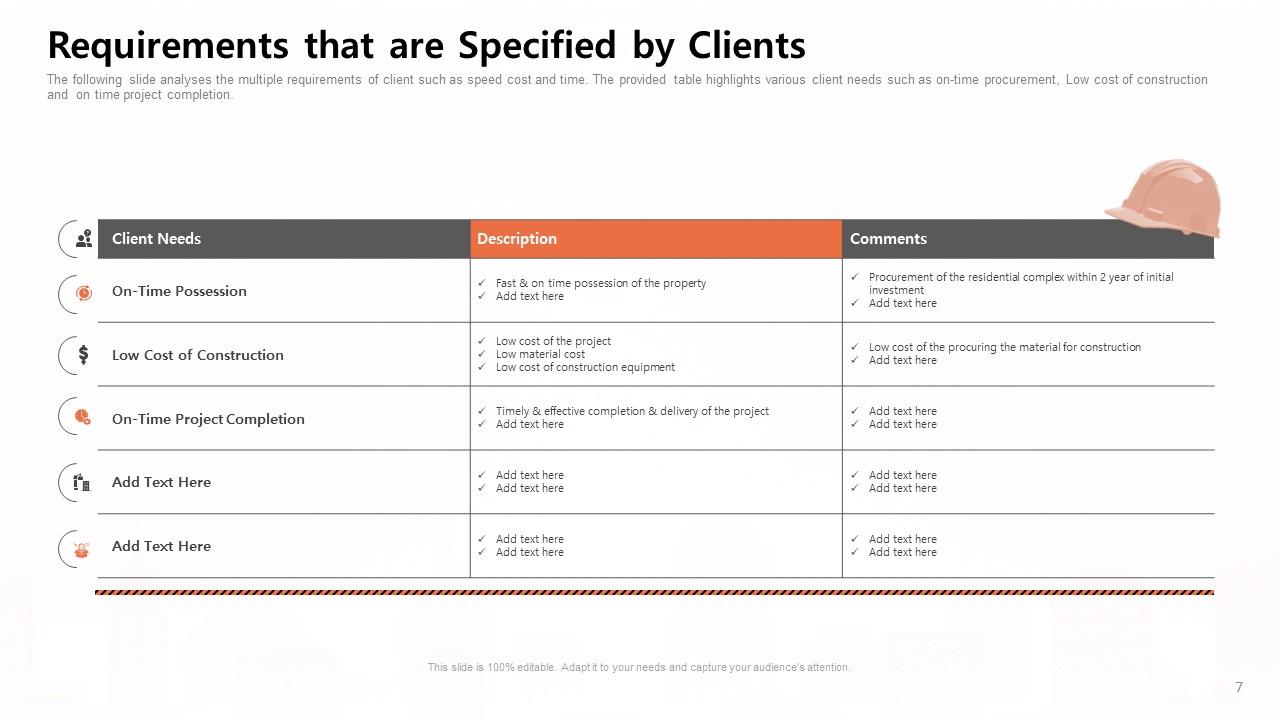
Slide 7: The following slide analyses the multiple requirements of client such as speed cost and time. The provided table highlights various client needs such as on-time procurement, Low cost of construction and on time project completion.
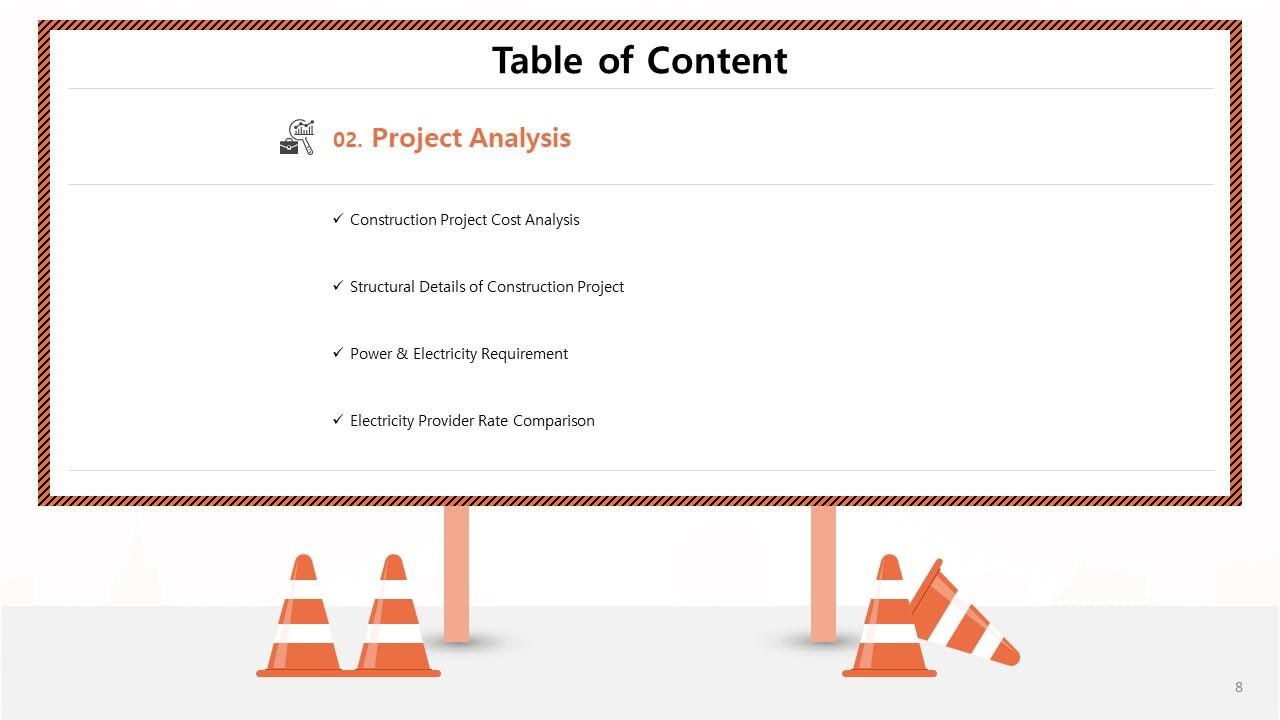
Slide 8: This slide displays Table of Content.
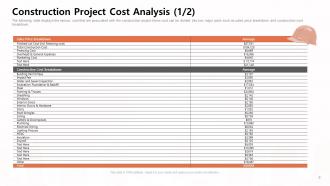
Slide 9: This slide displays the various cost that are associated with the construction project these cost can be divided into two major parts such as sales price breakdown and construction cost breakdown.
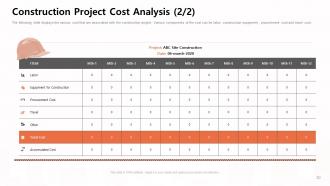
Slide 10: The following slide displays the various cost that are associated with the construction project. Various components of the cost can be labor ,construction equipment , procurement cost and travel cost.
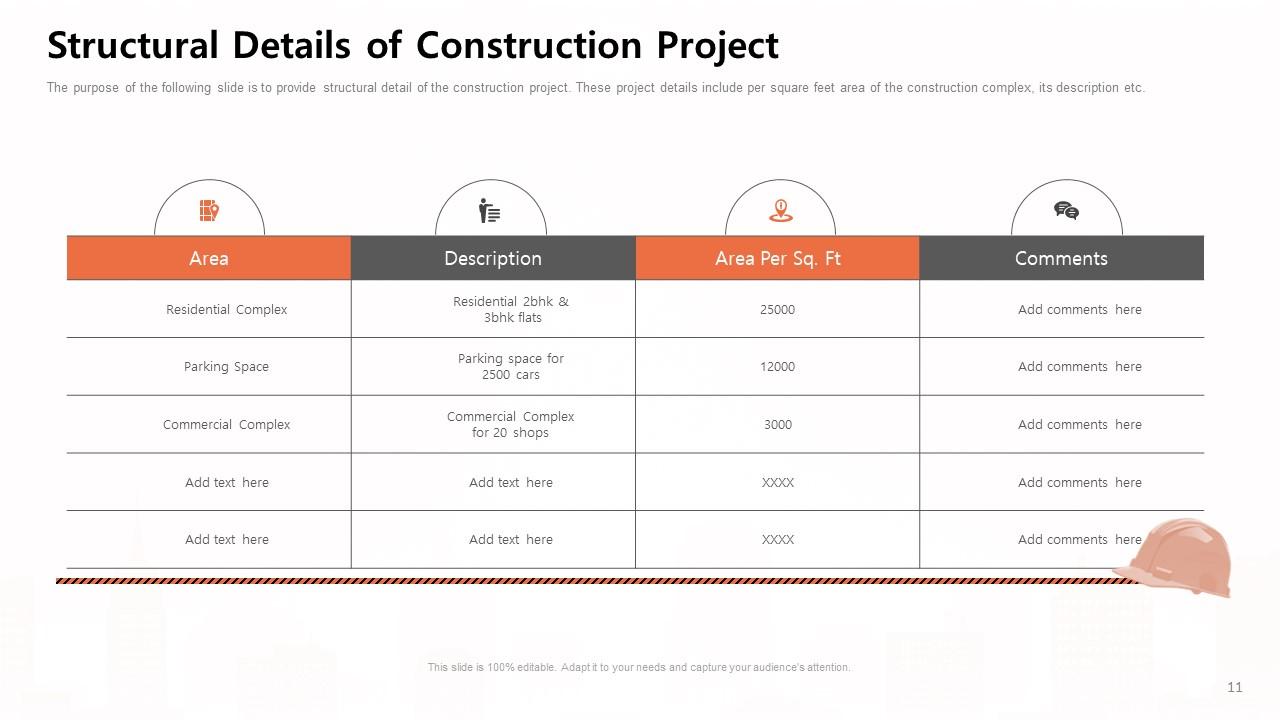
Slide 11: The purpose of the following slide is to provide structural detail of the construction project. These project details include per square feet area of the construction complex, its description etc.
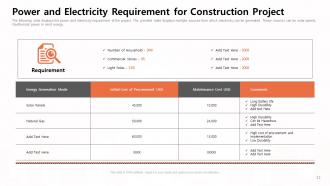
Slide 12: This slide displays the power and electricity requirement of the project. The provided table displays multiple sources from which electricity can be generated. These sources can be solar panels, Geothermal power or wind energy.
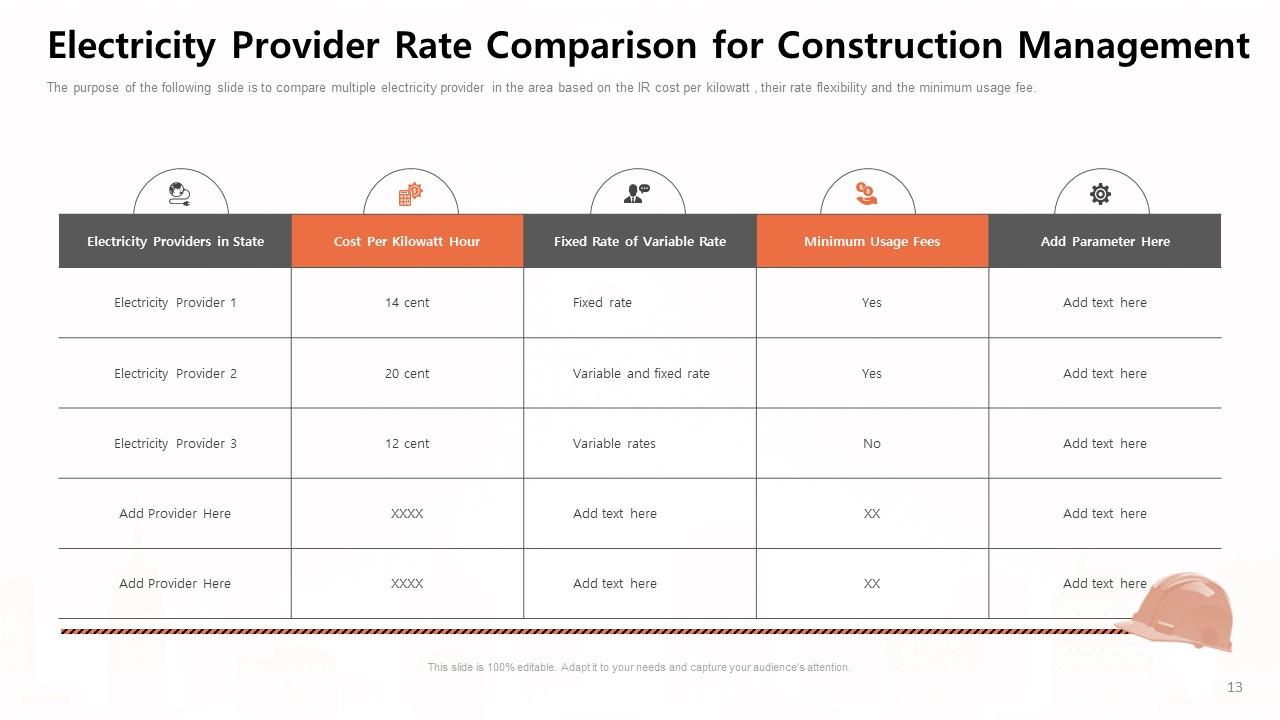
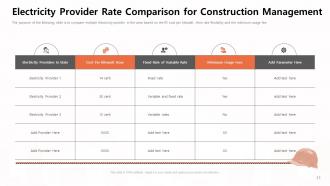
Slide 13: The purpose of the following slide is to compare multiple electricity provider in the area based on the IR cost per kilowatt, their rate flexibility and the minimum usage fee.
Slide 14: This slide displays Table of Content.
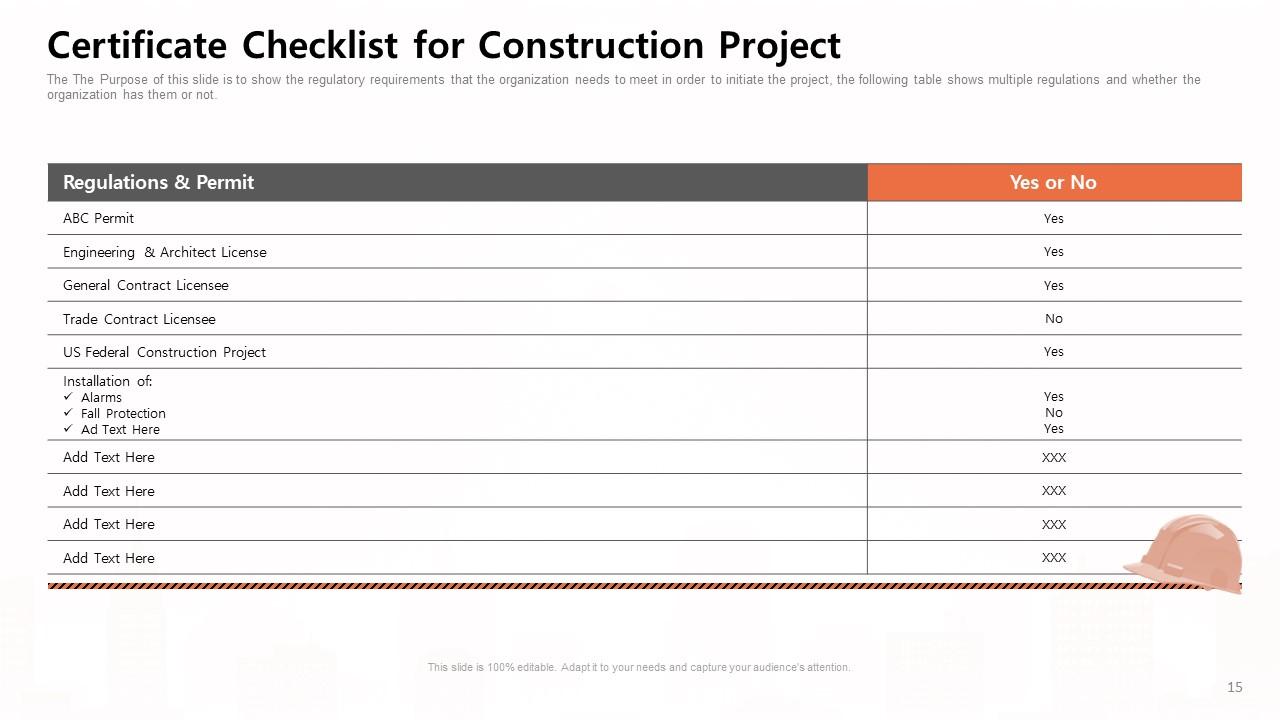
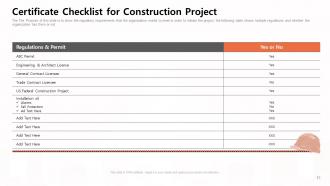
Slide 15: The The Purpose of this slide is to show the regulatory requirements that the organization needs to meet in order to initiate the project, the following table shows multiple regulations and whether the organization has them or not.
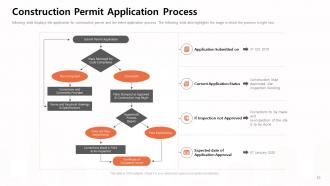
Slide 16: This slide displays the application for construction permit and the entire application process. The following slide also highlights the stage in which the process is right now.
Slide 17: This slide displays Table of Content
Slide 18: This slide shows Layout and Design for Construction Project.
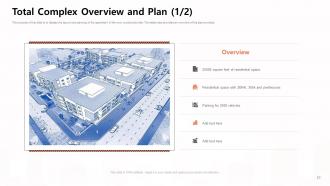
Slide 19: The purpose of this slide is to display the layout and planning of the apartment of the new construction site. The slides also provides an overview of the plan provided.
Slide 20: The purpose of this slide is to display the layout and planning of the apartment of the new construction site. The slides also provides an overview of the plan provided.
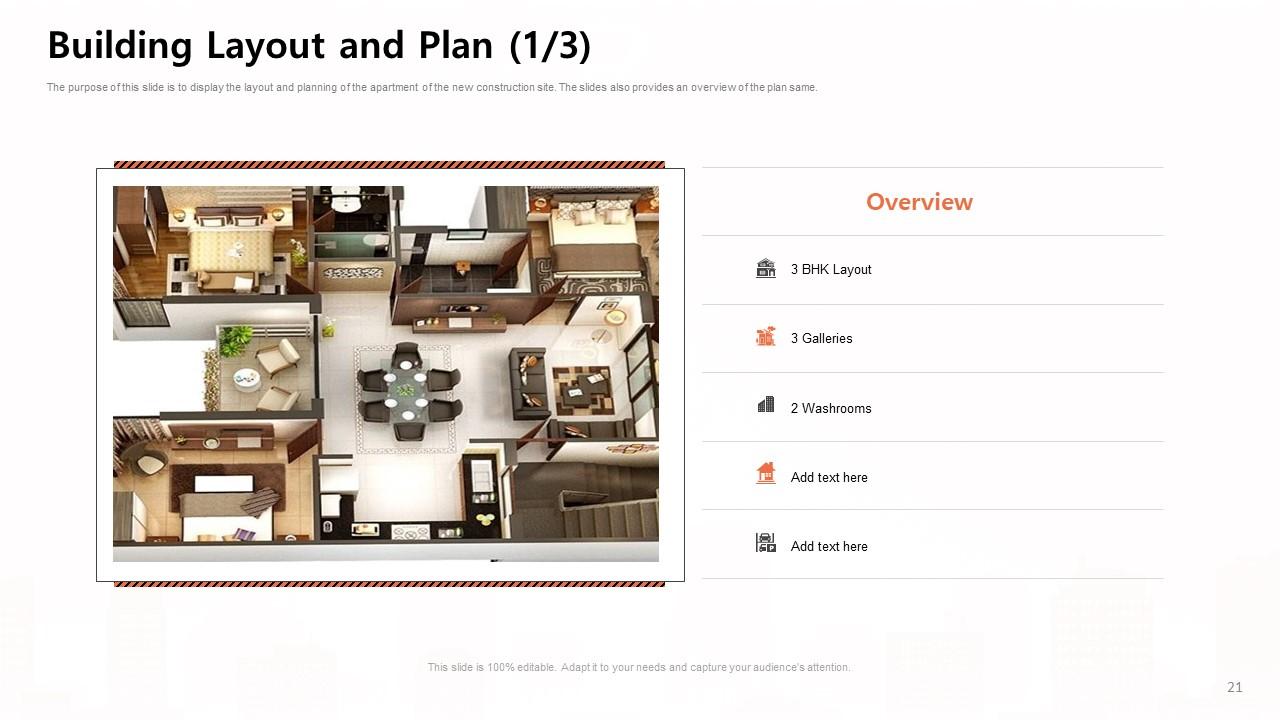
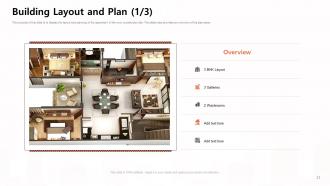
Slide 21: This slide displays the layout and planning of the apartment of the new construction site. The slides also provides an overview of the plan same.
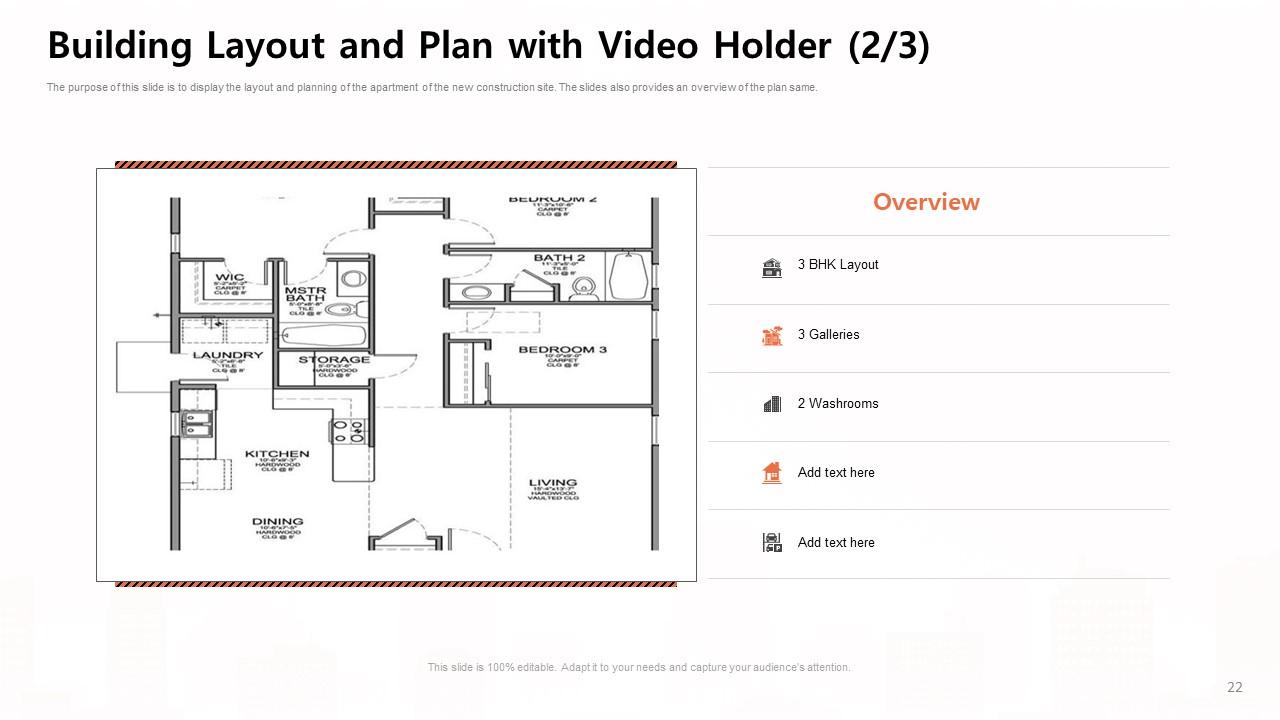
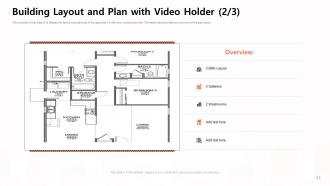
Slide 22: The purpose of this slide is to display the layout and planning of the apartment of the new construction site. The slides also provides an overview of the plan same.
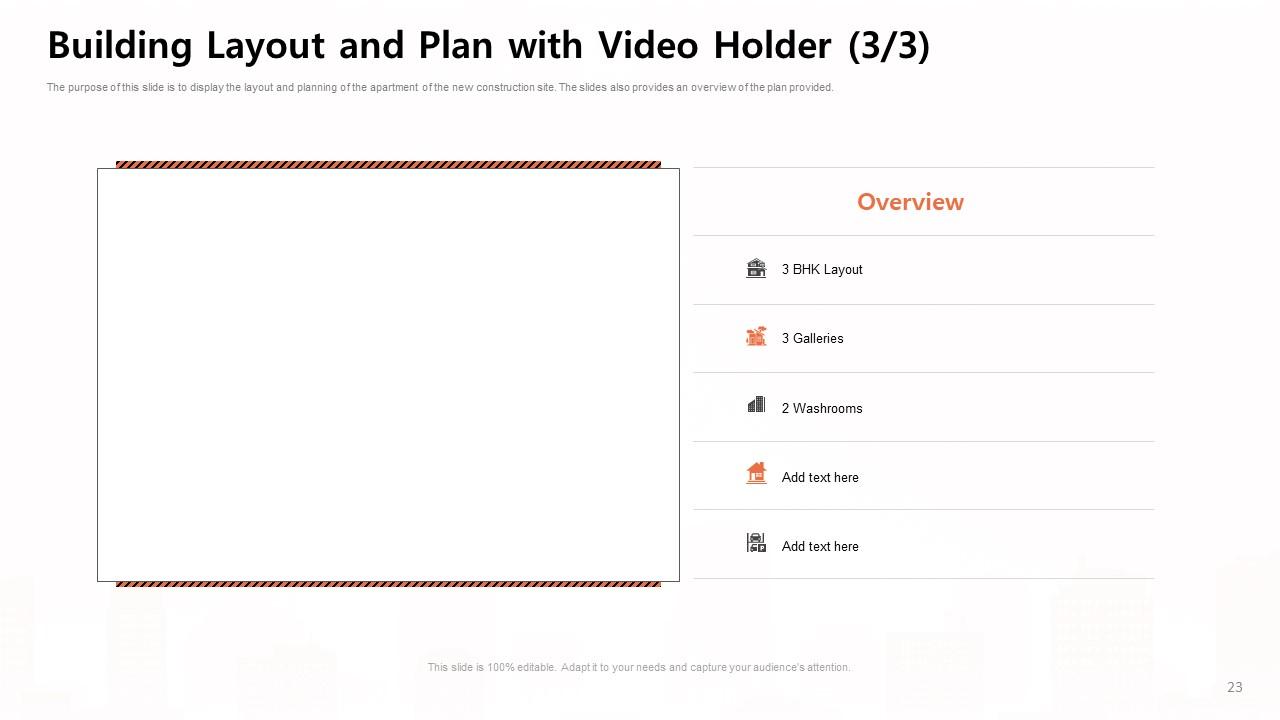
Slide 23: This slide shows the layout and planning of the apartment of the new construction site. The slides also provides an overview of the plan provided.
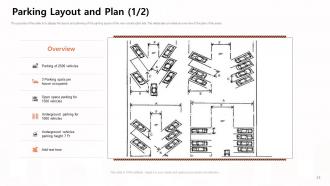
Slide 24: The purpose of this slide is to display the layout and planning of the parking space of the new construction site. The slides also provides an overview of the plan of the same.
Slide 25: The purpose of this slide is to display the layout and planning of the apartment of the new construction site. The slides also provides an overview of the plan provided.
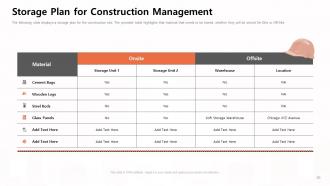
Slide 26: The following slide displays a storage plan for the construction site. The provided table highlights that material that needs to be stored, whether they will be stored On-Site or Off-Site.
Slide 27: This slide depicts Procurement Stage for Construction Management.
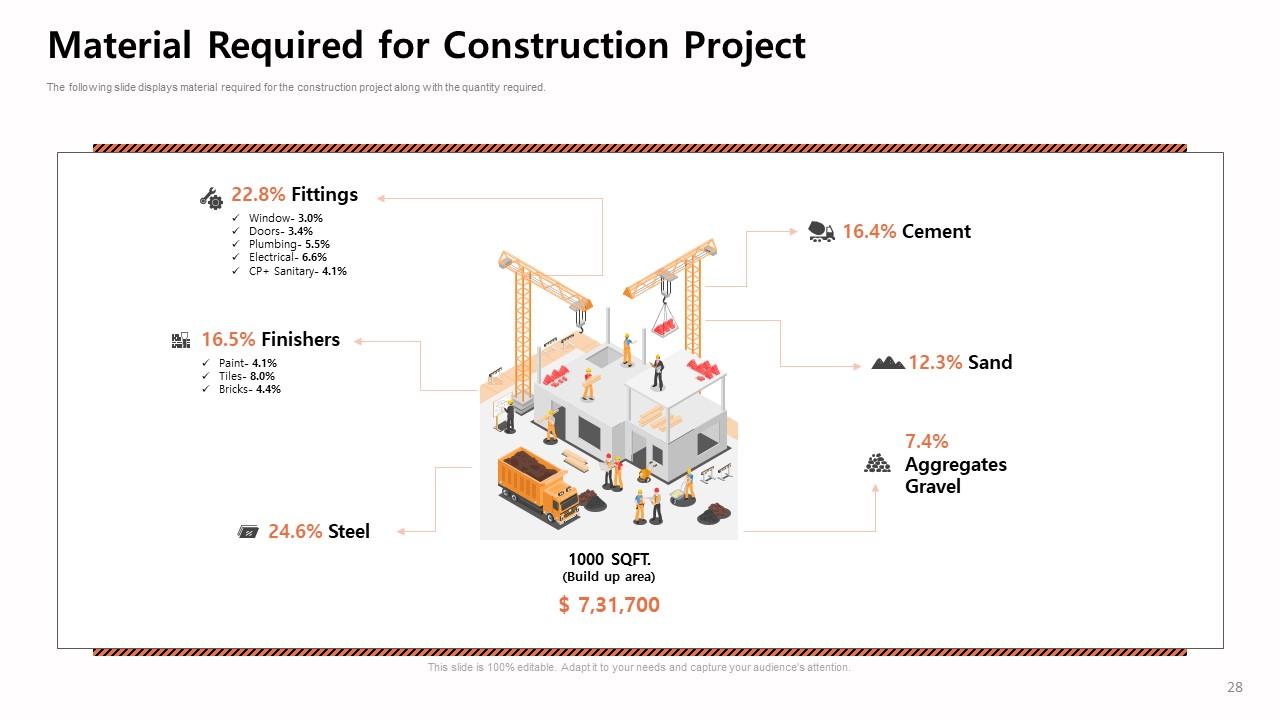
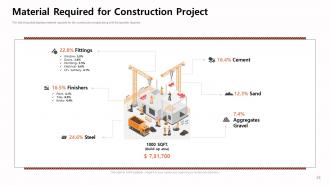
Slide 28: The following slide displays material required for the construction project along with the quantity required.
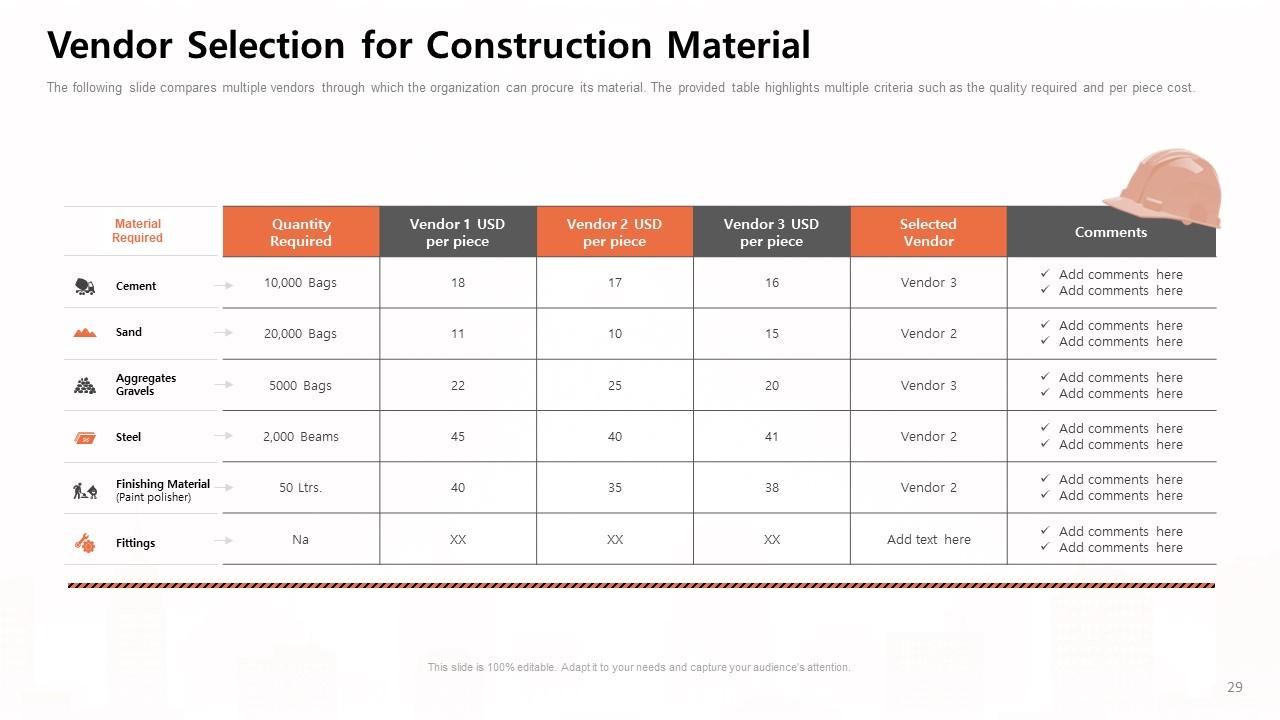
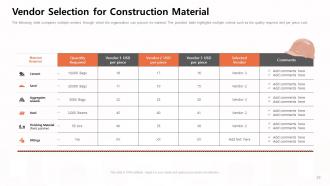
Slide 29: This slide compares multiple vendors through which the organization can procure its material. The provided table highlights multiple criteria such as the quality required and per piece cost.
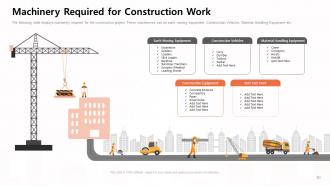
Slide 30: This slide displays machinery required for the construction project. These machineries can be earth moving equipment, Construction Vehicles, Material Handling Equipment etc.
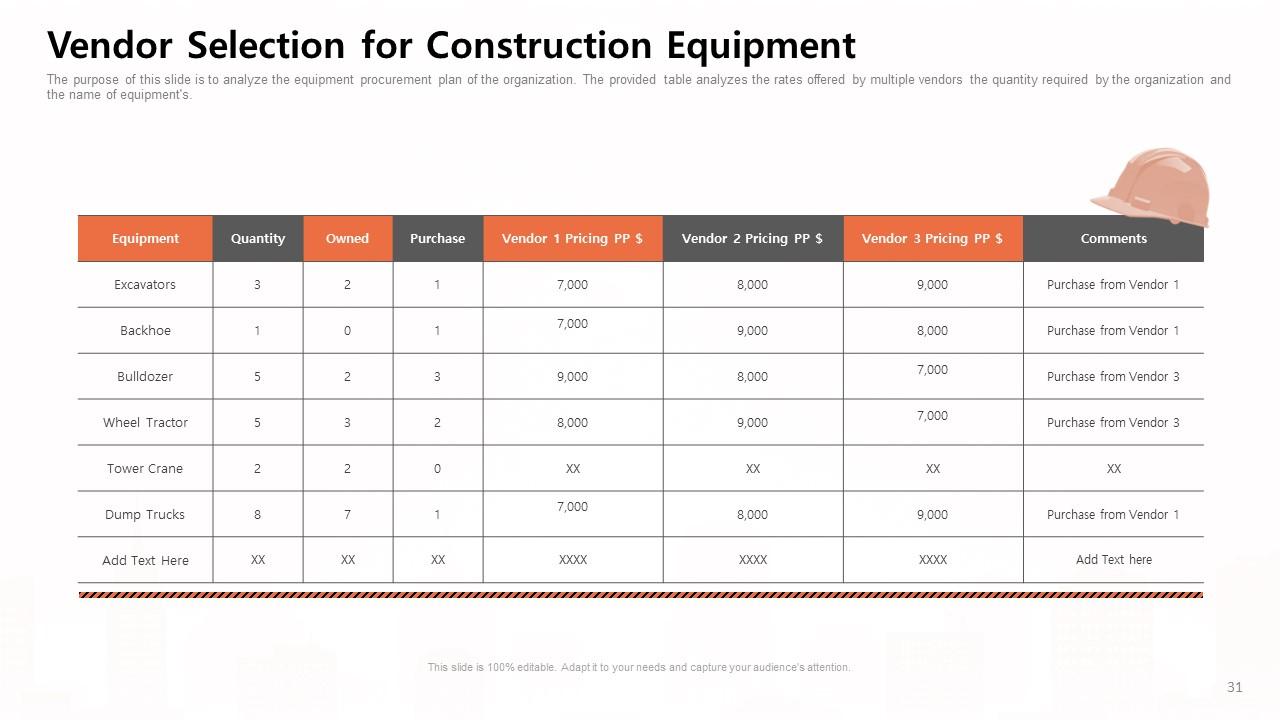
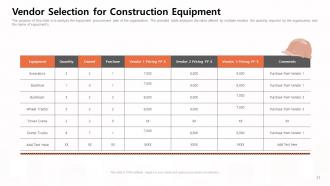
Slide 31: The purpose of this slide is to analyze the equipment procurement plan of the organization. The provided table analyzes the rates offered by multiple vendors the quantity required by the organization and the name of equipment's.
Slide 32: The purpose of the following slide is to show the type of insurance that is required by the company. These insurance can be of three type: People insurance, Asset- insurance and liability insurance.
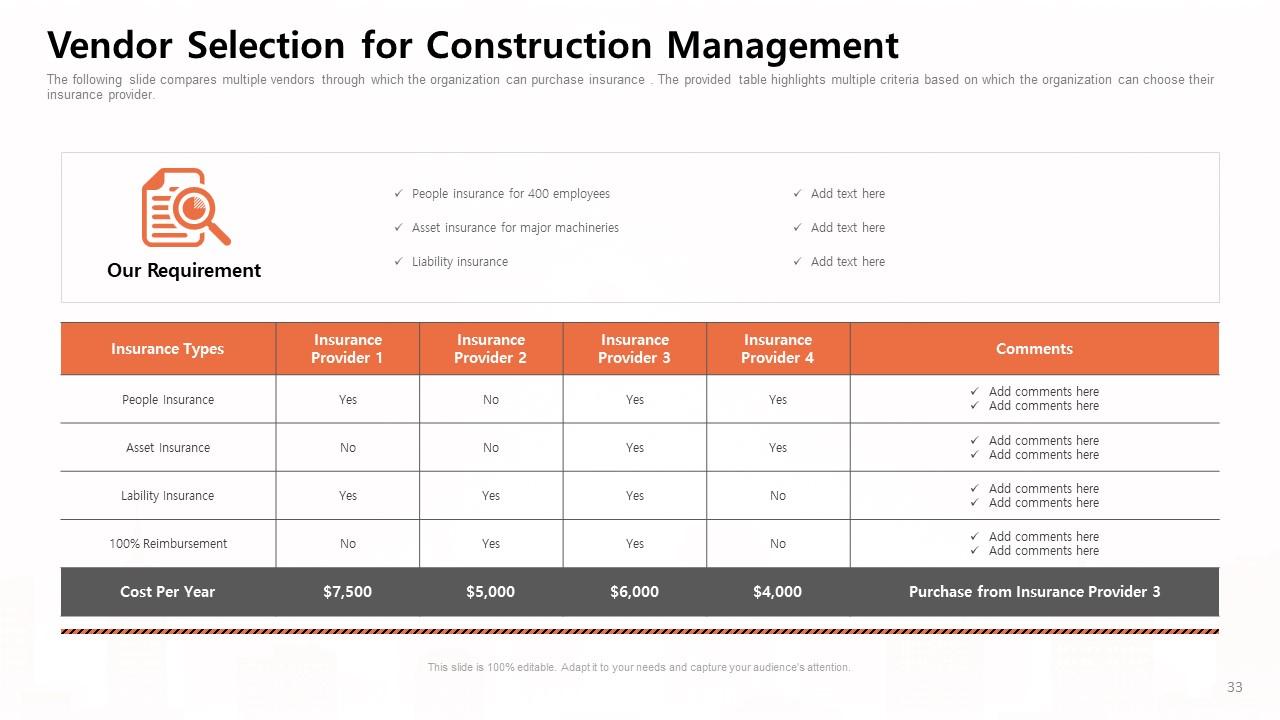
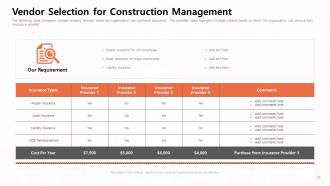
Slide 33: The following slide compares multiple vendors through which the organization can purchase insurance . The provided table highlights multiple criteria based on which the organization can choose their insurance provider.
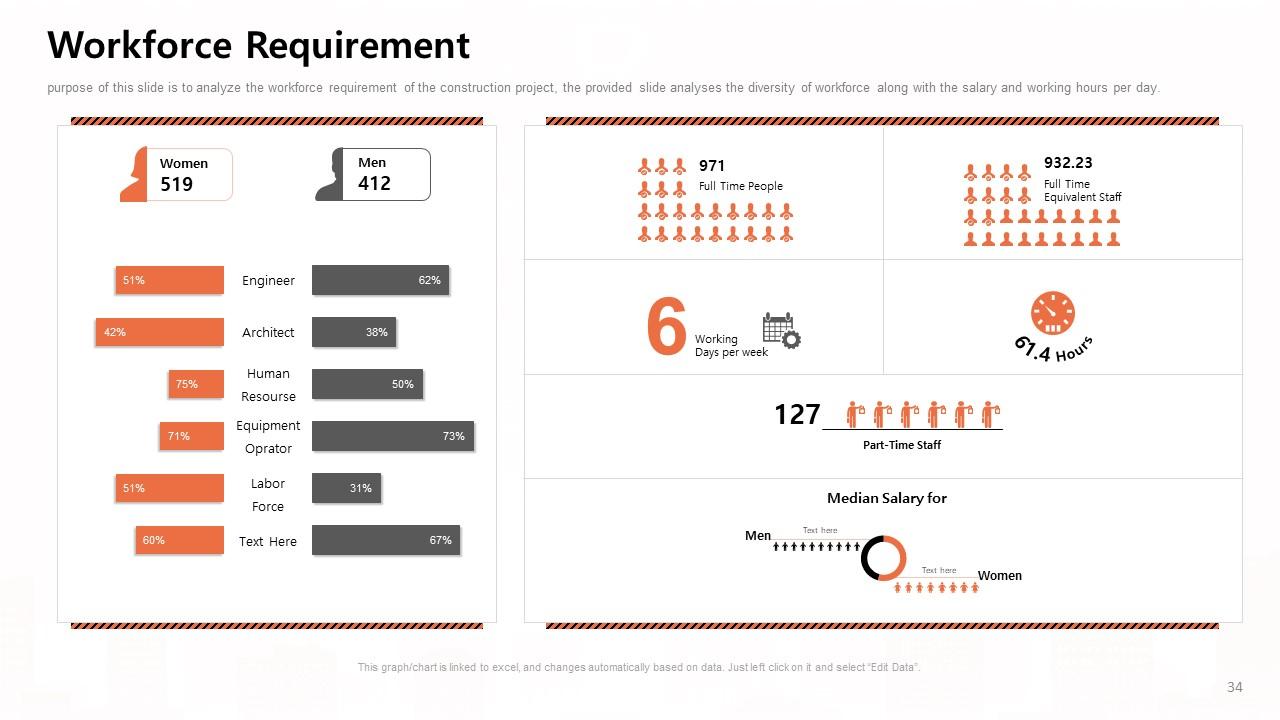
Slide 34: The purpose of this slide is to analyze the workforce requirement of the construction project, the provided slide analyses the diversity of workforce along with the salary and working hours per day.
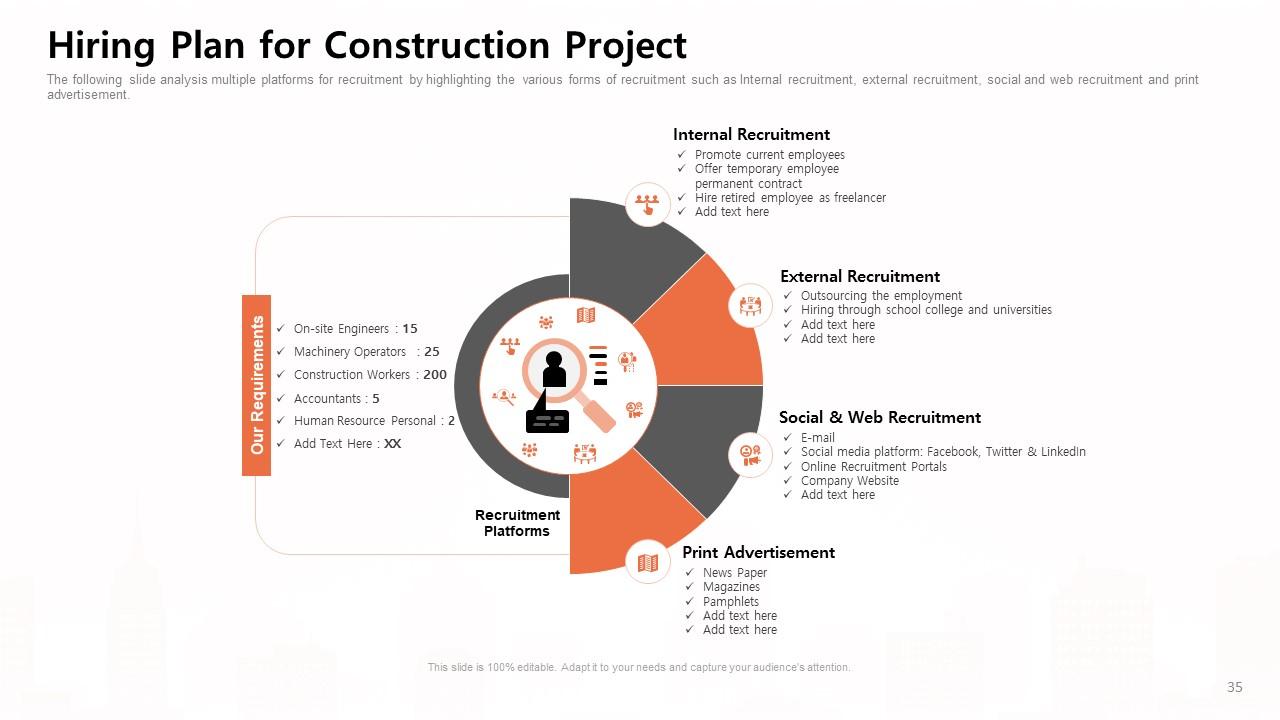
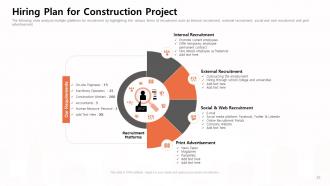
Slide 35: This slide analysis multiple platforms for recruitment by highlighting the various forms of recruitment such as Internal recruitment, external recruitment, social and web recruitment and print advertisement.
Slide 36: This slide depicts Construction Phase in Construction Management.
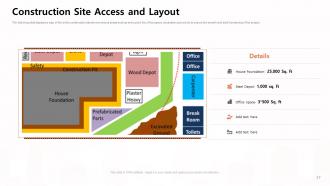
Slide 37: The following slide displays a map of the entire construction site shows various areas such as entry point, the office space, excavation ground etc to ensure the smooth and safe functioning of the project.
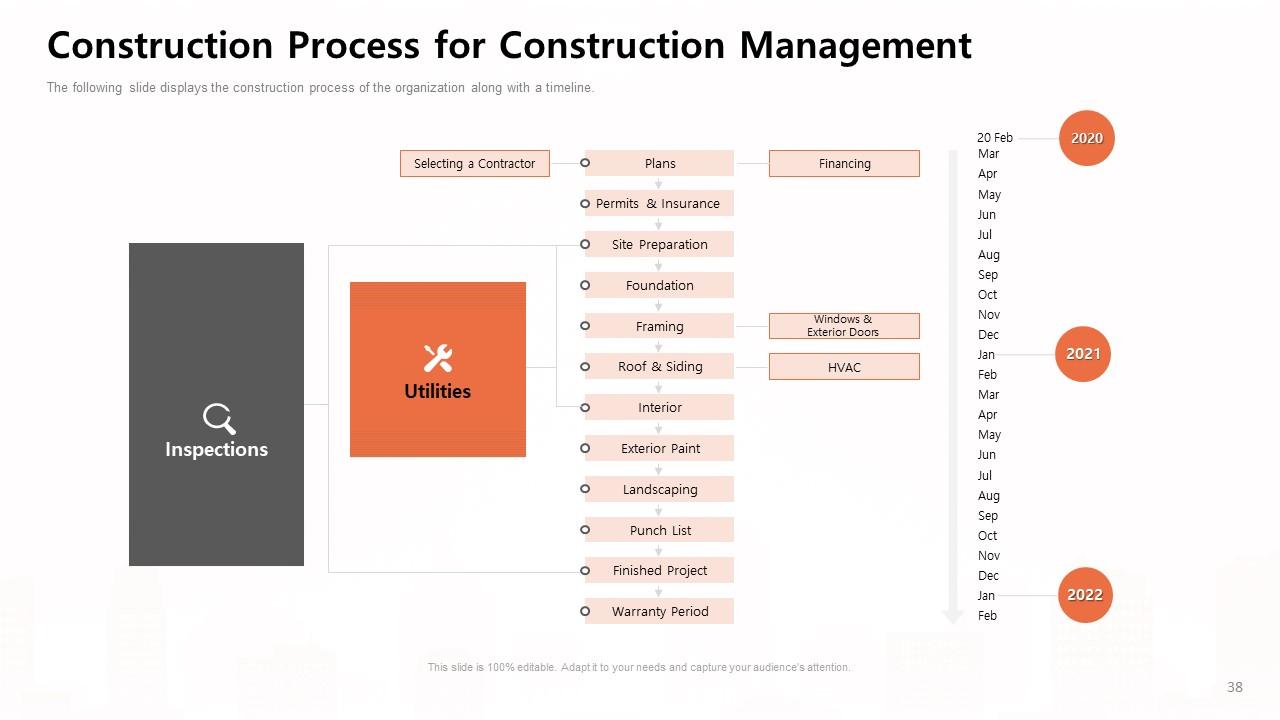
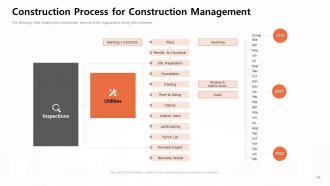
Slide 38: The following slide displays the construction process of the organization along with a timeline.
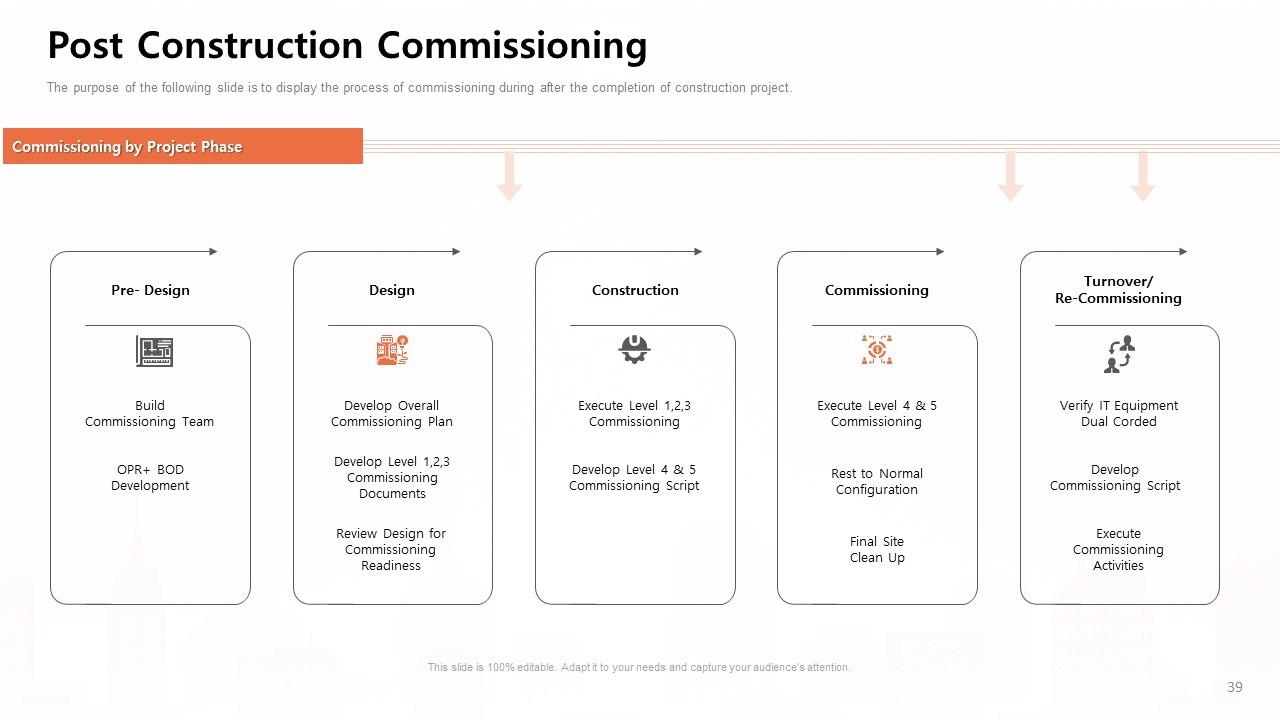
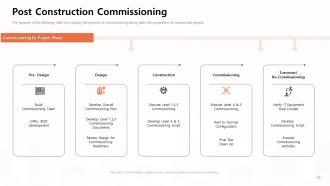
Slide 39: The purpose of the following slide is to display the process of commissioning during after the completion of construction project.
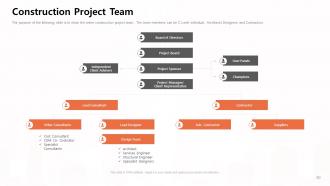
Slide 40: The purpose of the following slide is to show the entire construction project team . The team members can be C Level individual, Architects Designers and Contractors.
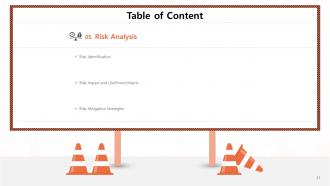
Slide 41: This slide shows Table of Content
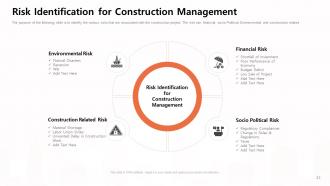
Slide 42: The purpose of the following slide is to identify the various risks that are associated with the construction project. The risk can financial, socio Political, Environmental and construction related.
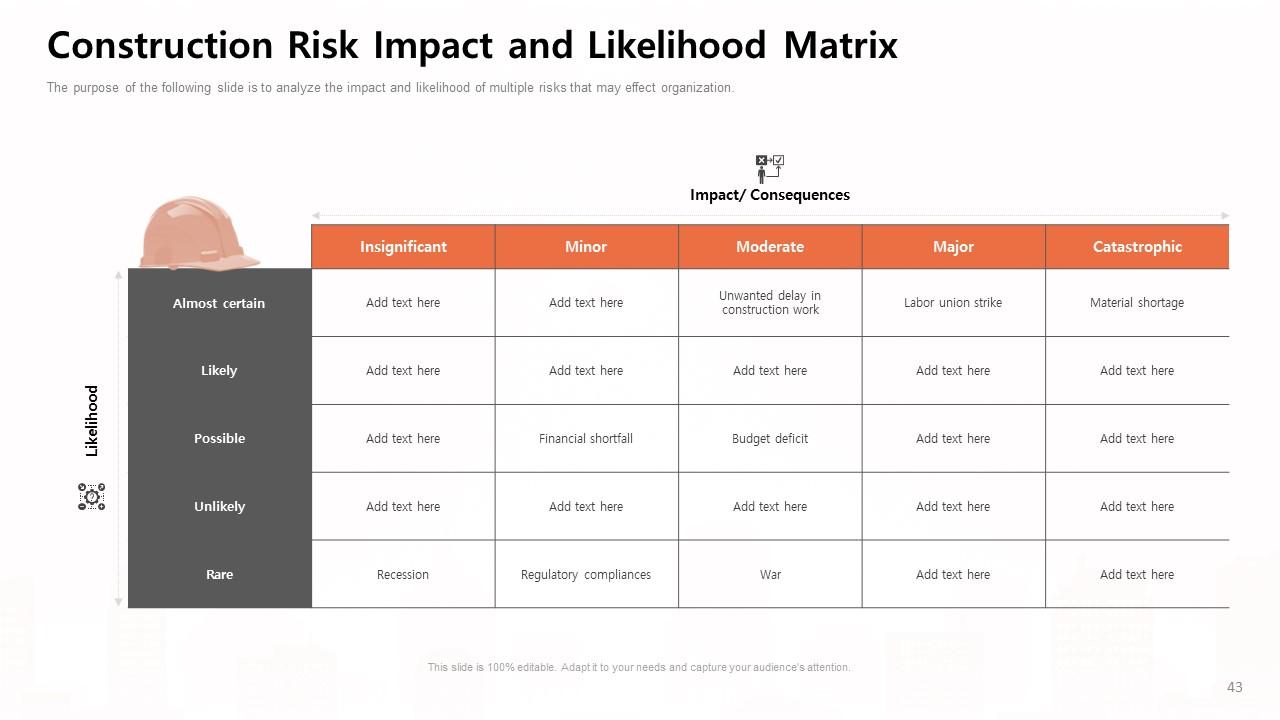
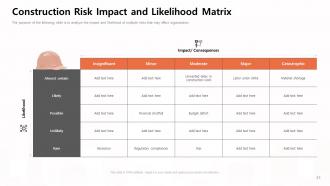
Slide 43: The purpose of the following slide is to analyze the impact and likelihood of multiple risks that may effect organization.
Slide 44: The purpose of this slide is to show various mitigation strategies for multiple risks such as investment shortfall, labor force strike etc.
Slide 45: This slide displays Table of Content.
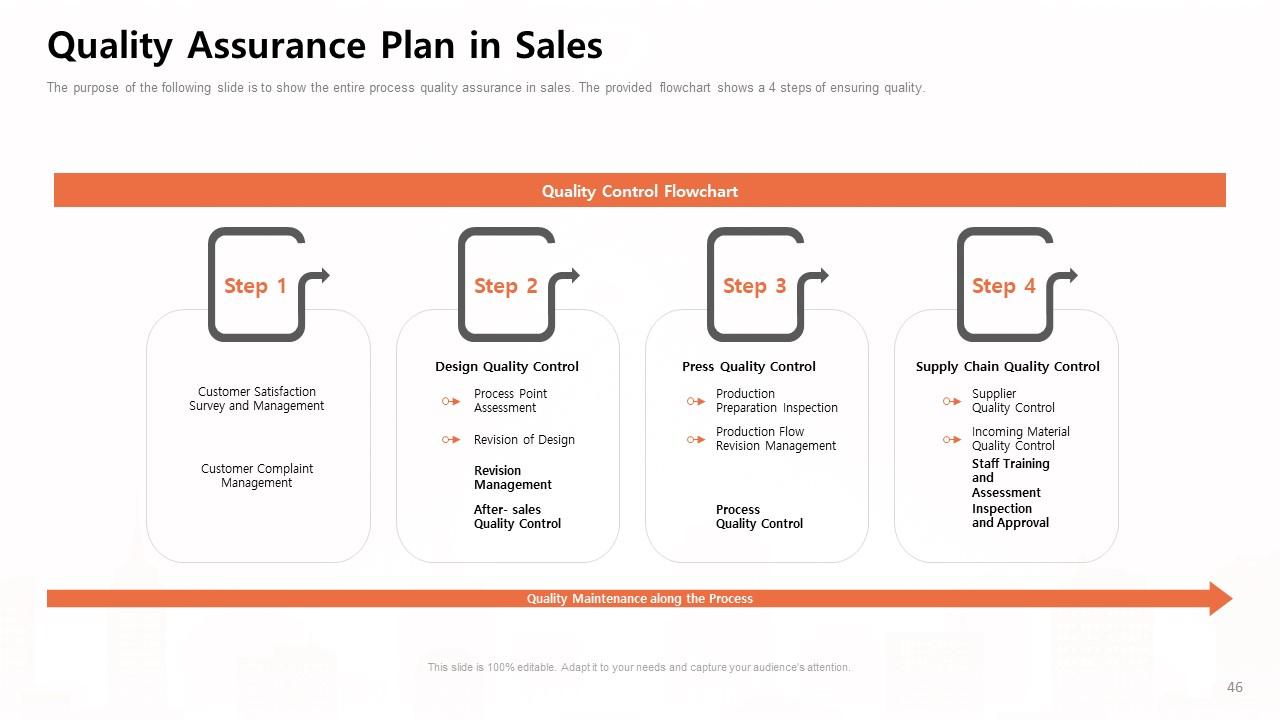
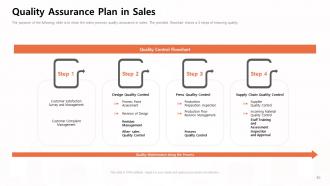
Slide 46: The purpose of the following slide is to show the entire process quality assurance in sales. The provided flowchart shows a 4 steps of ensuring quality.
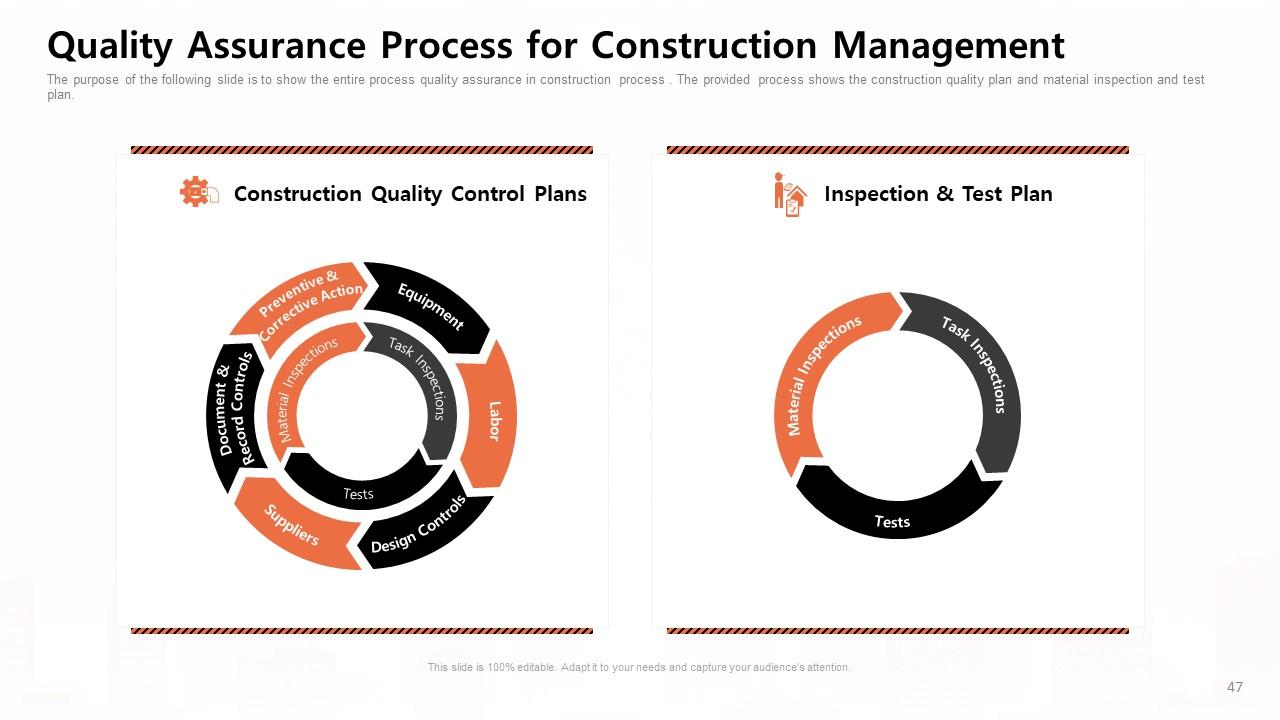
Slide 47: The purpose of the following slide is to show the entire process quality assurance in construction process. The provided process shows the construction quality plan and material inspection and test plan.
Slide 48: This slide displays Table of Content.
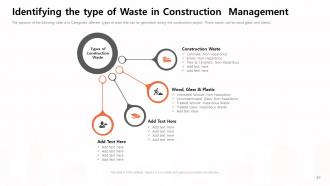
Slide 49: The purpose of the following slide is to Categorize different types of wate that can be generated during the construction project. These waste can be wood,glass and plastic.
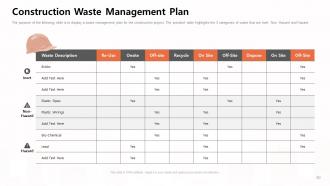
Slide 50: The purpose of the following slide is to display a waste management plan for the construction project. The provided table highlights the 3 categories of waste that are Inert, Non- Hazard and Hazard.
Slide 51: This slide shows Table of Content
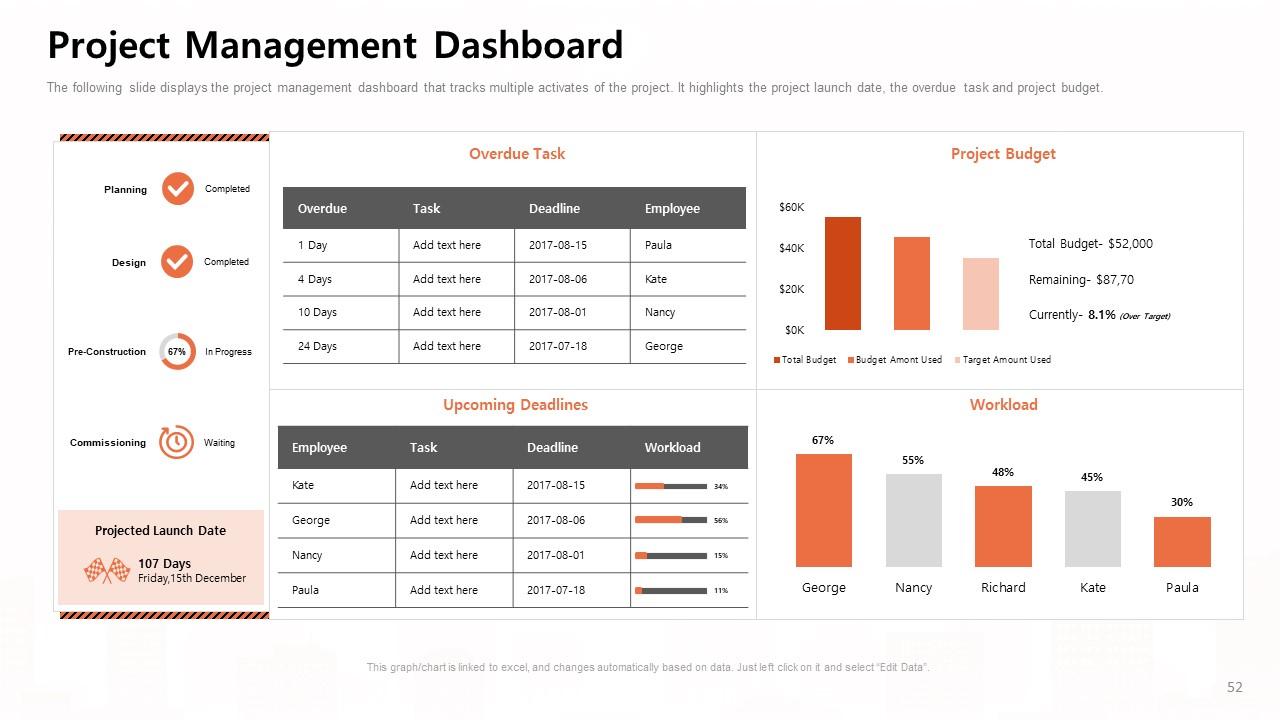
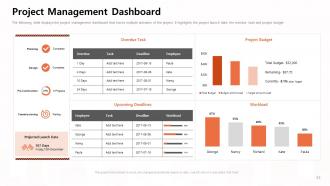
Slide 52: The following slide displays the project management dashboard that tracks multiple activates of the project. It highlights the project launch date, the overdue task and project budget.
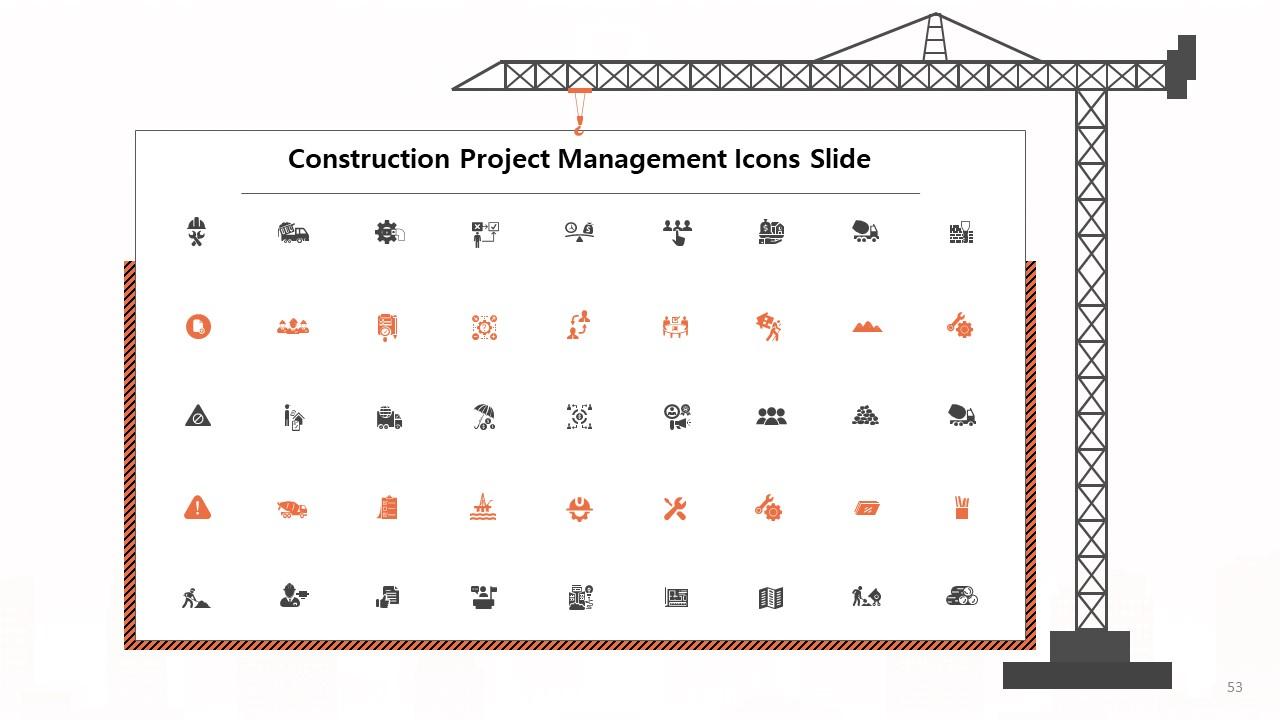
Slide 53: This is Construction Project Management Icons Slide.
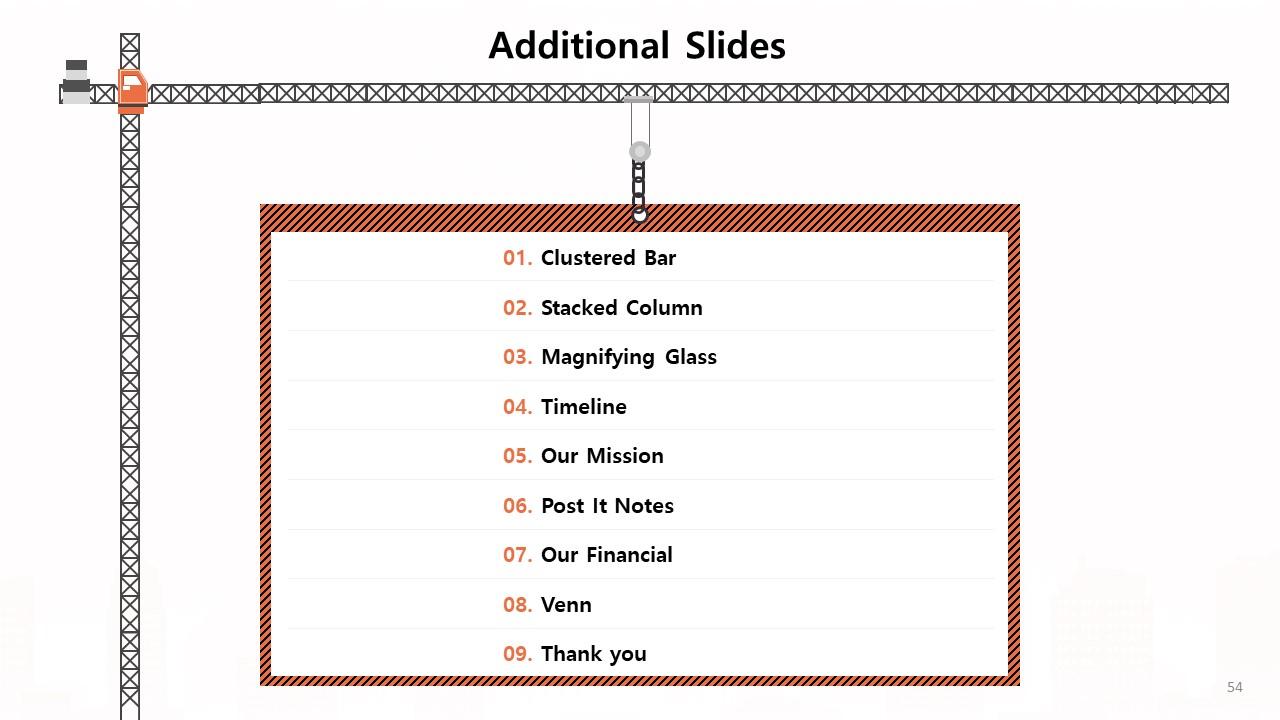
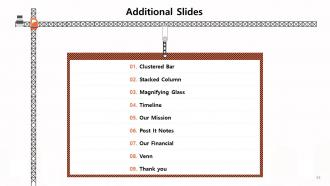
Slide 54: This slide is titled as Additional Slides for moving forward.
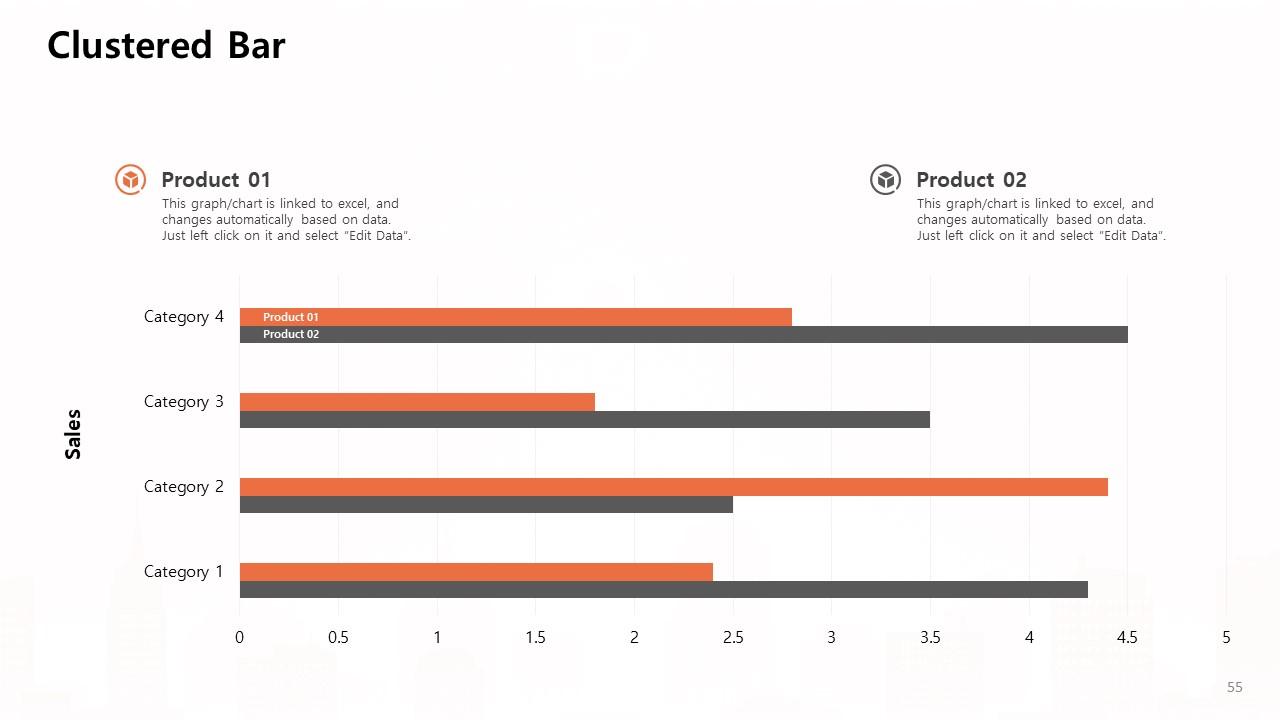
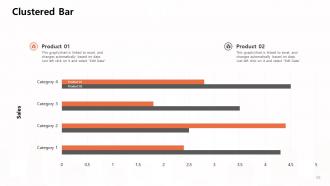
Slide 55: This slide displays Clustered Bar chart for comparison of products.
Slide 56: This slide displays Stacked Column chart.
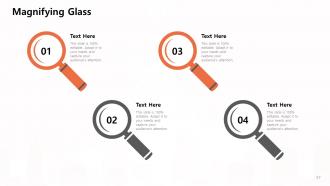
Slide 57: This slide shows Magnifying Glass for highlighting important content.
Slide 58: This slide shows Timeline process.
Slide 59: This slide displays Mission, Vision and Goals of the company.
Slide 60: This slide is titled as Post It Notes.
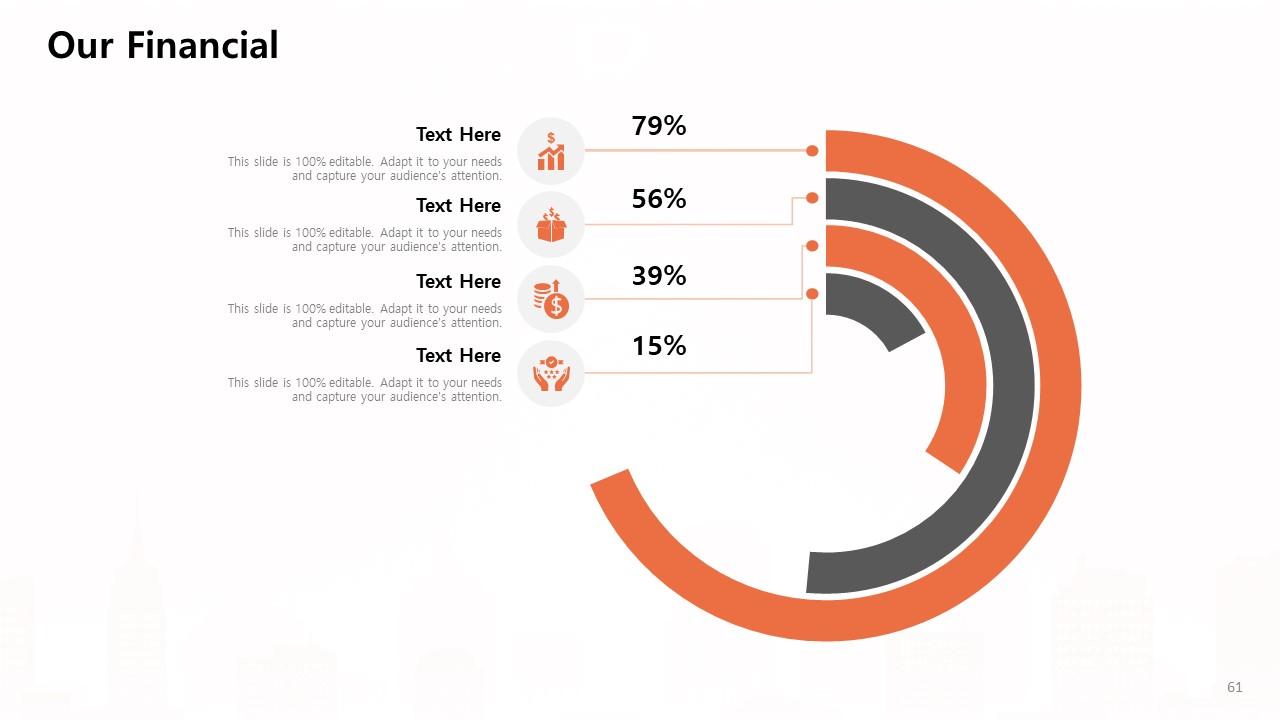
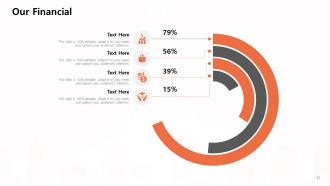
Slide 61: This is financial slide for showcasing finance related stuff.
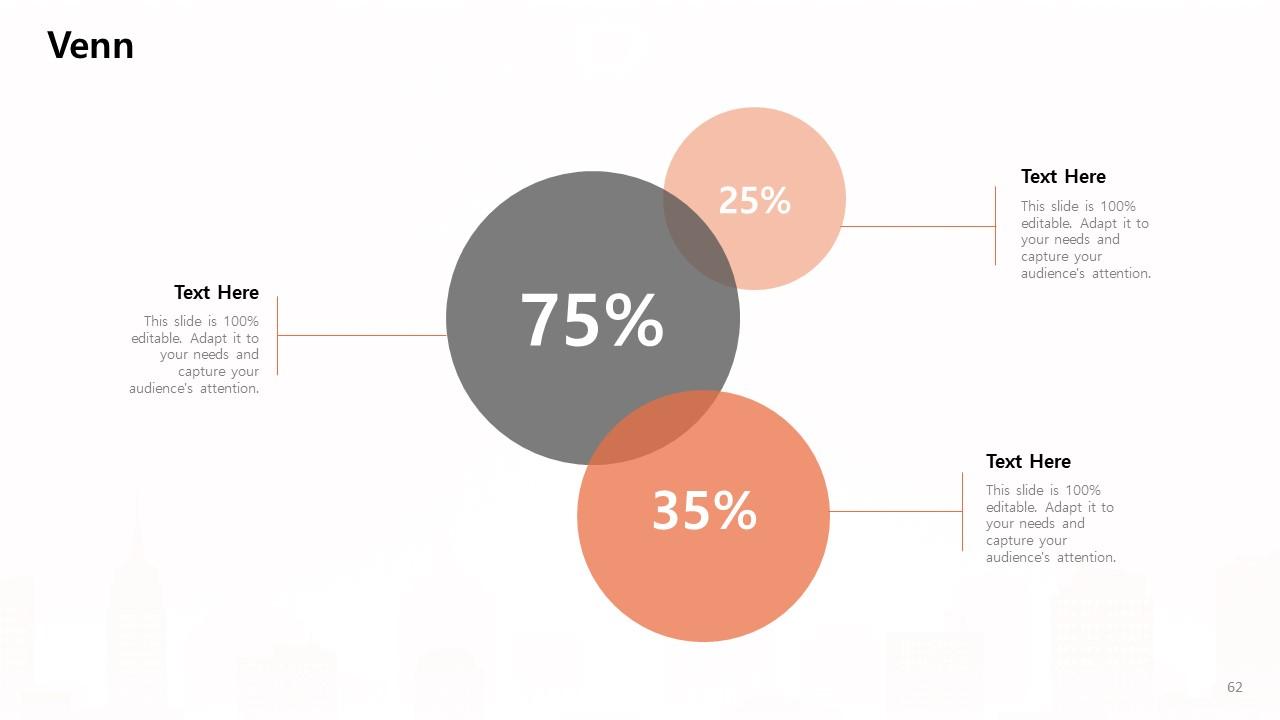
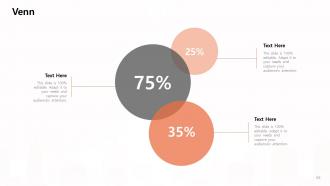
Slide 62: This is Venn slide.
Slide 63: This is Thank You slide with Contact details.
Construction Project Management Powerpoint Presentation Slides with all 63 slides:
Use our Construction Project Management Powerpoint Presentation Slides to effectively help you save your valuable time. They are readymade to fit into any presentation structure.
-
The Designed Graphic are very professional and classic.
