

Procurement process circular ppt slide





Try Before you Buy Download Free Sample Product
 Impress Your
 Audience
 100%
100% Editable
 Save Hours
 of Time


You will get an incalculable boost with our PTT&S. It is an invaluable asset.
People who downloaded this PowerPoint presentation also viewed the following :
Procurement process circular ppt slide with all 5 slides:
Break down clusters with our Procurement Process Circular Ppt Slide. Get folks to connect freely with everyone.

FAQs for Procurement process
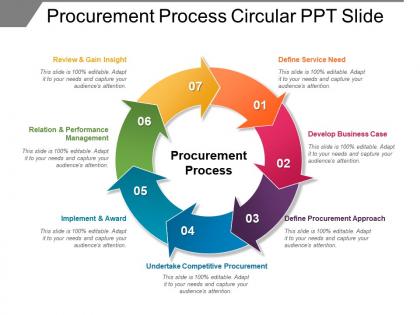
So procurement basically has five stages you'll go through. First, figure out what you actually need - I know it sounds obvious but people mess this up all the time. Then hunt down potential suppliers and evaluate their proposals against your criteria. After that comes contract negotiation (ugh, the fun part), followed by managing the relationship long-term. Honestly, spending extra time on that initial planning phase will save your sanity later. Once you're juggling multiple vendors, you'll thank yourself for being thorough upfront. The whole process flows way smoother when you don't skip steps.
Honestly, start with purchase orders - that's where you'll see the biggest immediate impact. Automating approvals and vendor communications saves so much time it's ridiculous. Real-time spending visibility is huge too, plus you can set up workflows that automatically route stuff to whoever needs to see it. Oh, and electronic invoicing eliminates like 90% of the back-and-forth nonsense. AI helps with supplier risk assessment if you want to get fancy later. The best part? Everything lives in one place instead of scattered across random email threads. I'd pick one area first though - don't try to overhaul everything at once.
Think of supplier evaluation as your safety net before committing to any vendor. You're digging into their financials, track record, and whether they can actually handle your volume. Pretty much like vetting a roommate, but with way more paperwork. This whole process determines who gets on your approved list and gives you ammunition for better contract terms. Short-term pain, long-term gain though - the info you collect now prevents those nightmare scenarios where suppliers ghost you mid-project. My advice? Get your evaluation checklist sorted before you even start reaching out to potential partners.
Research market rates and your supplier's business first - that's your foundation. Being friendly with suppliers beats playing hardball every time. I learned this the hard way early in my career, honestly. Get quotes from multiple vendors to create competition, but don't automatically pick the cheapest one. Bundle your contracts together for more buying power. Price isn't everything though - negotiate payment terms, delivery schedules, service stuff too. Document everything now so you've got solid data for next time. Multiple qualified options give you way more negotiating strength.
Honestly, you can't just slap compliance on at the end - build it into each step from the start. Write policies people can actually understand (skip the lawyer-speak nobody reads). Set approval workflows based on spending limits and document your vendor choices properly. Track everything in a system that leaves a clear trail. Oh, and train your team regularly since rules shift and memories fade. The trick is making it feel normal instead of like annoying red tape. When compliance flows naturally with the process, people won't fight it as much.
Watch out for conflicts of interest - that's the big one. Don't take gifts from vendors, even small stuff can bite you later. Make sure all qualified suppliers get a fair shot at bidding. Document everything and keep your selection criteria objective, not based on who you like. Bribery's obviously off limits, but honestly the gray areas trip people up more. No steering contracts to buddies or playing favorites. Follow your company's procurement rules to the letter. Oh, and loop in legal early if anything feels sketchy - way better than dealing with mess later.
Honestly, stakeholder engagement can totally make or break your whole procurement thing. You really want to get the right people involved early - like end users, IT folks, finance, legal, whoever matters. Better requirements upfront, fewer headaches later. People who feel included won't randomly object to your final decision either, which is huge. I can't tell you how many times I've watched procurements completely fall apart because somebody important got forgotten. Map out who you need from the start and keep them in the loop throughout the process. Don't just ask for input at the end when it's basically too late to fix anything.
Focus on the big three first: cost savings, supplier performance, and cycle times. Cost savings is straightforward - just track actual spend vs budget plus any negotiated reductions. For suppliers, measure on-time delivery, quality scores, and whether they're actually following contracts. Cycle times are huge because honestly, nobody wants procurement slowing everything down. Time from requisition to PO to delivery - track all of it. Don't forget stakeholder satisfaction since you're basically serving internal customers. Once you've nailed those basics, add spend under management and supplier diversity metrics.
Oh man, global procurement is rough. Currency swings will destroy your budget planning - I've seen it happen overnight. Different countries mean different rules, and honestly it's like playing whack-a-mole with regulations. Supply chains get way more fragile too. One port closes and suddenly your whole operation's screwed. Cultural stuff slows everything down, plus trying to check quality when you can't just pop over to see the facility? Nightmare. Time zones alone will wear you out. My advice - map out your riskiest suppliers first and get backup options in other regions. Trust me on this one.
First things first - figure out what you're actually trying to achieve. Carbon targets, ethical sourcing, waste reduction, whatever matters most to your company. Map out your current suppliers so you know where you're starting from. The tricky bit is balancing cost and quality with all the sustainability stuff. Honestly, suppliers can be goldmines for ideas you haven't thought of, so loop them in early. Build the green metrics right into your RFPs and scoring sheets - makes evaluation way easier later. Oh, and definitely pilot this with one category first before going crazy company-wide. Trust me on that one.
Honestly, data analytics is a game-changer for procurement decisions. Instead of guessing, you'll actually see supplier performance patterns and spot cost savings you never knew existed. The spend analysis part? That's where it gets interesting - most people are genuinely surprised by where their budget disappears to. You can benchmark supplier prices, predict supply chain issues before they blow up, and forecast demand way better. Oh, and contract optimization becomes so much easier when you have historical data backing you up. I'd start with spend data first since it's the quickest way to see real results.
Public sector is super regulated compared to private - you're dealing with detailed RFPs, mandatory bid periods, mountains of paperwork. Private sector? Way more flexible. You can negotiate, make quick calls, pick vendors based on who you actually want to work with. Honestly the speed difference is crazy. Public side prioritizes fairness over getting stuff done fast, so everything takes forever. Oh and you usually have to take the lowest qualified bid, not necessarily the best one. If you're making the switch, just plan for everything to take twice as long and learn your agency's rules ASAP.
Oh man, supply chain stuff is such a headache right now. You've gotta totally flip how you think about buying - no more putting all your eggs in one basket or running super lean inventory. Diversifying suppliers is huge, even if backup options cost more. Buffer stock becomes your friend, though it ties up cash which sucks. The whole game shifts from "cheapest option wins" to "what won't leave me screwed when things go sideways." Start by figuring out which suppliers would really hurt to lose, then work backwards from there. Better tracking tools help too.
So basically, you've gotta weave risk management through your whole procurement thing - can't just slap it on later. First, dig deep into potential suppliers. Check their finances, get references, see if they're actually compliant with stuff. Don't put everything with one supplier either - I learned that the hard way once. Spread it around because when things go sideways (and they will), you'll be screwed otherwise. Get solid contracts with clear performance metrics and penalties. Then actually track how they're doing against those numbers. Oh, and have backup plans ready before you need them - alternative suppliers, different sourcing approaches, whatever works.
Focus on contract negotiation and supplier management first - that's your foundation. Financial analysis is critical since you're always crunching numbers on cost proposals. But honestly? Communication skills matter more than people think. You're literally translating between teams and vendors constantly. Project management helps a ton, and definitely learn SAP or Oracle early - trust me on that one. Legal contract basics are worth studying too, even if it's boring stuff. CPP certification gives you something solid to aim for if you want credentials.
-
Helpful product design for delivering presentation.
-
Very unique, user-friendly presentation interface.