Strategic sourcing process ppt diagrams
Try Before you Buy Download Free Sample Product
Audience
Editable
of Time
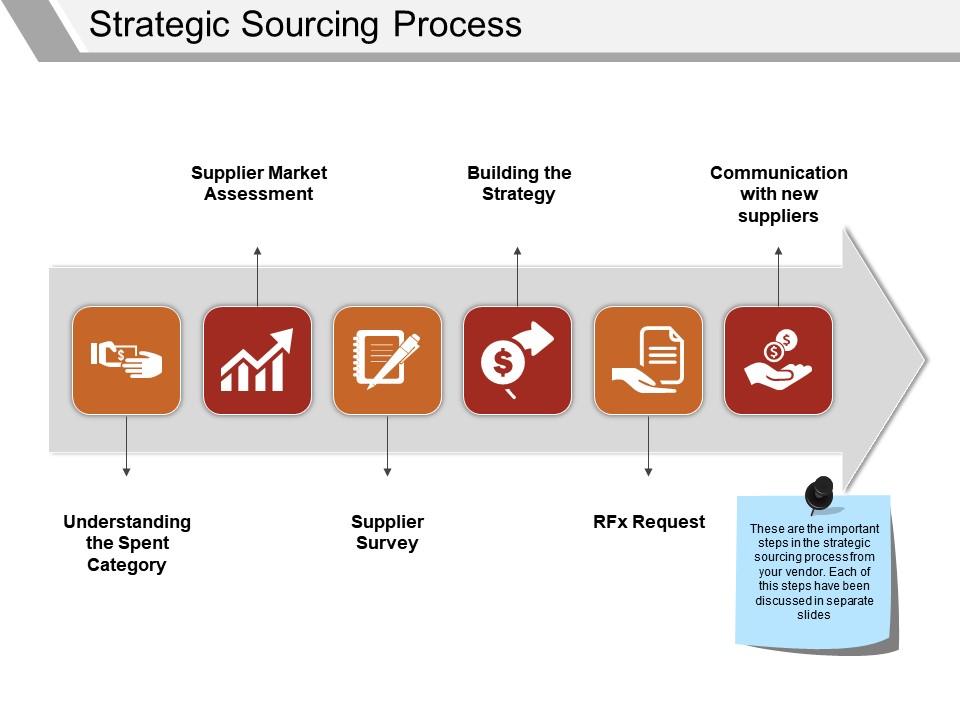
Build new strategies and communicate with new suppliers by using the Strategic Sourcing Process PPT Diagrams. Determine the future direction of your business and analyze your financial position in the market with the help of this strategy control presentation template. Use the strategy planning PowerPoint graphic to discuss the different steps such as to determine the strategic intent, define the organizational mission, assess the situation, strategy formulation, and strategy implementation. Take the assistance of this business strategy PPT slideshow to outline the numerous strategy models like balanced scorecard, strategy map, value chain analysis, SWOT analysis, gap planning, and PEST model. There are various high-quality icons present in the slide which makes your presentation illuminative and knowledgeable. Employ strategy implementation PowerPoint layout to illustrate certain factors of strategies like premise control, implementation control, special alert control, and strategic surveillance. Hence, monitor the progress of your target by downloading our ready-to-use enterprise strategy PPT visual.
People who downloaded this PowerPoint presentation also viewed the following :
Strategic sourcing process ppt diagrams with all 5 slides:
Appreciation of your effort continues to grow due to our Strategic Sourcing Process Ppt Diagrams. It ensures that credits build up.
FAQs for Strategic sourcing
Strategic sourcing delivers significant cost reductions, enhanced supplier relationships, improved quality control, better risk management, and streamlined procurement operations. Organizations implementing these processes typically achieve 10-20% cost savings while gaining greater supply chain visibility, with companies in manufacturing, healthcare, and retail finding that strategic sourcing ultimately provides competitive advantage through optimized vendor partnerships and operational efficiency.
Strategic sourcing drives cost savings through supplier consolidation, competitive bidding processes, long-term partnership negotiations, and comprehensive spend analysis across categories. By leveraging economies of scale and fostering strategic supplier relationships, organizations achieve reduced procurement costs while maintaining quality standards through rigorous vendor evaluation criteria, ultimately delivering enhanced operational efficiency and competitive advantage.
Supplier relationship management serves as the foundation of strategic sourcing by fostering long-term partnerships, ensuring quality consistency, enabling collaborative innovation, and optimizing cost structures through strategic negotiations. These relationships streamline procurement processes, enhance supply chain resilience, and deliver competitive advantages, with many organizations finding that strong supplier partnerships reduce costs while improving service delivery and operational efficiency.
Companies should measure strategic sourcing success through cost savings, supplier performance ratings, procurement cycle time reduction, contract compliance rates, and risk mitigation effectiveness. These metrics enable organizations to track operational efficiency across manufacturing, healthcare, and retail sectors, while delivering enhanced supplier relationships, faster procurement processes, and ultimately stronger competitive advantage in an increasingly complex supply chain environment.
Market analysis enhances strategic sourcing effectiveness by identifying supplier capabilities, pricing trends, risk factors, and emerging opportunities across global markets. Through comprehensive market intelligence, organizations can negotiate better contracts, diversify supplier bases, and anticipate supply chain disruptions, while ultimately reducing costs and improving supplier performance in an increasingly competitive procurement landscape.
Common strategic sourcing challenges include supplier relationship management, data integration across systems, resistance to change from stakeholders, cost-benefit analysis complexity, and maintaining quality standards during transitions. Organizations often struggle with balancing cost reduction goals against service quality requirements, while navigating supplier consolidation and contract negotiations, ultimately requiring significant change management and cross-functional collaboration.
Technology revolutionizes strategic sourcing by enabling data-driven supplier evaluations, automated procurement processes, and real-time market analysis through AI and analytics platforms. These digital tools streamline vendor selection, enhance contract negotiations, and improve supply chain transparency, with manufacturing and retail companies finding that automated sourcing delivers faster procurement cycles and significant cost reductions.
Sustainability in strategic sourcing reduces environmental impact, enhances brand reputation, ensures regulatory compliance, and creates long-term cost efficiencies through resource optimization and waste reduction. By integrating environmental criteria into supplier evaluations, establishing green procurement policies, and collaborating with eco-conscious vendors, organizations streamline operations while meeting consumer demands for responsible practices, ultimately delivering competitive advantage and operational resilience.
Organizations align strategic sourcing with business objectives by integrating procurement goals with corporate strategy, establishing cross-functional teams, and implementing performance metrics that reflect broader business outcomes. This strategic combination enables companies to enhance operational efficiency, reduce costs, and strengthen supplier relationships, while supporting growth initiatives, ultimately delivering competitive advantage and measurable value across multiple business units and stakeholder groups.
Successful supplier selection practices include comprehensive needs assessment, detailed RFP development, rigorous financial evaluation, quality certifications review, and thorough reference checking. These practices enable organizations to identify reliable partners by evaluating cost competitiveness, delivery capabilities, and technical expertise, with many companies finding that structured selection processes reduce supply chain risks while delivering improved quality and long-term strategic partnerships.
Risk management can be incorporated into strategic sourcing through supplier diversification, comprehensive risk assessments, continuous monitoring systems, contractual safeguards, and contingency planning protocols. These approaches enable organizations to identify potential disruptions early, maintain supply chain resilience, and protect against operational vulnerabilities, with many companies finding that proactive risk integration ultimately delivers cost stability and competitive advantage.
Cross-functional teams in strategic sourcing bring together procurement, finance, operations, quality, and technical experts to ensure comprehensive supplier evaluation and decision-making. These diverse teams enhance sourcing outcomes by combining market knowledge, risk assessment capabilities, and operational requirements, with many organizations finding that collaborative approaches deliver better supplier relationships, cost savings, and strategic alignment.
Global sourcing strategies emphasize cost optimization, supplier diversification, and access to specialized capabilities across international markets, while local sourcing prioritizes supply chain control, reduced lead times, and community relationships. Many organizations combine both approaches strategically, with global sourcing delivering significant cost advantages and innovation access, while local sourcing ensures agility and responsiveness for critical operations.
Strategic sourcing significantly enhances contract negotiations by providing comprehensive supplier data, market intelligence, and competitive benchmarking that strengthens negotiating positions. Through detailed spend analysis and supplier performance metrics, organizations secure better pricing, improved service levels, and more favorable terms, while building strategic partnerships that deliver long-term value and operational efficiency.
Organizations ensure compliance and ethical practices in strategic sourcing through comprehensive supplier audits, clear contractual standards, and robust monitoring systems that track performance metrics. These frameworks enable companies to verify labor practices, environmental standards, and regulatory adherence across their supply chains, ultimately delivering risk mitigation and brand protection while maintaining competitive sourcing advantages.
-
Excellent work done on template design and graphics.
-
Illustrative design with editable content. Exceptional value for money. Highly pleased with the product.