


Corporate blockchain powerpoint presentation slides





Try Before you Buy Download Free Sample Product
 Impress Your
 Audience
 100%
100% Editable
 Save Hours
 of Time


Transform your business with our content ready Corporate Blockchain PowerPoint Presentation Slides. Streamline and automate communication using this professionally designed distributed ledger technology presentation deck. The professionally designed smart contracts PowerPoint complete deck Includes a set of self-explanatory templates such as agenda, introduction, distributed ledger introduction & working, smart contract, privacy, use cases- letter of credit, corporate debt & bond, industrial blockchain benefits, limitations, etc. Our great collection of high-quality smart contracts blockchain PPT visuals will help you to create an effective business PowerPoint presentation. Make use of the ready-to-use distributed ledger presentation deck to digitize transactions and workflows. Utilize business blockchain applications PPT visuals to solve different industrial problems. Furthermore, accounting professionals can also use this ready to use distributed ledger technology PPT slides to represent the digital system of recording transactions. Therefore, download the enterprise blockchain strategy PowerPoint presentation and create greater transparency and traceability for business processes. Control the activity at its height with our Corporate Blockchain Powerpoint Presentation Slides. Ensure everything goes flawlessly.
People who downloaded this PowerPoint presentation also viewed the following :
Content of this Powerpoint Presentation
Slide 1: This slide introduces Corporate Blockchain. State Your Company Name and begin.
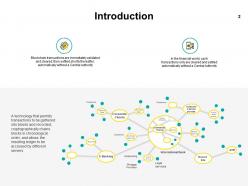
Slide 2: This slide shows Introduction with related diagram.
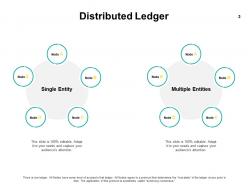
Slide 3: This slide presents Distributed Ledger with single and multiple entities.
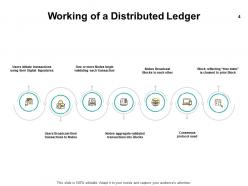
Slide 4: This slide displays Working of a Distributed Ledger with related icons and text.
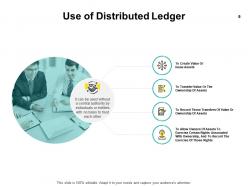
Slide 5: This slide represents Use of Distributed Ledger to- Create Value Or Issue Assets, Transfer Value Or The Ownership Of Assets, Record Those Transfers Of Value Or Ownership Of Assets, Allow Owners Of Assets To Exercise Certain Rights Associated With Ownership, And To Record The Exercise Of Those Rights.
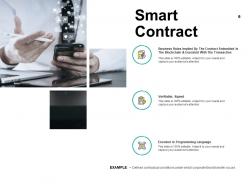
Slide 6: This slide showcases Smart Contract with related imagery.
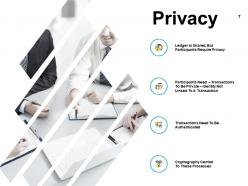
Slide 7: This slide shows Privacy with related icons.
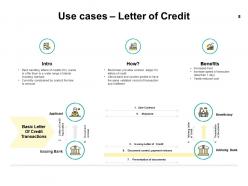
Slide 8: This slide presents Use cases– Letter of Credit with Intro, benefits etc.
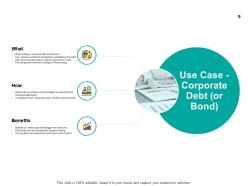
Slide 9: This slide represents Use Case - Corporate Debt (or Bond) with categories as- What, How, and Benefits.
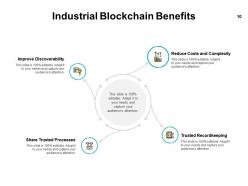
Slide 10: This slide showcases Industrial Blockchain Benefits as- Reduce Costs and Complexity, Trusted Recordkeeping, Improve Discoverability, Share Trusted Processes.
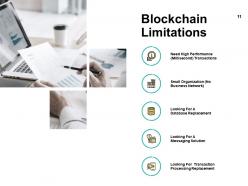
Slide 11: This slide shows Blockchain Limitations describing- Need High Performance (Millisecond) Transactions, Small Organization (No Business Network), Looking For A Database Replacement, Looking For A Messaging Solution, Looking For Transaction Processing Replacement.
Slide 12: This slide displays Corporate Blockchain Icons.
Slide 13: This slide is titled as Additional Slides for moving forward.
Slide 14: This is About Us slide to show company specifications.
Slide 15: This is Meet Our Team slide with names and designation.
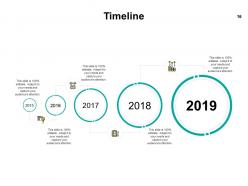
Slide 16: This is a Timeline slide to show information related with time period.
Slide 17: This is Our Mission slide with related imagery and slide.
Slide 18: This is a Thank You slide with address, contact numbers and email address.
Corporate blockchain powerpoint presentation slides with all 18 slides:
Use our Corporate Blockchain Powerpoint Presentation Slides to effectively help you save your valuable time. They are readymade to fit into any presentation structure.


FAQs for Corporate blockchain
Key advantages include enhanced security through cryptographic protection, improved transparency with immutable transaction records, streamlined operations via smart contracts, reduced intermediary costs, and faster cross-border transactions. These capabilities enable corporations to minimize fraud risks, accelerate supply chain tracking, and automate compliance processes, with many financial services and manufacturing companies finding that blockchain ultimately delivers significant operational efficiency and competitive advantage.
Corporate blockchain enhances supply chain transparency by creating immutable records of product journeys, enabling real-time tracking, and providing stakeholders with comprehensive visibility into sourcing and manufacturing processes. Through distributed ledgers, companies in automotive, pharmaceuticals, and food industries can trace products from origin to consumer, ultimately reducing fraud, ensuring compliance, and building consumer trust while streamlining audit processes.
Potential challenges include integration complexity with existing systems, high implementation costs, regulatory uncertainty, scalability limitations, and workforce training requirements. While these obstacles present initial hurdles, many organizations find that strategic planning, phased implementation, and partnering with experienced blockchain providers helps streamline adoption, ultimately delivering enhanced security, transparency, and operational efficiency across their business processes.
Smart contracts function as automated, self-executing agreements that trigger when predetermined conditions are met, streamlining corporate processes like payments, compliance, and vendor management without intermediaries. Through blockchain's immutable ledger, companies achieve faster contract execution, reduced administrative costs, and enhanced transparency, with financial institutions and supply chain organizations finding that smart contracts significantly minimize manual oversight while ensuring regulatory compliance.
Blockchain enhances enterprise data security through cryptographic encryption, immutable ledger technology, decentralized storage, and real-time audit trails. Financial institutions and healthcare organizations leverage these capabilities to prevent data tampering, streamline compliance reporting, and reduce cybersecurity risks, ultimately delivering enhanced transparency and operational efficiency in increasingly complex regulatory environments.
Corporate blockchain enhances regulatory compliance and governance by providing immutable audit trails, automated compliance monitoring through smart contracts, and transparent transaction records. Through distributed ledger technology, organizations streamline reporting processes, reduce compliance costs, and demonstrate accountability to regulators, with many financial institutions and healthcare companies finding that blockchain delivers enhanced transparency and significantly improved regulatory oversight.
Blockchain facilitates industry collaboration by creating shared, transparent ledgers for supply chain tracking, enabling secure multi-party data sharing, standardizing payment and settlement processes, and establishing trusted consortiums for regulatory compliance. These capabilities streamline cross-company operations, reduce verification costs, and enhance trust between partners, with sectors like logistics and financial services finding that blockchain-based networks ultimately deliver faster transactions and improved operational efficiency.
Corporate blockchain use cases in finance include supply chain financing, trade finance automation, cross-border payments, regulatory compliance tracking, and smart contract-based settlements. These applications streamline operations by reducing intermediaries, enhancing transparency, and accelerating transaction processing, with many banks and financial institutions finding that blockchain delivers faster services, lower costs, and improved audit capabilities.
Corporations can leverage blockchain for intellectual property rights by creating immutable records of creation timestamps, establishing transparent ownership chains, and enabling automated licensing through smart contracts. This technology streamlines patent filings, reduces IP disputes, and facilitates secure collaboration, with pharmaceutical and entertainment companies finding that blockchain-based systems significantly enhance protection while reducing administrative costs and legal complexities.
Companies can overcome blockchain skepticism through pilot programs demonstrating clear ROI, comprehensive employee education initiatives, partnering with established blockchain vendors, and showcasing successful use cases from their industry. By starting with low-risk applications like supply chain tracking or document verification, organizations build internal confidence while delivering measurable outcomes, ultimately creating momentum that transforms initial resistance into strategic competitive advantage.
Corporate blockchain integrates with existing ERP and CRM systems through APIs, middleware solutions, and smart contracts that enable seamless data synchronization and automated workflows. This strategic combination enhances supply chain transparency, streamlines financial reconciliation, and automates customer verification processes, with many enterprises finding that blockchain-ERP integration ultimately delivers improved operational efficiency and enhanced data integrity across departments.
Interoperability between blockchain networks enables businesses to seamlessly connect disparate systems, share data across platforms, and avoid vendor lock-in while maximizing their technology investments. This strategic capability allows organizations in finance, healthcare, and supply chain management to streamline operations, enhance transparency, and create comprehensive solutions that deliver greater efficiency and competitive advantage.
Companies ensure blockchain scalability through strategic architecture choices, including layer-two solutions, sharding protocols, hybrid blockchain models, and optimized consensus mechanisms. These approaches enable organizations to handle increased transaction volumes while maintaining performance, with many financial institutions and supply chain companies finding that combining public and private blockchain elements delivers enhanced throughput and operational efficiency.
Key trends shaping corporate blockchain's future include interoperability between networks, integration with AI and IoT, sustainability-focused solutions, regulatory compliance frameworks, and decentralized finance adoption. These developments enable organizations to streamline cross-border transactions, automate complex workflows, and enhance supply chain transparency, with financial services and manufacturing sectors finding that strategic blockchain implementation delivers significant operational efficiency and competitive advantage.
Businesses can measure blockchain ROI through cost reduction metrics, operational efficiency improvements, transaction speed enhancements, and compliance automation savings. Financial institutions and supply chain companies increasingly track reduced processing costs, faster settlement times, and decreased manual oversight requirements, while measuring improved transparency and trust-building outcomes that ultimately deliver competitive advantages and stronger customer relationships.
-
Easily Understandable slides.
-
Helpful product design for delivering presentation.
-
Great quality slides in rapid time.
-
I discovered this website through a google search, the services matched my needs perfectly and the pricing was very reasonable. I was thrilled with the product and the customer service. I will definitely use their slides again for my presentations and recommend them to other colleagues.
-
Great product with highly impressive and engaging designs.
-
Excellent design and quick turnaround.
-
Thanks for all your great templates they have saved me lots of time and accelerate my presentations. Great product, keep them up!