

Blockchain powerpoint presentation slides





Try Before you Buy Download Free Sample Product
 Impress Your
 Audience
 100%
100% Editable
 Save Hours
 of Time


Use extensively researched Blockchain PowerPoint Presentation Slides to educate your audience about the secure online payment transactions and cryptographic techniques. Show encryption methods and concept of decentralized network that allows the easy transfer of digital values such as currency and data. Bitcoin developers can incorporate this professionally designed content-ready Blockchain PowerPoint presentation templates for their work. This deck covers topics like distributed ledger, working of a distributed ledger, use cases, industrial blockchain benefits, blockchain limitations, and more. Illustrate the idea of transferring funds directly between two parties without any banks or credit card company using blockchain PPT presentation templates. Demonstrate the workings of cryptocurrencies, showcase the process and its benefits with the help of cryptocurrency PPT slides. These templates are completely customizable. You can edit the slides as per your convenience. Change color, text, icon, and font size as per your need. Download now. Engage with disbelievers through our Blockchain Powerpoint Presentation Slides. Explain the grounds for your beliefs.
People who downloaded this PowerPoint presentation also viewed the following :
Content of this Powerpoint Presentation
Blockchain is crucial to corporate operations, especially ways of recording transactions in cryptocurrencies. The technology ensures trust in any financial system and maintains the security of data across computers connected in a person-to-person network.
Blockchain is secure and transparent, even as it does not impact accessibility in any adverse manner.
Primarily used for bitcoin-based transactions, blockchain values trades by enhancing transparency, security, and efficiency in trades. It ensures that data is uncompromised, risk-free from fraud and faults, and is accessible across the network.
Smart contracts is one major application of blockchain, and where considerable progress has been made. Get the template here.
Blockchain, with its emphasis on no intermediary and no particular holder of trust for financial transactions, has emerged as a game-changer for commerce.
At SlideTeam, we have a collection of blockchain PowerPoint Designs that offer an easy and convenient way for corporates to present finance concepts. Using these 100% editable and customizable PPT Layouts, you can communicate messages related to decentralization, smart contracts, and transactions to your audience. Adding blockchain designs to your presentation enables you to highlight aspects of cryptocurrency, distributed ledgers, and more.
Access four pillars of blockchain technology with a click here and use it to better your processes.
Use these presentation visuals to showcase how blockchain revolutionizes financial processes. Additionally, you can deliver a statement about how effective blockchain is for the smooth functioning of modern business.
Let’s explore!
Template 1: Introduction
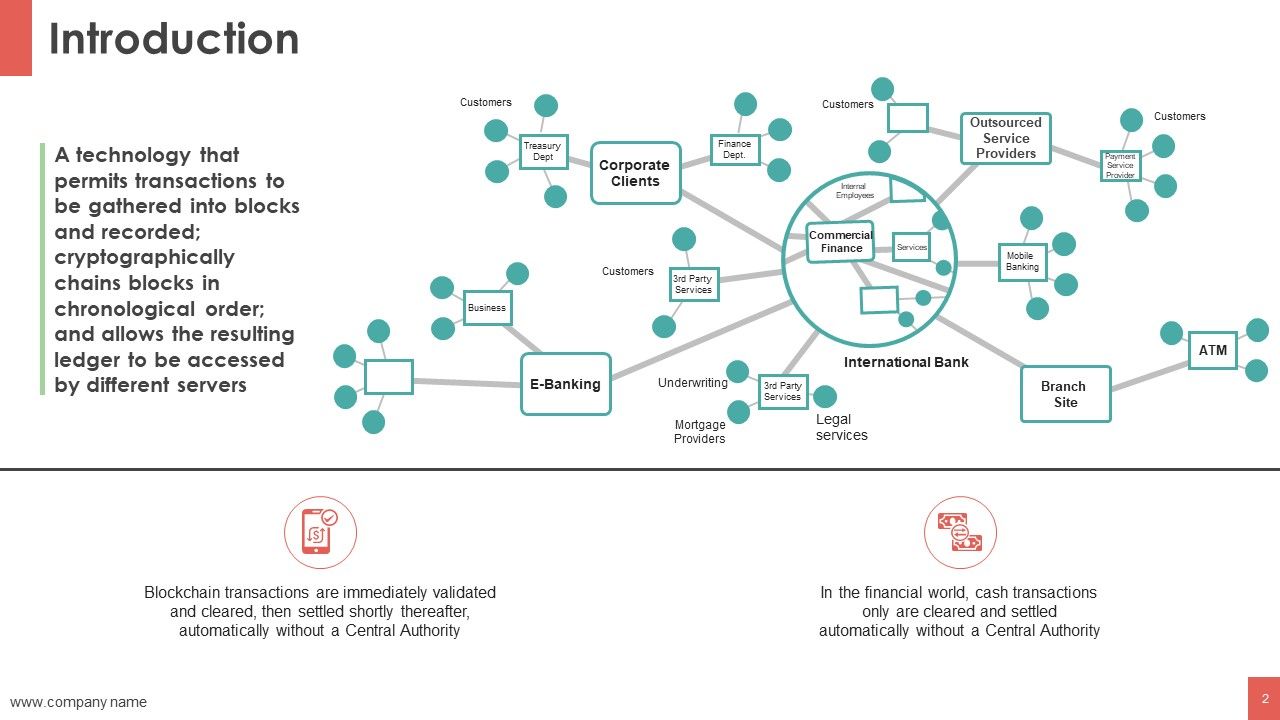
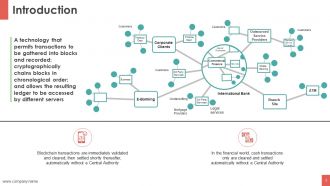
From corporate clients to underwriting teams and mobile banking to international banks, this slide caters to finance, legal, and commercial services. Whether showcasing treasury department strategies or highlighting the efficiency of outsourced service providers, our PPT design seamlessly integrates third-party services and mortgage providers. This versatile PowerPoint visual is ideal for finance departments, branch sites, and payment service providers. It empowers professionals across job profiles, from financial analysts to branch managers, to effectively communicate and engage their audience.
Template 2: Distributed Ledger
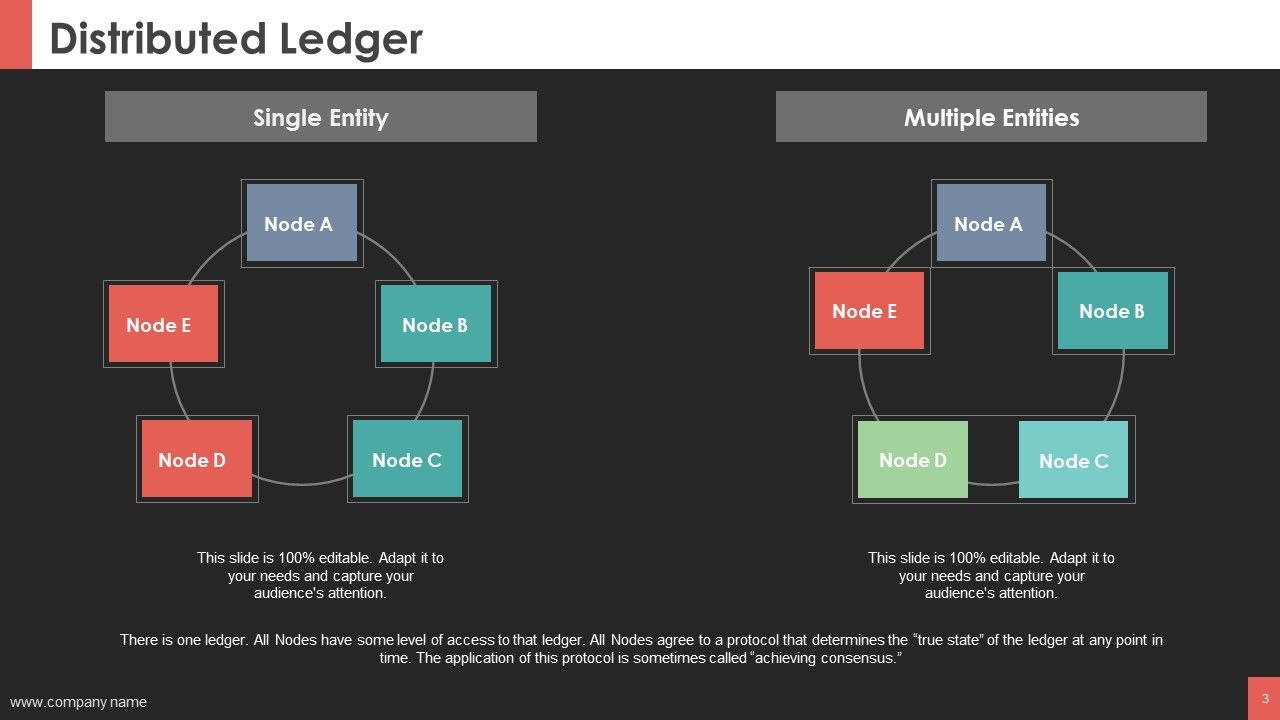
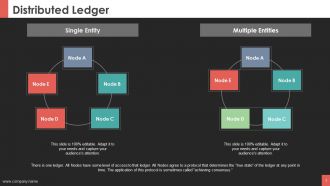
This presentation slide illuminates the crux of Distributed Ledger Technology (DLT), demonstrating its adaptability across single and multiple-entity agendas. In the single-entity scenario, nodes A, B, C, D, and E congregate to form a robust network, while in the multi-entity setup, nodes A, B, C, D, and E foster alliances among diverse establishments. The PPT layout is ideal for professionals ranging from blockchain developers to compliance officers. It showcases the transformative power of DLT in revolutionizing data management and fostering trust in the digital age.
Template 3: Working of a Distributed Ledger
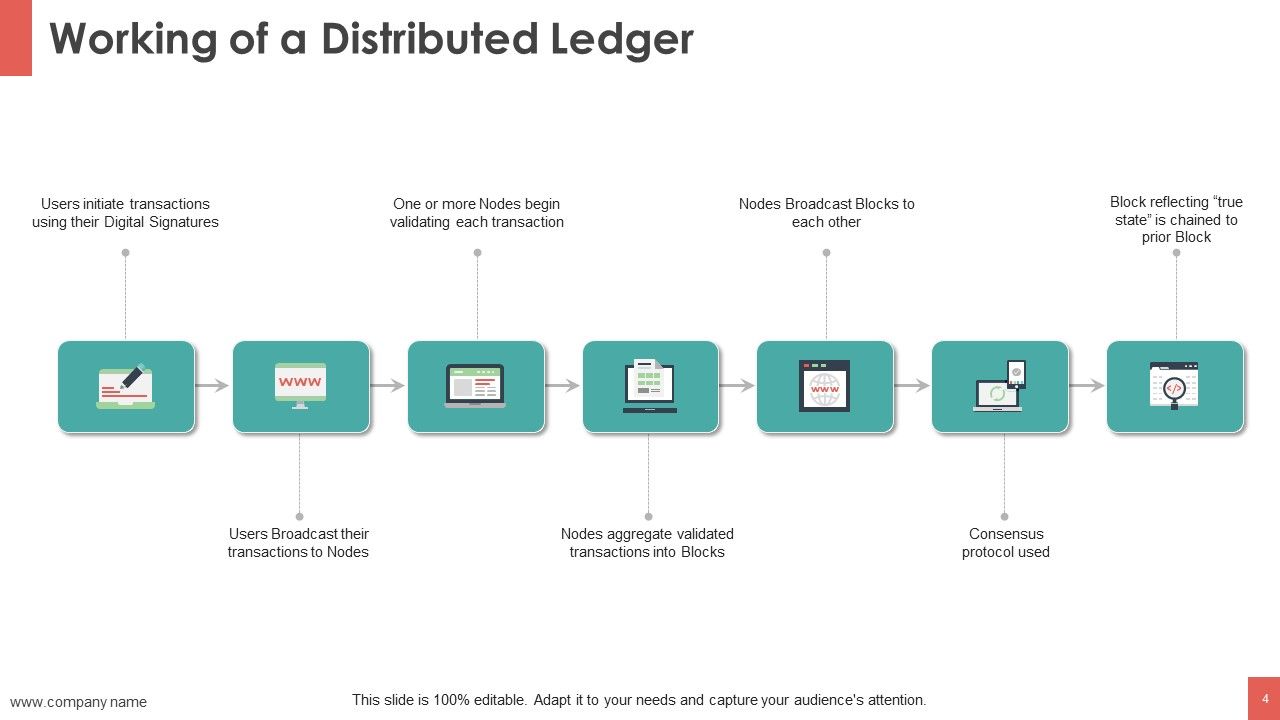
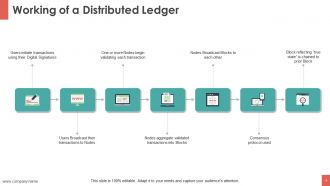
This PPT diagram elucidates the operational dynamics of a DLT, beginning with users initiating transactions via their digital signatures. Subsequently, users broadcast these transactions to nodes, where one or more nodes undertake the validation process. Following validation, nodes aggregate validated transactions into blocks and broadcast them across the network. This comprehensive presentation layout is invaluable for professionals such as blockchain architects, cybersecurity analysts, financial auditors, and software developers.
Template 4: Use of Distributed Ledger
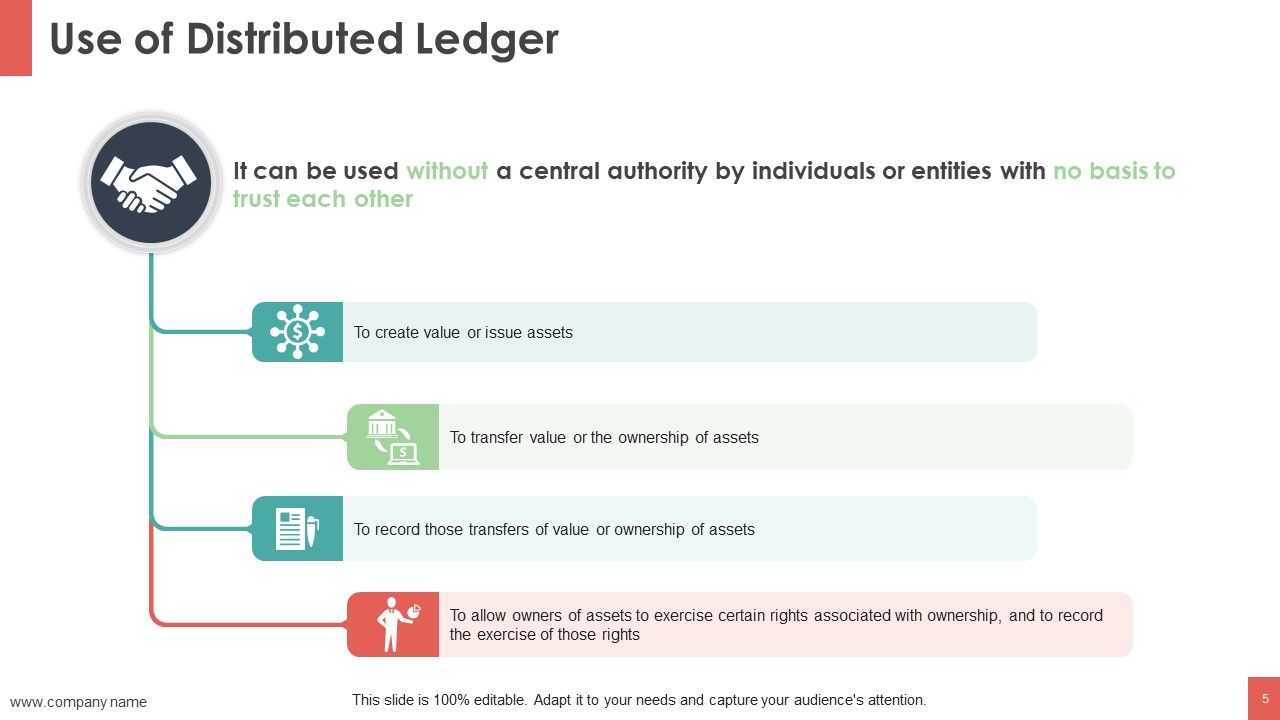
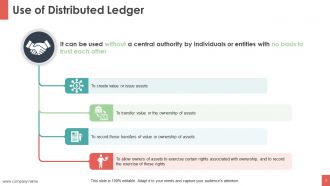
This PowerPoint layout underscores the versatile applications of DLT, which enables the creation, transfer, and recording of asset values and ownership. The slide helps highlight key concepts from issuing assets to facilitating their transfer and recording ownership changes. Furthermore, DLT empowers users to exercise ownership rights efficiently. This PPT diagram adds value to professionals, such as blockchain developers, financial analysts, legal advisors, and compliance officers, offering insights into harnessing DLT's transformative potential in asset management and transactional processes.
Template 5: Smart Contract
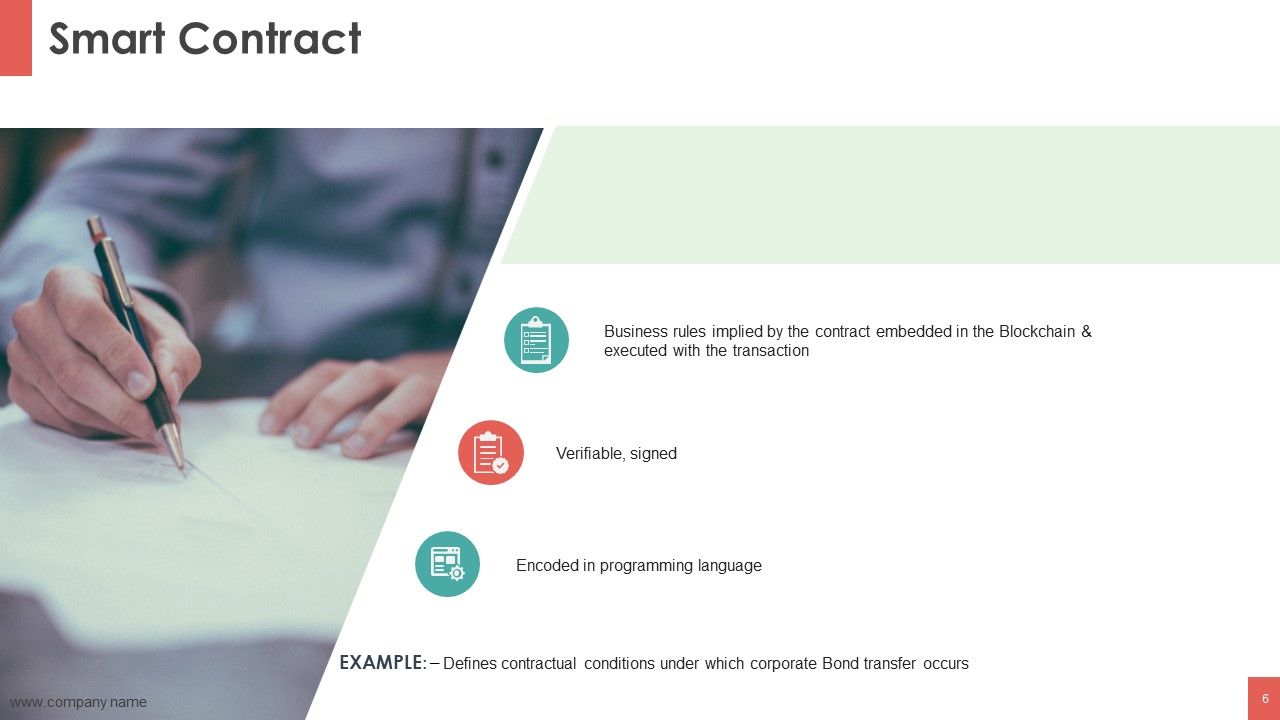
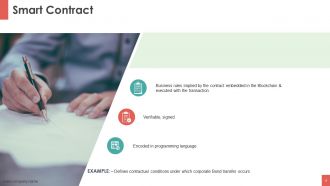
This PPT visual effectively illustrates the fundamental concept of smart contracts, where the business rules are embedded within the blockchain and executed with transactions. These contracts are signed and verifiable, with their conditions encoded in a programming language, ensuring transparency and effectiveness. For example, a smart contract might outline the terms for transferring corporate bonds. The slide showcases how intelligent contracts streamline processes and bolster trust across diverse industries.
Template 6: Privacy
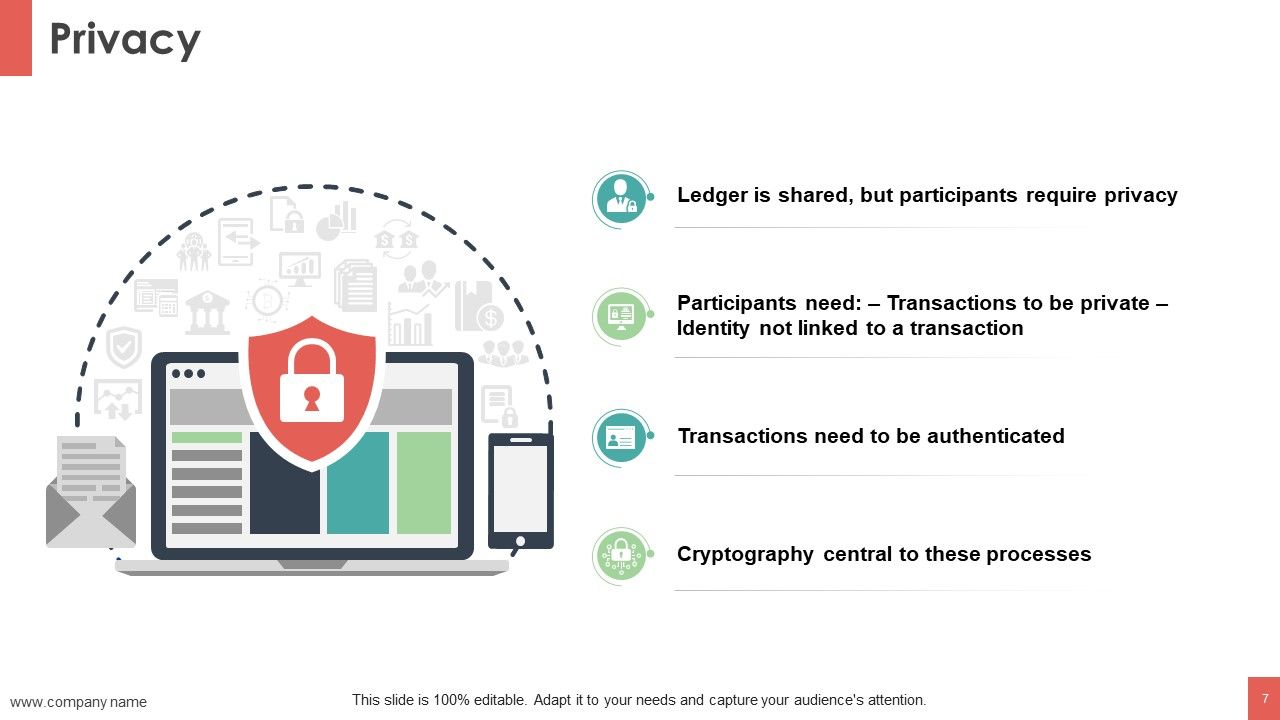
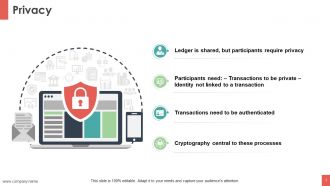
This presentation framework highlights the critical significance of privacy within distributed ledger systems. While these ledgers are shared, participants necessitate privacy measures to safeguard sensitive information. It ensures that transactions remain private, with identities not linked to specific transactions or authentication. This PPT layout is indispensable for professionals across domains, including cybersecurity analysts, blockchain developers, compliance officers, and data privacy experts. It offers vital guidance on preserving the confidentiality and integrity of information within decentralized environments, ensuring trust and security across digital transactions.
Template 7: Use cases – Letter of Credit
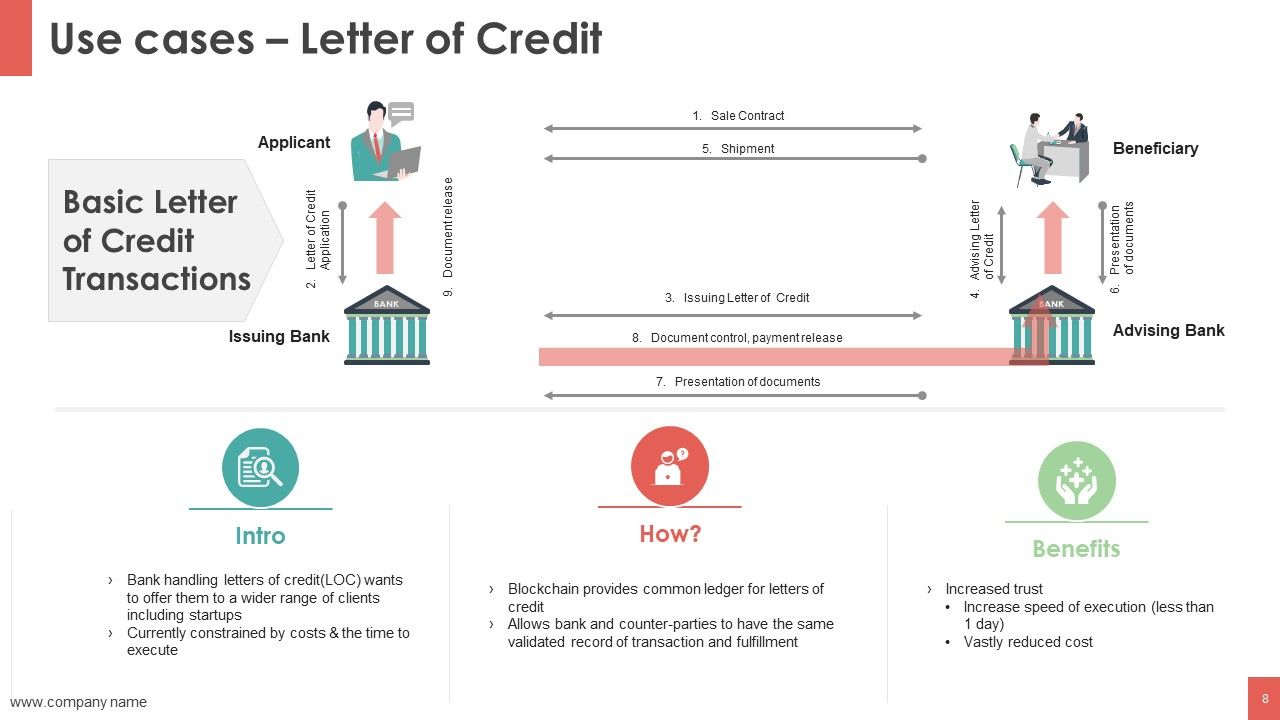
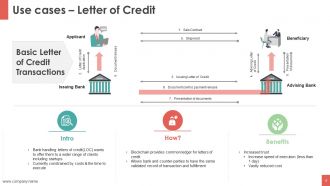
This PowerPoint template showcases the wide-ranging applications of Letters of Credit (LC), an essential tool in international trade. It covers activities from initiating sales contracts and LC applications to issuing and advising LCs. These tasks involve managing shipments, presenting documents, and ensuring document control for payment release. This PPT layout is beneficial for professionals, including trade finance managers, international trade specialists, supply chain managers, and financial analysts. They can leverage this presentation design, as it provides insights into the complex operations of LCs, facilitating seamless transactions and risk mitigation in global commerce.
Template 8: Use Case – Corporate Debt (or Bond)
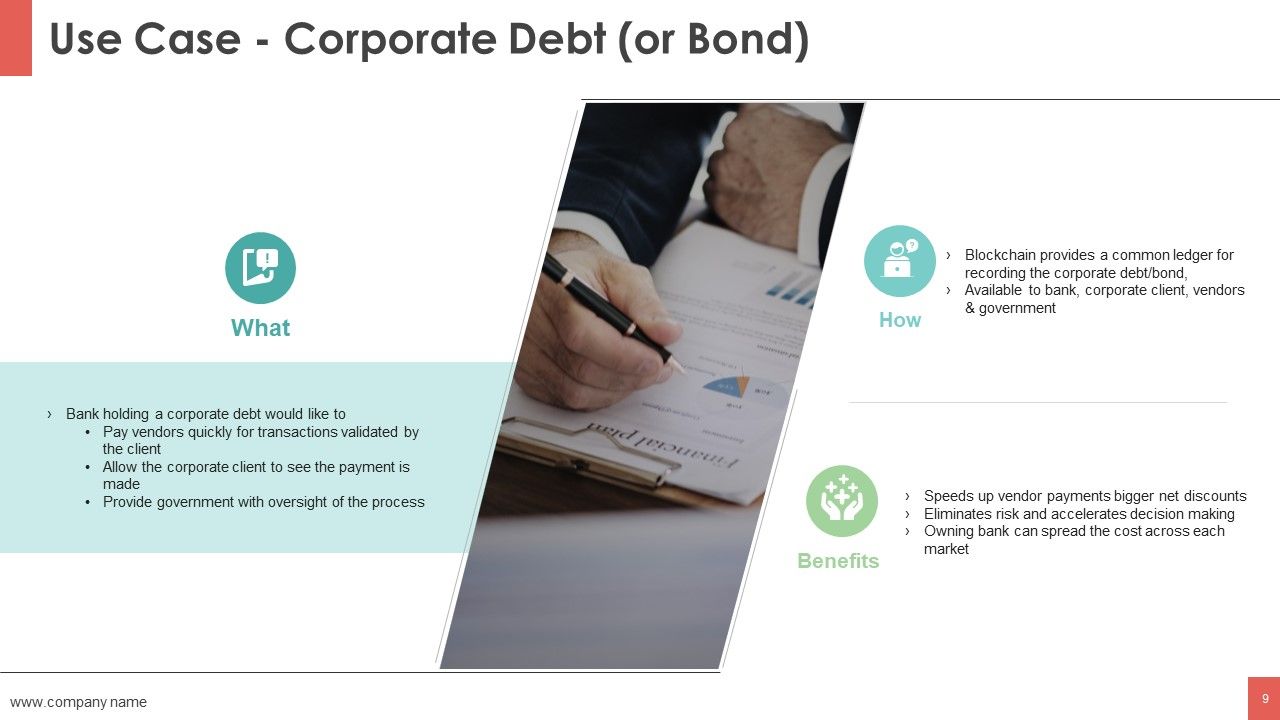
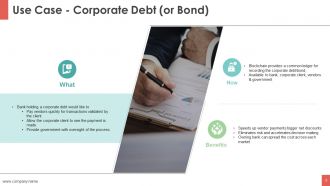
This PowerPoint Design portrays the application of corporate debt or bonds, a significant financial tool in capital markets. It showcases corporate debt, operational workings, and its advantages. Besides this, it helps businesses issue bonds to get investments from investors, obliging them to regular interest payments and repaying the principal amount. The PPT layout depicts the entire process and involves issuing bonds, marketing them to investors, and managing interest payments and redemptions. This presentation slide benefits investment bankers, corporate finance managers, and financial analysts.
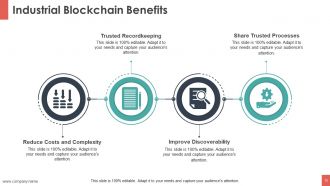
Template 9: Industrial Blockchain Benefits
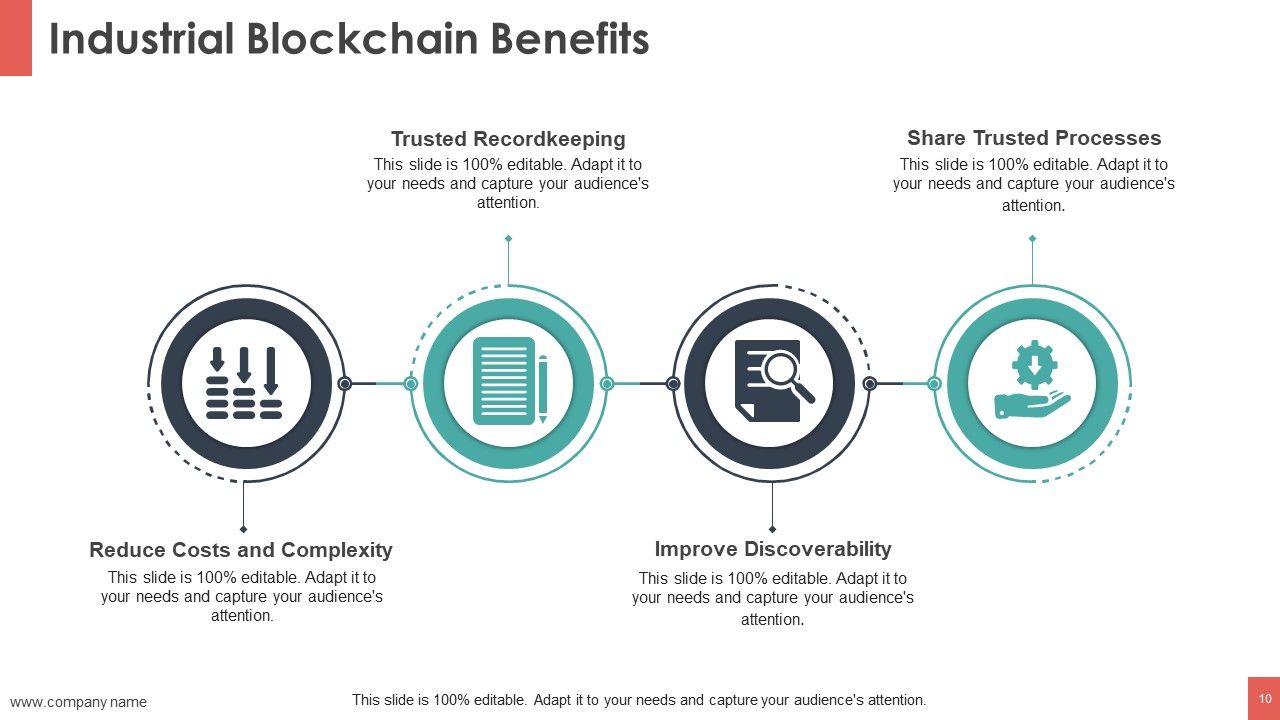
This PowerPoint diagram highlights the advantages of implementing industrial blockchain technology. Industries lower expenses and simplify intricate procedures using blockchain. Additionally, blockchain guarantees reliable recordkeeping, augmenting the integrity and dependability of data. Enhanced accessibility and discoverability of information enhances operational effectiveness. These collaborative, dependable processes enable professionals in diverse roles, such as supply chain managers, logistics coordinators, quality assurance specialists, and IT professionals.
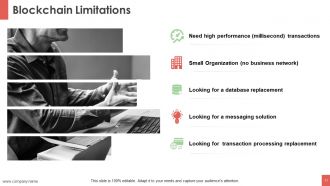
Template 10: Blockchain Limitations
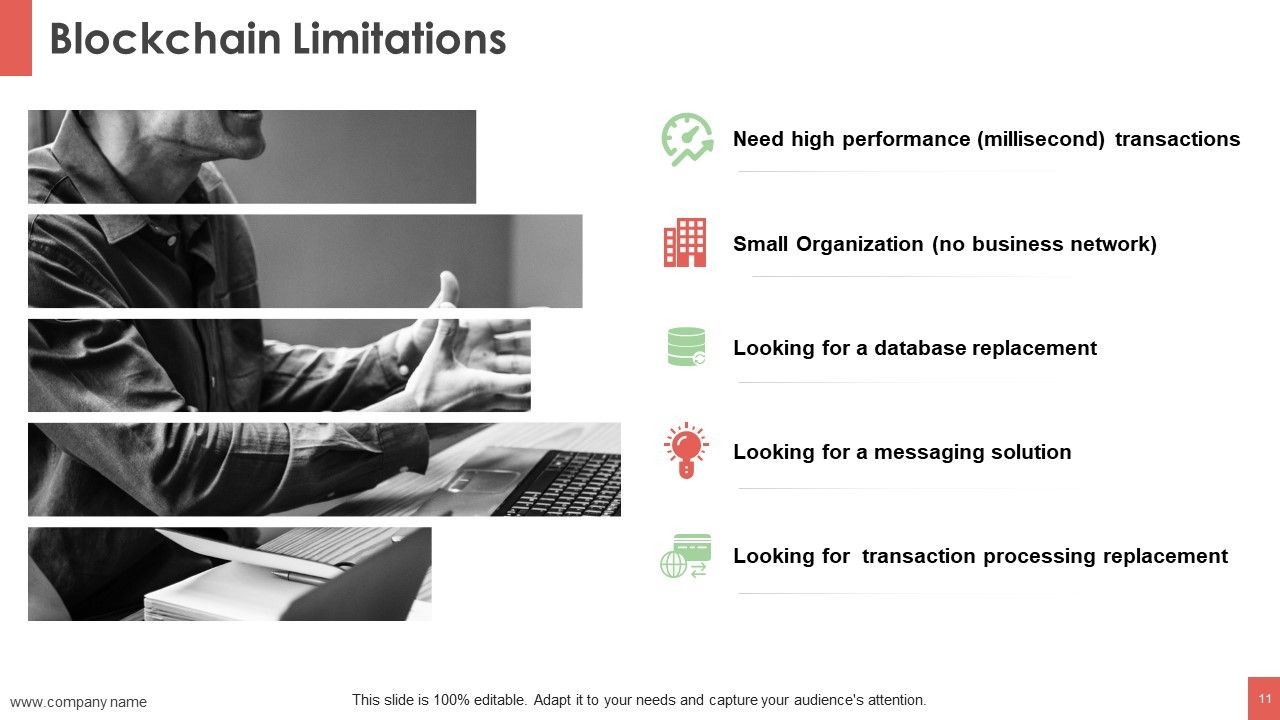
This presentation graphic highlights the limitations of blockchain technology. Blockchain may not be suitable for scenarios requiring high-performance transactions in milliseconds or suit small organizations lacking a business network. It may not directly replace traditional databases or messaging solutions, nor can it always replace transaction processing systems. The PPT diagram helps professionals such as IT architects, technology consultants, project managers, and business analysts effectively use the information to assess the suitability of blockchain for specific use cases and devise alternative solutions where necessary.
Unlocking Future Potential: Blockchain Revolution
Blockchain provides vast potential for corporations across industries. Its capacity to boost transparency, security, and proficiency makes it an excellent resource for driving innovation. It aids businesses in restructuring transactions, mitigating risks, and reducing costs. In this digital age, blockchain allows trades to gain an advantage by unlocking new opportunities and adapting to changing market dynamics. It revolutionizes business operations and helps shape the future of commerce.
Our blockchain presentation designs help you to make your team understand the new dynamics of modern business.
PS Understand how distributed ledgers contribute to better, faster business with a look at this PPT Template on distributed ledgers.
Blockchain powerpoint presentation slides with all 19 slides:
Evoke compassion with our Blockchain Powerpoint Presentation Slides. Develop their feelings for fellow beings.

FAQs for Blockchain
So blockchain is this digital record book that gets copied across tons of computers. New info gets "chained" to old blocks using some crypto math stuff - makes it super hard to mess with old records. Here's the thing though - you'd have to hack most of the computers at once to change anything, which is basically impossible. Everyone can see the same transactions happening live, so there's your transparency. Honestly, most projects don't actually need this level of trust verification. Only go blockchain if you really need that decentralized security aspect, otherwise you're just overcomplicating things.
So blockchain is basically like having a permanent receipt for everything in your supply chain. Raw materials, manufacturing, shipping - it all gets logged and can't be changed later. Honestly, it's pretty wild how fast you can trace stuff back now, like minutes instead of weeks. Super helpful for recalls obviously. The cool part is nobody can mess with the records without everyone else knowing, so you actually know who screwed up where (sorry, but it's true lol). I'd probably start by figuring out which suppliers would even be down to try this tech first.
So basically blockchain just cuts out all those middleman banks that usually make international transfers take forever and cost a fortune. Your money can move peer-to-peer in minutes instead of bouncing around between 3-4 banks for days. Ripple's doing this with some major banks already, though adoption is still kinda all over the place honestly. The cool part is you can actually track your payment in real-time - no more wondering where your cash went for three business days. My cousin uses it for his overseas freelance work and loves it. If you're doing regular international payments, definitely check out blockchain options.
So basically, public blockchains like Bitcoin are open to anyone - total transparency but they're slow and expensive as hell. Private ones? Only certain people get access. Banks love these because they can control everything and transactions are way faster. If you're building something where trust matters and you want everyone to see what's happening, go public. But honestly, most businesses just use private ones for internal stuff since they don't want competitors peeking at their data. Really depends on whether you prioritize openness or speed.
Okay so smart contracts are basically programs that run themselves on blockchain. When certain conditions get met, they automatically execute - no need for a middleman or anything. It's like setting up "if this happens, then do that" rules that nobody can mess with once they're live. Pretty neat concept honestly. You get transparency since anyone can check the code, plus way lower costs without all those intermediaries taking their cut. They work great for insurance payouts, tracking supply chains, payment automation - that kind of stuff. If you're curious about trying it out, I'd start simple. Maybe set up an automated recurring payment or something basic just to see how it actually works.
So crypto is basically what makes blockchain networks actually work - it's like paying miners to validate transactions and keep everything secure. No government controls it, which is pretty cool honestly. You can send it anywhere instantly without dealing with banks or those annoying exchange rates. The thing is, most people think it's just digital money, but it's more like the economic backbone that holds these networks together. Without crypto incentives, the whole decentralized thing would fall apart. That's why every blockchain project needs some kind of token - it's not just hype, it actually serves a purpose.
So basically, blockchain keeps a permanent record of every single change made to patient files - like who touched what and when. Once something's logged, you can't go back and mess with it without everyone knowing. Pretty clever honestly. Healthcare providers get verified through cryptography before they can access anything, so there's always a clear trail of who did what. Makes it way harder for people to pull shady stuff since everything's out in the open. I'd say start small though - maybe test it out with prescription records first since that's where you see the most fraud anyway.
Yeah so blockchain's biggest headache is speed - Bitcoin only does like 7 transactions per second, Ethereum's around 15. Meanwhile Visa's crushing thousands. It's genuinely annoying waiting ages for stuff to process. Most projects are using layer-2 solutions now though. Lightning Network for Bitcoin, Polygon for Ethereum - they handle transactions off the main chain which is way faster. There's also sharding where you basically split everything into smaller chunks, plus newer consensus methods that don't suck like proof-of-work does. Honestly if you're building anything, just go straight to those layer-2 options. Way less headache.
Dude, so blockchain basically flips the script on digital identity. Instead of Facebook or Google hoarding your info, you control it yourself. Say you need to prove you're 21 - you can do that without giving up your birthday or home address. No single company owns your data anymore, which honestly feels long overdue. Microsoft and some governments are testing these "self-sovereign identity" things already. It's pretty wild - you pick what to share and when. If you're building something that needs identity verification, check out Hyperledger Indy or uPort. They'll show you how it actually works in practice.
Yeah so blockchain's environmental impact is pretty rough - Bitcoin burns through electricity like crazy, we're talking Argentina-level consumption. It's all because of this "proof of work" thing where computers basically race to solve puzzles that eat tons of energy. But here's the thing - Ethereum just switched to "proof of stake" and cut their energy use by like 99%, which is wild. I mean, if you're thinking about blockchain stuff for work or whatever, just check what consensus mechanism they're using first. Makes a massive difference.
Blockchain basically lets customers own their loyalty points for real - they can transfer them between programs or trade with other people. Way more flexible than regular airline miles. Smart contracts handle the automation part, so bonus points hit accounts instantly when someone reaches spending goals. The transparency is huge too since customers see exactly how everything works, which honestly builds way more trust than traditional programs. Cross-brand partnerships become possible where your points work at totally different businesses. I'd check out existing blockchain loyalty platforms first though - no point reinventing the wheel when there's already decent options out there to build on.
Honestly, it's a total shitshow right now - no country can agree on how to handle crypto regulation. The US calls everything securities, China just banned it all (typical), while Europe's actually putting together decent frameworks like MiCA. Singapore and Switzerland are basically rolling out red carpets for crypto companies though. What kills me is how something totally legal in one place can land you in jail somewhere else. Cross-border compliance is genuinely nightmare fuel. My buddy's startup spent like 6 months just figuring out licensing requirements. Don't even think about expanding without getting lawyers in each country first.
So blockchain's actually changing how real estate works - crazy stuff. Property ownership history gets recorded permanently, which means way less fraud and title drama. Smart contracts handle escrow automatically too, cutting out tons of paperwork (thank god). Some counties are already putting property records on blockchain systems. Title searches that used to take forever now happen super fast. You'll see shorter closing times and lower costs, which is huge. Oh, and if you're house hunting soon, definitely ask your agent about blockchain platforms - not all of them use it yet but it's worth checking.
Honestly, blockchain voting could be pretty game-changing. Your vote gets locked in with crypto security, and anyone can verify the results are legit - no more worrying about stuffed ballot boxes or those sketchy voting machines breaking down. Nobody controls the whole system since it's decentralized, which builds way more trust. Remote voting actually becomes possible without sacrificing security. Though obviously you'd still need to figure out the whole digital divide thing and keep votes private while staying transparent. Estonia's been testing this stuff out, plus some cities here in the US if you want to see how it's going.
Look, forget the overpriced monkey pics for a sec. NFTs are actually pretty cool because they let you prove you own digital stuff without some company controlling it. Concert tickets that can't be faked, diplomas you can verify instantly, game items that work across different games - that kind of thing. Real estate shares too, which is wild to think about. The royalty part is genius though - artists get paid every time their work gets resold. My advice? Skip the hype projects and look for ones solving actual problems. That's where the real money will be.
-
This Template So Bueatiful
-
Great Work! I have been looking for a recommended blockchain certification training course
and managed to find this link. -
this template so bueatiful
-
Innovative and attractive designs.