


Bpm Powerpoint Presentation Slides





Try Before you Buy Download Free Sample Product
 Impress Your
 Audience
 100%
100% Editable
 Save Hours
 of Time


Discover, and analyze the different functions of your business with the aid of BPM PowerPoint Presentation Slides. You can explain how to manage a group of inter-dependent projects by using the business process management PowerPoint graphic. Use business process modeling PPT deck to provide value-added products and best services to your consumers. With the help of the BPM framework presentation slides, you can design business strategies to improve the final result of the project. Take the assistance of this professionally designed operations management PowerPoint layout to enhance customer satisfaction by fulfilling their requirements. Employ enterprise planning systems presentation slides to control both automated and non-automated business processes. In this deck, there are various high-grade icons and other diagrams that make your presentation precise and informative. You can create greater business values and stabilize your position in the marketplace by downloading our ready-to-use integrated business planning PPT theme.
People who downloaded this PowerPoint presentation also viewed the following :
Content of this Powerpoint Presentation
Slide 1: This slide introduces BPM. State Your Company Name and begin.
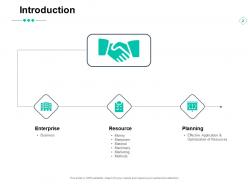
Slide 2: This slide shows Introduction to- Resource, Enterprise, and Planning.
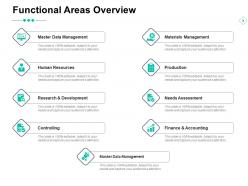
Slide 3: This slide presents Functional Areas Overview describing- Master Data Management, Materials Management, Human Resources, Production, Needs Assessment, Research & Development, Finance & Accounting, Controlling, Master Data Management.
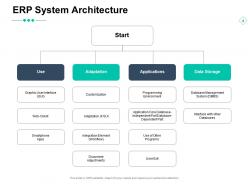
Slide 4: This slide displays ERP System Architecture with categories as- Use, Adaptation, Data Storage, and Applications.
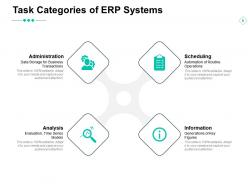
Slide 5: This slide represents Task Categories of ERP Systems describing- Administration, Scheduling, Analysis, Information.
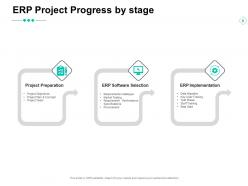
Slide 6: This slide showcases ERP Project Progress by stage including- Project Preparation, ERP Software Selection, ERP Implementation.
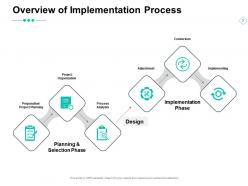
Slide 7: This slide shows Overview of Implementation Process.
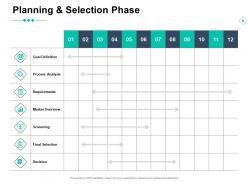
Slide 8: This slide displays Planning & Selection Phase in tabular form.
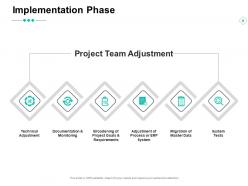
Slide 9: This slide presents Implementation Phase describing- Broadening of Project Goals & Requirements, Adjustment of Process or ERP System, Documentation & Monitoring, Migration of Master Data, Technical Adjustment, System Tests.
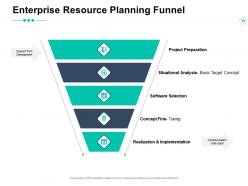
Slide 10: This slide represents Enterprise Resource Planning Funnel describing- Project Preparation, Realization & Implementation, Situational Analysis- Basic Target Concept, Software Selection, Concept Fine- Tuning.
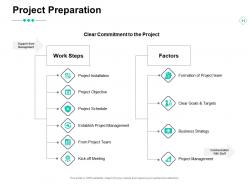
Slide 11: This slide showcases Project Preparation with work steps and factors.
Slide 12: This slide shows Situational Analysis- Basic Target Concept.
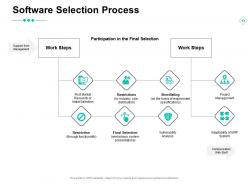
Slide 13: This slide presents Software Selection Process with related chart.
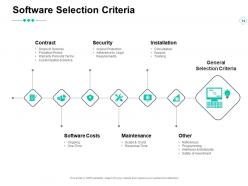
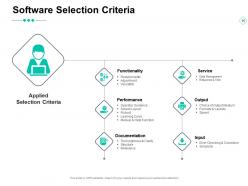
Slide 14: This slide displays Software Selection Criteria describing- Contract, Security, Installation, Software Costs, Maintenance, etc.
Slide 15: This is another slide on Software Selection Criteria.
Slide 16: This slide represents Fine -Tuning of Concept with related flow chart.
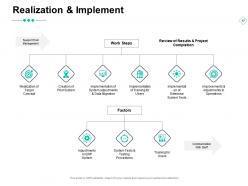
Slide 17: This slide showcases Realization & Implement.
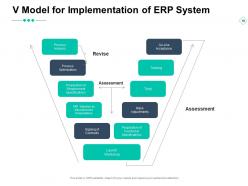
Slide 18: This slide shows V Model for Implementation of ERP System.
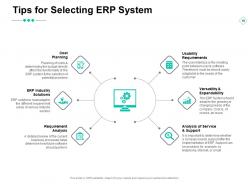
Slide 19: This slide presents Tips for Selecting ERP System describing- Cost Planning, ERP Industry Solutions, Requirement Analysis, Usability Requirements, Versatility & Expandability, Analysis of Service & Support.
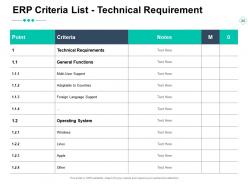
Slide 20: This slide displays ERP Criteria List - Technical Requirement.
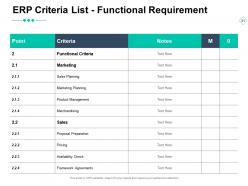
Slide 21: This slide represents ERP Criteria List - Functional Requirement.
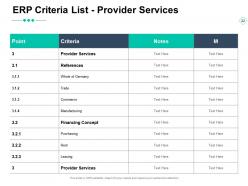
Slide 22: This slide showcases ERP Criteria List - Provider Services in tabular form.
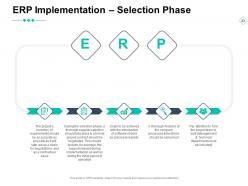
Slide 23: This slide shows ERP Implementation – Selection Phase with related icons.
Slide 24: This slide displays BPM Icons.
Slide 25: This slide reminds about a 15 minutes coffee break.
Slide 26: This slide is titled as Additional Slides for moving forward.
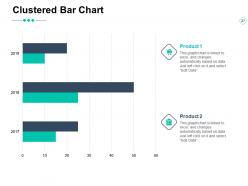
Slide 27: This slide shows Clustered Bar Chart with two products comparison.
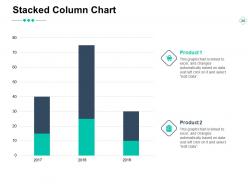
Slide 28: This slide presents Stacked Column Chart with two products comparison.
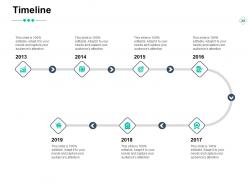
Slide 29: This is a Timeline slide to show information related with time period.
Slide 30: This is an Idea Generation slide to state a new idea or highlight information, specifications etc.
Slide 31: This is Our Team slide with names and designation.
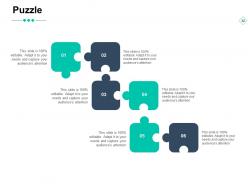
Slide 32: This is a Puzzle slide with text boxes to show information.
Slide 33: This is Our Mission slide with related imagery and text.
Slide 34: This is Our Target slide. State your targets here.
Slide 35: This is a Financial slide. Show your finance related stuff here.
Slide 36: This slide shows Magnify Glass to highlight information.
Slide 37: This is a Thank You slide with address, contact numbers and email address.
Bpm Powerpoint Presentation Slides with all 37 slides:
Use our Bpm Powerpoint Presentation Slides to effectively help you save your valuable time. They are readymade to fit into any presentation structure.





FAQs for Bpm
**INPUT**: What are the key components of an effective Business Process Management (BPM) system? **OUTPUT**: Effective BPM systems include process modeling tools, workflow automation engines, real-time monitoring dashboards, integration capabilities, and analytics modules. These components work together by streamlining operations, enhancing visibility, and enabling continuous optimization, with many organizations finding that this strategic combination delivers improved efficiency, reduced costs, and better customer experiences across departments. **Word count: 54 words**
Organizations can measure BPM success through key performance indicators like cycle time reduction, cost savings, error rates, customer satisfaction scores, and employee productivity metrics. These measurements enable companies to track operational efficiency improvements, identify bottlenecks across departments, and demonstrate ROI, with many finding that regular monitoring ultimately delivers enhanced competitive advantage and streamlined workflows.
Technology serves as the backbone of modern BPM practices through automation tools, analytics platforms, cloud-based solutions, AI-driven insights, and integration capabilities. These technologies streamline workflow management, enhance process visibility, and enable real-time optimization, with many organizations finding that automated processes reduce operational costs by 30-40% while delivering faster customer services and improved compliance.
BPM integrates with agile methodologies through iterative process design, cross-functional collaboration, continuous feedback loops, and incremental process improvements. While traditional BPM emphasizes structured workflows, agile BPM enables rapid prototyping and adaptive process refinement, with many organizations finding that this hybrid approach delivers faster implementation cycles, enhanced stakeholder engagement, and more responsive business operations.
Common BPM implementation challenges include resistance to change, inadequate process mapping, insufficient stakeholder buy-in, technology integration complexities, and lack of clear governance structures. While these obstacles present initial hurdles, organizations increasingly find that addressing them through comprehensive training, executive sponsorship, and phased rollouts ultimately delivers streamlined operations and enhanced competitive advantage.
BPM enhances customer satisfaction by streamlining service delivery, reducing response times, and ensuring consistent experiences across all touchpoints. Through automated workflows and real-time process monitoring, organizations in retail, banking, and healthcare can resolve issues faster, personalize interactions more effectively, and eliminate bottlenecks, ultimately delivering seamless customer journeys that build loyalty and competitive advantage.
Organizations should track cycle time, cost per process, error rates, customer satisfaction scores, employee productivity levels, and compliance adherence rates to assess BPM effectiveness. These metrics enable businesses to identify bottlenecks, reduce operational costs, and enhance service delivery, with many finding that regular monitoring ultimately delivers improved resource allocation and competitive advantage.
BPM focuses on continuous improvement and optimization of existing processes through incremental changes, monitoring, and automation, while BPR involves radical redesign and complete transformation of business processes from scratch. BPM enables ongoing refinement through technology integration and performance tracking, whereas BPR delivers dramatic operational overhauls, with many organizations finding that combining both approaches strategically maximizes efficiency and competitive advantage.
Companies ensure stakeholder buy-in for BPM changes through clear communication of benefits, early involvement in planning phases, and demonstrating quick wins that showcase tangible value. Strategic engagement across departments, comprehensive training programs, and transparent change management help organizations build consensus, while many firms find that highlighting cost savings, efficiency gains, and competitive advantages accelerates adoption and sustains long-term commitment.
Leading BPM tools include process modeling software, workflow automation platforms, business intelligence dashboards, document management systems, and integration middleware. These technologies streamline operations by automating routine tasks, providing real-time visibility, and enabling seamless data flow, with many organizations finding that strategic tool combinations deliver significant efficiency gains and competitive advantage.
BPM enhances regulatory compliance and risk management by standardizing workflows, automating compliance checks, and creating comprehensive audit trails across all business processes. Through systematic process documentation and real-time monitoring, organizations in banking, healthcare, and manufacturing can identify potential risks early, ensure consistent adherence to regulations, and ultimately reduce compliance costs while minimizing operational risks.
BPM drives innovation by standardizing workflows, eliminating redundancies, automating routine tasks, and creating data-driven insights that reveal improvement opportunities. Through process optimization and real-time analytics, organizations can redirect resources toward strategic initiatives, accelerate product development cycles, and enhance customer experiences, ultimately delivering competitive advantage in an increasingly dynamic business environment.
Best practices for documenting business processes include using standardized notation like BPMN, maintaining clear process maps with defined inputs and outputs, establishing version control systems, and ensuring stakeholder validation throughout development. These approaches streamline organizational knowledge management by reducing ambiguity, accelerating employee training, and enabling continuous improvement initiatives, with many enterprises finding that well-documented processes significantly enhance operational efficiency and regulatory compliance.
Employee training and involvement significantly enhance BPM outcomes by ensuring proper process adoption, reducing resistance to change, and leveraging frontline insights for optimization. Well-trained teams execute standardized processes more effectively, identify improvement opportunities faster, and maintain compliance consistently, with organizations finding that engaged employees deliver measurably better process performance and customer experiences.
Future BPM trends include AI-powered process automation, low-code/no-code platforms, hyper-automation combining multiple technologies, real-time analytics integration, and cloud-native architectures. These innovations streamline operations by reducing manual tasks, accelerating deployment timelines, and enhancing decision-making capabilities, with many organizations finding that strategic BPM adoption ultimately delivers significant competitive advantage and operational efficiency.
-
Nice and innovative design.
-
Top Quality presentations that are easily editable.