

Blockchain technology ppt presentation powerpoint presentation slides




Try Before you Buy Download Free Sample Product
 Impress Your
 Audience
 100%
100% Editable
 Save Hours
 of Time


Introducing Blockchain Technology PPT Presentation Powerpoint Presentation Slides. This readily available presentation consists of various templates describing blockchain overview, blockchain architecture, working of blockchain, 30 60 90 days roadmap plan for blockchain, blockchain versions, variants, use cases, etc. Take the assistance of a blockchain digital transformation PPT slideshow, to depict important blockchain factors that are transforming the business. The slides also highlight the version of blockchain and variants of blockchain. Showcase the use of blockchain in supply chain management by using our professionally designed blockchain technology PPT slide deck. This readily available blockchain internet presentation also discusses how blockchain is transforming the retail sector. Usage of blockchain in healthcare, education, banking, eCommerce, etc. can also be discussed. It also covers the most popular applications of blockchain. Familiarize your audience with the differences between blockchain and traditional databases. Also, tell your users about the limitations of blockchain technology and the future of blockchain by easily downloading our digital enterprise strategy PPT slide deck.
People who downloaded this PowerPoint presentation also viewed the following :
Content of this Powerpoint Presentation
At some point in life, we’ve all been envious of our forefathers. We wondered how good it would be to live in times when life was never complicated and no fancy terms were thrown around. Back then, a house might have only cost two pebbles and a bag of stones. Simple and uncomplicated.
Since the inception of the barter system and money, the quality of a person’s life has kept rising. Inflation was there, but people were always improving their livelihoods as well. Progress comes with revolution; with new inventions and technologies, we no longer have to fill out a form and deposit money into our accounts, as multiple means have evolved over time. One such invention that threatens to change the game in financial services is blockchain.
In one line, blockchain technology is a decentralized, secure digital ledger. To make it simpler, it's a page of accounts where we write down everything that happens, and everyone gets to read it and agree on what's written.
Go through our other templates that are titled ‘Blockchain Gaming Technology One Pager Theme’ and ‘Blockchain Technology IT Powerpoint Presentation slides’ to understand the technology and its many applications and manifestations.
To all those considering incorporating it into your business, this slide is just for you. Read through it, keep your notebooks on the side, and finally, don't forget to download this deck, where each deck is 100% editable and customizable.
Let’s explore!
Template 1: What is Blockchain?
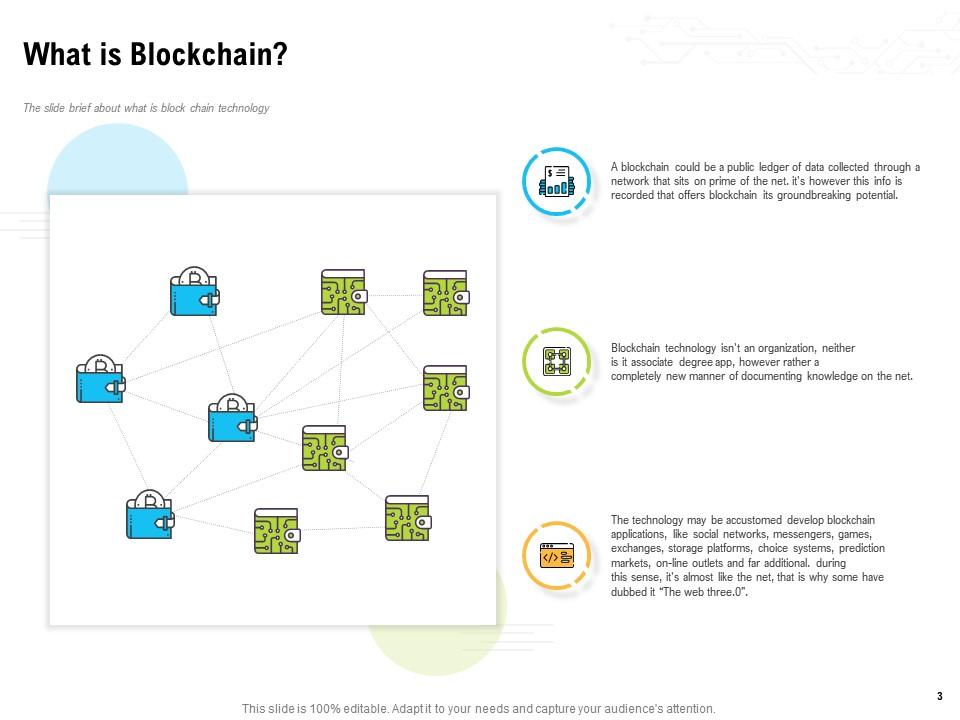
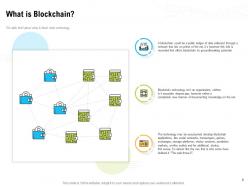
The first slide of PPT Complete Deck exhaustively outlines the basics of blockchain technology. One of the primary purposes of blockchain is the elimination of an intermediary, something the pictorial representation makes evident. On the left are pictures of wallets that signify the transaction from person to person. On the right, the basics of blockchain are given extensively through texts wherein its significance and the norms are stated. Integrate this slide into your presentations to strengthen the basics of the viewers.
Template 2: How Blockchain Transaction Works?
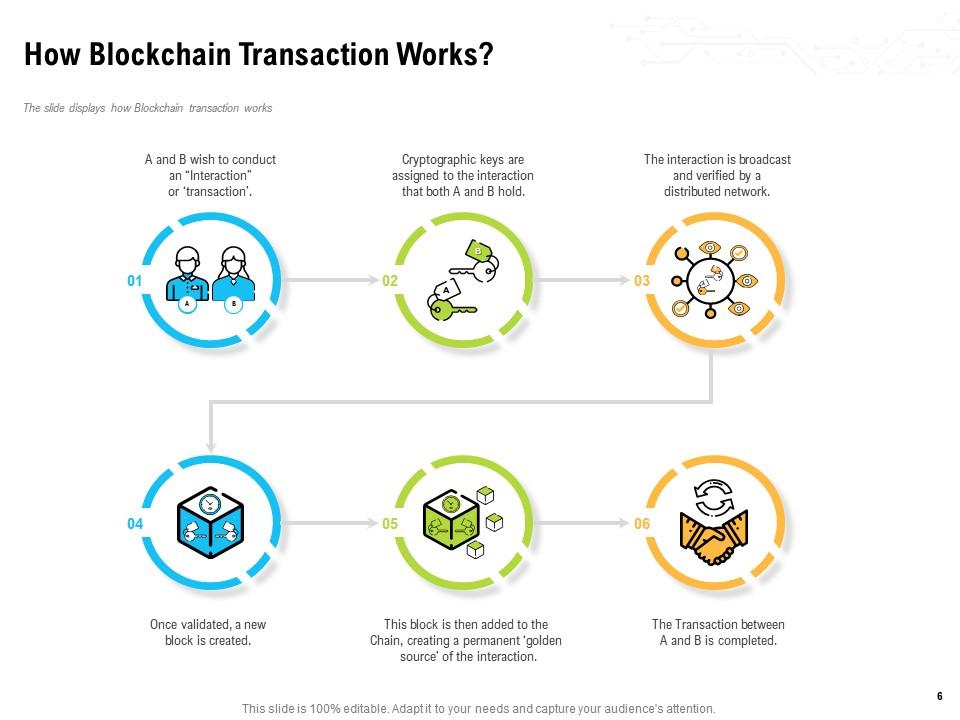
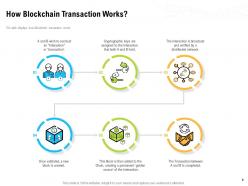
Use this slide to explain the completion of a transaction step by step through pictures. There are six steps in which a transaction goes through. The first picture depicts the presence of two individuals, Person A and Person B, involved in the transaction. The two individuals possess two keys that serve as unique identifying tokens. In the following image, the ownership gets transferred between the two owners with a verified network monitoring it. Following this verification, a block gets created which holds the transaction details and as it gets added to the blockchain. The creation of a block creates an indelible record of the completed transaction forming its foundation. And finally, the transfer of ownership is completed as it marks the successful exchange of assets between represented individuals.
Template 3: How is Blockchain Transforming Business
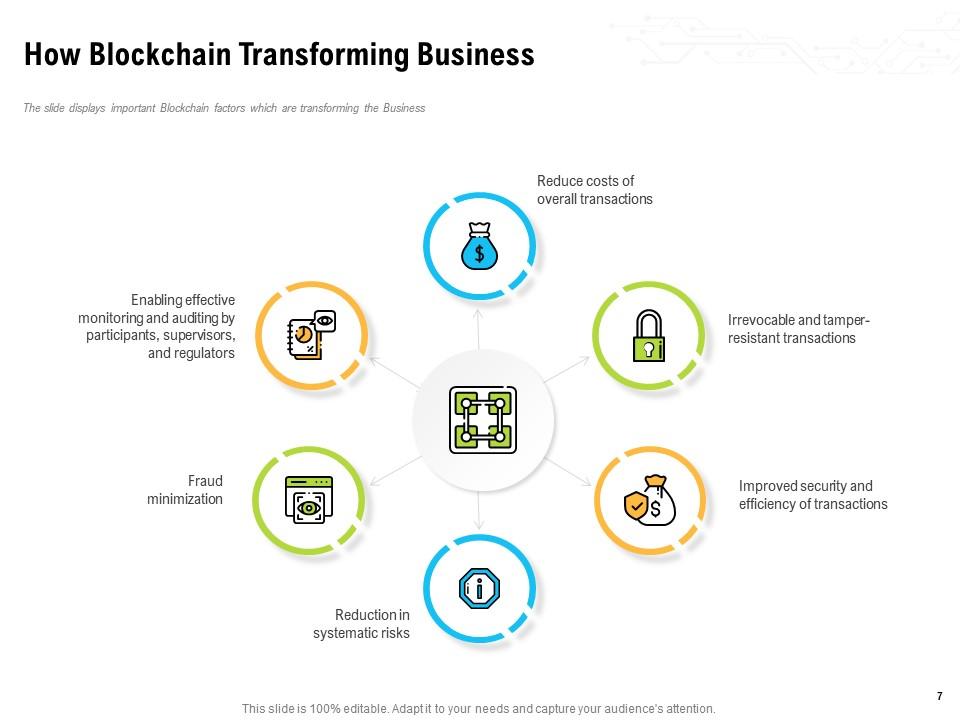
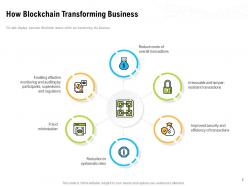
The PowerPoint Template showcases the impact blockchain has had on businesses across the globe and verticals. Blockchain has opened the doors for businesses to minimize instances of fraud and has enhanced security through its decentralized system. Along with its untappable security, other facets of its impact are mentioned around the central image, providing an extended viewpoint on its positive effects.
Template 4: Blockchain Variants
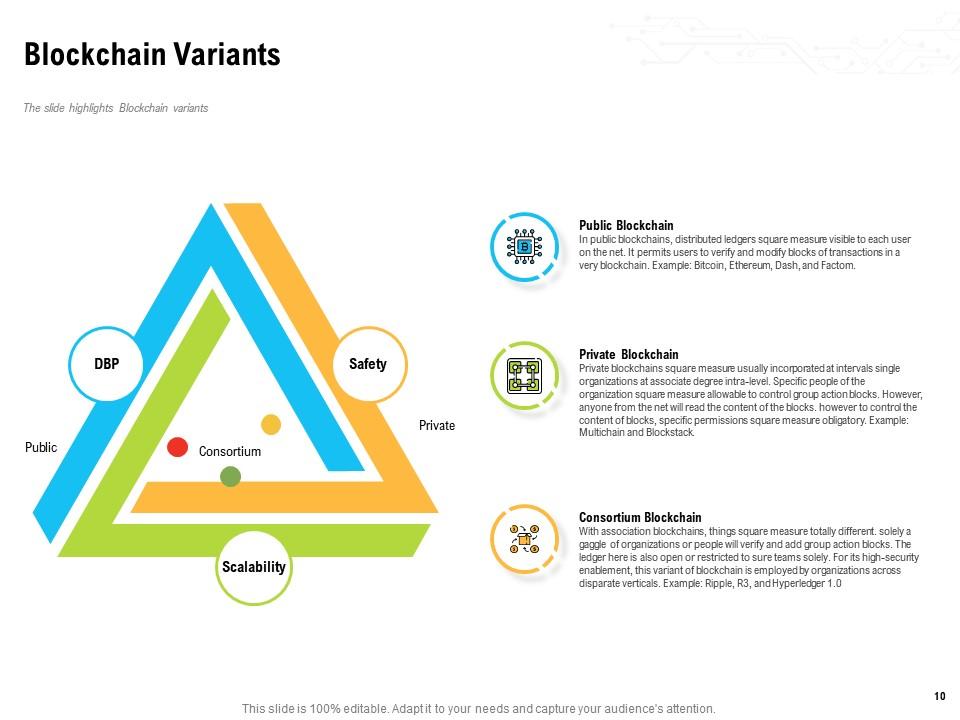
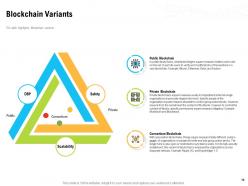
This layout showcases the variants of Blockchain. In a triangular diagram, the three distinct variants are shown broadly. Each variant has been represented in separate colors to amplify its presence as well as signify its identity. On the right, the three variants, Public Blockchain, Private Blockchain, and Consortium Blockchain are mentioned along with a brief definition. The Private Blockchain emphasizes transparency, as it’s decentralized and allows unrestricted access. The Public Blockchain, in contrast, is centralized and has restricted access allowing business transactions to go through. Finally, the Consortium Blockchain is an amalgam of both the private and public chains.
Template 5: Blockchain Use Cases
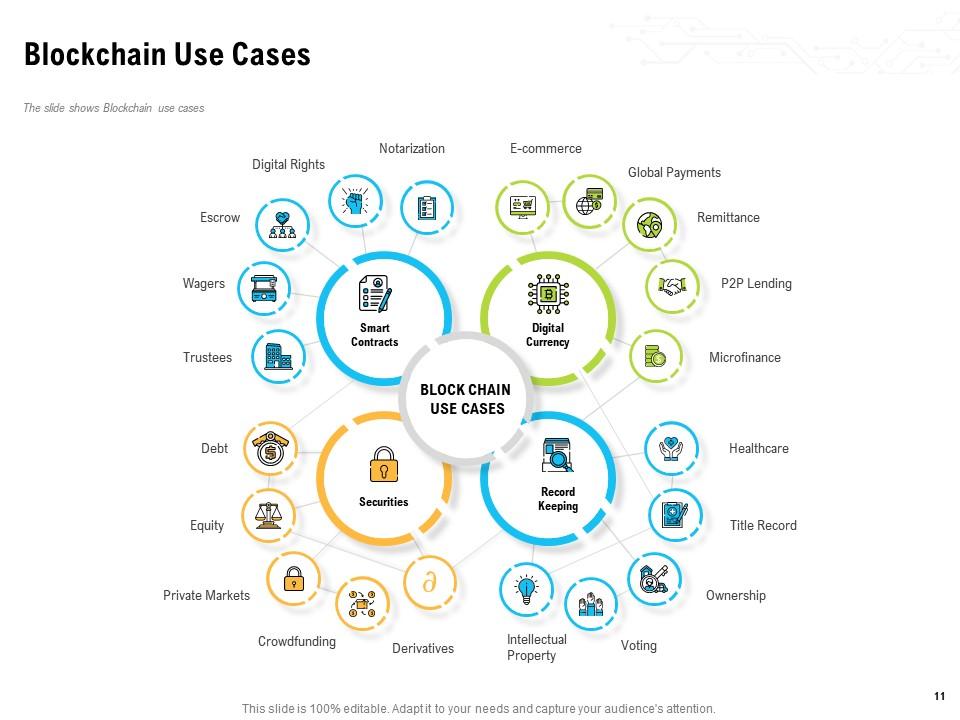
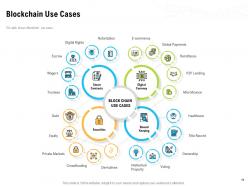
This template pivots around the prevalence of Blockchain in a multitude of verticals and its primary use cases. The four biggest use-cases are securities, record keeping, smart contracts, and digital currencies. Each of these four use-cases is distinguished and subdivided into multiple sub-topics that support the primary cases. For instance, record keeping is revolutionized through the amplified security of blockchain that is impossible to hack into. Likewise, most primary use-cases serve broader purposes.
Template 6: Blockchain in Supply Chain Management

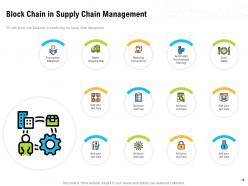
The name of the game is progress. It isn’t about being a master in one, but a monarch in many. There are 8 boxes that are given next to the image on the left, which signifies the blockchain. Text boxes are given within those boxes for the users to add their bit as the image or template in itself is designed to deliver. The idea is to ensure and clarify that using blockchain, supply chains can be made much more secure and safer against loss and theft. Blockchain enables information flow in a much more transparent and secure manner, ensuring material remains safe.
Template 7: Blockchain in Retail
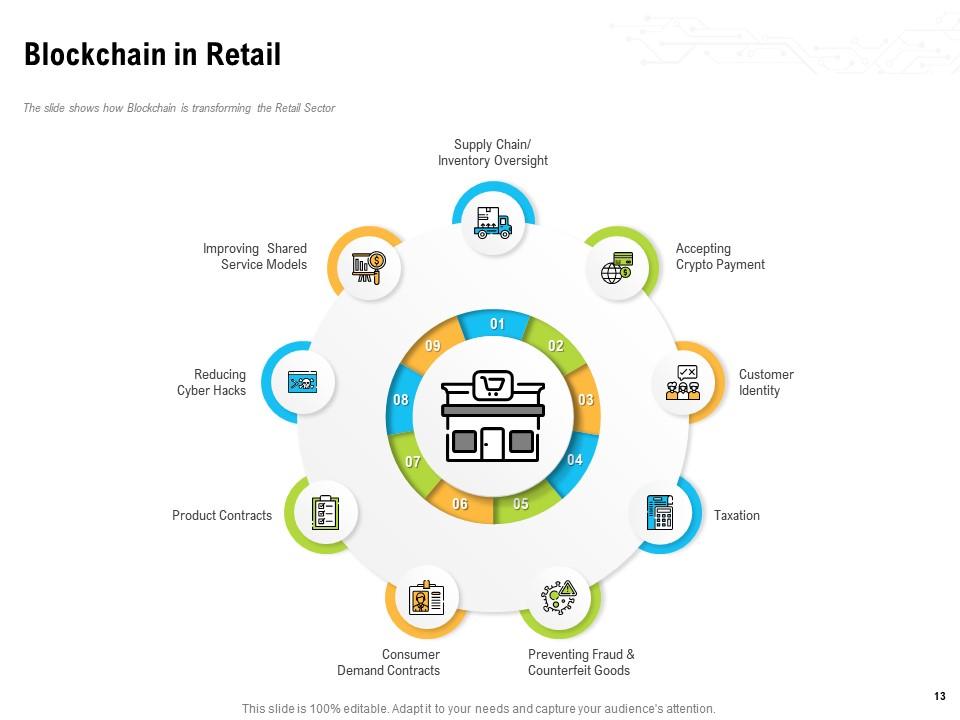
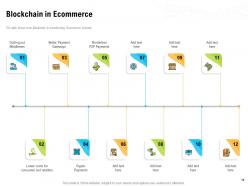
One industry that has been hit with a paradigm shift is the retail industry. As its securities are heightened and a public ledger is maintained consumers and producers are transacting deals and viewing the supply chain. Its advantages are not constrained to only the two points as in our template we have mentioned nine key pointers about its impact and merits in the retail industry. From inventory oversight to shared service model, we have touched base on almost every aspect of how much it has aided the industry.
Template 8: Blockchain in Banking
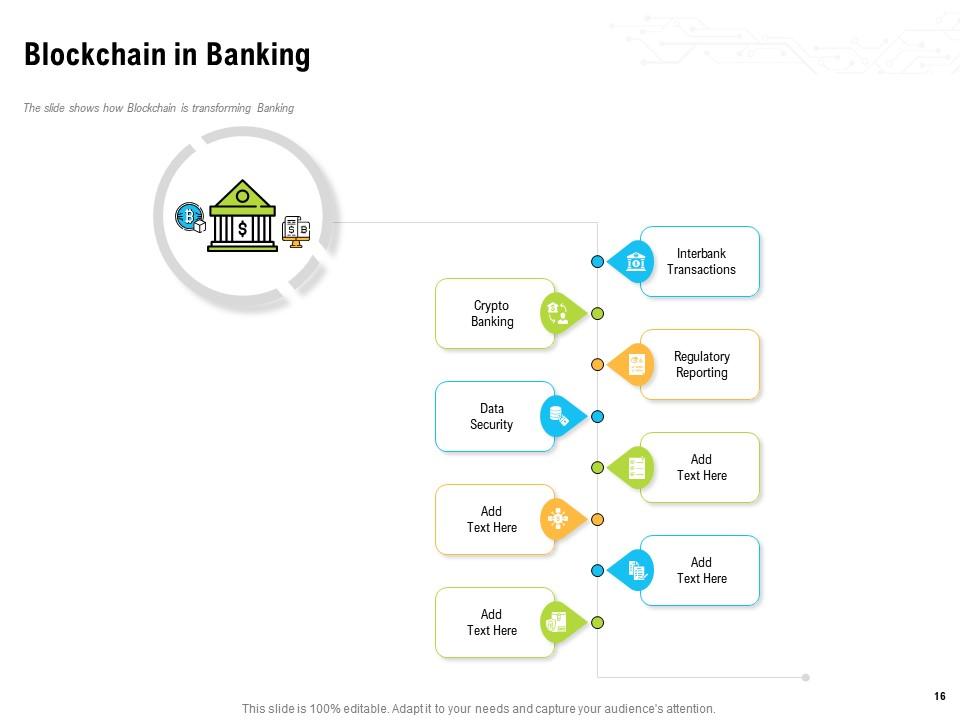
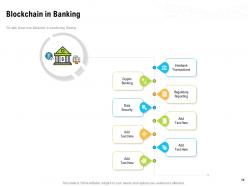
Blockchain has reshaped norms. We have now gone past the traditional banking processes and a Do-It-Yourself (DIY) has been integrated into the functions of banking. This template exemplifies how the evolution of blockchain has disrupted and enhanced banking experience and in its functions. From maintaining a ledger to creating a block in order to process a transaction, every aspect of banking has changed with the invention of this technology.
Template 9: Most Popular Applications of Blockchain
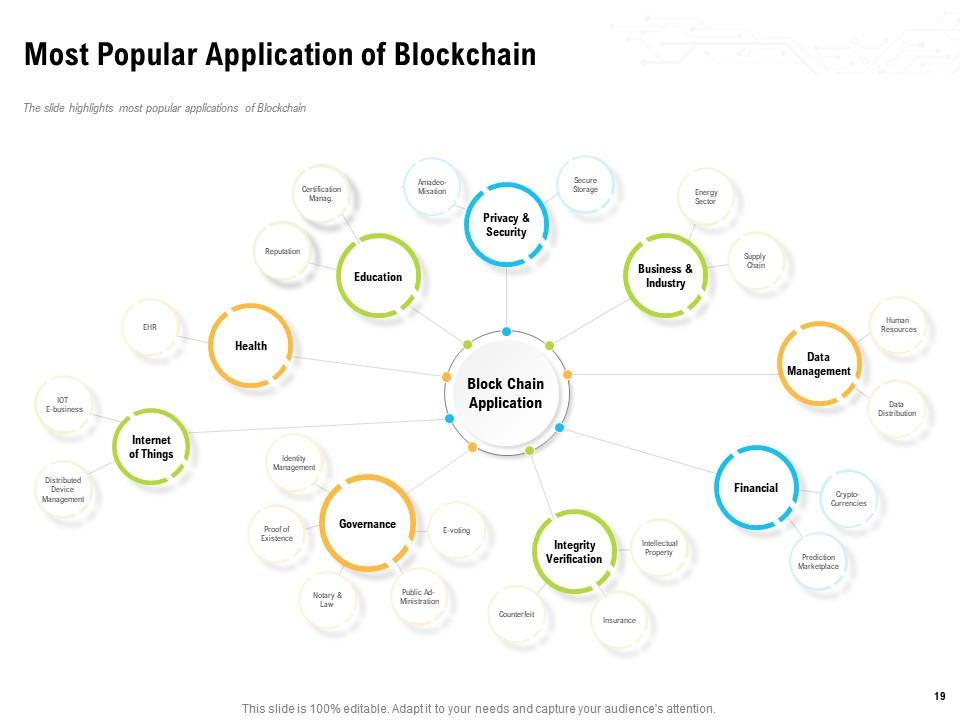
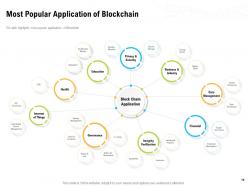
This PPT Template is designed in such a way so that the applications of blockchain are mentioned and given the best possible display. Some of the possible applications are in governance, banking, education, health, internet of things and data management.
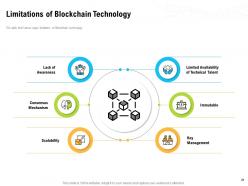
Template 10: Limitations of Blockchain Technology
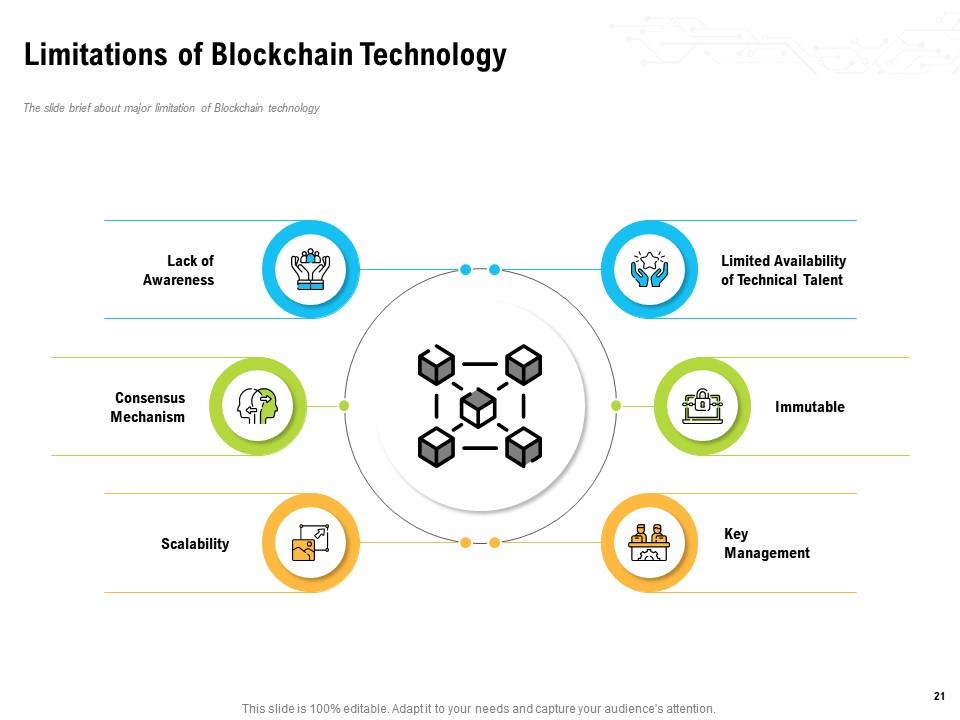
All the unprecedented glory of this technology comes with some sinister that the users must be aware of. Our final slide sheds light on its limitations and highlights the six primary challenges. By understanding these limitations the blockchain community could either work towards overcoming these obstacles or evading them. The six primary obstacles include Scalability, Key Management, Consensus Mechanism, Lack of Awareness, and Limited availability. Scalability deals with the large volume of transactions that could face network struggles or even end unfinished. Achieving consensus could be hard at times whereas immutability poses a challenge for error correction and dispute resolution.
******
BLOCKCHAIN IS HERE TO STAY
The blockchain technology is the game-changer and would soon enter our homes in ways we cannot imagine yet. This also happened with the internet, and is sure to happen with technology. It will win primarily because everyone loves cheaper transactions.
PS If you are into real estate and you think it’s high time you changed tack. To do this well, this exclusive blockchain technology in real estate industry template is made for you.
Blockchain technology ppt presentation powerpoint presentation slides with all 31 slides:
Use our Blockchain Technology PPT Presentation Powerpoint Presentation Slides to effectively help you save your valuable time. They are readymade to fit into any presentation structure.




FAQs for Blockchain technology ppt presentation
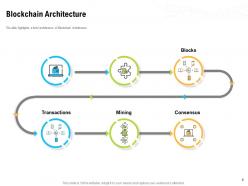
So blockchain breaks down into a few key pieces. Blocks store all the transaction data, then cryptographic hashes link everything together in this chain. There's a whole distributed network of nodes validating stuff too. Proof-of-work keeps everyone honest, but man, it burns through energy like crazy. Once something gets recorded on that ledger, you can't go back and edit it like a normal database - it's permanent. Start with understanding how those hashes create the actual "chain" connection though, that's where it clicked for me. The rest makes way more sense after that.
Oh, so blockchain basically spreads your data across tons of computers instead of keeping it all in one place. Hackers can't just hit one target anymore - they'd have to compromise like hundreds of nodes simultaneously, which is pretty much impossible. Each piece of data gets cryptographically linked to the previous one too. Honestly, I think it's one of the coolest security innovations we've seen. If someone tries tampering with old records, the whole network spots it immediately. It's kinda like having a public notebook that everyone can read but nobody can secretly scribble in. Worth checking out if you're dealing with really sensitive stuff.
So blockchain basically creates this permanent record of every single handoff in your supply chain - pretty cool actually. You can track stuff from raw materials all the way to delivery, which is clutch for quality control. Food and pharma companies are obsessed with this right now because they need that traceability. Smart contracts handle payments and compliance automatically too, so less waiting around and fewer screwups. Everyone's working off the same data, so no more "I never got that shipment" arguments. Honestly? Just figure out what's breaking in your supply chain first - that's where you'll see the biggest wins with this tech.
Honestly, blockchain's way more useful than just crypto. Supply chain tracking is huge - you can follow a product from factory to store shelf. Smart contracts are pretty neat too, they just execute automatically when conditions hit. Digital identity stuff, healthcare records, voting systems - anywhere you need transparency without someone screwing with the data. What's cool is cutting out middlemen who you'd normally have to trust. Oh, and real estate transactions are starting to use it. If you're thinking about your industry, look for processes where multiple people need to verify the same info. That's usually where it shines.
Smart contracts are programs that run themselves when certain conditions hit. Picture a vending machine - you pay, it checks everything's good, then boom, you get your snack without dealing with anyone. They live on the blockchain and can't be messed with once they're up there. No middlemen needed for tons of stuff, which is pretty sweet. Honestly, the best way to get it is looking at real examples on Ethereum rather than just theory. Actually seeing the code makes way more sense - I was confused until I did that myself.
Honestly, blockchain adoption is pretty messy right now. Scalability sucks, costs are insane, and nobody knows what regulators will do next. Good luck finding developers who actually know this stuff - the talent pool is tiny. Integration with your current systems? Total headache. Energy usage is brutal too, especially with proof-of-work. The tech changes so fast that whatever you build might be obsolete in six months, which is kind of terrifying. Smart contract security issues keep me up at night. Start small though - pick one area for a pilot instead of going all-in. Way less risky.
So blockchain platforms basically have totally different ways of agreeing on which transactions are legit. Bitcoin does that proof-of-work thing where miners race to solve math puzzles - burns through crazy amounts of energy though. Ethereum actually switched to proof-of-stake, so you validate transactions based on what you've put up as collateral. Hyperledger goes with practical Byzantine fault tolerance since it's more for business stuff. There's also newer experiments with proof-of-authority and delegated proof-of-stake. The consensus method really determines how fast, green, and decentralized your network ends up being.
So basically, decentralization spreads everything across tons of computers instead of one company controlling it all. Makes it way harder to hack or mess with. Your bank can freeze your account whenever they want, but with decentralized blockchain? Not happening. Trade-off is it's slower and uses more energy - kinda annoying honestly. But thousands of nodes validating stuff means way better security. Just make sure you check how decentralized something actually is before jumping in. Some projects talk big but aren't really that decentralized.
So blockchain basically makes a permanent record that can't be changed after the fact. Think of it like having a receipt for everything that nobody can fake or mess with later. Pretty useful for tracking stuff through supply chains or keeping medical records straight. Everyone gets to see the same info, which is where the transparency part comes in. Honestly, the best way to figure out if you need it is just look at your work processes - find the one where you're always wondering "wait, what actually happened here?" That's probably your answer right there.
So basically the big problem is energy use - Bitcoin mining burns through insane amounts of electricity. Like, we're talking entire countries here, which obviously means more coal plants and carbon emissions. Plus all the hardware creates tons of e-waste since miners are constantly upgrading their rigs. Honestly it's pretty nuts when you think about it. But some newer chains like Ethereum switched to "proof-of-stake" which uses way less power. If you're checking out any blockchain stuff, just look up what consensus mechanism they use first - makes a massive difference environmentally.
Yeah so the main thing holding blockchain back is honestly just speed. Bitcoin only does like 7 transactions per second, Ethereum maybe 15 - meanwhile Visa's crushing thousands. When things get busy, fees go crazy high and everything slows down. I mean, who wants to pay $50 to buy a coffee, right? That's why most companies won't touch it yet. But there's some cool stuff coming - layer-2 networks and sharding that should help. Still early days though. If you're thinking about using blockchain for something, I'd definitely wait to see how these solutions pan out first.
Dude, it's honestly a mess right now. The US can't even decide what crypto IS - SEC says securities, CFTC says commodities. Meanwhile China just banned everything while El Salvador went full Bitcoin. The EU actually got their act together with MiCA rules though. If you're thinking business stuff, you'll hit AML compliance, taxes, and securities laws if it smells like investment products. Oh and regulations change like every month so that's fun. Definitely talk to a lawyer who knows this space before doing anything major - I learned that one the hard way.
So blockchain's basically cutting out all those middleman fees in finance. Cross-border payments are getting way faster since you don't need three different banks verifying everything - the ledger handles it automatically. Banks are kinda freaking out because their whole fee model is threatened, but they're also trying to use it for trade stuff and identity checks. Creates this permanent record that can't be messed with, which is pretty cool. Honestly, if you're thinking about finance careers, you should probably check out how DeFi platforms work. That's where everything's headed anyway.
So blockchain lets you own your digital identity instead of Facebook or whoever deciding who you are. Your credentials and personal data live on this decentralized network that you actually control - which honestly feels like how the internet should've worked from the start. No more getting locked out when some platform randomly changes their terms. You can prove you're you across different services without handing over tons of personal info every single time. For your work stuff, think about how much easier customer onboarding could be, or how it'd cut down on identity fraud.
So basically blockchain lets customers verify your claims themselves instead of just taking your word for it. Think of it like showing your work in math - they can trace everything back. Smart contracts handle agreements automatically, no "trust us, we'll get back to you" nonsense. Works best for stuff where authenticity really matters - food, luxury items, that kind of thing. Honestly, finance too but that's more complex. I'd start simple though. Pick one product line and add QR codes so people can see the whole journey from start to finish.
-
good
-
Unique and attractive product design.
-
Graphics are very appealing to eyes.
-
Colors used are bright and distinctive.
-
Use of different colors is good. It's simple and attractive.
-
Colors used are bright and distinctive.
-
Top Quality presentations that are easily editable.