


Blockchain in ecommerce n524 powerpoint presentation slides
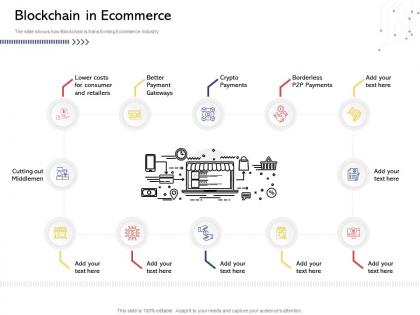




Try Before you Buy Download Free Sample Product
 Impress Your
 Audience
 100%
100% Editable
 Save Hours
 of Time


Our Blockchain In Ecommerce N524 Powerpoint Presentation Slides are topically designed to provide an attractive backdrop to any subject. Use them to look like a presentation pro.
People who downloaded this PowerPoint presentation also viewed the following :
Blockchain in ecommerce n524 powerpoint presentation slides with all 2 slides:
Use our Blockchain In Ecommerce N524 Powerpoint Presentation Slides to effectively help you save your valuable time. They are readymade to fit into any presentation structure.

FAQs for Blockchain in ecommerce n524
Honestly, blockchain could be a game-changer for your store. Customers can track products from manufacture to delivery, which is huge for building trust - especially if you're selling expensive stuff. Smart contracts handle payments automatically and cut down on disputes since everything's locked in beforehand. You'll save money on middleman fees too, though there's definitely a learning curve with the tech. The fraud protection is probably the biggest win - way fewer chargebacks to deal with. I'd say try a small pilot first, see how it affects your sales. Worth testing especially if you've got international customers.
So basically blockchain makes this permanent record that nobody can mess with after it's created. You can literally track your stuff from the factory all the way to your house. Since it's spread across tons of computers instead of just one server, hackers can't really break in anywhere. Smart contracts are pretty cool too - they just automatically handle payments when everything checks out, so you don't have to worry about whether it went through or not. Everything gets verified by multiple people which makes fraud way harder. Honestly, it just makes online shopping feel way less sketchy.
So basically blockchain creates this permanent record that nobody can mess with - every transaction and product movement gets locked in. Each item gets its own digital ID that's impossible to fake, so you can verify if something's legit instantly. Payment fraud becomes way harder since everything's transparent and traceable. No more random chargebacks appearing! Smart contracts check if buyers and sellers are who they say they are before money moves. Honestly, the coolest part is customers can scan a QR code and see exactly where their product came from - builds crazy trust.
So smart contracts are like automated middlemen - they execute when conditions are met without any human babysitting. For eCommerce, they can release payments once customers get their orders, restock inventory when you're running low, or handle refunds if shipping takes forever. I actually think the loyalty program stuff is pretty cool - rewards get distributed automatically when customers hit spending milestones. The whole point is cutting out manual processes that usually involve tons of back-and-forth. Honestly, I'd start with automating payment releases since that's where you'll feel the biggest difference right away.
Basically blockchain gives you this permanent record that tracks your product from start to finish - nobody can mess with it once it's there. Every step gets timestamped and verified, so customers can scan a QR code and see exactly where their stuff came from. Way better than those sketchy paper certificates honestly. It's like having a digital ID that's impossible to fake. Super useful if you're selling luxury items or organic products where people worry about knockoffs. The tricky part is finding suppliers who already use this tech - you can't really do it solo. But once you've got that setup, customers actually trust what they're buying.
Dude, the main thing is speed and cost - blockchains are painfully slow and crazy expensive for tons of transactions. Your dev team better know their stuff because the technical side gets messy fast. Plus integrating with your current systems? Total pain. Oh and if you're trying to be green, most blockchains guzzle energy like nobody's business. The rules are still all over the place too, which is honestly kind of scary from a business perspective. I'd say test it out small first - maybe track your supply chain or something simple before you go full crypto payments.
So basically you're cutting out the middleman - no banks or payment processors taking their cut. Transactions go straight from buyer to seller, which means way lower fees and settlements in minutes instead of days. Your system won't crash when Visa has one of those random outages either (honestly those always happen at the worst times). The downside? You'll need more technical setup, and crypto transactions can't be reversed like credit cards. I'd probably start by adding crypto as an option alongside your regular payment methods, see how it goes.
Honestly, blockchain could be a total game-changer for your supply chain. Customers can track products from start to finish - no BS, just real transparency. When something goes wrong (and it will), you'll find the problem source in minutes instead of digging for weeks. Plus smart contracts automatically pay suppliers when conditions are met, which is pretty slick. The traceability aspect builds serious trust with customers too. My advice? Don't go all-in right away though. Test it with one supplier first, see how messy it gets, then scale up if it actually works for your business.
So basically blockchain lets your customers verify stuff themselves - like checking if that Gucci bag is real or seeing exactly where their coffee beans came from. Think of it as a receipt that can't be faked or deleted. Pretty sweet for luxury brands dealing with knockoffs. You can even do loyalty tokens that customers actually own instead of those sketchy points programs that vanish when companies fold (looking at you, every airline ever). Honestly, I'd start with product authentication - seems like the most straightforward approach that'll actually move the needle.
Dude, blockchain could totally change how you do international payments. No more ridiculous bank fees since you're cutting out all those middleman banks. Transfers happen in minutes instead of waiting days - which is honestly about time. You can actually track where your money is going too, unlike the current system where it just vanishes for 3-5 business days. Smart contracts handle the currency conversion stuff automatically, plus compliance checks. Only thing is you gotta watch the regulations since every country has different rules about crypto. But yeah, it's way better than traditional banking.
Dude, blockchain would be huge for your shipping business. Every package gets tracked on this permanent ledger that can't be messed with. Your customers finally get real tracking - none of that "out for delivery" nonsense that drags on forever. Smart contracts automatically pay drivers when deliveries actually happen, which is pretty slick. The transparency is insane. You'll instantly know if carriers are BS-ing you about delays. Honestly, I think the best part might be fewer angry customers calling about lost packages. It just makes the whole supply chain way more honest.
Yeah totally! Walmart's doing some cool stuff with blockchain for food tracking - they can find contamination sources in seconds now instead of weeks, which honestly blows my mind. De Beers uses it to keep conflict diamonds out of their supply chain. Maersk teamed up with IBM for shipping docs and fraud prevention. Amazon's testing it for fake products too. If you're thinking about it, just figure out where you have the biggest trust issues in your process. That's usually where you'll see the best results. Start there and don't overcomplicate it.
So blockchain basically lets buyers and sellers deal directly with each other. No more PayPal sitting in the middle taking fees. Smart contracts handle all the payment stuff automatically - they verify delivery and transfer funds without you needing some central company holding everything. It's actually pretty neat how transparent it all is. Both people can see exactly what happened with their transaction. You'll get cheaper fees and faster payments since there's no middleman. Oh, and if you're thinking about building something like this, Ethereum and Polygon already have the smart contract tools built in.
Honestly, crypto's just gonna be another way to pay - like having Venmo next to your credit card reader. The big win? Way fewer middlemen skimming fees off the top. Cross-border stuff becomes stupid fast and cheap too. Smart contracts are pretty neat - they handle refunds and loyalty points automatically, so less manual work for you. Bitcoin's still a rollercoaster (who wants that headache?), but stablecoins don't swing around like crazy. Most payment processors already play nice with existing setups, so it's not as complicated as you'd expect. Worth looking into.
Yeah, regulatory stuff is what's really killing blockchain adoption in eCommerce right now. Different countries have totally different crypto rules, GDPR doesn't play nice with immutable ledgers, and don't get me started on tax compliance - it's a mess. Traditional payment laws weren't built for decentralized systems either. I mean, "code is law" sounds badass until real lawyers show up, you know? If you're thinking about this for your platform, talk to some regulatory people first. Maybe test things out in crypto-friendly places before going big.
-
Awesome presentation, really professional and easy to edit.
-
Excellent work done on template design and graphics.
-
Great product with highly impressive and engaging designs.
-
Great quality slides in rapid time.
-
Content of slide is easy to understand and edit.
-
Excellent Designs.
-
Great designs, really helpful.