


Distributed ledger powerpoint presentation slides




Try Before you Buy Download Free Sample Product
 Impress Your
 Audience
 100%
100% Editable
 Save Hours
 of Time


Share data across network spread on multiple sites using Distributed Ledger PowerPoint Presentation Slides. Have the transactions public witnesses making cyber attack difficult. Understand the technology of fast and secure transactions. Make your audience understand the concept of decentralized network that lets you share data of so many kinds such as currency, digital values, and database. With the help of distributed ledger PPT presentation slideshow, participants involved in the process can learn to access the recordings shared across the network. This deck comprises of various templates to keep the transparency of electronic cash system such as distributed ledger, working of a distributed ledger, use of a distributed ledger, smart contract, privacy, letter of credit, corporate debt, industrial blockchain benefits, blockchain limitations, etc. These templates are editable. You can use them the way you want. Modify these templates as per your need. Add content and use this deck to send receive data across multiple networks. Download ready-to-use distributed ledger PPT slides now. Our Distributed Ledger Powerpoint Presentation Slides follow a customized display. Get every detail displayed as you desire.
People who downloaded this PowerPoint presentation also viewed the following :
Content of this Powerpoint Presentation
Slide 1: This slide introduces Distributed Ledger. State Your Company Name and get started.
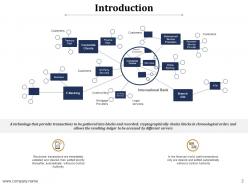
Slide 2: This slide presents Introduction for Distributed Ledger Technology with its definition showing- Customers, Underwriting, Mortgage, Providers, Legal services, Customers, International Bank, Internal Employees, Branch Site, ATM, Mobile Banking, Outsourced Service Providers, Services, 3rd Party Services, E-Banking, Corporate Clients, Business Treasury, Finance Deptt., Commercial, Finance, Payment Service Provider.
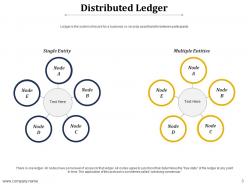
Slide 3: This slide presents Distributed Ledger divided into- Single Entity, Multiple Entities.
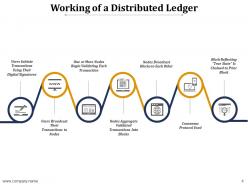
Slide 4: This slide showcases Working of a Distributed Ledger with the following points- Users Broadcast Their Transactions to Nodes, Consensus Protocol Used, Nodes Aggregate Validated Transactions Into Blocks, Users Initiate Transactions Using Their Digital Signatures, One or More Nodes Begin Validating Each Transaction, Nodes Broadcast Blocks to Each Other, Block Reflecting “True State” Is Chained to Prior Block.
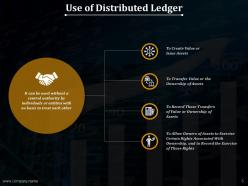
Slide 5: This slide shows Use of Distributed Ledger such as- To Create Value or Issue Assets, To Record Those Transfers of Value or Ownership of Assets, To Transfer Value or the Ownership of Assets, To Allow Owners of Assets to Exercise Certain Rights Associated With Ownership, and to Record the Exercise of Those Rights, It can be used without a central authority by individuals or entities with no basis to trust each other.
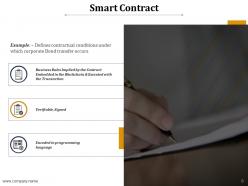
Slide 6: This slide showcases Smart Contract showcasing- Business Rules Implied by the Contract Embedded in the Blockchain & Executed with the Transaction, Verifiable, Signed, Encoded in programming language.
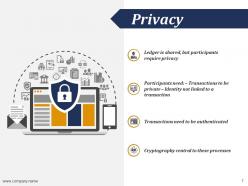
Slide 7: This slide shows Privacy with the following points- Ledger is shared but participants require privacy, Transactions need to be authenticated, Cryptography central to these processes, Participants need: – Transactions to be private – Identity not linked to a transaction.
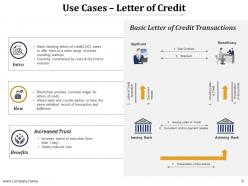
Slide 8: This slide presents Use Cases – Letter of Credit showcasing- Bank handling letters of credit(LOC) wants to offer them to a wider range of clients including startups, Currently constrained by costs & the time to execute, Blockchain provides common ledger for letters of credit, Allows bank and counter-parties to have the same validated record of transaction and fulfillment, Applicant, Beneficiary, Issuing Letter of Credit, Advising Letter of Credit, Presentation of documents, Advising Bank, BANK Document control, payment release, Document release, Letter of Credit Application, Sale Contract, Shipment, Presentation of documents, Increase speed of execution (less than 1 day), Vastly reduced cost, Increased Trust, Basic Letter of Credit Transactions, Issuing Bank.
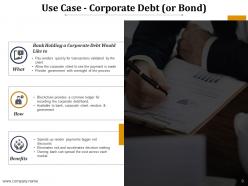
Slide 9: This slide presents Use Case - Corporate Debt (or Bond) showcasing- Pay vendors quickly for transactions validated by the client, Allow the corporate client to see the payment is made, Provide government with oversight of the process, Blockchain provides a common ledger for recording the corporate debt/bond, Available to bank, corporate client, vendors & government, Speeds up vendor payments bigger net discounts, Eliminates risk and accelerates decision making, Owning bank can spread the cost across each market.
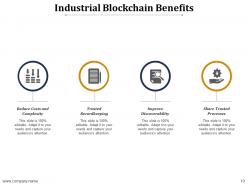
Slide 10: This slide shows Industrial Blockchain Benefits such as- Reduce Costs and Complexity, Trusted Recordkeeping, Improve Discoverability, Share Trusted Processes.
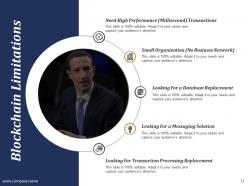
Slide 11: This slide presents Blockchain Limitations such as- Need High Performance (Millisecond) Transactions, Looking For a Database Replacement, Looking For a Messaging Solution, Looking For Transaction Processing Replacement, Small Organization (No Business Network).
Slide 12: This is a Distributed Ledger Icon Slide. Use them as per need.
Slide 13: This slide is titled Additional Slides to move forward. You can change the slide content as per need.
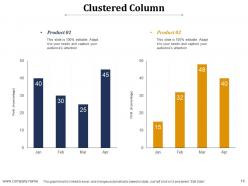
Slide 14: This is a Clustered Column graph slide. State specifications, comparison of products/entities here.
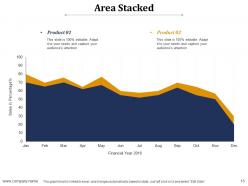
Slide 15: This is an Area Stacked graph slide. State specifications, comparison of products/entities here.
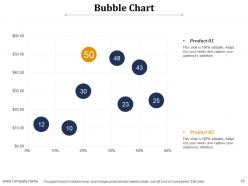
Slide 16: This is a Bubble Graph slide. State specifications, comparison of products/entities here.
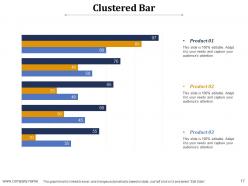
Slide 17: This is a Clustered Bar graph slide. State specifications, comparison of products/entities here.
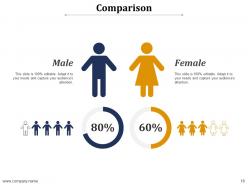
Slide 18: This is a Comparison slide in creative imagery of males and females. State comparison, specifications etc. here.
Slide 19: This is an Idea or Bulb image slide to show ideas, innovative information etc.
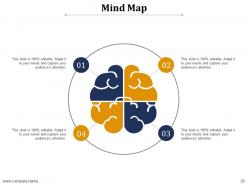
Slide 20: This is a Mind Map image slide to show segmentation, information, specifications etc.
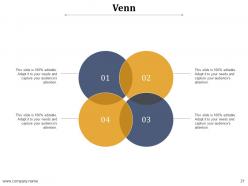
Slide 21: This is a Venn diagram slide to show information, specifications etc.
Slide 22: This is a Thank You slide with Address# street number, city, state, Contact Numbers, Email Address.
Distributed ledger powerpoint presentation slides with all 22 slides:
Use our Distributed Ledger Powerpoint Presentation Slides to effectively help you save your valuable time. They are readymade to fit into any presentation structure.

FAQs for Distributed ledger
So blockchain chains blocks together with cryptographic hashes - pretty straightforward. But other DLTs like DAGs or hashgraphs? They're structured totally differently. With blockchain you're processing transactions one by one through mining or consensus. DAGs can handle multiple transactions at once without even needing blocks (IOTA does this). It's basically like comparing a checkout line versus a bunch of intersecting highways, if that makes sense. Yeah, alternatives often beat blockchain on speed and energy efficiency. But blockchain's got that proven track record and massive network effects going for it. Really depends what you need though.
So basically, different blockchains have totally different ways of agreeing on what's legit. Bitcoin does that energy-heavy mining thing (Proof of Work), while Ethereum switched to Proof of Stake where validators actually have money on the line. Enterprise stuff usually goes with Byzantine fault tolerance - sounds fancy but it works. Newer options like Proof of Authority are crazy fast, though they're way more centralized. Kinda misses the whole decentralization point, but whatever works for private networks I guess. Really comes down to what you actually need - speed, decentralization, or not burning through electricity. Figure out your priorities first, then pick your poison.
Okay so smart contracts are basically code that runs automatically when certain conditions happen - no people needed to oversee it. They turn blockchains from just record books into actual programmable platforms. Like if X happens, then Y gets executed automatically. No middlemen taking cuts, everything's transparent since the contract lives on the blockchain where everyone can see it. Makes stuff way faster and you can't mess with it once it's deployed, which is honestly pretty neat. Ethereum's probably the easiest place to start if you want to check them out, though there are other platforms too.
Basically, DLT keeps a permanent record of everything that happens to your products - from where they start to when customers buy them. Everyone in your supply chain puts their info on the same ledger, so there's no more guessing if suppliers are being honest with you. It's pretty hard to fake records when they're locked in like that. Plus you'll spot problems way faster, like if something's contaminated or counterfeit. The paperwork headaches mostly disappear too, which is honestly such a relief. I'd start small though - pick your worst transparency issue and test blockchain there first.
So basically, distributed ledgers are tough to hack because someone would need to mess with tons of computers at once - pretty much impossible. Transparency is solid too. But here's the thing: smart contracts can still have bugs, and if your private keys get stolen? You're screwed. No bank to call crying about it lol. Also watch out for 51% attacks on smaller networks. I'd say figure out how their consensus thing works first and get serious about protecting those keys. Oh, and maybe don't put your life savings in right away.
So basically you'd set up DLT as this shared patient record system that's crazy secure - think like a Google Doc but with military-grade encryption. Each doctor can see real-time updates from other providers treating the same patient. The cool part? Patients actually control who accesses what info. Your cardiologist's notes automatically show up when you hit the ER, which honestly could save lives. Interoperability is huge here - no more faxing records like it's 1995. I'd definitely start small though, maybe pilot it with just a few clinics first to work out the kinks.
So blockchain scalability is pretty messy right now. Most can only handle like 10-15 transactions per second while Visa does thousands. Consensus mechanisms are the culprit - getting all those nodes to agree takes forever. Plus every node stores the entire transaction history, which gets massive over time. Energy consumption is brutal too, especially with proof-of-work. Honestly, it's why I'm skeptical of some crypto hype. Layer 2 solutions help though - they basically process transactions off the main chain then batch them together. Or you could look at newer consensus algorithms, but they usually sacrifice some decentralization for speed.
So basically DLT just removes all those middleman banks that usually drag things out for days and charge you crazy fees. Your money goes straight from point A to point B in like minutes instead of bouncing around forever. Everyone can see what's happening on the shared ledger, so there's no need for some central bank to verify everything - which is honestly pretty cool when you think about it. Plus you get real-time tracking instead of wondering where your payment disappeared to. If you're doing international transfers regularly, you should definitely check out some blockchain options. Could save you a ton of time and money.
DLT compliance is such a mess right now, honestly. GDPR and financial regs are the big ones to watch, plus whatever industry rules apply to you. The worst part? Blockchain's permanent records totally conflict with those "right to be forgotten" laws - like, how do you delete something that's literally designed to never be deleted? What you need to do depends on where you're operating and what you're building. Get a lawyer involved ASAP though, because this stuff changes constantly. I swear the rules shift every few months.
So basically, you get to control your own identity records instead of letting governments or Google handle everything. The data gets spread across multiple secure nodes, which makes it super hard to hack or fake. You can share just specific stuff - like proving you're over 21 without showing your whole ID. Way better for privacy, honestly. I think it's one of those things that sounds complicated but is actually pretty straightforward once you dig in. Look up "self-sovereign identity" if you want to go down that rabbit hole.
Finance is the obvious one, but healthcare's huge too - patient records, you know? Supply chains love it because you can trace food contamination in minutes instead of waiting weeks. Real estate deals, insurance claims, even voting systems work well since nobody really trusts each other anyway. Energy trading's another good spot. Honestly, if your company's paying middlemen who don't add much value, that's where DLT shines. The pattern I see? Industries with tons of compliance headaches or complex chains of custody get the most bang for their buck.
So basically with traditional systems, you're putting all your trust in one place - like your bank or whatever company. But distributed ledgers spread that control across tons of different nodes instead. Think of it like having multiple witnesses vs just one referee calling the shots. The upside? Way harder for someone to hack or manipulate since there's no single point of failure. Downside is it's usually slower and more of a pain to manage. Honestly depends what matters more to you - having quick control or knowing the system's transparent and can't be easily messed with.
So basically you want to avoid proof-of-work systems like Bitcoin - they're energy hogs. Proof-of-stake is way better, cuts energy use by like 99%. Ethereum already made the switch and it worked great. There's other stuff too - sharding spreads out the work, layer-2 solutions move transactions off the main blockchain. Some newer projects are even carbon-neutral from day one, which is pretty cool. Oh, and hybrid models exist too. Honestly, just check what consensus mechanism any project uses first. That'll tell you most of what you need to know about energy impact.
So basically, distributed ledgers make fraud way harder because once something's recorded, you can't secretly change it. The data gets locked down with cryptography and copied across tons of computers - honestly, it's pretty clever. If someone tries to mess with old records, everyone notices right away since their copies won't match. It's like having a bunch of witnesses who never forget anything and can't be bought off. Pretty much impossible to get away with shady stuff. I'd look at whatever processes give you the most headaches fraud-wise and see if blockchain could help there.
Honestly, DLT is finally moving past all the crypto noise into stuff that actually matters. Supply chain tracking, digital identity, cross-border payments - that's where the real action is. Governments are rolling out their own digital currencies, and different blockchain networks talking to each other is becoming huge. Privacy solutions are blowing up too because who wants every transaction visible forever? The whole energy problem is getting sorted with proof-of-stake - thank god. My advice? Focus on projects that genuinely need decentralization instead of chasing whatever shiny blockchain thing pops up next. Half these "revolutionary" use cases could just be a regular database.
-
Unique research projects to present in meeting.
-
Topic best represented with attractive design.
-
Unique design & color.
-
Great product with highly impressive and engaging designs.
-
Best way of representation of the topic.