


Cost Reduction Techniques Used In Procurement Process




Try Before you Buy Download Free Sample Product
 Impress Your
 Audience
 100%
100% Editable
 Save Hours
 of Time


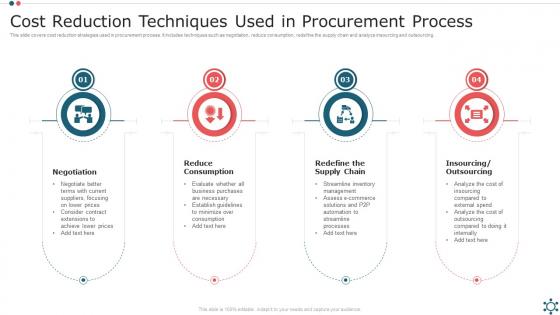
This slide covers cost reduction strategies used in procurement process. It includes techniques such as negotiation, reduce consumption, redefine the supply chain and analyze insourcing and outsourcing.
People who downloaded this PowerPoint presentation also viewed the following :
Cost Reduction Techniques Used In Procurement Process with all 6 slides:
Use our Cost Reduction Techniques Used In Procurement Process to effectively help you save your valuable time. They are readymade to fit into any presentation structure.





FAQs for Cost Reduction Techniques Used
Effective procurement cost reduction techniques include strategic supplier consolidation, competitive bidding processes, volume purchasing agreements, contract renegotiation, and supplier relationship optimization. These approaches streamline operations by leveraging economies of scale, enhancing negotiation power, and improving supply chain efficiency, with many organizations finding that strategic combinations of these methods deliver significant savings while maintaining quality standards.
Strategic sourcing reduces procurement costs by consolidating supplier relationships, leveraging bulk purchasing power, and implementing data-driven vendor selection processes. Through systematic market analysis and competitive bidding, organizations streamline operations, negotiate better terms, and minimize administrative overhead, with many companies finding that strategic partnerships ultimately deliver 15-30% cost savings while enhancing supply chain efficiency.
Supplier relationship management enables cost reduction through strategic partnerships, volume discounts, collaborative planning, performance optimization, and risk mitigation. Strong relationships with key suppliers often lead to preferential pricing, innovation sharing, and flexible terms, with many organizations finding that long-term partnerships deliver 10-15% cost savings while enhancing supply chain resilience and operational efficiency.
Technology and automation enhance procurement efficiency by streamlining sourcing processes, automating contract management, and enabling real-time spend analytics across supplier networks. Through AI-powered vendor selection and automated purchase order systems, organizations significantly reduce processing times, minimize manual errors, and achieve better pricing negotiations, with many companies finding 15-20% cost reductions while accelerating procurement cycles.
Key procurement cost reduction metrics include cost savings percentage, cost avoidance, supplier performance scores, procurement cycle time, and spend under management. These metrics enable organizations to track efficiency gains, evaluate supplier relationships, and measure strategic sourcing effectiveness, with many companies finding that comprehensive measurement across these areas ultimately delivers greater transparency and competitive advantage.
Bulk purchasing and volume discounts significantly reduce procurement expenses by leveraging economies of scale, negotiating lower per-unit costs, and minimizing transaction fees across consolidated orders. Many manufacturing and retail organizations find that strategic bulk buying delivers 15-30% cost savings while streamlining supplier relationships, reducing administrative overhead, and ultimately enhancing cash flow management and competitive positioning.
Effective supplier negotiation strategies include leveraging volume commitments, establishing long-term partnerships, benchmarking market rates, implementing performance-based contracts, and utilizing competitive bidding processes. These approaches enhance procurement outcomes by securing favorable pricing, improving service levels, and building strategic supplier relationships, with many organizations finding that collaborative negotiation ultimately delivers cost reductions and operational efficiency.
Organizations can assess procurement risks through supplier financial evaluations, market analysis, contract reviews, and diversified sourcing strategies, while minimizing costs through strategic negotiations and performance monitoring. Through risk-adjusted procurement frameworks, companies in manufacturing, healthcare, and retail streamline vendor relationships, reduce supply chain vulnerabilities, and achieve cost savings of 10-15%, ultimately delivering enhanced operational efficiency and competitive advantage.
Cross-departmental collaboration in procurement facilitates cost savings through consolidated purchasing power, shared supplier relationships, standardized specifications, and coordinated demand forecasting across business units. Through strategic alignment between finance, operations, and procurement teams, organizations streamline vendor negotiations, eliminate duplicate contracts, and optimize inventory management, with many companies finding that integrated approaches deliver 15-20% cost reductions while enhancing operational efficiency.
Market analysis and benchmarking influence procurement cost reduction strategies by identifying optimal pricing structures, revealing supplier performance gaps, and uncovering alternative sourcing opportunities across different markets. Through comprehensive market intelligence, organizations streamline vendor negotiations, enhance contract terms, and optimize their supply chain efficiency, with many procurement teams finding that systematic benchmarking delivers 15-20% cost savings while improving service quality.
E-procurement systems deliver significant cost savings through automated workflows, reduced processing times, enhanced supplier transparency, and streamlined approval processes that minimize manual errors. While implementation requires upfront technology investments and staff training, organizations across manufacturing, healthcare, and retail find that these systems ultimately reduce procurement costs by 10-20% while accelerating purchasing cycles.
Supplier diversity reduces procurement costs by expanding vendor pools, increasing competitive bidding, fostering innovation, and minimizing supply chain risks through multiple sourcing options. While implementation requires investment in supplier development and relationship management, organizations across manufacturing, healthcare, and financial services find that diverse supplier networks ultimately deliver enhanced negotiating power, improved service quality, and greater operational resilience in increasingly complex markets.
Common procurement cost reduction pitfalls include focusing solely on price rather than total value, compromising quality standards, over-relying on single suppliers, and neglecting long-term supplier relationships. These missteps often result in increased operational risks, supply chain disruptions, and hidden costs that ultimately erode savings, with many organizations finding that strategic supplier partnerships deliver more sustainable cost benefits.
Demand forecasting enhances procurement planning by enabling accurate inventory management, strategic supplier negotiations, bulk purchasing opportunities, and reduced emergency orders. Through predictive analytics, organizations streamline ordering cycles, minimize carrying costs, and negotiate better contracts with suppliers, while avoiding stockouts and overstock situations, ultimately delivering significant cost savings and improved operational efficiency.
Ethical sourcing practices enable organizations to achieve sustainable cost reduction while maintaining social responsibility through enhanced supplier relationships, risk mitigation, and brand protection. Companies implementing fair labor standards, environmental compliance, and transparent supply chains often discover reduced operational disruptions, improved supplier loyalty, and stronger market positioning, ultimately delivering long-term competitive advantages and operational efficiency.
-
Awesomely designed templates, Easy to understand.
-
I discovered this website through a google search, the services matched my needs perfectly and the pricing was very reasonable. I was thrilled with the product and the customer service. I will definitely use their slides again for my presentations and recommend them to other colleagues.