


Culture Change Frameworks Organizational Team Values Circles Assessment Innovation




Try Before you Buy Download Free Sample Product
 Impress Your
 Audience
 100%
100% Editable
 Save Hours
 of Time


Ensure the event becomes highly enjoyable with our Culture Change Frameworks Organizational Team Values Circles Assessment Innovation. It will increase the entertainment factor.
People who downloaded this PowerPoint presentation also viewed the following :
Culture Change Frameworks Organizational Team Values Circles Assessment Innovation with all 23 slides:
Our Culture Change Frameworks Organizational Team Values Circles Assessment Innovation are downright entertaining. A fun filled experience is assured.

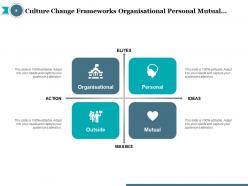
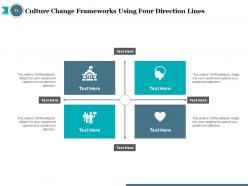
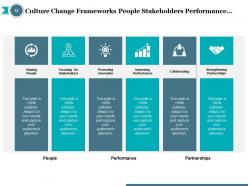
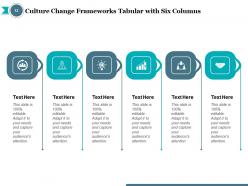
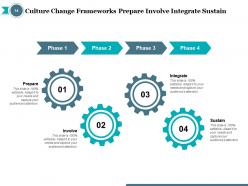
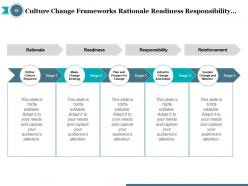
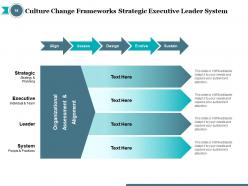

FAQs for Culture Change Frameworks Organizational Team Values
Honestly, most of this stuff fails because leadership talks a big game but doesn't actually walk the walk. You need your leaders genuinely bought in first - like really bought in, not just saying the right things in meetings. Define what the culture change looks like day-to-day, not some fluffy mission statement nobody reads. Set up ways to measure if it's working and create feedback loops that go both ways. Communication is massive here. People won't change if they don't get why you're doing this in the first place. Oh, and cascade down from leadership once they're actually modeling the behavior consistently.
Okay so basically, hierarchical companies need leadership totally on board or your culture change just gets murdered somewhere in middle management. Flat orgs move way faster since there's less red tape, but good luck getting everyone on the same page - people interpret stuff however they want. Matrix structures? Honestly a complete mess for this kind of thing because nobody knows who's actually in charge. Here's the thing though - you gotta match your approach to whatever structure you're stuck with. Bottom-up won't work in some rigid corporate hierarchy, and trying to force top-down changes in collaborative places is just asking for pushback.
Dude, leadership makes or breaks this stuff. They're literally the ones building and pushing your culture change. Without them modeling the new behaviors and explaining why changes matter, you're screwed. I've watched so many initiatives crash because leaders talked a big game but never actually changed how they acted. Middle managers are huge too - they translate all that vision stuff into what actually happens day-to-day. Oh, and they need to put real money behind it, not just send emails about it. Get your leadership team on the same page first, otherwise you'll just have another motivational poster nobody cares about.
You need both the numbers and the vibe check, honestly. Employee engagement scores and retention rates are solid starting points - they don't lie. But I'd also do pulse surveys and actually listen to what people say during coffee breaks. Those conversations tell you way more than spreadsheets sometimes. Track behaviors that match your new values too, like how often teams collaborate or pitch new ideas. Oh, and definitely measure stuff before you change anything so you have something to compare against. Check in every quarter - culture shifts take forever but you'll start seeing patterns pretty quickly.
Ugh, the worst mistake? Companies think they can just announce "we're changing our culture now!" and boom, it's done. Doesn't work that way at all. Most places get obsessed with the flashy stuff - new posters, fancy mission statements - but ignore the boring systems that actually matter. Like, why are you still promoting people who act like jerks? Leadership says one thing then does another, which just makes everyone cynical. Also takes forever - I'm talking years here, not some quick fix. Figure out what behaviors you actually want first, then stop rewarding the old crap.
Here you go - build those feedback loops right from the start. Quick pulse surveys and focus groups will show you where you actually stand (not where you think you do). Then set up regular touchpoints - monthly check-ins, anonymous boxes, even those random Slack polls work. But here's the thing: don't just collect feedback and vanish. People need to see their input actually changing things. I'd create a review committee that meets every two weeks to spot patterns and pivot when needed. Always circle back to tell people what you heard and what you're doing about it. That's honestly the make-or-break part.
So Microsoft's whole turnaround under Satya Nadella is pretty wild - went from this toxic "know-it-all" vibe to actually collaborative. Southwest nailed the employee-first thing which somehow makes customers happier too. Netflix does their harsh "keeper culture" but man, it works for them. Johnson & Johnson's had this values-based approach forever and it's saved them during major crises. Healthcare transformations blow my mind the most since that industry hates change. Oh, and don't just copy what worked elsewhere - you'll want frameworks that actually fit your specific problems.
Look, diversity and inclusion aren't just nice-to-haves anymore - they're baked into most solid change frameworks now. Before you even think about strategy, you've got to figure out how open your culture actually is to different perspectives. What's the psychological safety like? Any obvious bias patterns? Most frameworks today build in inclusive stakeholder engagement from the start. Way better than those old school top-down approaches that honestly just don't work anymore. Map this stuff early - tap into your employee resource groups, run some listening sessions. Oh, and make sure your actual change team looks like the diversity you're aiming for. Sounds obvious but people forget that part all the time.
Honestly, remote work changes everything about company culture. Those random coffee chats and bump-into-people moments? Gone. Now you've got to actually plan how to share your values instead of just hoping people absorb them naturally. Culture shifts way faster when everyone's remote - there's less of that sticky "this is how we've always done things" vibe. But teams can also drift apart super easily if you're not careful. I've seen it happen at my last job actually. You need regular rituals and communication stuff that keeps everyone connected to what your company actually stands for.
Stories are honestly your best bet for getting people on board with culture change. They make those big abstract values actually mean something. Share wins from people who've already bought in - show what this new culture actually looks like day-to-day. Personal stuff from leadership hits different too, way better than the usual corporate fluff. Oh, and transformation stories work great - like how someone went from skeptical to all-in. You want characters, real challenges, outcomes that mirror where you're headed. Find your early adopters and get their stories out there in meetings or town halls.
Kotter's 8-Step Process is probably your best bet, along with Burke-Litwin and McKinsey's 7S framework. They're all decent at connecting values to real behaviors. Honestly though? Companies overthink this stuff constantly. Just start simple - define your core values first, then map specific behaviors to each one. Build those into hiring and performance reviews. Oh, and recognition programs too. The real trick is making sure people actually get rewarded for living those values, not just having them painted on conference room walls. I've seen too many places where the "values" are total BS because promotions still go to whoever brings in the most revenue.
Honestly, external pressure is your best friend when trying to change company culture. Market shifts make transformation feel urgent instead of just some nice-to-have initiative. Your industry goes remote or focuses on sustainability? Culture has to follow or you'll look outdated. People actually get behind change more when they see clear external reasons - like new regulations or customer demands shifting. I've seen it work way better than just saying "hey, let's be different internally." Use those market realities as your excuse. Makes the whole thing feel less arbitrary and more... necessary, you know?
You've gotta get people involved in creating the change, not just dumping it on them. Explain why it matters - what's in it for them personally and for the company. Set up town halls or surveys so they can actually speak up about their concerns. Honestly? Most leaders just announce changes and wonder why everyone's grumpy about it. Find some culture champions throughout the company who'll naturally spread good vibes about what you're doing. Oh, and don't forget to celebrate quick wins - people need to see this stuff actually working.
Honestly, communication can totally tank your whole culture change if you mess it up. Nobody wants another boring "transformation journey" email from corporate - people just delete that stuff. You've got to figure out what actually works with your team first. Some people want hard data and numbers, others need the story behind why you're changing things. I'd say start by looking at how your current leaders talk to people and see what's landing vs what's making everyone roll their eyes. Then stay consistent but tweak your style for different groups. It's way more about reading the room than following some template.
Honestly, training is what makes culture change actually stick. People will fall back into old patterns super fast if you don't keep reinforcing the new stuff - it's just human nature, you know? I've watched companies blow thousands on a single "transformation workshop" thinking they're done. Ridiculous. You need ongoing coaching and chances for people to practice. Oh, and track whether behaviors are actually changing, not just if people showed up to training. The real victory is when your team starts teaching the new way to everyone else.
No Reviews