

Cyber Incident Report Template Powerpoint Ppt Template Bundles




Try Before you Buy Download Free Sample Product
 Impress Your
 Audience
 100%
100% Editable
 Save Hours
 of Time


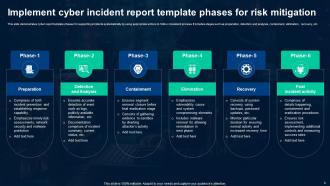
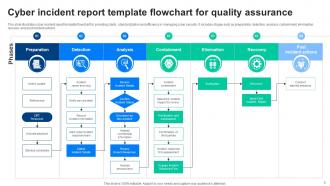
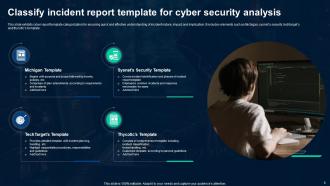
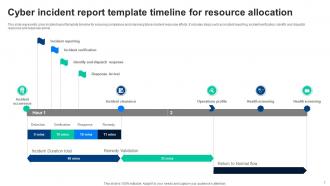
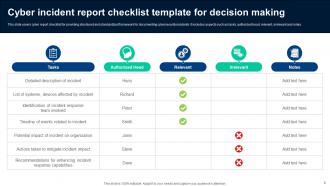
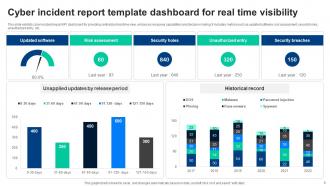
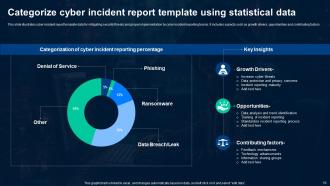
A cyber incident report template is a structured document used to document and communicate details of a cyber security breach or event. It typically includes incident specifics such as date and time, incident type, affected assets, and impact assessment. Additionally, it covers incident response actions, attribution if known, forensics findings, recommendations for mitigation, and communication plans for internal and external stakeholders. The template may also feature a timeline to chronologically represent the incidents progression. Utilised for compliance, accountability, and lessons learned, it aids in efficient and organised incident response while helping organisations improve their cyber security posture.
People who downloaded this PowerPoint presentation also viewed the following :
Cyber Incident Report Template Powerpoint Ppt Template Bundles with all 22 slides:
Use our Cyber Incident Report Template Powerpoint Ppt Template Bundles to effectively help you save your valuable time. They are readymade to fit into any presentation structure.









FAQs for Cyber Incident Report Template Powerpoint
A comprehensive cyber incident report template should include incident detection details, affected systems and data, timeline of events, initial response actions, containment measures, and impact assessment. These elements enable organizations to document security breaches systematically, facilitate regulatory compliance, and improve future incident response protocols, with many financial services and healthcare institutions finding that structured reporting accelerates recovery and minimizes operational disruption.
Organizations ensure incident report clarity and accuracy through standardized templates, comprehensive data collection protocols, real-time documentation requirements, and multi-level review processes. These structured approaches streamline reporting by eliminating ambiguity, capturing critical technical details, and maintaining consistent formatting standards, with many cybersecurity teams finding that systematic validation procedures ultimately deliver faster response times and more effective incident resolution.
Stakeholders serve as critical information sources, decision-makers, and communication facilitators during cyber incident reporting, including IT teams, legal counsel, executive leadership, regulatory bodies, and affected customers. These diverse groups enable comprehensive incident assessment, ensure regulatory compliance, facilitate strategic response decisions, and maintain transparent communication channels, ultimately delivering coordinated recovery efforts and enhanced organizational resilience.
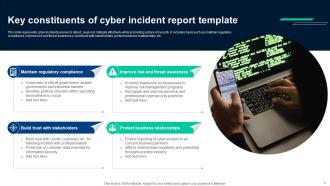
A cyber incident report template assists with regulatory compliance by standardizing documentation requirements, ensuring consistent data collection, and facilitating timely reporting to authorities. These templates help organizations meet frameworks like GDPR, HIPAA, and SOX by capturing essential incident details, maintaining audit trails, and streamlining compliance workflows, ultimately reducing regulatory penalties while enhancing security posture.
**INPUT**: What best practices should be followed when documenting a cyber incident? **OUTPUT**: Cyber incident documentation should include comprehensive timeline details, affected systems identification, impact assessment, response actions taken, and evidence preservation methods. These practices enable organizations to streamline forensic analysis, enhance regulatory compliance, and strengthen future security protocols, with many financial institutions and healthcare providers finding that detailed documentation ultimately delivers faster recovery times and improved incident response capabilities. *Word count: 58 words*
Industries customize incident report templates by incorporating sector-specific compliance requirements, threat landscapes, and operational priorities into their documentation frameworks. Healthcare organizations emphasize patient data protection and HIPAA compliance, while financial institutions focus on transaction security and regulatory reporting, and manufacturing companies prioritize operational technology vulnerabilities, with many finding that tailored templates streamline both incident response and regulatory compliance processes.
**INPUT**: What tools or technologies can enhance the effectiveness of cyber incident reporting? **OUTPUT**: Cyber incident reporting effectiveness is enhanced through SIEM systems, automated threat detection platforms, incident response orchestration tools, forensic analysis software, and real-time communication dashboards. These technologies streamline reporting by accelerating threat identification, automating data collection, and enabling coordinated responses, with many organizations finding that integrated platforms ultimately deliver faster incident resolution and improved security posture.
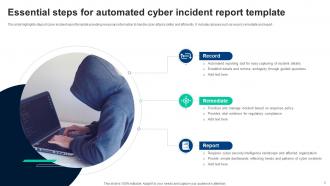
Organizations streamline incident reporting through automated data collection, standardized templates, real-time notification systems, centralized dashboards, and integrated workflow management tools. These technologies enhance efficiency by reducing manual documentation, accelerating response times, and ensuring consistent information capture, with many enterprises finding that automated reporting cuts incident resolution time by 40-60% while improving accuracy.
Cyber incident response KPIs should track detection time, containment duration, recovery speed, financial impact, affected systems count, and stakeholder communication timelines. These metrics enable organizations to measure response effectiveness, identify process improvements, and demonstrate security program maturity to executives, while regulatory compliance teams increasingly use these benchmarks to validate incident management capabilities.
Organizations can leverage past incident reports by analyzing attack patterns, identifying recurring vulnerabilities, updating security protocols, and enhancing employee training programs based on documented lessons learned. Through systematic review of these reports, companies strengthen their defensive postures, refine incident response procedures, and build comprehensive threat intelligence databases, ultimately delivering more resilient cybersecurity frameworks and reducing response times for future incidents.
Common pitfalls include using overly technical jargon, creating unnecessarily complex forms, failing to include timeline documentation, omitting impact assessment sections, and lacking clear escalation procedures. These template design flaws can delay response times, confuse reporting personnel, and hinder effective incident resolution, with many organizations finding that streamlined, user-friendly templates significantly enhance their cybersecurity incident management capabilities.
A cyber incident report template facilitates better communication by standardizing information formats, establishing clear escalation protocols, defining team roles and responsibilities, and creating consistent documentation procedures. Through structured sections for technical details, impact assessments, and response actions, organizations streamline coordination between IT, security, legal, and executive teams, ultimately enabling faster resolution and more effective incident management across departments.
Feedback mechanisms can be incorporated through post-incident review sections, lessons learned documentation, stakeholder input fields, improvement recommendation tracking, and follow-up action item assignments. These components enable organizations to capture insights from security teams, affected departments, and external partners, ultimately transforming incident reports into strategic learning tools that enhance future cyber resilience and response capabilities.
Organizations use incident reports to strengthen cybersecurity by analyzing attack patterns, identifying system vulnerabilities, and refining response procedures. These comprehensive assessments enable businesses to update security protocols, enhance staff training programs, and implement preventive measures, with many financial institutions and healthcare organizations finding that systematic incident analysis reduces future breach risks and accelerates threat detection capabilities.
Visual aids enhance cyber incident report comprehension by simplifying complex attack patterns, timeline sequences, network diagrams, and impact assessments through charts, graphs, and flowcharts. These visual elements enable faster stakeholder understanding, streamline executive briefings, and facilitate cross-team collaboration, with many organizations finding that visual documentation accelerates incident resolution and improves future security planning efforts.
-
Love how there are no boring templates here! The design is fresh and creative, just the way I like it. Can't wait to edit and use them for my extended projects!
-
Amazing variety of PowerPoint slides. Really helpful in designing professional presentations.