


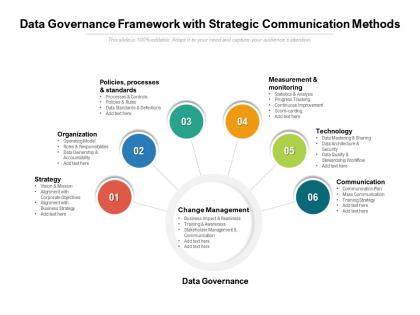
Data governance framework with strategic communication methods




Try Before you Buy Download Free Sample Product
 Impress Your
 Audience
 100%
100% Editable
 Save Hours
 of Time


Our Data Governance Framework With Strategic Communication Methods are explicit and effective. They combine clarity and concise expression.
People who downloaded this PowerPoint presentation also viewed the following :
Data governance framework with strategic communication methods with all 2 slides:
Give your audience a fulfilling experience. They will find our Data Governance Framework With Strategic Communication Methods elevating.
FAQs for Data governance framework with
Data ownership is where I'd start - assign someone to actually own each dataset. Then you need policies people will follow (not some 50-page manual nobody reads). Quality management comes next with monitoring and validation stuff. Don't forget security and compliance or you're screwed. Tools matter too, but honestly that's the easiest piece. Most companies nail the tech part but completely bomb on getting people to stick to processes. Oh, and make sure your policies aren't written by lawyers - keep them simple so teams will actually use them.
So basically, data governance sets up clear rules for how your data gets handled - who's responsible, how it's stored, what counts as "correct." Without it you're just winging it and honestly, that never ends well. You'll get standard definitions everyone agrees on, plus validation checks that catch weird stuff before it spreads. Regular monitoring helps too. The best part? No more endless meetings where people fight over which customer list is actually right. Your teams can finally trust the numbers they're working with instead of second-guessing everything.
Look, compliance basically sets the rules for how you handle data - it's like your foundation. GDPR, HIPAA, whatever applies to you. I know it sounds like a total pain, but these regulations actually help organize your whole approach. They make you map out data flows, set up proper access controls, figure out retention stuff. Pretty much forces structure where there might be chaos otherwise. I'd start by figuring out which regs hit your company first. Then build everything around those requirements. Trust me, it's way better than getting slammed with fines later.
Track the obvious stuff first - data quality scores, compliance rates, how fast you fix issues. But here's what actually matters: survey your people about whether they trust the data they're using. Are teams following your processes or just ignoring them? I've found the real win is when complaints shift from "I can't find good data" to "can we do more sophisticated analysis?" That's your sweet spot right there. Oh, and measure if decision-making got better - sometimes that takes a few months to show up though.
Honestly, the worst part is dealing with people who hate change and departments that won't talk to each other. Data sits in random silos everywhere. Plus everyone defines basic stuff like "customer" differently - it's wild how messy that gets. Getting executives to care about something this abstract? Good luck with that. Oh and don't get me started on trying to integrate legacy systems. Here's what actually works: pick one small area first, find an exec who gets it, then focus on wins you can point to. Once people see real results, they'll stop fighting you on everything else.
Look, data governance is basically making sure everyone's working with the same clean, trustworthy info. No more sitting in meetings wondering "wait, which report is right?" It stops that annoying thing where marketing has different numbers than sales. You get clear rules about who owns what data, better quality checks, and - this is huge - consistent definitions across teams. I've seen companies waste hours debating whether numbers are even accurate. With good governance? Decisions happen faster because nobody's second-guessing the data. Honestly, it's one of those boring-sounding things that actually makes a massive difference once you have it.
Honestly, I'd start with a data catalog - Collibra, Alation, or Informatica if you've got enterprise money. Great Expectations works well for data quality monitoring (assuming your team's pretty technical). For access controls, just use whatever your cloud provider offers natively - don't overcomplicate it. Your "best" stack really depends on team size and what infrastructure you're already running. Pick the area that's causing you the biggest headache right now and tackle that first. Maybe it's visibility, maybe it's quality issues. Don't try to solve everything at once though - that's how projects die.
Honestly, just pick your most critical datasets first and assign actual people to own them day-to-day. These stewards become your go-between for the big governance policies and what's actually happening with the data. Give them real authority over quality and access decisions - otherwise they're just glorified ticket-takers. Map out who they escalate to when stuff gets messy. I'd probably start with maybe two datasets max, work out the inevitable weirdness, then expand from there. The whole thing falls apart if you don't back them up with proper tools and actual decision-making power.
So basically, data governance is your game plan - the policies and rules about who's responsible for keeping data clean and secure. Management is actually doing the work - picking databases, setting up systems, all that hands-on stuff. Governance answers "what should we do and why?" Management tackles "how do we actually pull this off?" Like, governance might say only certain people can see customer data. Then management builds the actual controls to make that happen. Honestly, you really need governance first or you'll just be scrambling around with no direction. Both matter though.
Quarterly reviews work best for data governance stuff, though annually is fine if you're swamped. Someone needs to actually own this process - seriously, don't just hope it happens. Build in flexibility from day one so you're not starting over constantly. I set up Google alerts for GDPR changes and whatever privacy laws hit my industry. AI rollouts and cloud moves will mess with your policies too, so factor those in. It's honestly a pain tracking everything, but way better than scrambling when auditors show up. Oh, and contractions make policies way more readable than that corporate robot speak.
Your stakeholders are literally everything when it comes to data governance. Business users know what data they actually need day-to-day. IT teams understand the technical stuff that'll break if you're not careful. Compliance people freak out about regulations (rightfully so). Executives want the big picture strategy. Without getting input from all these groups, you're just writing policies nobody will use. Each team has totally different ideas about data quality and security requirements. Get everyone together early in the process - like, before you've already decided everything. Trust me, policies that work in the real world come from this collaboration.
Don't treat privacy as an add-on - weave it straight into your governance setup. Tag all your data by how sensitive it is first. Role-based access controls are a must, plus you'll want audit trails tracking who accessed what. The annoying part? Governance teams need to see stuff but privacy rules say no. Automated redaction tools are honestly lifesavers here. Train your data stewards on privacy regulations too - can't skip that step. Oh, and document everything with the same detail you'd use for other governance processes. Sounds like overkill but it's not.
Honestly, start with who owns what data and who gets to make calls about it. Then map out how your data actually flows through processes - approval workflows, escalation paths, all that stuff. But here's the thing: don't let it die in some random SharePoint folder where nobody will ever look at it again. Pick one spot everyone knows about. Throw in real examples instead of just boring policy language. Oh, and definitely get someone to actually maintain this stuff regularly - I've seen way too many teams with docs that are basically useless because they're three years out of date.
So data governance is basically making sure your analytics teams aren't working with garbage data. Think of it like this - you wouldn't build a house on a shaky foundation, right? Same deal here. It sets up clear definitions for what your data means, puts quality checks in place, and controls who can access what. Without it, you're creating dashboards that might look pretty but tell you absolutely nothing useful. Different teams will use different metrics and you'll end up with everyone arguing about numbers. My advice? Start small - pick your most important data sources first and add some basic quality rules.
So the big thing now is automated data classification and AI handling policy stuff - saves you from all that boring manual work. Privacy-by-design isn't optional anymore with regulations everywhere (seriously, there's like a new one every month). Business units are starting to own their own data decisions instead of everything going through IT. Data mesh is pretty hot right now too. Honestly? Just start with automation tools for data discovery and lineage tracking. That's where you'll see real results without breaking the bank or your sanity.
No Reviews