


Data Management Framework Powerpoint Ppt Template Bundles




Try Before you Buy Download Free Sample Product
 Impress Your
 Audience
 100%
100% Editable
 Save Hours
 of Time


Our Data Management Framework Powerpoint Ppt Template Bundles are topically designed to provide an attractive backdrop to any subject. Use them to look like a presentation pro.
People who downloaded this PowerPoint presentation also viewed the following :
Data Management Framework Powerpoint Ppt Template Bundles with all 17 slides:
Use our Data Management Framework Powerpoint Ppt Template Bundles to effectively help you save your valuable time. They are readymade to fit into any presentation structure.






FAQs for Data Management Framework Powerpoint
So there's five main things you need to nail: data governance (policies and who owns what), data architecture (how everything connects), data quality management, security/privacy stuff, and lifecycle management. Honestly, most teams screw up by jumping straight to the fancy tools without figuring out governance first - like who's responsible for what data and basic processes. Your architecture needs to handle what you're doing now but also scale later. Quality management keeps you from making decisions based on total garbage data, which happens more than you'd think. Just start with governance or you'll be rebuilding everything in six months.
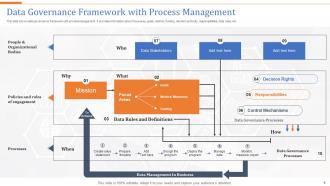
So data governance is like the rule book for your whole data setup - who gets access to what, quality standards, all that stuff. It sits above the technical layers (storage, analytics, etc.) and keeps everything organized. My last company skipped this step and we got burned hard on compliance issues. Really wish we'd started by figuring out data ownership first. Short sentences work better here: map out who owns what data in your org. That's step one. Without governance you're basically guessing whether your data's any good or secure enough to actually trust.
Look, data quality is everything - it's literally the foundation your whole system depends on. Bad data means bad insights, period. I watched one team waste three months on analysis before realizing their source data was complete trash (awkward meetings followed). These problems don't stay contained either. They spread through your entire pipeline and mess up reports, models, everything downstream. You've gotta bake quality checks into your data flows right from the start. Trust me, retrofitting that stuff later is a nightmare you don't want.
Look, you can't just slap security on at the end and hope for the best. Build it into everything from day one. Control who gets access to what data - seems obvious but so many companies mess this up. Encrypt all your stuff, whether it's sitting in storage or moving around. Most data breaches? Some poor intern clicked a sketchy email, so definitely train your people. Set up monitoring that'll flag weird activity patterns before they become disasters. Oh, and audit regularly - not just when compliance makes you. Security needs to be part of your daily routine, not something you remember once a quarter.
Track both tech stuff and business impact. Technical metrics: data quality scores, uptime, processing speeds. Business side gets more interesting though - measure time-to-insight, adoption rates, and whether people actually trust your data for decisions. That trust thing is everything, honestly. If they're still sneaking back to Excel, you've got problems lol. Also watch compliance results and data lineage coverage. Oh, and don't go crazy measuring 20 things at once - pick 3-4 key ones first.
So basically these frameworks are like having guardrails for all your compliance stuff - GDPR, HIPAA, SOX, whatever applies to you. You'll know exactly where your sensitive data is sitting, who can touch it, and how long you're supposed to keep it. Honestly, without this setup you're just waiting for an audit to go sideways. The frameworks set up your governance policies and automate those annoying retention schedules. Plus they create the paper trails that regulators actually care about. Start by figuring out what data you've got and which rules you need to follow - sounds boring but it'll save your butt later.
Oh man, data silos are the worst - nothing talks to each other properly. Quality standards? What standards lol. Getting people to actually change how they work is like pulling teeth since nobody wants extra tasks dumped on them. Legacy systems are ancient and stubborn as hell. Then you've got the whole "who owns what data" mess that nobody wants to figure out. Don't even get me started on budgets - decent tools cost a fortune. Honestly though, just pick one small area first and make it work really well. Way easier than trying to fix everything at once.
Look, good data frameworks basically save you from drowning in messy spreadsheets and guessing games. You'll actually trust the numbers you're looking at instead of wondering if Sarah from accounting updated her pivot table. Teams can compare stuff across departments without that whole "your numbers don't match mine" drama. Honestly, it's kind of amazing how much faster you spot patterns when everything's consistent. No more digging around for hours trying to figure out where a number came from - though I still do that sometimes out of habit. Figure out what decisions you make most, then build backwards from there.
So you're gonna run into databases everywhere - SQL and NoSQL stuff. Cloud platforms like AWS or Azure are pretty much standard now since nobody wants to deal with their own servers anymore. Spark's really popular for big data processing, and you'll definitely see ETL tools moving data between systems. Oh, and streaming tools like Kafka if you need real-time data (which honestly gets overhyped sometimes). Airflow handles workflow orchestration. Data catalogs help with governance too. My advice? Figure out what specific problems you're trying to solve first - then pick tools that actually fit instead of just going with whatever's trendy.
Look, you gotta build flexibility right into your data framework from day one - otherwise you're screwed when things change (and they always do). I do quarterly check-ins to see what's actually working versus what seemed like a good idea at the time. When new compliance stuff hits or your data explodes, you can just swap out pieces like storage or governance rules without starting over. Honestly, most people treat this like a one-and-done project, but it's more like maintaining a car. Monitor your usage patterns and listen to user complaints - they'll tell you exactly what needs fixing.
Honestly, start with just one or two data flows - don't try to boil the ocean right away. Map out where everything's connecting before you actually hook systems together. Set up solid validation rules and consistent naming from day one (trust me on this one). Error handling is gonna save your butt later when things inevitably break. Document where your data's coming from and going to so you're not playing detective months later. Oh, and definitely have a rollback plan ready. Regular quality checks are clutch too. Once you've nailed the basics, then you can expand.
Cloud's honestly your best bet here. No crazy upfront costs, and everything scales automatically when you need it - then shrinks back down when you don't. Most providers throw in analytics tools, backups, security stuff that would bankrupt you to build yourself. The integration part is actually pretty sweet too. Look at your data workloads first - which ones are all over the place volume-wise? Those messy, unpredictable ones are perfect for moving to cloud. You'll see the money savings right away. Way better than guessing how much capacity you'll need and getting it wrong.
Get leadership on board first - that's huge. Make data accessible to everyone, not just the tech people. Regular training helps, but honestly? Celebrating wins when teams actually use data works way better than any workshop. People eat that recognition up. Invest in tools where folks can dig into data themselves instead of waiting forever for IT. Oh, and don't make it feel like some corporate initiative nobody asked for. Weave it into what they're already doing. Start with quick pilot projects that show results fast, then grow from there. Share real stories about problems data actually solved.
Think of data frameworks as your game plan for handling info from start to finish. No more making it up as you go (been there, disaster waiting to happen). They set up clear rules for collecting, storing, processing, and eventually tossing your data. Teams actually know what they're doing since everyone's working off the same playbook. Compliance becomes way easier - auditors won't catch you off guard. Best move? Map out what you're currently doing against whatever framework you pick. You'll spot the worst gaps right away and can tackle those first.
Okay so metadata is basically your data's ID card - tells you what it is, where it came from, who owns it, all that stuff. It's what makes your whole data system actually function. Sounds super boring, right? But trust me, you'll be kicking yourself if you don't have good metadata when you desperately need to find something or prove compliance. Flying blind without it. The trick is building it into your processes from the start - retrofitting later is a nightmare. Like trying to organize your photos after you've dumped 10,000 random ones into a folder.
-
Understandable and informative presentation.
-
Great quality product.