


Design Thinking Powerpoint PPT Template Bundles




Try Before you Buy Download Free Sample Product
 Impress Your
 Audience
 100%
100% Editable
 Save Hours
 of Time


Our Design Thinking Powerpoint PPT Template Bundles are topically designed to provide an attractive backdrop to any subject. Use them to look like a presentation pro.
People who downloaded this PowerPoint presentation also viewed the following :
Design Thinking Powerpoint PPT Template Bundles with all 23 slides:
Use our Design Thinking Powerpoint PPT Template Bundles to effectively help you save your valuable time. They are readymade to fit into any presentation structure.





FAQs for Design Thinking Powerpoint
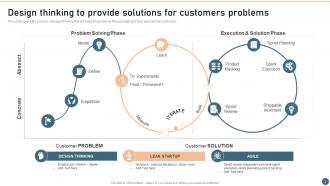
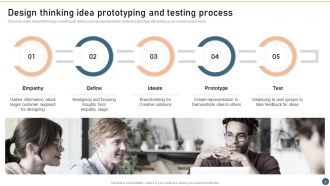
Honestly, it's all about flipping how you approach problems. Most companies start with "here's our tech, what can we build?" Design thinking goes the opposite way - you dig deep into what users actually need first. Way deeper than feels comfortable, trust me. Then you prototype fast and cheap, test it, watch it probably fail, then try again. Traditional methods are super linear - plan everything upfront, execute, done. This approach is messier but you end up solving real problems instead of creating fancy solutions nobody wants. The iterative part can drive you crazy at first though.
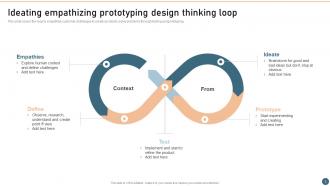
So empathy mapping is where you document what users think, feel, see, say, hear, and do around your problem. It's like making a character profile but for actual people. You'll catch pain points and motivations that surveys totally miss because you're seeing the full picture, not just what they tell you directly. The visual setup makes sharing insights with your team way easier too. Honestly, I started doing one after every user interview and now I spot behavioral patterns so much faster than just scrolling through notes. Game changer.
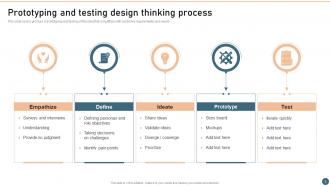
Honestly, prototyping is just a fancy way of saying "test your stupid ideas before you waste money on them." Build rough versions first - sketches, wireframes, whatever. I've seen people use literal cardboard and it works great. The whole point is failing fast and cheap instead of building something nobody wants. Get real feedback from users early. Short cycles of build-test-learn will save your ass because you'll discover stuff you never expected. People are weird and unpredictable, so their reactions might surprise you. Start simple though - even paper sketches reveal tons about what actually works.
Okay so diverse teams are honestly game-changers. Different backgrounds mean people spot problems you'd never see coming. Plus they challenge each other's assumptions, which sounds annoying but actually creates way better solutions. You won't get stuck in that groupthink trap where everyone just agrees with each other. The best part? When your team reflects different user types, they inherently understand what those users need. I'm probably biased since I've seen this work so well, but definitely grab people from different departments and backgrounds for your next sprint. Short version: variety = better ideas.
Yeah, design thinking totally works for healthcare and education! Same basic steps - just talk to the actual people first. Like, interview patients or students about what sucks for them right now. Define what you're really trying to fix, brainstorm ideas, then test stuff out fast. Could be a new check-in process or totally different way to teach something. The crazy part? Most places skip asking users what they actually want and just roll out whatever sounds good to administrators. Keep tweaking based on real feedback though - that's where the magic happens.
Honestly, most people rush the empathy part way too fast. Then they get completely stuck brainstorming forever without actually building anything. Stakeholders always want answers yesterday, which doesn't help. Oh, and talking to real users? Yeah, that's terrifying at first - I totally get why people avoid it. Set time limits for everything, especially when you're ideating. Schedule those user interviews right away so you can't back out. When people push back, just show them quick prototypes instead of explaining the whole methodology thing. Trust me, start small with something that won't make or break your career.
Dude, you catch issues super early this way instead of building for months just to watch it bomb. Test rough prototypes first - even sketches work honestly. Get feedback fast, then tweak. Way better than crossing your fingers and hoping it works later! Each round gets you closer to what people actually want vs. what you assumed they'd want. Those "failures" teach you stuff. I know it sounds backwards but starting messy saves you so much headache down the road. Quick cycles beat perfectionism every time.
Honestly, brainwriting is way better than regular brainstorming - people write ideas silently first so the loud ones don't take over. Mind mapping's solid for seeing connections. Try Crazy 8s too (8 sketches in 8 minutes, kinda intense but works). SCAMPER gives you specific prompts like "substitute" or "combine" to twist existing ideas around. Oh, and "How Might We" questions totally reframe problems. I always forget about that one but it's clutch. Sometimes the random techniques work better than the obvious ones. Just pick a couple methods and test them out with your team.
Honestly, measuring design thinking is kinda tricky but doable. Start with the obvious stuff - user satisfaction scores, conversion rates, how fast you're shipping products. Revenue impact too if you can track it. But here's the thing: the fuzzy metrics matter just as much. How engaged are your teams? Are people actually collaborating better across departments? I'd survey folks about their problem-solving confidence - that tells you a lot. Oh, and definitely set your baselines before you kick anything off. Pick maybe 3-4 metrics max that actually align with what you're trying to achieve. Don't go crazy trying to measure everything.
Do empathy interviews first - ask open questions like "walk me through how you handle X" instead of leading them somewhere specific. The magic happens when you just listen tbh. Watch people in their actual environment too since what they do vs what they say are totally different things. I always mix interviews with surveys or analytics data. Oh and get your whole team in these sessions! Everyone needs to hear feedback directly, not some watered-down summary later. Trust me, it makes a huge difference when the entire team actually hears users complaining about something.
Dude, storytelling is like magic for design thinking. Instead of boring stakeholders with bullet points and charts, you're painting a picture they can actually see. Walk them through your user's whole journey - the frustration, the "aha" moment, everything. Way more convincing than data dumps, trust me. It connects all your research to real outcomes in people's heads. Oh, and here's a trick that works every time: start with "So Sarah's trying to book a flight and..." instead of "Our findings indicate..." You'll see the difference immediately. Stories just stick better.
So start with user research before your actual sprints kick off. During sprint planning, throw in quick 15-minute empathy sessions - sounds cheesy but it works. Most teams honestly just build stuff without thinking about users, then act shocked when nobody uses it. Use your backlog refinement for the define and ideate stuff. Quick prototyping happens during sprints, and sprint reviews become your testing ground with real users. It's pretty straightforward once you get the hang of it. You'll stay user-focused without slowing down your agile process. Just add those persona reviews to your next planning session and see how it goes.
Dude, design thinking is a game changer for customer experience. Instead of guessing what people want, you actually figure out their real problems first. Most companies just build random features and hope for the best - which is wild when you think about it. When you focus on understanding users, they feel heard and stick around longer. The testing part saves your butt too since you catch problems early. Seriously, just watch someone use your product for like 20 minutes. I guarantee you'll see stuff that'll make you go "oh no, we totally missed that."
Honestly, leadership has to go first on this - if the C-suite isn't asking "what do users actually want?" then forget it. Give teams room to mess up without getting fired (fear kills good ideas so fast). Train people on user interviews and prototyping, sure, but the real win is rewarding cross-department collaboration instead of everyone staying in their lanes. Oh and make user research something the whole company can access, not just design. I'd start with small pilot projects that show quick results, then build from there once you've got some momentum.
Honestly, IDEO's free toolkit is where I'd start - it's got everything laid out step by step. Stanford's d.school has solid free downloads too. You could do workshops at local innovation places, but I've picked up just as much from YouTube videos (weird, right?). "The Design of Everyday Things" is probably worth reading at some point. Design thinking podcasts are great for commutes. But here's the thing - don't get stuck just consuming content. Pick one method and actually use it on something real you're working on. That's when it clicks.
-
I faced no difficulty while searching for the slide I wanted. Honestly, the website’s interface is easy to use and can be navigated easily!
-
Slideteam offers pocket-friendly products. As a college student this is a really necessary thing to look at while paying for something.