


Research Method Powerpoint Ppt Template Bundles




Try Before you Buy Download Free Sample Product
 Impress Your
 Audience
 100%
100% Editable
 Save Hours
 of Time


Our Research Method Powerpoint Ppt Template Bundles are topically designed to provide an attractive backdrop to any subject. Use them to look like a presentation pro.
People who downloaded this PowerPoint presentation also viewed the following :
Research Method Powerpoint Ppt Template Bundles with all 14 slides:
Use our Research Method Powerpoint Ppt Template Bundles to effectively help you save your valuable time. They are readymade to fit into any presentation structure.
-

Research Method
-

Aspects of Quantitative Research Design Method
-

Flowchart for Choosing a Primary Market Research Method
-

Icon for Experimental Research on Scientific Method
-

Market Research Method based on Suitability for Data Analysis
-

Multiple Qualitative Research Method to Solve Business Issues
-
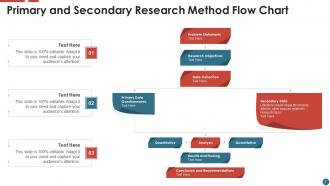
Primary and Secondary Research Method Flow Chart
-

Quantitative Research Method for Data Analysis
-

Thank You
-

-

-

-

-

FAQs for Research Method Powerpoint
Look, quantitative is all about numbers and data you can measure - surveys, experiments, that kind of stuff. Perfect when you want to test something or find patterns across tons of people. Qualitative is totally different though. It's more about the "why" behind things through interviews and observations. Way messier but honestly more fascinating imo. Just think about what you actually need. Want to reach a bunch of people and prove something? Go quantitative. Need to really understand how people think or feel about something? Definitely qualitative. Sometimes I feel like people overthink this choice tbh.
So mixed methods is pretty smart - you get different angles that back each other up. When your survey data and interviews are saying the same thing, that's when you know you're onto something real. Numbers give you the solid proof, but the interviews tell you *why* people actually think that way. I always think of it like... having backup evidence? One method covers what the other one misses. The key thing is planning how they'll work together from the start. Don't just throw both methods at your research and hope it works out.
Dude, sampling makes or breaks your whole study. Get it wrong and you've basically wasted months of work - trust me on this one. Your sample has to actually represent whoever you're studying, otherwise your results are pretty much useless. Random sampling works best most of the time. Though honestly, I've seen people get decent results with stratified too if it fits what they're doing. You need enough people and the right method to avoid bias. I know it's boring compared to the actual research part, but spend time getting this right upfront. Your future self will thank you.
First thing - get that IRB approval sorted before you even think about starting. Honestly, the paperwork's annoying but you can't skip it. Set up proper consent forms and protect people's data/privacy. Also think through any risks your study might create - be real about potential harm. When you publish, be upfront about your methods and whether you've got any conflicts of interest (funding sources, whatever). Oh and don't treat ethics like something you tack on at the end - build it into your whole research design from day one. Trust me on this one.
Honestly, surveys are your friend when you need quick data from lots of people - cheaper too. People tend to be more honest when there's no interviewer staring at them. But the response rates? Yeah, they're usually pretty terrible. You miss out on all those nonverbal cues and can't dig deeper into interesting responses. Face-to-face interviews let you actually connect with people and ask those "wait, what do you mean by that?" questions. Reading someone's expression tells you way more than a checkbox ever will. Downside is they cost a fortune and take forever to set up. Go surveys for the big picture stuff, interviews when you really need to understand the why behind people's answers.
Honestly, case studies are where you get the actual story instead of just surface-level data. Surveys tell you "what" happened, but case studies show you the messy why and how behind everything. It's like watching the full movie vs just reading a quick plot summary, you know? You can dig into all those weird interconnected factors that surveys completely miss. The detail is insane - you'll spot patterns and relationships that help explain what's really driving things. Just start with a solid research question and be ready to chase down random leads that pop up. Those tangents often end up being gold.
Okay so first thing - get your descriptive stats down. Means, medians, standard deviations, that basic stuff. Then you can dive into the fun part: t-tests for group comparisons, ANOVA when you've got multiple groups, regression for seeing how variables connect. Chi-square works great for categorical data. Honestly? You'll probably end up using correlation analysis way more than you think. Oh and don't just look at p-values - effect sizes matter too because statistically significant doesn't always mean it actually matters in real life. SPSS is user-friendly if you're just starting out, though R's free.
So action research is perfect when you're trying to fix problems while studying them - like changing how a classroom works or helping a community with something specific. The cool thing? You're not just watching from the sidelines. You jump in, try solutions, see what happens, then tweak your approach. Yeah, it gets messy compared to those neat controlled studies, but honestly that messiness is what makes it work. You can pivot quickly when things don't go as planned. If you want to actually create change instead of just documenting stuff, this is your method.
Honestly, bias is everywhere in research so you've gotta plan ahead. Randomize your participant assignments and use blinding whenever you can - double-blind is gold standard but single works too. Don't skip the control group (obviously). Here's something most people mess up: sample size actually matters way more than you'd think. Underpowered studies are basically asking for bias issues, so do a proper power analysis first. Train your team the same way and stick to standardized procedures. Oh, and pre-register your hypotheses so you're not tempted to cherry-pick results later. Bottom line - build these controls into your design from the start.
Ok so first thing - make your hypothesis super specific and testable. Like, someone should be able to read it and know exactly what you're measuring. I hate when people write "will affect" because what does that even mean? Be precise about how your variables connect. Ground it in actual research too, don't just make stuff up. Honestly, I'd write it as one clear sentence first. The big test is asking yourself "can I actually measure this?" If you're hemming and hawing, it's probably too vague. Oh and make sure it's replicable - that's huge.
Look, whatever method you pick totally shapes your results. Surveys give you the big picture stuff but you'll miss all the deeper reasons people think what they think. With interviews you get amazing details, but good luck trying to say it applies to everyone. Mixed methods? They're honestly the gold standard but wow do they eat up time. I learned that the hard way on my last project. Each approach comes with baggage that'll affect your conclusions. Just match your method to what you're actually trying to find out, not what seems easiest. And definitely call out those limitations when you share your results.
Honestly, it's all about time vs. how deep you wanna go. Longitudinal studies follow the same people for ages - you can actually see changes happen and prove what causes what, but they're such a pain. People quit halfway through constantly. Cross-sectional is way easier since you just compare different groups once and you're done. Super quick and cheap. But here's the thing - you can't really prove anything caused anything else, just that stuff's related. Also might miss weird generational differences or whatever. If you're new to this stuff, I'd probably go cross-sectional first tbh.
Honestly, the right tools make a huge difference in data analysis. R or Python can crunch numbers way faster than doing it by hand, and you'll actually spot patterns instead of just staring at spreadsheets until your brain melts. Tableau's great for making sense of your results visually. Cloud platforms are lifesavers when you're dealing with massive datasets - your laptop will thank you. Machine learning stuff can find connections across tons of variables that you'd never catch otherwise. Oh, and those automated cleaning tools? Total game-changer for fixing messy data upfront. Just pick whatever's popular in your field first.
Honestly, just match your method to what you're actually trying to figure out. Exploring something brand new? Go qualitative. Testing if X causes Y? That's quantitative territory. But here's the thing - your budget and timeline matter way more than people admit. Mixed methods are cool in theory but they'll eat your resources alive. Also consider what kind of data you can realistically analyze (no point collecting stuff you can't interpret). Your theoretical framework should point you in the right direction too. Don't pick something just because it sounds impressive - pick what'll actually answer your question without breaking the bank.
Dude, pilot testing is a lifesaver - seriously saved my butt so many times. You'll catch weird stuff before it tanks your whole study. Like technical problems, confusing questions, or when your timing estimates are completely off (mine always are lol). I once had what I thought was the clearest survey question ever and people were SO confused. Test it with maybe 5-10 people from your actual target group. They'll tell you if your wording sucks or if the response options don't make sense. Plus you'll figure out if it actually takes 20 minutes instead of your optimistic 10-minute guess. Trust me, just listen to their feedback even if it stings a little.
-
Nice and innovative design.
-
Nice and innovative design.