


Detailed Swot Analysis For A Stationery Business Start Up Office Stationery Business BP SS




Try Before you Buy Download Free Sample Product
 Impress Your
 Audience
 100%
100% Editable
 Save Hours
 of Time


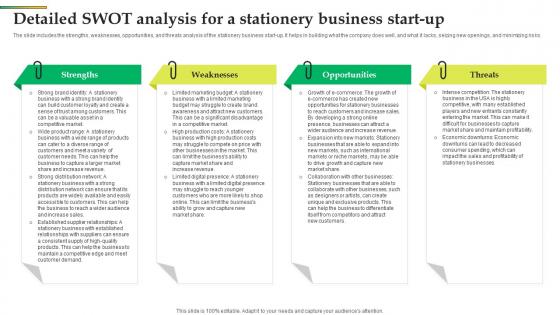
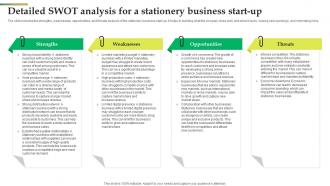
The slide includes the strengths, weaknesses, opportunities, and threats analysis of the stationery business start up. It helps in building what the company does well, and what it lacks, seizing new openings, and minimizing risks.
People who downloaded this PowerPoint presentation also viewed the following :
Detailed Swot Analysis For A Stationery Business Start Up Office Stationery Business BP SS with all 9 slides:
Use our Detailed Swot Analysis For A Stationery Business Start Up Office Stationery Business BP SS to effectively help you save your valuable time. They are readymade to fit into any presentation structure.








FAQs for Detailed Swot Analysis For A Stationery Business Start Up Office Stationery
Key strengths include brand loyalty through quality products, diverse product portfolios spanning office supplies to specialty items, established distribution networks, and strong relationships with educational institutions and corporate clients. These advantages enable stationery businesses to maintain steady revenue streams, adapt to seasonal demands, and leverage cross-selling opportunities, ultimately delivering consistent market presence and customer retention in an increasingly digital landscape.
A stationery business can differentiate itself by developing signature product lines, creating customizable solutions, emphasizing sustainable materials, offering personalized design services, and targeting niche markets like corporate branding or specialty crafts. These strategic approaches enable businesses to command premium pricing, build customer loyalty, and establish market positioning, with many stationery companies finding that unique product offerings ultimately drive competitive advantage in an increasingly crowded marketplace.
Stationery businesses often face supply chain vulnerabilities including dependency on paper manufacturers, fluctuating raw material costs, seasonal demand variations, and lengthy lead times for specialized products. These challenges can result in inventory shortages during peak periods, increased operational costs, and difficulty maintaining consistent product availability, with many retailers finding that diversifying suppliers and implementing demand forecasting systems helps minimize disruptions while enhancing customer satisfaction.
Seasonal trends significantly impact stationery demand through back-to-school surges, holiday gift purchases, and year-end corporate procurement cycles, requiring businesses to strategically adjust inventory, marketing campaigns, and pricing models accordingly. Companies increasingly leverage these predictable patterns by diversifying product lines, building seasonal partnerships with retailers and educational institutions, and implementing flexible supply chain strategies that capitalize on peak periods while maintaining steady revenue streams throughout slower months.
Digital stationery opportunities include interactive templates, cloud-based collaboration tools, AI-powered design assistance, subscription-based digital planners, and augmented reality note-taking applications. These innovations streamline workflow management, enhance creative processes, and enable seamless remote collaboration, with many educational institutions and corporate offices finding that digital solutions deliver cost efficiency and environmental sustainability while maintaining traditional stationery functionality.
Stationery businesses can address environmental concerns by transitioning to recycled paper products, biodegradable materials, plant-based inks, sustainable packaging, and eco-friendly manufacturing processes. These strategic changes enable companies to reduce their carbon footprint while meeting growing consumer demand for sustainable products, with many businesses finding that environmentally conscious practices ultimately enhance brand reputation and customer loyalty in an increasingly eco-aware marketplace.
Online retailers present significant threats through competitive pricing due to bulk purchasing power, extensive product variety exceeding physical store limitations, and convenient 24/7 shopping experiences. These digital platforms also leverage targeted marketing, subscription services, and rapid delivery options, with many local stationery businesses finding that customers increasingly prioritize convenience and cost savings over personalized service.
Customer interaction strengthens stationery brands by building loyalty through personalized experiences, gathering valuable feedback for product development, creating community connections, and enabling direct marketing opportunities. Through social media engagement, customization services, and educational content, stationery companies enhance brand recognition, increase repeat purchases, and develop deeper customer relationships, ultimately delivering competitive advantage in an increasingly crowded marketplace.
Remote work significantly increases demand for home office essentials like notebooks, planners, quality pens, desk organizers, and ergonomic accessories, while reducing corporate bulk purchases. This shift enables stationery businesses to target individual consumers with premium, personalized products, ultimately delivering enhanced profit margins and direct customer relationships in an increasingly decentralized work environment.
Branding establishes customer loyalty, differentiates products in competitive markets, and enables premium pricing through perceived value and quality associations. Strong branding helps stationery businesses build emotional connections with consumers, streamline marketing efforts, and expand into new product categories, ultimately delivering sustained market presence and increased profitability across diverse customer segments.
A stationery business can leverage social media through visually appealing content showcasing product aesthetics, behind-the-scenes manufacturing processes, user-generated content featuring customers using products, targeted advertising to specific demographics, and educational content about organization and productivity. These strategies enhance brand visibility, build community engagement, and drive sales conversions, with many retail businesses finding that consistent social media presence significantly increases customer acquisition and retention rates.
Stationery businesses can explore partnerships with educational institutions, corporate offices, event planners, online marketplaces, and subscription box services to significantly expand their market reach. These strategic collaborations enable access to bulk purchasing opportunities, recurring revenue streams, and diverse customer segments, while many stationery companies find that partnerships with schools and offices deliver consistent demand and enhanced brand visibility.
Market research informs stationery product development by identifying consumer preferences, analyzing competitor offerings, understanding price sensitivity, and revealing market gaps or emerging trends. Through surveys, focus groups, and sales data analysis, stationery companies can develop targeted products that meet specific customer needs, optimize pricing strategies, and create differentiated offerings, ultimately delivering higher customer satisfaction and competitive advantage.
Stationery businesses can improve customer retention through personalized product offerings, loyalty reward programs, subscription services for regular supplies, exceptional customer service, and seasonal promotional campaigns. By implementing bulk discounts for office clients, custom printing services, and responsive online ordering systems, companies enhance customer experiences while building long-term relationships, ultimately delivering competitive advantage in an increasingly digital marketplace.
Changing consumer preferences present both challenges and opportunities for the stationery industry, with digital adoption reducing demand for traditional products while increasing interest in premium, eco-friendly, and personalized items. Many retailers are finding success by pivoting toward sustainable materials, customizable designs, and specialty products, ultimately delivering enhanced customer experiences and competitive differentiation in an increasingly conscious marketplace.
-
Illustrative design with editable content. Exceptional value for money. Highly pleased with the product.
-
I want to express my gratitude to SlideTeam’s presentation design services team for helping me create the best presentation of my life!
-
A fantastic collection of templates. I'll likely use this as my go-to resource for future templates and support.
-
SlideTeam provides PPTs on every single topic. Their templates suit my job very well. I am very grateful!